¡Acompáñanos a viajar por el mundo de los libros!
Añadir este libro a la estantería
Grey
Escribe un nuevo comentario Default profile 50px
Grey
Suscríbete para leer el libro completo o lee las primeras páginas gratis.
All characters reduced
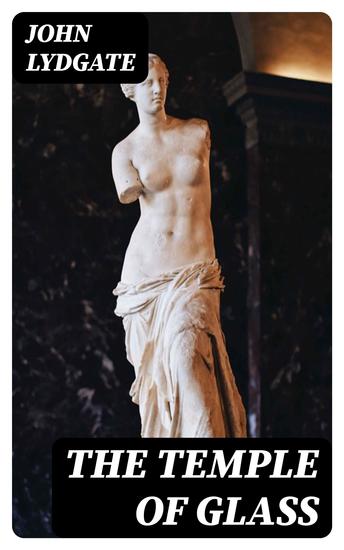
The Temple of Glass - cover

¡Lo sentimos! La editorial o autor ha eliminado este libro de nuestro catálogo. Pero no te preocupes, tenemos más de 500.000 otros libros que puedes disfrutar.

The Temple of Glass

John Lydgate

Editorial: DigiCat

  • 0
  • 0
  • 0

Sinopsis

John Lydgate's 'The Temple of Glass,' a significant work from the early 15th century, stands as a testament to the literary brilliance of the late Middle English period. In this allegorical narrative poem, the reader journeys through the titular structure, encountering a tapestry of characters embodying various facets of love and chivalry. Lydgate's versification is masterful, his language embodying the courtly and philosophical ethos of his time. Within its literary context, the poem echoes the traditions of Geoffrey Chaucer and precedes the flourishing of Renaissance literature, serving as a bridge between medieval and early modern English literary sensibilities. Lydgate's nuanced engagement with themes of virtue and courtly love offers a rich portrayal of medieval thought and serves as a valuable contribution to the corpus of English literary heritage. As a monk and a scholar, John Lydgate was poised uniquely at the confluence of ecclesiastical learning and the burgeoning literary culture of his time. His extensive body of work often grappled with social and moral concerns, reflecting his own intellectual pursuits and the burgeoning humanism of the period. 'The Temple of Glass' may well have been an exploration of Lydgate's own contemplations on the complexities of human desires and the ideals of courtly behavior, mirroring the shifting societal values entwined with spirituality and romance. This nuanced understanding renders the poem both a product of its time and a work of timeless inquiry into human nature. Enthusiasts of medieval literature and scholars of English poetics will find 'The Temple of Glass' an essential addition to their collection. Lydgate's craftsmanship and his tangential relationship to Chaucerian tradition offer vital insights into the evolution of poetic form and theme. This rediscovery by DigiCat Publishing allows contemporary readers to reengage with Lydgate's vision, promising not only historical appreciation but also an enduring reflection on the human condition as depicted by one of the era's most profound literary voices.
Disponible desde: 01/08/2022.
Longitud de impresión: 25 páginas.

Otros libros que te pueden interesar

  • A Waiter Made of Glass - Stories and Poems - cover

    A Waiter Made of Glass - Stories...

    Verlyn Flieger

    • 0
    • 0
    • 0
    Award-winning author Verlyn Flieger takes readers through a series of insightful short stories exploring tragic aspects of human nature. A few of the tales are dark, others a bit lighter, but all celebrate the creativity of storytelling. The second part of the book is a collection of new poetry unearthing the wonders of language, the mundane, and grief and mourning as part of life—the dark spot within the light. Death is the inevitable, inescapable result of mortality, and grief is the price the living pay for that condition. Readers are invited to join in the journey, take some comfort in the knowledge of shared darkness, and know that even within the dark moments, there is always at least a speck of splintered light.
    Ver libro
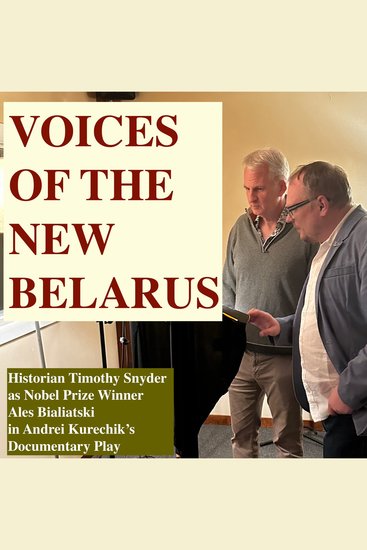
  • Voices of The New Belarus - Documentary Play Writer's adition - cover

    Voices of The New Belarus -...

    Andrei Kureichik

    • 0
    • 0
    • 0
    Dive into the heart-wrenching world of Voices of New Belarus, a searing documentary drama by renowned Belarusian playwright-in-exile Andrei Kureichik. This powerful work captures the harrowing events of the 2020 Belarusian revolution through the deeply personal accounts of 16 political prisoners. Each monologue reveals a distinct story, a unique truth, and together they create an unflinching mosaic of resistance, sacrifice, and hope.First presented at Yale University and the Oslo Freedom Forum—the world’s foremost human rights festival—these testimonies come to life through the voices of the Yale School of Drama’s finest actors and prominent intellectuals: historian Timothy Snyder, intellectual history professor Marci Shore, fascism scholar Jason Stanley, and the visionary theatre director Jura Kordonsky. They embody the words of Belarusian heroes, including imprisoned Nobel laureate Ales Bialiatsky, revolutionary icon Maria Kolesnikova, and many others—politicians, journalists, priests, and ordinary citizens—who stood up against the brutal regime of dictator Alexander Lukashenko.This audiobook is not just a performance—it’s a testament to truth that refuses to be silenced. Half of the proceeds will directly support funds aiding political prisoners and their families, making each listen a contribution to justice. Prepare for an emotional journey that will challenge your understanding of freedom—and leave your soul forever changed.
    Ver libro
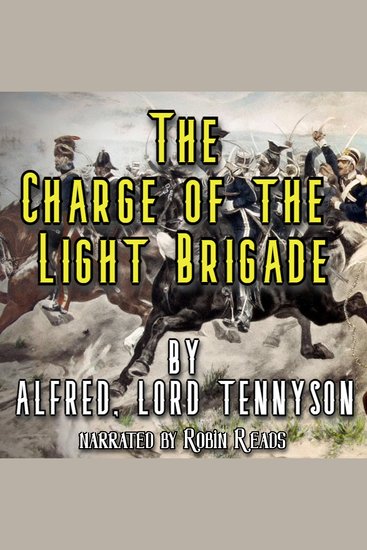
  • The Charge Of The Light Brigade - and The Last of the Light Brigade - cover

    The Charge Of The Light Brigade...

    Alfred Lord Tennyson, Rudyard...

    • 0
    • 0
    • 0
    Alfred Tennyson's timeless poetic tribute to the Charge of the Light Brigade during the Battle of Balaclava in the Crimean War, first published in 1854, is collected here with Rudyard Kipling's poetic response, first published in 1890.
    Ver libro
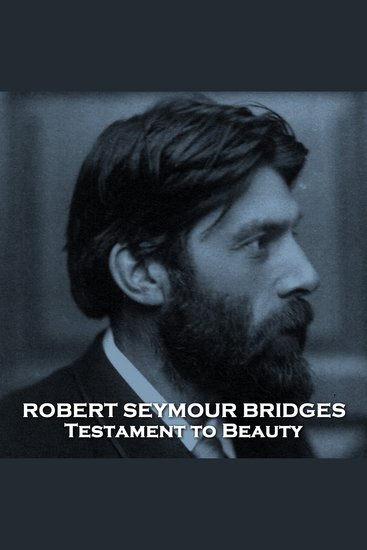
  • Testament to Beauty - A former Poet Laureate demonstrates his poetic talents in this tender and beautiful verse - cover

    Testament to Beauty - A former...

    Robert Seymour Bridges

    • 0
    • 0
    • 0
    Robert Seymour Bridges, OM was born on 23rd October 1844 at Walmer in Kent where he spent his early childhood in a house overlooking the anchoring ground of the British fleet.  
    His father died aged only 47 in 1853. A year later his mother remarried and the family relocated to Rochdale, where his stepfather was the vicar.  
    In 1854 Bridges was sent to Eton College and attended until 1863.  After Eton he went to Corpus Christi College at Oxford. There he became good friends with Gerard Manley Hopkins and would later compile an edition of his poems that is now considered a major contribution to English literature. 
    He graduated from Oxford, in 1867, with a second-class degree in literae humaniores.  Initially he planned to join the Church of England and travelled to the Middle East to broaden his religious horizons.  However, he soon decided that life as a physician would be a better path and, after 8 months studying German (that being the language of many scientific papers at the time) he began his study of medicine at St. Bartholomew's Hospital in 1869.  His long-term ambition was that by the age of forty he could retire from medicine to devote himself to writing. 
    Unfortunately Bridges failed his final medical examinations in 1873 and, as unable to immediately retake the papers, spent six months in Italy learning Italian as well as immersing himself in its art. In July 1874 he went to Dublin to continue his medical studies. Re-examined in December he passed and became a house physician at St Bartholomew's Hospital. It was whilst here that he engaged in a series of highly critical remarks about the Victorian medical establishment. One such was his claim that whilst working as a young doctor he saw a staggering 30,940 patients in one year. 
    A bout of severe pneumonia and lung disease forced his retirement from the medical profession in 1882 and so, slightly ahead of schedule, he began his literary career in earnest.  He already been writing for several years and had published his first poetry collection in 1873.  
    After his illness and a trip to Italy, Bridges moved, with his mother, to Yattendon in Berkshire.  It was during this time, from 1882 to 1904, that Bridges wrote most of his best-known lyrics as well as eight plays and two masques, all in verse.  
    It was also here, in 1884, that he married Monica Waterhouse. They would go on to have three children and spend the rest of their lives in rural seclusion, in an idyllic marriage, first at Yattendon, then at Boars Hill, Oxford. 
    Bridges made an important contribution to hymnody with the publication in 1899 of his Yattendon Hymnal. This collection of hymns became a bridge between the Victorian hymnody of the late 19th century and the modern hymnody of the early 20th century. He was also a chorister at Yattendon church for 18 years. 
    In 1902 Monica and his daughter Margaret became seriously ill with tuberculosis, and a move from Yattendon to a healthier climate was in order. After several temporary homes they moved abroad to spend a year in Switzerland before returning to settle again in England at Chilswell House, which Bridges had designed, and built on Boar's Hill overlooking Oxford University.   
    His greatest achievement though was still some years ahead of him.  The office of Poet Laureate was held by Alfred Austin but with his death it was offered first to Rudyard Kipling, who refused it, and then to Bridges. He was appointed Poet Laureate in 1913 by George V, the only medical graduate to have ever held the office. Bridges, at this time, was neither highly regarded nor well known but a safe pair of hands in a World rapidly being overshadowed by the storms about to erupt over Europe and the First World War. 
    The events of this War, including the wounding of his son, Edward, had a sobering effect on Bridges' poetry. His work became fiercely patriotic. In 1915 edited a volume of prose and poetry, The Spirit of Man, intended to appeal to readers living in war time
    Ver libro
  • Sudal's Whisper - cover

    Sudal's Whisper

    Lee Su-dal

    • 0
    • 0
    • 0
    This Collection contain 77 poems divided into 4 parts as follows:Rice in Peaceful landWhen the Royal Azala BloomsLove Song of a Broad RockSudal’s WhisperAuthor Lee Su-dal personifies the poetic object and its emotional communion and empathy through allegory to have a primary surface meaning and a secondary hidden meaning. 
    In this collection, author made the poems concise and easy to read than creating images, and he personified the poetic subjects through allegory to create empathy , and even when he turned his attention to social phenomena and satirized the world, he made the readers feel a positive and hopeful perspective rather than a sharp criticism.
    Ver libro
  • Scattered Love - cover

    Scattered Love

    Maylis Besserie

    • 0
    • 0
    • 0
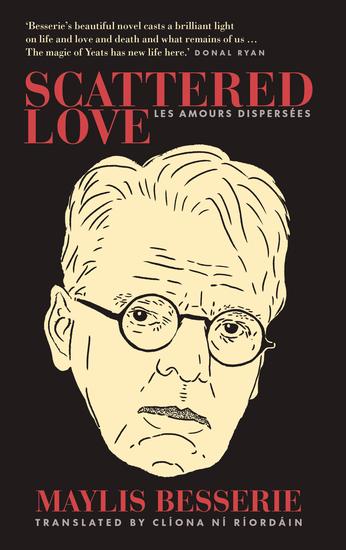
    'She entered the house like a shadow … She was like a divine elixir: one drop for each of my thoughts. … I could feel the breath of the warrior, the Queen of Ireland, and it intoxicated me with the wind of hope, like noble wine.'
    She is Maud Gonne, the muse of writer William Butler Yeats. Yeats here returns as a ghost, having been buried in southern France in January 1939 at Roquebrune-Cap-Martin. Ten years later his remains are repatriated to Ireland. He emerges from his grave to recount his thwarted love for Maud, a story blending with the movement for Irish independence in which they each played an integral part.
    Yeats' ghost has suddenly appeared as diplomatic documents have come to light, casting doubt on the contents of the coffin brought back to Sligo for a state funeral. Where did the poet's body go? Does he still hover 'somewhere among the clouds above'? What remains of our loves and our deaths, if not their poetry?
    Maylis Besserie's exciting new work follows on from Yell, Sam, If You Still Can (Le tiers temps). In her second novel, she turns her attention from Samuel Beckett to another Irish writer, W.B. Yeats. The connection between Ireland and France is forged once again in the smithy of art, culture and the days at the end of life.
    A Guardian Most Anticipated Book of 2023
    An Irish Times Most Anticipated Book of 2023
    An Irish Independent Most Anticipated Book of 2023
    Ver libro