¡Acompáñanos a viajar por el mundo de los libros!
Añadir este libro a la estantería
Grey
Escribe un nuevo comentario Default profile 50px
Grey
Suscríbete para leer el libro completo o lee las primeras páginas gratis.
All characters reduced
The Shipwrecked Orphans - cover

The Shipwrecked Orphans

John Ireland

Editorial: DigiCat

  • 0
  • 0
  • 0

Sinopsis

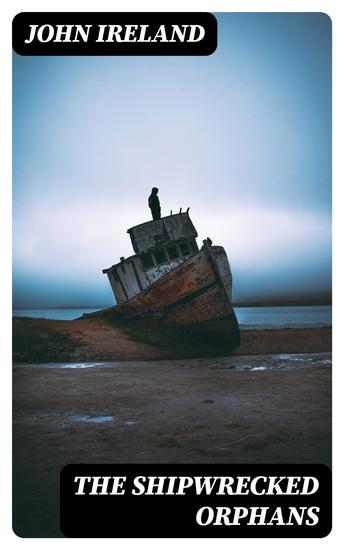
In "The Shipwrecked Orphans," John Ireland crafts a poignant tale of survival, resilience, and the search for belonging amidst the chaos of maritime disaster. Set against the backdrop of an unforgiving sea and remote islands, Ireland employs a lyrical narrative style that intertwines vivid descriptions with emotional depth, illustrating the plight of the young protagonists. The novel navigates themes of isolation, adversity, and the indomitable spirit of youth, all while exploring the social and cultural currents of the time, making it a significant contribution to the genre of children's literature that reflects societal concerns and human values. John Ireland, a noted figure in 19th-century literature, drew upon his own experiences and observations of the sea and its perils, influencing his representation of adventure and hardship in this work. His background as both a traveler and a keen observer of human nature lends authenticity to his characters' journeys, inviting readers to empathize with their struggles and triumphs. Ireland's writings often reflect a deep concern for the welfare of children, likely stemming from his own childhood experiences and the societal conditions of his era. "The Shipwrecked Orphans" is recommended for readers who appreciate rich storytelling infused with moral lessons. Ireland's ability to evoke both the beauty and terror of nature will resonate with those who cherish classic adventure narratives. This book is an essential read for anyone interested in the complexities of childhood and the enduring power of hope, making it a timeless treasure for both young and adult audiences.
Disponible desde: 04/09/2022.
Longitud de impresión: 32 páginas.

Otros libros que te pueden interesar

  • The Future Our Ecuational Institutions - cover

    The Future Our Ecuational...

    Friedrich Nietzsche

    • 0
    • 0
    • 0
    “The Future of Our Educational Institutions” is a work by Friedrich Nietzsche, originally delivered as a series of five public lectures at Basel University in 1872. In this work, Nietzsche critically examines the attempt in 19th-century Germany to make education public, and its inherent politicisation. He points out the deep contradictions within the gymnasium system and argues against the exploitation of youth by the State for its own purposes. Nietzsche presents a radical challenge to the existing educational institutions and practices, arguing that education in modernity is a lost cause.
    Ver libro
  • European Genocides - Details about the Holocaust and Yugoslavian War - cover

    European Genocides - Details...

    Kelly Mass

    • 0
    • 0
    • 0
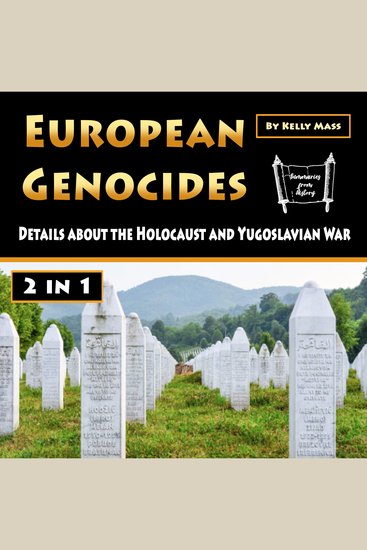
    This audiobook contains two topics: 
    1 - The Yugoslavian Genocide is hard to explain. So many factors have contributed to the war, and eventually, the genocide in Bosnia, that many UN soldiers didn’t even know what to do with it. A lack of response, though, made the problem worse. And looking back on some of the cowardice and indifference, I’m sure many countries involved would like to go back in time and do it over. A combination of historical aspects such as the division of religion, the world wars, the Iron Curtain, and the fall of the Soviet Union were part of what led to a conflict that lasted for years in this sensitive region in Europe. Throughout the Bosnian War of 1992-- 1995, the Yugoslavian or Bosnian genocide describes either the Srebrenica massacre or the larger criminal activities against mankind and ethnic cleaning project performed by the Army of Republika Srpska (VRS) in areas controlled by the Army of Republika Srpska. 
    2 - Most people know what the Holocaust was. They have at least a vague image of what transpired in Europe during the 1940s. Still, the details may be blurry. So, let’s take a look at history and the events that shocked the world. And even though this was clearly not the first genocide in the world, it was one of particular proportions and scale, and therefore noteworthy. At the time of The Second World War, the Holocaust, also referred to as the Shoah, was a genocide of European Jews. Between 1941 and 1945, Nazi Germany and its allies killed around 6 million Jews in German-occupied Europe, representing about two-thirds of Europe's Jewish population.
    Ver libro
  • Aftershock - How Past Events Shake Up Your Life Today - cover

    Aftershock - How Past Events...

    Geri-Lynn Utter

    • 0
    • 0
    • 0
    You may be at a point in your life where you realize that you have been edgy, a bit depressed, feeling unsettled. Yet everything in your life seems to be okay. You look for a cause, but you just can't put your finger on it. Perhaps you should examine your recent past—six months ago, a year ago—and ask yourself, "What did I go through that was stressful at the time, yet I was able to deal with by suppressing my stress until that situation was over?" 


    "Aftershock" is a term coined by clinical psychologist Dr. Geri-Lynn Utter, who came to recognize this largely ignored scenario in many of her patients. As a subclinical level of the more familiar post-traumatic stress disorder, "aftershock" may underlie your present emotional stress, a delayed emotional response that affects many of us after common, yet big deal, life events such as miscarriage, moving to a new city, divorce, or, for some people, the Covid-19 pandemic that has rocked much of the world. 


    The most urgent raison d'etre of Aftershock is to enlighten listeners to the very presence of this psychological trauma—what it is and what causes it, how to recognize the symptoms, and how to heal when life's stressors keep you in the center of the aftershock of a storm.
    Ver libro
  • George Soros - A Life In Full - cover

    George Soros - A Life In Full

    Peter L. W. Osnos

    • 0
    • 0
    • 0
    The name George Soros is recognized around the world. Universally known for his decades of philanthropy, progressive politics, and investment success, he is equally well known as the nemesis of the far right—the target of sustained attacks from nationalists, populists, authoritarian regimes, and anti-Semites—because of his commitment to open society, freedom of the press, and liberal democracy. At age ninety-one, Soros still looms large on the global stage, and yet the man himself is surprisingly little understood. 


    Biographers have attempted to tell the story of George Soros, but no single account of his life can capture his extraordinary, multifaceted character. Now, in this ambitious and revealing new book, Soros's longtime publisher, Peter L. W. Osnos, has assembled an intriguing set of contributors from a variety of different perspectives—public intellectuals (Eva Hoffman, Michael Ignatieff), journalists (Sebastian Mallaby, Orville Schell), scholars (Leon Botstein, Ivan Krastev), and nonprofit leaders (Gara LaMarche, Darren Walker)—to paint a full picture of the man beyond the media portrayals. 


    Through this kaleidoscope of viewpoints emerges a vivid and compelling portrait of this remarkable man's unique and consequential impact. It has truly been a life in full.
    Ver libro
  • Detroit in World War II - cover

    Detroit in World War II

    Gregory D. Sumner

    • 0
    • 0
    • 0
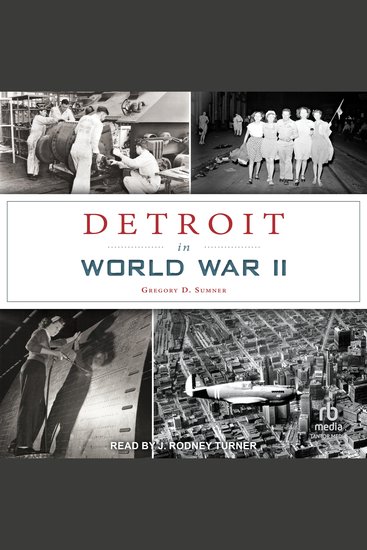
    When President Roosevelt called for the country to be the great "Arsenal of Democracy," Detroit helped turn the tide against fascism with its industrial might. Locals were committed to the cause, putting careers and personal ambitions on hold. Factories were retooled from the ground up. Industrialist Henry Ford, First Lady Eleanor Roosevelt, aviator Charles Lindbergh, legendary boxer Joe Louis, future baseball Hall of Famer Hank Greenberg and the real-life Rosie the Riveters all helped drive the city that was "forging thunderbolts" for the front lines. With a panoramic narrative, author Gregory D. Sumner chronicles the wartime sacrifices, contributions, and everyday life of the Motor City.
    Ver libro
  • Edward Teller: A short biography - 5 Minutes: Short on time – long on info! - cover

    Edward Teller: A short biography...

    5 Minutes, 5 Minute Biographies,...

    • 0
    • 0
    • 0
    Edward Teller, Hungarian-American physicist and father of the hydrogen bomb: Life and work in a short biography! Everything you need to know, brief and concise. Infotainment, education and entertainment at its best!
    Ver libro