Junte-se a nós em uma viagem ao mundo dos livros!
Adicionar este livro à prateleira
Grey
Deixe um novo comentário Default profile 50px
Grey
Assine para ler o livro completo ou leia as primeiras páginas de graça!
All characters reduced
Reconstruction in Philosophy - cover
LER

Reconstruction in Philosophy

John Dewey

Editora: Interactive Media

  • 0
  • 0
  • 0

Sinopse

"Reconstruction in Philosophy" by John Dewey is a groundbreaking philosophical work that challenges traditional modes of thinking and calls for a profound reevaluation of philosophical inquiry. In this transformative book, Dewey offers a compelling vision for reconstructing philosophy to better serve the needs and complexities of the modern world. With incisive intellect and deep insight, Dewey argues for a shift away from abstract metaphysical speculations and toward a more pragmatic and practical approach to philosophy. He contends that philosophy must be firmly rooted in concrete human experience and actively engaged with the social and cultural challenges of the time. Dewey explores the fundamental concepts of knowledge, truth, morality, and the nature of reality, recontextualizing them within the framework of democratic ideals, scientific inquiry, and societal progress. He emphasizes the importance of integrating philosophy with other disciplines, such as psychology, sociology, and education, to develop a comprehensive understanding of the human experience.
Disponível desde: 06/07/2023.
Comprimento de impressão: 126 páginas.
Outros livros que poderiam interessá-lo

  • Niebuhr's Lectures on Roman History Vol 3 - cover

    Niebuhr's Lectures on Roman...

    Barthold Georg Niebuhr,...

    • 0
    • 0
    • 0
    Niebuhr's Lectures On Roman History V3 (1875) is a book written by Barthold Georg Niebuhr, a German historian and statesman considered one of the founders of modern historical scholarship.  
    Note This audio edition is abridged but is the only one of it's kind at this time. 
    The book is the third volume in a series of lectures on the history of ancient Rome, and covers a period from the end of the Second Punic War to the death of Julius Caesar. 
    In this volume, Niebuhr provides a detailed account of the political, social, and cultural developments of the Roman Republic during this period. He examines the rise of powerful political figures such as Scipio Africanus, Marius, and Sulla, and their impact on the Roman state. He also analyzes the social and economic changes that occurred during this time, including the growth of the Roman economy and the emergence of new social classes. 
    Throughout the book, Niebuhr draws on a wide range of sources, including ancient texts and archaeological evidence, to provide a comprehensive and nuanced view of Roman history. He also offers his own insights and interpretations, making the book a valuable resource for anyone interested in the history of ancient Rome. 
    Nonetheless, Niebuhr's Lectures On Roman History V3 (1875) is a well-researched and informative book that provides a fascinating look at one of the most important periods in Roman history 
    In this volume the narrator edited some portions out and  Niebuhr's research and commentary extends to the reign of Vitellius. If you are a fan of the series Rome or a graduate student or a person who enjoys evaluating events and sources objectively, then this audio volume is for you. Some of us are better learners using audio than the printed versions.
    Ver livro
  • Thomas Jefferson Survives - American Independence in His Time and Ours - cover

    Thomas Jefferson Survives -...

    Peter S. Onuf, Francis D....

    • 0
    • 0
    • 0
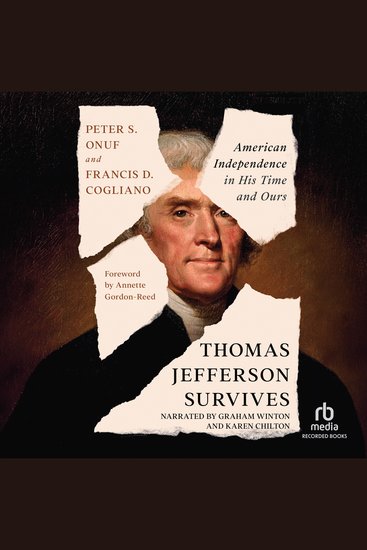
    “Does Thomas Jefferson still matter?” ask two leading historians on the 250th anniversary of the Declaration of Independence. 
      
    Thomas Jefferson has been reinvented more than perhaps any American president in history. In the nineteenth century, slavery’s defenders invoked Jefferson’s defense of states’ rights while abolitionists drew on his antislavery writings in support of their cause. After the Civil War, Jefferson’s reputation declined because of his association with secession and disunion, but in the twentieth century, his image soared as he came to embody the democratic values America fought for during World War II.  
      
    Unsurprisingly, Jefferson’s legacy has shifted yet again in the twenty-first century, effectively becoming a partisan talisman—jettisoned by the left as a plantation patriarch and repurposed by the right as an avatar of white nationalism. Dissatisfied with these political caricatures and manic swings, leading Jefferson scholars Peter S. Onuf and Francis D. Cogliano instead situate the founding father in his complicated historical context and reveal how his wisdom can be applied today.  
      
    In a series of three interrelated essays, the authors paint a nuanced portrait. “Generations” elucidates how Jefferson’s understanding of history shaped his responses to the major problems of his time. “My Country” delves into how he conceived of the American homeland, and “The People” unravels how Jefferson articulated a new national identity in the Declaration of Independence.  
      
    Taken together, Thomas Jefferson Survives demonstrates how even amid crisis, Jefferson managed to articulate a capacious and optimistic vision for the future of the American people. As Pulitzer Prize–winning historian Annette Gordon-Reed writes in her foreword, “As much as Jefferson reflected the often-benighted times in which he lived, he rose above them in ways that have a great deal to tell us about the political straits in which we find ourselves.” After all, Jefferson knew better than anyone that 1776 was an important moment, but not the only moment, for Americans to write a better future. 
      
    “A powerful argument for the continuing importance of Thomas Jefferson in our troubled and turbulent times. These two great scholars of Jeffersonian America, using Jefferson’s belief in generational sovereignty and his utter faith in us, that is, the future generations of American people, have brilliantly described for us the various ways Jefferson still matters.”—Gordon Wood, Pulitzer Prize–winning historian and author of Friends Divided
    Ver livro
  • The Pocketbook - Soul Survival - cover

    The Pocketbook - Soul Survival

    Anônimo

    • 0
    • 0
    • 0
    The Pocketbook: Soul Survival (Volume One) 
    This isn’t just an audiobook. 
    It’s a survival kit. A love letter. A pocket-sized archive of truth, tenderness, and strategy—read by the one who lived it. 
    In just about an hour, you’ll walk with Chef Lara™ through rooftops, grief, joy, protest signs, and the power of a good affirmation in your back pocket. It’s the kind of listen you can share with your mama, your daughter, your son, your dad. The kind of book that makes you want to pause, talk, and remember your own stories too. 
    Because this is how we survive political warfare. 
    By telling the truth. 
    By carrying softness on purpose. 
    By listening to each other, even when the world gets loud. 
    So come as you are. Walk and listen. And maybe—just maybe—pass it on.
    Ver livro
  • Transform Conversations: Secrets That Ignite Meaningful Change - "Unlock powerful audio lessons to elevate your conversations and inspire transformative change today!" - cover

    Transform Conversations: Secrets...

    Jasper Wainwright

    • 0
    • 0
    • 0
    Transform Conversations: Secrets That Ignite Meaningful Change 
    ⭐️⭐️ Simplified Guide & Explanations Included ⭐️⭐️ 
    Are you ready to elevate your career and enhance your understanding through impactful dialogues that drive profound change? 
    Seeking a thorough guide that covers everything you need to unlock potential and transform conversations for meaningful change? 
    Your journey starts here! 
    This resource is your ultimate companion for deepening your insights, applying your skills, and engaging in practical exercises. With this guide, you’re on the path to success. 
    Key features of this enriched guide: 
    - In-depth insights about transforming dialogue for meaningful change   
    - Detailed exploration of the principles and practices involved in effective communication   
    - Proven strategies for preparing for transformative conversations and overcoming challenges   
    Our guide stands out due to its comprehensive approach, ensuring that nothing is overlooked. Concepts are explored thoroughly and with clarity. 
    Please note that this guide is an independent resource and not affiliated with any official organization. 
    Crafted with a logical layout and straightforward language, our guide on transforming conversations guarantees seamless transitions between topics. Bid farewell to complicated jargon and embrace clear, concise, and technically accurate content. 
    So, why hesitate? Click the BUY NOW button, secure your guide, and embark on your journey toward transformation and meaningful change! 
    Transform your conversations and unlock your potential for profound change today!
    Ver livro
  • Abraham Lincoln: A short biography - 5 Minutes: Short on time - long on info! - cover

    Abraham Lincoln: A short...

    5 Minutes, 5 Minute Biographies,...

    • 0
    • 0
    • 0
    Abraham Lincoln, American president and savior of the union: Life and work in a short biography! Everything you need to know, brief and concise. Infotainment, education and entertainment at its best!
    Ver livro
  • Medieval Bosnia: The Turbulent History of Bosnia and the Region during the Middle Ages - cover

    Medieval Bosnia: The Turbulent...

    Editors Charles River

    • 0
    • 0
    • 0
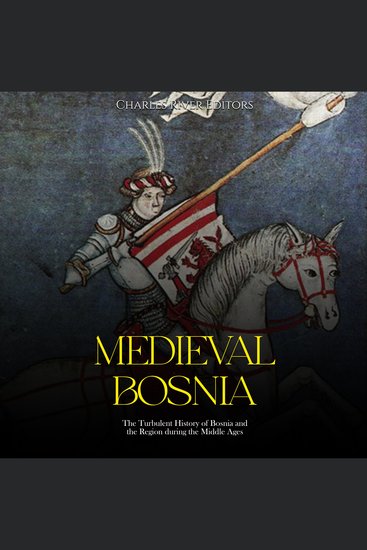
    Much has been written about Western intervention during the breakup of Yugoslavia, and whether it made matters worse, prevented worse atrocities, or was simply ineffective. In early 1992, however, what was clear was that Europe was hopelessly divided over the best course of action to take towards Yugoslavia, and after several years of fighting, the Bosnian War was one of the most violent conflagrations in Europe since the end of World War II.  
    That war had been the byproduct of centuries of tensions in the Balkans, and an attempt in the wake of World War I to redraw the political boundaries of Europe and the Middle East. That included forming the Kingdom of Yugoslavia, initially known as the Kingdom of Serbs, Croats and Slovenes, a particularly fragile enterprise, and there was almost constant tension between the majority Serbs and the other Yugoslav nationalities, especially the Croats.  
    Depending on the source, many authors have focused on different catalysts for Yugoslavia’s demise, but Vesna Drapac may have succinctly summed the situation up when he wrote that by the end, the state “lacked a reason to exist.” There is certainly something in this sentiment, but the disintegration came at an enormous cost. 
    Given what happened in Yugoslavia, it should be little surprise that Bosnia did not have its fully-established borders until the 19th century, and even in modern times, in many respects the people distinguished and defined Bosnia as a polity more than its shifting borders, and regardless of whether Bosnia operated as an independent state or kingdom. It was during the Middle Ages that Bosnia’s culture and ethnic makeup truly began to coalesce, despite the politically rocky nature of the era in the Balkans. 
    Ver livro