¡Acompáñanos a viajar por el mundo de los libros!
Añadir este libro a la estantería
Grey
Escribe un nuevo comentario Default profile 50px
Grey
Suscríbete para leer el libro completo o lee las primeras páginas gratis.
All characters reduced
The Collected Works of John Buchan (Illustrated) - Enriched edition Spy Classics Thrillers Adventure Novels Mystery Novels Historical Works Scottish Poems Essays & World War I Books - cover

The Collected Works of John Buchan (Illustrated) - Enriched edition Spy Classics Thrillers Adventure Novels Mystery Novels Historical Works Scottish Poems Essays & World War I Books

John Buchan

Editorial: Good Press

  • 0
  • 0
  • 0

Sinopsis

In "The Collected Works of John Buchan (Illustrated)", readers are invited into a rich tapestry of adventure and intrigue that blends historical fiction, psychological depth, and a keen understanding of the complexities of early 20th-century society. This illustrated compilation showcases Buchan's masterful prose, characterized by vivid imagery and incisive character development, reflecting themes of nationalism, morality, and the interplay between man and nature. Placed within the context of post-Edwardian literature, Buchan's writing serves as both an escape and a mirror to the tumultuous socio-political atmosphere that shaped his narratives. John Buchan, a distinguished Scottish author and politician, drew upon his extensive experiences, both in the military and in governmental roles, to infuse his works with authenticity and a nuanced perspective on imperialism and adventure. His travels and personal interests in history and culture profoundly influenced his storytelling, making his narratives resonate with a sense of place and purpose. Buchan's legacy as the creator of the famous character Richard Hannay is evident in this collection, often reflecting his own explorations of identity and morality. For readers seeking a compelling journey through adventure and intellect, "The Collected Works of John Buchan (Illustrated)" is a must-read. It not only entertains but also invites critical thought about historical narratives and the human condition, ensuring its place as an essential contribution to the canon of Scottish literature. Engage with Buchan's intricate worlds and discover the timeless themes that continue to captivate audiences.

In this enriched edition, we have carefully created added value for your reading experience:
- A comprehensive Introduction outlines these selected works' unifying features, themes, or stylistic evolutions.
- A Historical Context section situates the works in their broader era—social currents, cultural trends, and key events that underpin their creation.
- A concise Synopsis (Selection) offers an accessible overview of the included texts, helping readers navigate plotlines and main ideas without revealing critical twists.
- A unified Analysis examines recurring motifs and stylistic hallmarks across the collection, tying the stories together while spotlighting the different work's strengths.
- Reflection questions inspire deeper contemplation of the author's overarching message, inviting readers to draw connections among different texts and relate them to modern contexts.
- Lastly, our hand‐picked Memorable Quotes distill pivotal lines and turning points, serving as touchstones for the collection's central themes.
Disponible desde: 06/12/2023.
Longitud de impresión: 4884 páginas.
Otros libros que te pueden interesar

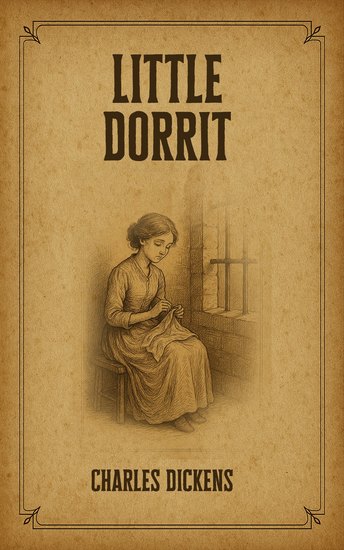
  • Little Dorrit - cover

    Little Dorrit

    Charles Dickens

    • 0
    • 0
    • 0
    Little Dorrit is a deeply moving and socially incisive novel by Charles Dickens that explores poverty, pride, bureaucracy, and the enduring power of compassion. Set against the backdrop of Victorian England, the story offers a sweeping portrait of society—from the grim confines of a debtors' prison to the glittering yet hollow world of wealth and status.
    
    At the heart of the novel is Amy Dorrit, known as "Little Dorrit," a gentle and selfless young woman born and raised within the walls of the Marshalsea Prison, where her father has been imprisoned for debt. Despite her harsh circumstances, Amy embodies kindness, humility, and quiet strength. Her life becomes intertwined with that of Arthur Clennam, a thoughtful and morally conflicted man seeking to uncover secrets from his family's past.
    
    As the narrative unfolds, Dickens exposes the cruelty and inefficiency of rigid social institutions, particularly through his biting satire of government bureaucracy and financial systems. Characters rise and fall in fortune, revealing how wealth can corrupt, isolate, and ultimately imprison the soul just as surely as physical walls can imprison the body.
    
    Little Dorrit is a powerful meditation on freedom—both external and internal. Through its richly drawn characters and intricate plot, the novel examines how love, loyalty, and moral integrity can endure even in the most oppressive conditions. Blending social criticism with deep emotional insight, the novel stands as one of Dickens's most profound and compassionate works, offering a timeless reflection on human dignity and resilience.
    Ver libro
  • Oblomov - cover

    Oblomov

    Ivan Goncharov

    • 0
    • 0
    • 0
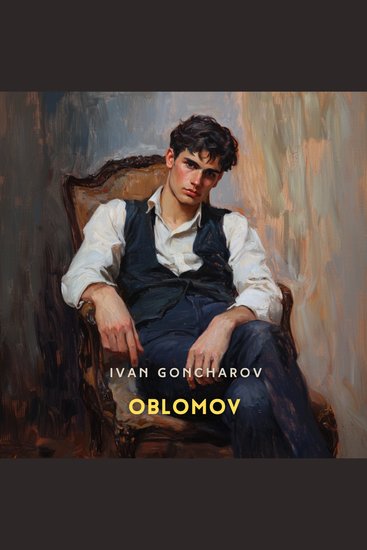
    Ivan Goncharov’s Oblomov is a profound exploration of indolence and the human condition, centered on Ilya Oblomov, a Russian nobleman whose defining trait is his overwhelming lethargy. Unable to muster the energy for work or ambition, Oblomov spends his days in bed or lost in nostalgic reveries of his idyllic childhood estate. His apathy contrasts sharply with his pragmatic friend Stoltz, who strives for progress and success. When Oblomov falls in love with Olga, her attempts to inspire him initially spark change, but his inertia ultimately prevails. Goncharov’s novel critiques societal stagnation and the feudal system while painting Oblomov’s passivity as both tragic and universal. A poignant blend of humor and pathos, Oblomov examines the tension between dreams and reality, leaving readers to ponder the fine line between contentment and complacency.
    Ver libro
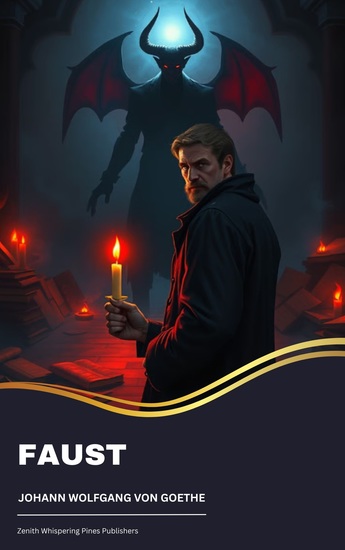
  • Faust - cover

    Faust

    Johann Wolfgang von Goethe

    • 0
    • 0
    • 0
    A man who wants everything. A devil who offers it. A bargain that no one can escape unchanged.
    In Goethe's monumental drama, the scholar Faust—exhausted by limits of knowledge and longing for deeper meaning—strikes a fateful pact with Mephistopheles. Promised pleasure, power, and limitless experience, Faust plunges into a world of beauty, temptation, and moral peril. Yet every moment gained carries a shadow, and every desire leads him closer to the edge of damnation.
    
    Praised as "one of the greatest works of world literature," this epic explores ambition, love, sin, redemption, and the eternal struggle between light and darkness. Readers are captivated by its poetic force, philosophical depth, and unforgettable characters.
    
    If you crave dramatic storytelling, probing ideas, and a journey that tests the limits of the human spirit, Faust delivers a timeless and transformative experience.
    
    Open the book—and follow Faust into the fire of his own desires.
    Ver libro
  • A Lesson on a Tortoise - From their pens to your ears genius in every story - cover

    A Lesson on a Tortoise - From...

    D H Lawrence

    • 0
    • 0
    • 0
    David Herbert Lawrence was born on the 11th September 1885 in Eastwood, Nottinghamshire, a coal mining town where the reality of a harsh life was only useful as experiences for future literary works. 
    He was educated at Beauvale Board School and became the first local boy to receive a scholarship to attend Nottingham High School. After 3 years he became a junior clerk in Haywood’s surgical appliances factory. He was also attempting a literary career which, in the short term, led to a teacher training position in Eastwood and later a teaching qualification from University College, Nottingham.  
    Lawrence’s first efforts were poems, short stories and a draft of ‘The White Peacock’. Moving to London and a teaching position in Croydon his writing attracted the attention of Ford Madox Ford, editor of The English Review, and he commissioned him to write ‘Odour of Chrysanthemums’.  
    Wanting to write full-time he now began work on what would become ‘Sons and Lovers.   
    In 1912 he met the older and married mother-of-three Frieda Weekley. They eloped to Germany and here Lawrence could see for himself the growing tensions with France.  So keen was his interest that he was arrested and accused of being a British spy.  
    In early 1914 Frieda obtained her divorce and they returned to Britain to be married just days before the outbreak of war. Owing to her German parentage, and his own public dislike of militarism and violence, the couple were treated with contempt and suspicion throughout the war years.  
    Despite this he continued to write but his reputation in England was so tarnished and, mirrored by his own disdain for the country, he and Frieda left England in November 1919, first for Europe and then America via Ceylon and Australia. 
    They bought a ranch in Taos, New Mexico and visited Mexico several times. The third visit in March 1925 caused a near fatal attack of malaria. To convalesce they moved to Florence. Here he continued work on ‘Lady Chatterley’s Lover’ which for many years would cause controversy. A renewed interest in oil painting resulted in an exhibition in 1929 which was raided by the police and several works were confiscated.  
    D H Lawrence died of complications arising from a bout of tuberculosis on the 2nd of March 1930 in Vence, France.  He was 44.
    Ver libro
  • Some Short Christmas Stories (Unabridged) - cover

    Some Short Christmas Stories...

    Charles Dickens

    • 0
    • 0
    • 0
    Charles John Huffam Dickens (7 February 1812 - 9 June 1870) was an English writer and social critic. He created some of the world's best-known fictional characters and is regarded as the greatest novelist of the Victorian era. His works enjoyed unprecedented popularity during his lifetime, and by the twentieth century critics and scholars had recognised him as a literary genius. His novels and short stories enjoy lasting popularity.
    Contents: The Poor Relation's Story / The Schoolboy's Story / A Christmas Tree / Nobody's Story / The Child's Story / What Christmas is as We Grow Older
    Ver libro
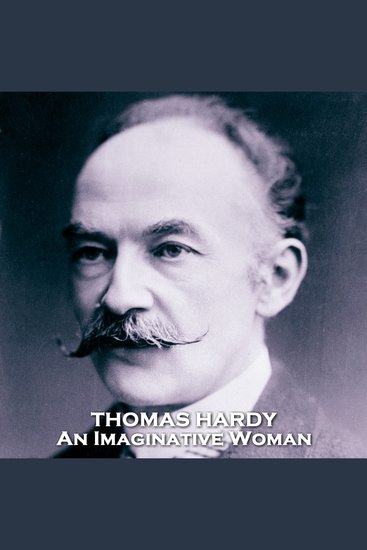
  • Imaginative Woman An - From their pens to your ears genius in every story - cover

    Imaginative Woman An - From...

    Thomas Hardy

    • 0
    • 0
    • 0
    Thomas Hardy was born in the hamlet of Upper Bockhampton about three miles east of Dorchester in Dorset, England, on 2nd June 1840.  
    Despite a fairly wide education and being an avid reader his parents thought it unlikely he would lead a successful scholarly or clerical career and he was apprenticed in 1856, at age 16, to a local architect whose speciality was in church restoration.  Hardy’s only opportunity to read was in the morning before work between the hours of five and eight.  
    On the back of a failed love affair he moved to London and spent five years working as an assistant to the architect Arthur Blomfield, also a restorer and designer of churches. Hardy though had by now become disillusioned with institutionalised forms of Christianity and abandoned any lingering hopes of ordination in the Anglican Church.  However, his writing of poetry was now flourishing, although it was still rejected for publication.  
    His novel ‘Desperate Remedies’, was published anonymously in 1871 and he now resolved to write full time though he was not yet in a position to achieve financial security or literary success. His second novel, ‘Under the Greenwood Tree’, appeared in 1872 and in 1873 ‘A Pair of Blue Eyes’, the most autobiographical of his works arrived. With ‘Far From the Madding Crowd’ in 1874, came critical acclaim, public attention and financial success. This was repeated in 1878 with ‘The Return of the Native’, and the ensuing years saw him rise to ever greater popularity.  
    His classic ‘The Mayor of Casterbridge’ arrived in 1886 and 5 years later ‘Tess of the d’Urbervilles’. The latter only saw publication after extensive alterations to its plot and the deletion of long passages to lessen the shock to the prudish Victorian audience who were dismayed by the seduction and ruin of a young girl by a rakish aristocrat.  
    ‘Jude the Obscure’, his last novel, suffered the same fate when it was published in 1895.  The uproar so disturbed him that he returned to poetry. In 1898 he had an earlier poetry collection, ‘Wessex Poems’ published. 
    Hardy spent the years between 1903 and 1908 writing ‘The Dynasts’, an epic poem on the Napoleonic Wars. 
    In his twilight years came honours and awards from the great and the good in recognition of his stature as one of the most outstanding of British authors across novels, short stories and poetry. George V conferred on him the Order of Merit in 1910. 
    From 1920 to 1927 he worked, in secret, on his autobiography, which was later published after his death as the work of his second wife, Florence Hardy.  
    Thomas Hardy OM died on the 11th January 1928. 
    His heart was buried alongside his first wife in Stinsford churchyard, Dorchester.
    Ver libro