Junte-se a nós em uma viagem ao mundo dos livros!
Adicionar este livro à prateleira
Grey
Deixe um novo comentário Default profile 50px
Grey
Assine para ler o livro completo ou leia as primeiras páginas de graça!
All characters reduced
The Citizen Soldier - Memoirs - cover
LER

The Citizen Soldier - Memoirs

John Beatty

Editora: DigiCat

  • 0
  • 0
  • 0

Sinopse

John Beatty's "The Citizen Soldier" emerges as a pivotal examination of the complexities entailed in the identity of the ordinary individual thrust into the tumult of war. Richly crafted with a narrative style that weaves together historical accounts and personal reflections, Beatty utilizes a blend of vivid imagery and compelling prose to explore themes of patriotism, sacrifice, and the blurred lines between duty and morality. Set against the backdrop of significant conflicts, the book opens a dialogue on what it truly means to serve one's country, challenging traditional notions of heroism and highlighting the emotional and psychological toll on the soldier. John Beatty, a distinguished historian and veteran, draws from his profound understanding of military history combined with his personal experiences to craft this poignant narrative. His extensive background in both academic and practical realms provides him with a unique vantage point from which to analyze the citizen soldier's experience in a manner that resonates deeply. Beatty's own journey through the ranks instills an authentic voice that permeates the text, making it not just a study of war, but a reflection of the human spirit under duress. For readers seeking a thoughtful and nuanced portrayal of military life, "The Citizen Soldier" is an essential addition to their collection. Beatty's work transcends the confines of traditional war literature, offering insights not only into the historical experience of soldiers but also into contemporary discussions about identity and belonging. This book is a compelling read for historians, veterans, and anyone interested in the complexities of military duty in a modern context.
Disponível desde: 11/10/2022.
Comprimento de impressão: 271 páginas.

Outros livros que poderiam interessá-lo

  • Uncivil War An - Taking Back Our Democracy in An Age of Trumpian Disinformation and Thunderdome Politics - cover

    Uncivil War An - Taking Back Our...

    Anônimo

    • 0
    • 0
    • 0
    The author of the Washington Post’s hugely influential ""Plum Line"" sounds the alarm on the subversion of our democracy by self-interested politicians, greedy plutocrats, foreign government hacking, racial prejudice, media propaganda and our own lack of vigilance, and what must be done to save it before it’s too late. 
    The sophistication and ambition of those now eroding American democracy by gaming the rules in their favor is unprecedented, including computer-generated gerrymandering, unreasonable voter ID laws, limitations on voting hours, a lack of convenient polling places, and efforts to disenfranchise likely Democratic voters. This has been accompanied by foreign government intervention and an unprecedented level of political disinformation that threatens to undermine the very possibility of shared agreement on facts and poses profound new challenges to the media’s ability to inform the citizenry. 
    Yet it would be wrong to think that the problem is that Republicans alone have learned how to work the system—our electoral process is undermining itself from within: its dysfunctional rules incentivize vicious partisan efforts to tilt the playing field, combining in a toxic escalation of polarization and a frightening corrosion of basic norms that threaten to totally eradicate fair play in politics. 
    In An Uncivil War, Washington Post journalist Greg Sargent vividly lifts the curtain on the nightmare dynamic that is transforming American politics into little more than a naked power struggle. Yet An Uncivil War is not only a thorough dissection of an ultimately immoral system, but a handbook for turning that around by restoring authentic democracy. Given the incredibly high stakes in 2018 and 2020, Sargent’s book could not be more essential.
    Ver livro
  • Dear Mr Snippet - A conversation in letters and diary entries from 1939 to 1945 - cover

    Dear Mr Snippet - A conversation...

    Roseanna Rolph

    • 0
    • 0
    • 0
    My dearest Mr Snippet… 
    World War II has just begun, and newly-married John, a young cadet army officer 
    from London, has been forced to leave behind his beloved wife Rita. As each of them 
    desperately try to hold onto their joint hopes and dreams, will fate grant them the future 
    they dream of, or will the unpredictabilities of a relentless war conspire against them? 
    Through their passionate, witty and heartfelt letters, personal diary entries and family 
    photographs, Dear Mr Snippet chronicles John and Rita’s parallel yet contrasting lives, 
    lived through the tensions and brutalities of World War II, Dunkirk and the Battle of 
    Normandy. 
    Collated by their granddaughter, Roseanna Rolph, Dear Mr Snippet is a truly 
    compelling and unique historical memoir that transports readers back to another time, 
    whilst shedding light on the struggles faced by military families to this day.
    Ver livro
  • The Great Famine of 1315-1317 - Europe's Darkest Hour - cover

    The Great Famine of 1315-1317 -...

    Sarah Willards

    • 0
    • 0
    • 0
    The Great Famine of 1315-1317 stands as one of the darkest periods in European history, marking a time of immense suffering, social upheaval, and devastation. It was not a single event but rather a prolonged crisis, which compounded existing vulnerabilities within medieval European society. The origins of the famine can be traced back to a confluence of environmental, social, and economic factors, all of which led to one of the worst food shortages ever experienced on the continent. 
    The famine’s roots can be found in the dramatic climatic changes of the early 14th century. The period known as the Little Ice Age brought cooler temperatures, and the years leading up to the famine saw unusual weather patterns. Prolonged rain, particularly during the summer months of 1315, led to flooding and crop failure, especially in regions dependent on staple grains like wheat, oats, and barley. The disastrous harvests were compounded by already strained food supplies and a growing population. 
    The impact of the famine was felt most acutely by the poorer classes, whose subsistence farming could not sustain them through such harsh conditions. The majority of the population in rural areas relied on farming for food and income, and with crops failing, their livelihoods were destroyed. Urban centers, though slightly better equipped to withstand hardship, faced sharp increases in food prices, making it difficult for even the wealthier classes to procure sustenance. Starvation, malnutrition, and poverty became widespread, leading to mass suffering across the continent.
    Ver livro
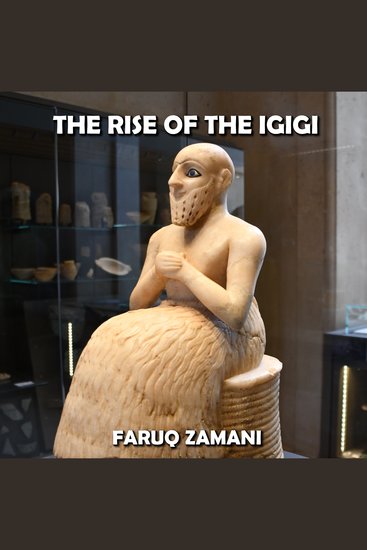
  • The Rise of the Igigi - How the Servants of the Anunnaki Revolted Against the Gods - cover

    The Rise of the Igigi - How the...

    Faruq Zamani

    • 0
    • 0
    • 0
    Igigi unrest leading to the Zu Incident was just a harbinger of other troubles to come-troubles inherent in long-term interplanetary missions, and female companionship was one of the significant problems. 
    The problem was less acute with the Earth-stationed Anunnaki since they contained females from the first landing party (some named and assigned tasks in Enki’s autobiography). In addition, a group of nurses led by their daughter of Anu was sent to Earth. She was known as Ninmah (= ‘Mighty Lady’); her role on Earth was that of Sud (= ‘One who gives succor’): she served as the Anunnaki’s Chief Medical Officer and was crucial to any subsequent events. 
    Its ancient tide echoed its opening words: Inuma ilu awilum (‘When the gods became like men’): however, there was also trouble among the Earth-based Anunnaki, especially those assigned to mining duties. Several unintended consequences resulted from the Anunnaki’s Mutiny in the Atra-Hasis Epic, which tells of an uprising by the Anunnaki who refused to work in the gold mines. 
    While the gods, like men, bore the toil and work. There was great toil for the gods, and the result was heavy; there was much distress. 
    The very Akkadian term, Awilu, means ‘employee,’ rather than simply ‘Man,’ as it is usually translated. In the Epic tale, the man takes over the work of the gods. Despite the absence of men on Earth, the gods toiled as though they were men. Enki and Ninmah achieved that feat, but it was not a story with a happy ending, as far as Enlil was concerned.
    Ver livro
  • My Last Date - An Authentic Heartwarming MM Romance - cover

    My Last Date - An Authentic...

    Casey Morales

    • 0
    • 0
    • 0
    After a thousand dates and hookups, I'd given up . . . 
    . . . then the doorbell rang. 
    Michael was a newborn gay not too many years ago. His first date was accidental. The ones that followed were adventures. 
    Now, in his thirties, he wonders if finding a lasting relationship is even possible. Frustrated by the internet's failure to help him find true love, Michael swears off dating and decides to focus on his career. 
    Then Heath shows up and rolls on the floor with Michael's furry best friend. The normally wary pup instantly falls for the irresistible stranger, but will Michael's heart bloom with also passion? 
    You'll love this book because everyone dreams of a happy ending. 
    Join Michael's journey today! 
    My Last Date is the final volume in the hilariously cheeky, best-selling Raised by Wolves series, a contemporary MM romance series about a newborn gay finding himself, told in the author's own voice. It explores the fullness of life, including hurt/comfort, found family, sexual awakening, love, loss and rebirth--and a guy who finally realizes who he is and what he wants.
    Ver livro
  • The Official CIA Manual of Trickery and Deception - cover

    The Official CIA Manual of...

    H. Keith Melton, Robert Wallace

    • 0
    • 0
    • 0
    A top-secret manual for training CIA field agents in deception and sleight-of-hand was thought to be a rumor…until a single surviving copy was discovered in the agency’s archives. 
    In 1953, a top-secret manual teaching agents sleight-of-hand and other deception techniques was written for the CIA by America’s then most famous magician. All copies were believed destroyed by the CIA’s purge of the infamous MKULTRA documents in 1973, and there was no proof of the manual’s existence . . . until a copy was discovered among the CIA’s recently declassified archives. 
    The manual in this work is thought to represent the only surviving copy of magician John Mulholland’s instructions: 
    Handling Tablets (preparing pills and tablets; hiding pills in hand, matchbook, wallet, and money) 
    Handling Powders (creating containers for holding powders; using duplicate pencils to make drops) 
    Handling Liquids (making containers to drop or spray liquids; using matchbooks, coins, wallets, cigarettes, and bare hands; creating distracting stories that are both rational and simple) 
    Removing Objects (mastering preparatory actions, timing, body position, and the art of distraction; making secret pockets; picking up and secretly folding paper) 
    Special Notes for Women (modifying earlier techniques for women’s use; using pocket mirrors, jewelry, cosmetics, handkerchiefs, and evening bags) 
    Working as a Team (Setting the roles of trickster and assistant; notes on the proper use of signals) 
    Along with the original text, espionage historian H. Keith Melton and longtime CIA gadgeteer Robert Wallace provides an introduction illuminating the history of CIA agent deception and dirty tricks, and the role of this secret manual in that highly controversial program.
    Ver livro