¡Acompáñanos a viajar por el mundo de los libros!
Añadir este libro a la estantería
Grey
Escribe un nuevo comentario Default profile 50px
Grey
Suscríbete para leer el libro completo o lee las primeras páginas gratis.
All characters reduced
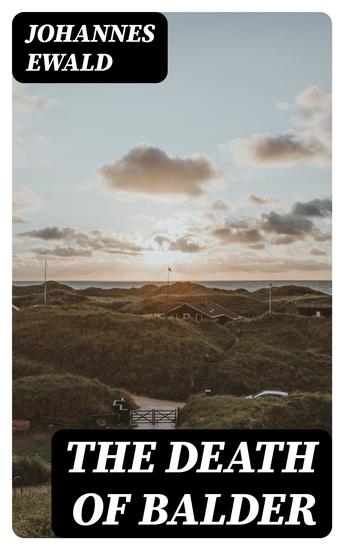
The Death of Balder - cover

The Death of Balder

Johannes Ewald

Traductor George Borrow

Editorial: DigiCat

  • 0
  • 0
  • 0

Sinopsis

In 'The Death of Balder,' Johannes Ewald intertwines the evocative themes of tragedy and myth in a profound exploration of the human condition. The play, steeped in Norse mythology, reincarnates the poignant tale of Balder, whose demise casts a shadow over the realms of gods and mortals alike. Ewald's lyrical style combines rich poetic language with dramatic dialogue, capturing the tension between fate and free will, while positioning his work in a broader Romantic context that favors emotion and nature as dominant forces. Johannes Ewald, a pivotal figure of the Danish Golden Age, drew inspiration from the tumultuous socio-political landscape of his time, as well as from his own personal struggles with illness and despair. His foray into mythology can be seen as an attempt to reconcile his own existential crises with timeless tales of gods and heroes, reflecting a deep-seated yearning for meaning amid chaos. Ewald's innovative blend of narrative and lyrical techniques marks his enduring legacy in Scandinavian literature. Readers intrigued by the intersections of mythology, philosophy, and poetry will find 'The Death of Balder' an essential addition to their literary repertoire. Ewald's masterful treatment of myth and emotion not only elevates the tragic narrative but also resonates with contemporary themes of loss and redemption, making it an evocative read for those seeking both beauty and depth.
Disponible desde: 16/09/2022.
Longitud de impresión: 132 páginas.

Otros libros que te pueden interesar

  • My Land of Freedom - A poem of war and freedom - cover

    My Land of Freedom - A poem of...

    Ifeanyi Njoku

    • 0
    • 0
    • 0
    This poem is a powerful reflection on war, displacement, and the struggle for freedom. It tells the tragic story of a people who fought for liberation but were met with violence, loss, and eventual surrender. Likely referencing the Igbo experience during the Nigerian Civil War, it captures the pain of oppression and the resilience of those who endured it. 
    The poem begins with a contradiction: "In my land of freedom, I walked with fear." This highlights the irony of living in a place meant to be free but being consumed by anxiety. The people demand justice, yet their cries are silenced by violence. The line "Killing our brothers, and leaving us undone" conveys both physical loss and emotional devastation. 
    The imagery of "scorching soil" and "separated from families" paints a picture of suffering and displacement. War does not just take lives—it tears families apart and leaves hearts unable to thrive. The mention of "refugee camps" emphasizes how many were forced from their homes, left to question their identity: "Are we unlucky, to be Igbo?" This speaks to a deep sense of abandonment and injustice. 
    The poem also highlights betrayal, as leaders fail to protect their people. "Everyone was a soldier, in this war we couldn't win." This line captures the grim reality of a war where survival itself was a battle. Despite their bravery, they were up against overwhelming forces. 
    The final lines are heartbreaking: "We had to surrender, and say goodbye to our pride." This is not just a loss of battle but a loss of dignity. Yet, even in surrender, their story lives on. This poem is a tribute to resilience, a reminder of suffering, and a call to remember those who fought, even when the world turned away.
    Ver libro
  • The Poetry of Thomas Chatterton - Despite tragically committing suicide at only 17 Chattertons influence would stretch far beyond his years being a huge spark to poets such as Shelley Keats Wordsworth and Coleridge - cover

    The Poetry of Thomas Chatterton...

    Thomas Chatterton

    • 0
    • 0
    • 0
    Thomas Chatterton was born in Bristol on 20th November 1752 some 15 weeks after the death of his father. For a time he was admitted to Edward Colston's Bristol charity school, on a limited curriculum of reading, writing, arithmetic and the catechism. 
      
    Although fascinated by the church of St Mary Redcliffe where his uncle was sexton, he was liable to fits of abstraction, sitting for hours in a trance or crying for no reason. When Chatterton was 8 he was so eager for books that he would read and write all day long and by 11 he had become a contributor to Felix Farley's Bristol Journal. He lived in thought with his 15th-century heroes and heroines. 
      
    The first of his literary mysteries, the dialogue of "Elinoure and Juga," was written before he was 12, and he showed it to the usher at the boarding school Colston's Hospital where he was a pupil, pretending it was the work of a 15th-century poet. Chatterton remained a boarder at Colston's Hospital for more than six years. His little pocket-money was spent borrowing books from a circulating library and always attempting to ingratiate himself with book collectors. 
      
    His holidays were mostly spent at his mother's house, and much of that in the attic study living for the most part in an ideal world of his own, centered on his mid-15th century imaginary world. 
      
    Chatterton soon conceived the romance of Thomas Rowley, an imaginary monk of the 15th century, and adopted for himself the pseudonym Thomas Rowley for poetry and history. He imagined he would become a famous poet who by his talents would be able to rescue his mother from poverty. 
      
    Chatterton needed a patron. Many were not interested. Horace Walpole was but discovering that the poems were most probably fake and Chatterton himself only 16 scornfully sent him away. 


    Badly hurt by Walpole's snub, Chatterton wrote very little for a summer. Then he turned his attention to periodical literature and politics, and the London periodicals. He was frequently published but received little reward for his startling efforts. 
      
    Chatterton wrote at Easter 1770, ‘‘Last Will and Testament,’’ a satirical mix in jest and seriousness. The will was possibly prepared so that John Lambert, the attorney to whom he was apprenticed, cancelled his indentures. His friends and acquaintances, having donated money, Chatterton proceeded to London. 
      
    He continued to write and publish in various styles and was paid little for his efforts. He wrote hopefully to his mother and sister, and spent his first earnings in buying gifts for them. 
      
    In June 1770, after nine weeks in London, he moved from a shared room in Shoreditch to an attic in Brook Street, Holborn. He now enjoyed uninterrupted solitude and now could write all night. The romance of his earlier years revived, and he transcribed from an imaginary parchment of the old priest Rowley his "Excelente Balade of Charitie." This poem, disguised in archaic language, he sent to the editor of the Town and Country Magazine, where it was rejected. 
      
    A neighbouring apothecary, repeatedly invited him to come for dinner or supper; but he refused. His landlady also, suspecting his necessity, pressed him to share her dinner, but in vain. "She knew," as she afterwards said, "that he had not eaten anything for two or three days." But he assured her that he was not hungry. 
      
    In August 1770, while walking in St Pancras Churchyard, Chatterton was much absorbed in thought, and did not notice a newly dug open grave in his path, and subsequently tumbled into it. His walking companion helped Chatterton out of the grave, and told him that he was happy in assisting at the resurrection of a genius. Chatterton replied, "My dear friend, I have been at war with the grave for some time now." 
     
    On 24th August 1770, Thomas Ch
    Ver libro
  • Stumbling and other poems - cover

    Stumbling and other poems

    Laura Quinney

    • 0
    • 0
    • 0
    Most poets recollect or describe the present. In her third book of poems, Laura Quinney (whose “superbly spare meditations” Harold Bloom compared to the poetry of Paul Celan and Emily Dickinson) does something more uncanny: recalling what it once was like to anticipate the future, she remembers what she thought the past would look like from the present moment, and in so doing deepens the meaning of memory. This is her third book of poetry.
    Ver libro
  • Things That Happen - And Other Poems (Unabridged) - cover

    Things That Happen - And Other...

    Bhaskar Chakrabarti

    • 0
    • 0
    • 0
    Bhaskar Chakrabarti's poetry is synonymous with the romantic melancholia inherent to Calcutta. His trenchant poetic voice was one of the most significant to emerge in the 1960s and '70s-perhaps the most prolific period of modern Bengali poetry. Spanning the rise of militant leftism, the spread of crippling poverty across India, the war in Bangladesh, the influx of millions of refugees, the dark, dictatorial days of Indira Gandhi's reign, and the disillusionment of communist rule in Bengal, Chakrabarti's poems plumb the depths of urban angst, expressing the spirit of sadness and alienation in delicate metaphors wrapped in deceptively lucid language.
    
    In this first-ever comprehensive translation of Chakrabarti's work, award-winning translator Arunava Sinha masterfully articulates that clarity of vision, retaining the unique cadence and idioms of the Bengali language. Presenting verses and prose poems from all of Chakrabarti's life-from his first volume, When Will Winter Come, published in 1971, to his last, The Language of Giraffes, published just before his death in 2005, and collecting several unpublished works as well-Things That Happen and Other Poems introduces the world to a brilliant and universal poetic voice of urban life.
    Ver libro
  • The Poetry of Ambrose Bierce - Civil war veteran Bierce whose works are inspired by his time spent serving is commonly known for his short stories but was also proficient in poetry which we showcase here - cover

    The Poetry of Ambrose Bierce -...

    Ambrose Bierce

    • 0
    • 0
    • 0
    Ambrose Gwinnett Bierce was born on 24th June 1842 at Horse Cave Creek in Meigs County, Ohio. His parents were poor but they introduced him to literature at an early age, instilling in him a deep appreciation of books, the written word and the elegance of language.  
     
    Growing up in Koscuisko County, Indiana poverty and religion were defining features of his childhood, and he would later describe his parents as “unwashed savages” and fanatically religious, showing him little affection but always quick to punish. He came to resent religion, and his introduction to literature appears to be their only positive effect. 
     
    At age 15 Bierce left home to become a printer’s devil, mixing ink and fetching type at The Northern Indian, a small Ohio paper. Falsely accused of theft he returned to his farm and spent time sending out work in the hopes of being published. 
     
    His Uncle Lucius advised he be sent to the Kentucky Military Institute. A year later he was commissioned as an Officer.  As the Civil War started Bierce enlisted in the 9th Indiana Infantry Regiment.  
     
    In April 1862 Bierce fought at the Battle of Shiloh, an experience which, though terrifying, became the source of several short stories. Two years later he sustained a serious head wound and was off duty for several months. He was discharged in early 1865.  
     
    A later expedition to inspect military outposts across the Great Plains took him all the way to San Francisco. He remained there to become involved with publishing and editing and to marry, Mary Ellen on Christmas Day 1871.  They had a child, Day, the following year.  
     
    In 1872 the family moved to England for 3 years where he wrote for Fun magazine. His son, Leigh, was born, and first book, ‘The Fiend’s Delight’, was published. 
    They returned to San Francisco and to work for a number of papers where he gained admiration for his crime reporting. In 1887 he began a column at the William Randolph Hearst’s San Francisco Examiner.  
     
    Bierce’s marriage fell apart when he discovered compromising letters to his wife from a secret admirer. The following year, 1889 his son Day committed suicide, depressed by romantic rejection. 
     
    In 1891 Bierce wrote and published the collection of 26 short stories which included ‘An Occurrence at Owl Creek Bridge’.  Success and further works including poetry followed.  
     
    Bierce with Hearst’s resources helped uncover a financial plot by a railroad to turn 130 million dollars of loans into a handout. Confronted by the railroad and asked to name his price Bierce answered “my price is $130 million dollars. If, when you are ready to pay, I happen to be out of town, you may hand it over to my friend, the Treasurer of the United States”.  
     
    He now began his first foray as a fabulist, publishing ‘Fantastic Fables’ in 1899.  But tragedy again struck two years later when his second son Leigh died of pneumonia relating to his alcoholism. 
     
    He continued to write short stories and poetry and also published ‘The Devil’s Dictionary’.  
     
    At the age of 71, in 1913 Bierce departed from Washington, D.C., for a tour of the battlefields where he had fought during the civil war. At the city of Chihuahua he wrote his last known communication, a letter to a friend. It’s closing words were “as to me, I leave here tomorrow for an unknown destination,” Ambrose Bierce then vanished without trace.   
     
    As a poet Bierce once again uses words to infuse his verse with both beauty and sharp wit as he writes on subjects that range from the off-beat and whimsical to incisive views on society, its revels and its torments. 
     
    1 - The Poetry of Ambrose Bierce - An Introduction 
    2 - An Alibi by Ambrose Bierce 
    3 - The Legatee by Ambrose Bierce 
    4 - Justice by Am
    Ver libro
  • How We Begin - cover

    How We Begin

    Elisabeth Lewerenz

    • 0
    • 0
    • 0
    Helen and Diana are perfect for each other: they've both got good degrees, busy jobs and nice flats. There's just one small problem – Diana's got a boyfriend.
    Elisabeth Lewerenz's play How We Begin is a tender exploration of love, queerness and identity. It was staged at VAULT Festival, London, in 2023, and won the VAULT Festival Award at the OffFest Theatre Festival Awards in 2024. An earlier version was staged at the King's Head Theatre, Islington, in 2019.
    Ver libro