¡Acompáñanos a viajar por el mundo de los libros!
Añadir este libro a la estantería
Grey
Escribe un nuevo comentario Default profile 50px
Grey
Suscríbete para leer el libro completo o lee las primeras páginas gratis.
All characters reduced
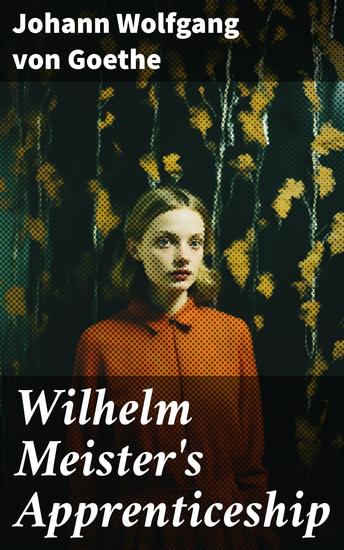
Wilhelm Meister's Apprenticeship - German Literature Classic - cover

Wilhelm Meister's Apprenticeship - German Literature Classic

Johann Wolfgang von Goethe

Traductor Thomas Carlyle

Editorial: Good Press

  • 0
  • 0
  • 0

Sinopsis

In "Wilhelm Meister's Apprenticeship," Johann Wolfgang von Goethe embarks on a profound exploration of self-discovery and societal roles through the journey of its titular character, Wilhelm. Written in the early 18th century, this seminal work encapsulates elements of the Bildungsroman genre, elucidating the intricacies of personal and artistic development as Wilhelm navigates love, ambition, and morality against the backdrop of Enlightenment ideals. Goethe's rich narrative style intertwines philosophical reflections with vibrant descriptions, creating a tapestry that reflects the complexities of human experience while addressing the tensions between individual aspirations and societal expectations. Goethe, a leading figure of the Sturm und Drang literary movement, was influenced by his own experiences in the realms of art, theater, and politics. His deep appreciation for the transformative power of art and intellectual pursuit is palpable in the novel, which mirrors his quest for a harmonious balance between passion and rationality. This journey reflects Goethe's own struggles to reconcile personal desires with the demands of his time, offering insight into the universal search for identity. "Wilhelm Meister's Apprenticeship" is an essential read for anyone seeking to understand the intricacies of personal growth and the philosophical currents of the late Enlightenment. Its timeless themes resonate with contemporary readers, making it a vital addition to the library of any admirer of literary mastery and self-exploration.
Disponible desde: 03/12/2023.
Longitud de impresión: 633 páginas.
Otros libros que te pueden interesar

  • The House Of The Arrow - cover

    The House Of The Arrow

    A.E.W. Mason

    • 0
    • 0
    • 0
    A young English girl is accused in Dijon of murdering her French aunt. Hanaud to the rescue! Inspector Hanaud is a member of the French Sûreté. He is said to have been the model for Agatha Christie’s Hercule Poirot, as well as the opposite of Conan Doyle’s Sherlock Holmes. In 1910, Mason undertook to create a fictional detective as different as possible from Sherlock Holmes, who had recently been resuscitated after his supposed death by Arthur Conan Doyle in 1903. Inspector Gabriel Hanaud was stout, not gaunt like Holmes; a professional policeman, not a gentleman amateur; from the French Sûreté, not Victorian England; and relying on psychological insights rather than physical evidence. His "Watson" is a retired London banker named Mr. Julius Ricardo, though he appears only briefly in this novel.
    Ver libro
  • A Christmas Tree - cover

    A Christmas Tree

    Charles Dickens

    • 0
    • 0
    • 0
    "I have been looking at a real Christmas tree, which stood in the middle of a great round table."
    
    Before the world knew the full breadth of his holiday legacy, Charles Dickens penned this enchanting "meditation" on the centerpiece of the Victorian home. A Christmas Tree is not a traditional narrative, but a brilliant stream-of-consciousness exploration of memory. Looking upon the glittering branches of a tree, Dickens takes the reader on a nostalgic tour of the toys, the stories, and the spectral shadows that define our earliest holiday experiences.
    
    A Toybox of the Imagination: Dickens vividly recreates the wonder of a child's world. He describes the "tumbling" dolls, the magic lanterns, and the leaden soldiers that once sparked his own imagination. Through his prose, we see the tree not just as a decoration, but as a living record of our growth—from the tangible excitement of childhood play to the more reflective, often haunting, memories of adulthood.
    
    Ghosts of Christmas Past: In typical Dickensian fashion, the light of the tree is balanced by the shadows of the fire. The story delves into the "ghost stories" that were once an essential part of the midwinter tradition. Dickens reminds us that the holiday season is a time for remembering those who are no longer at the table, blending warmth with a poignant, Gothic sensibility that is uniquely his own.
    
    Experience the heart of the holidays through the eyes of a master. Purchase "A Christmas Tree" today and rediscover the timeless magic of the season.
    Ver libro
  • Bartleby - cover

    Bartleby

    Herman Melville

    • 0
    • 0
    • 0
    "Bartleby, the Scrivener: A Story of Wall Street" is a short story by the American writer Herman Melville, first serialized anonymously in two parts in the November and December 1853 issues of Putnam's Magazine.
    Ver libro
  • Old Age - cover

    Old Age

    Anton Chekhov

    • 0
    • 0
    • 0
    In Old Age by Anton Chekhov we have the theme of change, loss, renewal, memories, guilt and despair. Taken from his The Complete Stories collection the story is narrated in the third person by an unnamed narrator and very early on in the story the reader realises that Chekhov may be exploring the theme of change. Since Uzelkov has returned to his hometown he cannot imagine the differences the town has undertaken. It is not the place that he has left and there is a sense of modernity. Even the old waiter cannot remember the parts of the town that Uzelkov can. What is also interesting about the town is that Uzelkov has many memories there. Including marrying and divorcing his first wife there. But this seems like a distant memory and only Shapkin can recall the marriage and the divorce. For he was responsible for the legal case and was paid handsomely for his duties.
    Over all Old Age is sad tale that lets the reader know that despite the passing of time, time is not a great healer and that the only real winner is Shapkin.
    Ver libro
  • Yah! Yah! Yah! - cover

    Yah! Yah! Yah!

    Jack London

    • 0
    • 0
    • 0
    “Yah! Yah! Yah!” written by Jack London: He was a whiskey-guzzling Scotchman, and he downed his whiskey neat, beginning with his first tot punctually at six in the morning, and thereafter repeating it at regular intervals throughout the day till bedtime, which was usually midnight. He slept but five hours out of the twenty-four, and for the remaining nineteen hours he was quietly and decently drunk. During the eight weeks I spent with him on Oolong Atoll, I never saw him draw a sober breath. In fact, his sleep was so short that he never had time to sober up. It was the most beautiful and orderly perennial drunk I have ever observed.
    Ver libro
  • Mary E Mann - A Short Story Collection - A selection of stories from the underrated author Mary E Mann who wrote primarily about poverty and the struggle of rural life - cover

    Mary E Mann - A Short Story...

    Mary E. Mann

    • 0
    • 0
    • 0
    Mary Rackham was born in Norwich on 14th August 1848 to a merchant family.  Little is known of her early life and her biography only re-appears in September 1871 with marriage to Fairman Joseph Mann, a farmer with 800 acres.   
     
    Mary moved to Shropham, Norfolk and became involved with the workhouse, visiting the sick and other unfortunates of the parish, her observations and experiences a valuable source for her later stories.  
     
    She took up writing, partly to offset the dreary village life of her surroundings, in the 1880s and published her first novel, ‘The Parish of Hilby’ (1883) at her own expense. It was well received by the critics.  
     
    Thus began a career that spanning three decades provided thirty-three novels, hundreds of short stories, and fourteen plays.? Her work was largely focused on rural life in Norfolk and centered on the fictional town of Dulditch, with grim but authentic accounts of poverty and deprivation.  
     
    Her marriage produced one boy and three girls. With her husband's death in 1913, she moved to Sheringham.  
     
    She is regarded as a major contributor to East Anglian literature with particular praise given to her short stories. 
     
    Mary E Mann died on 19th May 1929.  She was 80.  Her grave-marker is a carved open book with the epitaph ‘We bring our years to an end, as if it were a tale that is told’. 
     
    1 - The Short Stories of Mary E Mann - An Introduction 
    2 - Wolf Charlie by Mary E Mann 
    3 - Ben Pitcher's Elly by Mary E Mann 
    4 - Some of the Shipwrecked by Mary E Mann 
    5 - Rats by Mary E Mann 
    6 - Clomayne's Clerk by Mary E Mann 
    7 - The Country Doctor by Mary E Mann 
    8 - Little Brother by Mary E Mann
    Ver libro