¡Acompáñanos a viajar por el mundo de los libros!
Añadir este libro a la estantería
Grey
Escribe un nuevo comentario Default profile 50px
Grey
Suscríbete para leer el libro completo o lee las primeras páginas gratis.
All characters reduced
The Essential Works of Goethe - cover

The Essential Works of Goethe

Johann Wolfgang von Goethe

Traductor Thomas Carlyle, Bayard Taylor, James Anthony Froude, John Oxenford, A. J. W. Morrison, R. Dillon Boylan, Thomas Bailey Saunders, Charles Lock Eastlake, Hjalmar Hjorth Boyesen, Walter Scott

Editorial: DigiCat

  • 0
  • 0
  • 0

Sinopsis

In "The Essential Works of Goethe," the illustrious German writer Johann Wolfgang von Goethe presents a masterful compilation of his literary contributions, which encompass poetry, drama, philosophy, and scientific writings. Richly woven with the threads of Romanticism and Enlightenment thought, this anthology showcases Goethe's profound explorations of human existence, the nuances of love, nature's beauty, and the quest for self-knowledge. His eloquent prose and vivid imagery invite readers into a deeply introspective world, rendering complex themes accessible and profoundly engaging. Goethe's works are not only intertwined with the narrative of European thought, but they also reflect the turbulent socio-political landscapes of his time, encapsulating an era defined by both optimism and uncertainty. Goethe, a luminary in the canon of Western literature, possessed a diverse intellect and wide-ranging interests, which inspired his artistic output. His upbringing in Frankfurt, exposure to classical literature, and experiences in Italy greatly influenced his style and thematic preoccupations. Beyond poetry and drama, his ventures into natural philosophy also informed his literary pursuits, resulting in a harmonious blend of science and art that is unmistakably Goethe. For readers seeking a deeper understanding of the human condition through the lens of one of the most significant figures in literature, "The Essential Works of Goethe" is an indispensable resource. This anthology not only enriches one's appreciation of German literary heritage but also offers timeless insights that resonate with contemporary audiences, making it a must-read for scholars, students, and anyone captivated by the beauty of language and thought.
Disponible desde: 28/12/2023.
Longitud de impresión: 3965 páginas.
Otros libros que te pueden interesar

  • The Awakened Empath Bundle 2 in 1 Bundle: - cover

    The Awakened Empath Bundle 2 in...

    Ari Camran, Cate Orrell

    • 0
    • 0
    • 0
    The Awakened Empath Bundle, 2 in 1 Bundle: Empath's Survival Guide and Empath AbilitiesPeople have common misconceptions about being empathetic and being an empath. To state the obvious, these are two different concepts.  Being empathetic is when our hearts feel for another individual who is going through a period of crisis. Empathy gives us the power to think about, understand, and care about each other. Empath people, however, detect their energy, emotions, and physiological symptoms in them. They are usually more accurate in recognizing emotions just by looking through their body language. They are also more likely to acknowledge emotions prior to others and rate those emotions as being more intense.In this bundle, you will learn how to build and enhance your empathy. It will teach you sensible and time-tested tips you can use to rise above personal biases and become kinder, more forgiving, more accepting, and more loving toward other people. It will also be a guide for empaths.This 2 in 1 bundle includes the following audiobooks:1. Empath's Survival Guide: An Empath's Guide on How to Become Emotionally and Spiritually Healthy to Be the Best Version of Yourself2. Empath Abilities: Learn About the Power of Empathy and How it Can Significantly Enrich Your Life Plus Tips on How to Enhance Your EmpathyIf you want to learn more, download your copy of The Awakened Empath Bundle today!
    Ver libro
  • Black Women Affirmations and Emotional Self-Care - cover

    Black Women Affirmations and...

    EasyTube Zen Studio

    • 0
    • 0
    • 0
    2 books in 1999 Powerful Affirmations for Black WomenDear black woman,You are beautiful, powerful, effervescent. Yet the weight of the world seeks to dim your glow, gnaw at your strengths, and dull your spark.Whenever you feel alone, remember that there have been many others in your shoes once. Now, look at how they shine — brimming with self-love, optimism, confidence, motivation, vigor, power, and success.You see, there is an upside to the gloom and doom: it serves as the canvas for your light.So, stoke the frozen embers and give way to a brighter, happier, more confident YOU with the help of “999 Powerful Affirmations for Black Women”.Here is where you will find powerful daily affirmations to hack your mind to positivity, confidence, health, money, success, and motivation.In this compelling book, you will find 999 affirmations that will help you to:Put yourself firstLove yourself again after a terrible experienceBuild your strength in the midst of anxiety and stressImprove your sleep quality and rejuvenate your entire beingMake you feel beautiful againSeek joy in everything you doStep out of your comfort zone with confidence and easeStay true to your authentic selfAnd so much more!Emotional Self-Care for Black WomenAre you a black woman who's struggling to find motivation and meaning in your life?Have you felt like your efforts are futile because nothing you do feels like it's making an impact?Do you wish you could just become the confident, self-assured woman you've always dreamed yourself to be?You're not alone in this struggle.Many black women like us are struggling with the same feelings of helplessness when it comes to our personal and professional lives.This lack of motivation often causes us to struggle with anxiety, depression, low self-esteem, self-doubt, and other mental and emotional issues.
    Ver libro
  • The Legend of Atlantis - Myths and Mysteries of the Lost Continent - cover

    The Legend of Atlantis - Myths...

    Julia Blacksmith

    • 0
    • 0
    • 0
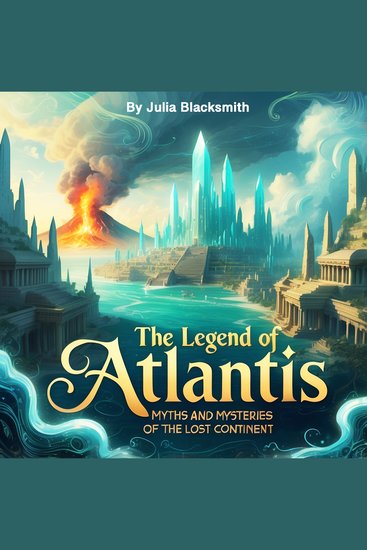
    The legend of Atlantis has captivated human imagination for over two millennia. First introduced by the ancient Greek philosopher Plato in his dialogues Timaeus and Critias, Atlantis was described as a powerful and advanced civilization that mysteriously vanished beneath the sea. According to Plato, Atlantis existed around 9,000 years before his time and was a utopian society of great wealth, wisdom, and military might. However, its people grew corrupt, leading to their downfall when the gods punished them with a catastrophic flood. While many scholars argue that Atlantis was purely a philosophical allegory, others have dedicated their lives to searching for evidence of its existence.  
    Numerous theories have emerged over the centuries, each attempting to explain whether Atlantis was a real place or a fictional construct. Some believe Plato’s account was based on real historical events, possibly inspired by the volcanic eruption that destroyed the Minoan civilization on the island of Santorini. Others speculate that Atlantis was an advanced prehistoric civilization that disappeared due to natural disasters. Conversely, skeptics argue that Plato intended Atlantis as a cautionary tale about human hubris, using it as a metaphor for the dangers of moral and political corruption.  
    Beyond academic debates, Atlantis has remained a significant part of global culture. The story has inspired countless books, movies, and television shows, often portraying the lost civilization as a mystical underwater world or a hidden realm of extraordinary technology. Fictional adaptations range from early modern utopian literature to modern conspiracy theories suggesting that Atlanteans possessed knowledge far beyond that of other ancient civilizations. Even today, the idea of a lost, technologically advanced society continues to fuel speculation and excitement, especially among those fascinated by ancient mysteries and alternative history. 
    Ver libro
  • Persuasion - The Act of Convincing Someone to Change Their Beliefs or Actions - cover

    Persuasion - The Act of...

    Cito Harder

    • 0
    • 0
    • 0
    Persuasion is an integral part of human interaction, deeply embedded in how we communicate and influence others in various aspects of life. It involves the art of convincing someone to change their beliefs, attitudes, or behaviors, often through reasoning, emotional appeal, or both. Whether it’s a political leader attempting to sway voters, a marketer aiming to sell a product, or an individual trying to resolve a conflict, persuasion is a tool that enables individuals to shape others’ thoughts and actions. Understanding persuasion is essential not only to comprehend how others influence us but also to understand how we can use it ethically to influence others in return. 
    At its core, persuasion is about changing the way people think or act without forcing them into compliance. It is often misunderstood as a form of manipulation, but while both involve influencing others, manipulation typically involves deceit or coercion, whereas persuasion focuses on genuine reasoning and voluntary agreement. The ethical boundaries between persuasion and manipulation are significant, and understanding where persuasion becomes harmful is an important distinction in the study of this process. 
    One of the most significant aspects of persuasion is its psychological foundation. Persuasion works through the understanding of human cognition, emotions, and behavior. People are naturally influenced by their emotions, biases, and the social context in which they find themselves. Cognitive biases such as the bandwagon effect, anchoring, and authority bias can make individuals more susceptible to persuasive messages. This means that the context, presentation, and emotional appeal can have a profound impact on how persuasive an argument or idea is.
    Ver libro
  • Answer to the Question An: What is Enlightenment? - cover

    Answer to the Question An: What...

    Immanuel Kant

    • 0
    • 0
    • 0
    "Answering the Question: What Is Enlightenment?" is a 1784 essay by the philosopher Immanuel Kant. In the December 1784 publication of the Berlinische Monatsschrift (Berlin Monthly), edited by Friedrich Gedike and Johann Erich Biester, Kant replied to the question posed a year earlier by the Reverend Johann Friedrich Zöllner, who was also an official in the Prussian government. Zöllner's question was addressed to a broad intellectual public community, in reply to Biester's essay entitled: "Proposal, not to engage the clergy any longer when marriages are conducted" (April 1783) and a number of leading intellectuals replied with essays, of which Kant's is the most famous and has had the most impact. Kant's opening paragraph of the essay is a much-cited definition of a lack of enlightenment as people's inability to think for themselves due not to their lack of intellect, but lack of courage.
    Kant's essay also addressed the causes of a lack of enlightenment and the preconditions necessary to make it possible for people to enlighten themselves. He held it necessary that all church and state paternalism be abolished and people be given the freedom to use their own intellect. Kant praised Frederick II of Prussia for creating these preconditions. Kant focused on religious issues, saying that "our rulers" had less interest in telling citizens what to think in regard to artistic and scientific issues.
    Ver libro
  • 1932 - FDR Hoover and the Dawn of a New America - cover

    1932 - FDR Hoover and the Dawn...

    Scott Martelle

    • 0
    • 0
    • 0
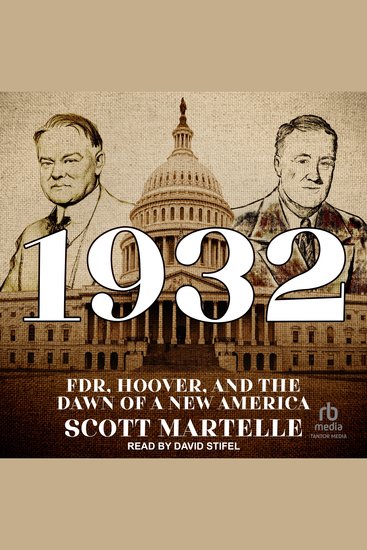
    At the start of 1932, the nation's worst economic crisis has left one-in-four workers without a job, countless families facing eviction, banks shutting down as desperate depositors withdraw their savings, and growing social and political unrest. Amid this turmoil, a political decision looms that will determine the course of the nation. It's a choice between two men with very different visions of America: Incumbent Republican Herbert Hoover and New York's Democratic Governor Franklin Delano Roosevelt. 


    Veteran journalist Scott Martelle provides a gripping narrative retelling of that vitally significant year as social and political systems struggled under the weight of the devastating Dust Bowl, economic woes, rising political protests, and growing demand for the repeal of Prohibition. That November, voters overwhelmingly rejected decades of Republican rule and backed Roosevelt and his promise to redefine the role of the federal government while putting the needs of the people ahead of the wishes of the wealthy. 


    Deftly told, this illuminating work spotlights parallel events from that pivotal year and brings to life figures who made headlines in their time but have been largely forgotten today. Ultimately, it is the story of a nation that, with the help of a leader determined to unite and inspire, took giant steps toward a new America.
    Ver libro