¡Acompáñanos a viajar por el mundo de los libros!
Añadir este libro a la estantería
Grey
Escribe un nuevo comentario Default profile 50px
Grey
Suscríbete para leer el libro completo o lee las primeras páginas gratis.
All characters reduced
Faust; a Tragedy Translated from the German of Goethe - cover

Faust; a Tragedy Translated from the German of Goethe

Johann Wolfgang von Goethe

Traductor Charles Timothy Brooks

Editorial: DigiCat

  • 0
  • 0
  • 0

Sinopsis

In "Faust; a Tragedy, Translated from the German of Goethe," the renowned German literary giant Johann Wolfgang von Goethe explores profound themes of human desire, ambition, and the quest for knowledge. This monumental work, first published in the early 19th century, is characterized by its intricate verse and philosophical depth, merging elements of Romanticism with classical influences. Through the character of Faust, who makes a pact with Mephistopheles in pursuit of ultimate wisdom and earthly pleasures, Goethe delves into the moral dilemmas humans face when confronting the limitations of their existence, thus situating his work within the broader European context of existential inquiry and the struggle between enlightenment and superstition. Goethe, a polymath and pivotal figure of the Sturm und Drang movement, drew upon his diverse experiences in science, philosophy, and politics to craft this profound tragedy. His lifelong fascination with duality and the human spirit's aspirations is reflected in Faust's character. Goethe's own struggles with forgiveness, reconciliation, and the pursuit of self-knowledge shine through his vigilant narrative, adding layers of personal insight to the universal themes embedded in the text. "Faust" is an essential read for anyone seeking to comprehend the complexities of human nature and moral philosophy. Goethe's eloquent prose invites readers into a world where ambition can lead to both enlightenment and despair. Engaging with this tragic masterpiece is not only a literary journey but an exploration of the timeless questions that challenge humanity, making it indispensable for scholars, students, and literary enthusiasts alike.
Disponible desde: 02/06/2022.
Longitud de impresión: 194 páginas.

Otros libros que te pueden interesar

  • Alice in Wonderland - cover

    Alice in Wonderland

    Lewis Carroll

    • 0
    • 0
    • 0
    "Alice's Adventures in Wonderland," written by Lewis Carroll in the mid-19th century, is a classic children's novel. The story follows a young girl named Alice, who, feeling bored and sleepy while sitting by a riverbank, encounters a White Rabbit. Intrigued, she follows the Rabbit down a rabbit hole and plunges into a fantastical world filled with curious creatures and whimsical adventures. 
    At the beginning of the book, Alice daydreams about her surroundings before spotting the flustered and animated White Rabbit. Her curiosity leads her to pursue the Rabbit, resulting in her tumbling down a deep rabbit hole. This brings her to a curious hall filled with locked doors. As she navigates this new world, Alice experiences a series of bizarre changes in size after eating and drinking mysterious substances.  
    Initially frustrated by the challenges posed by her fluctuating size and the peculiar inhabitants she encounters, Alice begins to explore her surroundings. The narrative sets the tone for her whimsical and often nonsensical adventures, which characterize the entire tale.
    Ver libro
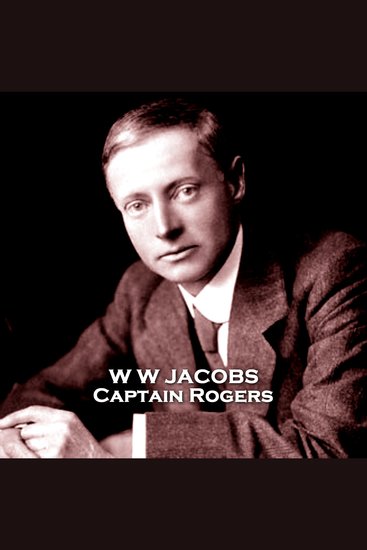
  • Captain Rogers - From their pens to your ears genius in every story - cover

    Captain Rogers - From their pens...

    W Jacobs

    • 0
    • 0
    • 0
    William Wymark Jacobs was born on 8th September 1863 in Wapping, East London.  
    He was educated at a private school and then Birkbeck Literary and Scientific Institution, now part of the University of London. 
    In 1879, Jacobs began work as a clerk in the civil service, in the Post Office Savings Bank.  In 1885 his first short story was published but it was not until almost the turn of the century that he would abandon his post office career to that as a full-time writer. By then he was a very popular author, his collections selling extremely well and with an excellent income. 
    His best-known work is the macabre ‘The Monkey's Paw’ and he is also highly regarded for his ghost stories although much of his remaining short story output is streaked with humour.  His characters are immediately identifiable and we all know that life will take chunks out of them in no time at all.  
    Jacobs married the noted suffragette Agnes Eleanor Williams in 1900 at West Ham, Essex. They went on to have two daughters and three sons as they settled down to life.  
    By the outbreak of the First World War his literary output had declined and he now mainly spent his time rewriting his earlier stories for the stage.  In all he wrote 18 plays. 
    W W Jacobs died on 1st September 1943 at Hornsey Lane, Islington in London. He was 79.
    Ver libro
  • The Cat That Walked by Himself - The First Jungle Book - cover

    The Cat That Walked by Himself -...

    Rudyard Kipling

    • 0
    • 0
    • 0
    'The Cat that Walked by Himself' is one of the most well-loved of Kipling's Just So Stories.
    This is a story about a cat who liked to walk wherever he wanted. Everything happened at those times when the animals were wild. They lived separately from people. The man was also wild. But he met the woman. She found a nice dry cave and made it their house. They were happy there. One evening the wild dog came to the cave. The woman promised the dog tasty bones for guarding her cave. Later the wild cow and the wild horse also came. She promised fresh grass to the cow and the horse for fresh milk and help with the housework. The cat watched it. He also wanted to be near fire and drink warm milk. Still the cat wanted to walk by himself as usual. The woman did not need such an animal. She needed useful animals. So she made a bargain with the cat.
    Ver libro
  • Psychology - cover

    Psychology

    Katherine Mansfield

    • 0
    • 0
    • 0
    "Psychology" is a 1920 short story by Katherine Mansfield. It was first published in Bliss and Other Stories.
    A man visits a woman for tea. He tells her this is the only place he pays attention to in terms of its furniture and so on. He also loves her 'little boy'. They then talk about the state of the novel as a literary genre - coming to the conclusion that the psycho-novel is shoddy. She feels anguished about possibly having failed in not following suit with that genre however, and he leaves...
    Ver libro
  • Gale of Wind A (Unabridged) - cover

    Gale of Wind A (Unabridged)

    William Clark Russell

    • 0
    • 0
    • 0
    William Clark Russell (24 February 1844 - 8 November 1911) was an English writer best known for his nautical novels. At the age of 13 Russell joined the United Kingdom's Merchant Navy, serving for eight years. The hardships of life at sea damaged his health permanently, but provided him with material for a career as a writer. He wrote short stories, press articles, historical essays, biographies and a book of verse, but was known best for his novels, most of which were about life at sea. He maintained a simultaneous career as a journalist, principally as a columnist on nautical subjects for The Daily Telegraph.
    A GALE OF WIND: At midnight Holdsworth came on deck to relieve the second mate. A man out of the port watch came to the wheel, and stood yawning, scarcely awake. The night was dark a hazy atmosphere, through which the stars gleamed sparely, and the sea like ebony.
    Ver libro
  • The Promissory Note - cover

    The Promissory Note

    Lucy Maud Montgomery

    • 0
    • 0
    • 0
    Lucy Maud Montgomery (November 30, 1874 – April 24, 1942), published as L. M. Montgomery, was a Canadian author best known for a series of novels beginning in 1908 with Anne of Green Gables. The book was an immediate success. The title character, orphan Anne Shirley, made Montgomery famous in her lifetime and gave her an international following.
    The Promissory Note: Ernest Duncan swung himself off the platform of David White's store and walked whistling up the street. Life seemed good to Ernest just then. Mr. White had given him a rise in salary that day, and had told him that he was satisfied with him.
    Ver libro