Junte-se a nós em uma viagem ao mundo dos livros!
Adicionar este livro à prateleira
Grey
Deixe um novo comentário Default profile 50px
Grey
Assine para ler o livro completo ou leia as primeiras páginas de graça!
All characters reduced
Peak Human - What We Can Learn from the Rise and Fall of Golden Ages - cover

Sentimos muito, os direitos editoriais deste livro não permitem que o mesmo seja lido desde o pais que esta tentando se conectar.

Peak Human - What We Can Learn from the Rise and Fall of Golden Ages

Johan Norberg

Editora: Atlantic Books

  • 0
  • 0
  • 0

Sinopse

'Deftly punctures popular misconceptions... Could a history book be more timely?' The Economist

'Engaging and persuasive' New Statesman

'A compelling and timely study of what drove history's most influential civilisations... the book comes with impeccable timing... An entertaining and informative read for anyone interested in the forces that shape how civilisations progress' Financial Times


Golden ages are marked by periods of spectacular cultural flourishing, scientific exploration, technological achievement and economic growth: Ancient Greece gave us democracy and the rule of the law; out of Abbasid Baghdad came algebra and modern medicine, and the Dutch Republic furnished us with Europe's greatest artistic movements. As such, each has unique lessons to teach us about the world we live in today. But, all previous golden ages have proven finite, whether through external pressures or internal fracturing.


In Peak Human, acclaimed historian Johan Norberg examines seven of humanity's greatest civilizations - ancient Athens, the Roman Republic, Abbasid Baghdad, Song China, Renaissance Italy, the Dutch Republic and the Anglosphere - and asks: how do we ensure that our current golden age doesn't end?
Disponível desde: 01/05/2025.
Comprimento de impressão: 496 páginas.
Outros livros que poderiam interessá-lo

  • The United States of English - The American Language from Colonial Times to the Twenty-First Century - cover

    The United States of English -...

    Rosemarie Ostler

    • 0
    • 0
    • 0
    The story of how English became American—and how it became Southern, Bostonian, Californian, African American, Chicano, elite, working-class, urban, rural, and everything in between 


    By the time of the Revolution, the English that Americans spoke was recognizably different from the British variety. Americans added dozens of new words to the language, either borrowed from Native Americans (raccoon, persimmon, caucus) or created from repurposed English (backwoods, cane brake, salt lick). Americans had their own pronunciations (bath rhymed with hat, not hot) and their own spelling (honor, not honour), not to mention a host of new expressions that grew out of the American landscape and culture (blaze a trail, back track, pull up stakes). Americans even invented their own slang, like stiff as a ringbolt to mean drunk. American English has continued to grow and change ever since. 


    The United States of English tells the engrossing tale of how the American language evolved over four hundred years, explaining both how and why it changed and which parts of the "mother tongue" it preserved (I guess was heard in the British countryside long before it became a typical Americanism). Plentiful examples of the American vernacular, past and present, bring the language to life and make for an engaging as well as enlightening listen.
    Ver livro
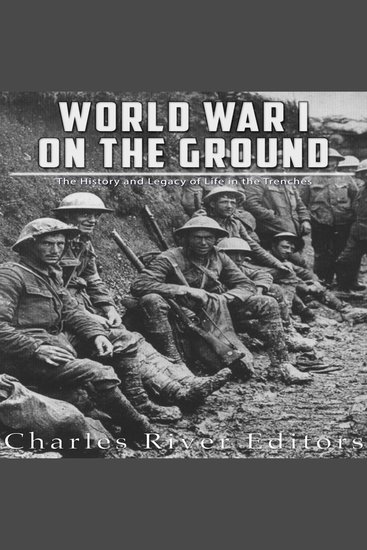
  • World War I on the Ground: The History and Legacy of Life in the Trenches - cover

    World War I on the Ground: The...

    Editors Charles River

    • 0
    • 0
    • 0
    World War I, also known in its time as the “Great War” or the “War to End all Wars”, was an unprecedented holocaust in terms of its sheer scale. Fought by men who hailed from all corners of the globe, it saw millions of soldiers do battle in brutal assaults of attrition which dragged on for months with little to no respite. Tens of millions of artillery shells and untold hundreds of millions of rifle and machine gun bullets were fired in a conflict that demonstrated man’s capacity to kill each other on a heretofore unprecedented scale, and as always, such a war brought about technological innovation at a rate that made the boom of the Industrial Revolution seem stagnant. 
    The enduring image of World War I is of men stuck in muddy trenches, and of vast armies deadlocked in a fight neither could win. It was a war of barbed wire, poison gas, and horrific losses as officers led their troops on mass charges across No Man’s Land and into a hail of bullets. While these impressions are all too true, they hide the fact that trench warfare was dynamic and constantly evolving throughout the war as all armies struggled to find a way to break through the opposing lines. 
    There was another war going on beneath the trenches, a war of tunnels and mines fought by men who didn’t see sunlight for days at a time and who lived in constant fear of cave-ins and enemy detection. These men, who had mostly been miners in civilian life, lived a twilight existence, working long hours in silence and near darkness while great battles raged overhead. They suffered from fatigue, stress, and the knowledge that they could be killed at any time by an unseen enemy. Despite this, they persevered, and the mines they laid under enemy trench systems turned the tide of at least one major battle.
    Ver livro
  • Mikhail Gorbachev: A short biography - 5 Minutes: Short on time – long on info! - cover

    Mikhail Gorbachev: A short...

    5 Minutes, 5 Minute Biographies,...

    • 0
    • 0
    • 0
    Mikhail Gorbachev, Russian president and Nobel Peace prize laureate: Life and work in a short biography! Everything you need to know, brief and concise. Infotainment, education and entertainment at its best!
    Ver livro
  • Feelings and Illusions - Selected Articles of Pabitra Adhikary - cover

    Feelings and Illusions -...

    Pabitra Adhikary

    • 0
    • 0
    • 0
    Beauty is a feeling. 
    Had we not looked at the rose would it have been beautiful? 
    Had the name of rose not been rose but instead it would have been something else then would we have loved it? 
    Nothing matters with the name. 
    If we look at the rose and say it's beautiful then it becomes beautiful. 
    Beauty lies in the eyes of the beholder. 
    Whatever creates happiness in our mind that is beautiful. 
    All the feelings are being controlled by hormones. So, the feeling of beauty, form, flavour, fragrance, touch, music every feeling is the creation of hormones. In one word we can say everything is illusion.
    Ver livro
  • Stress And Anxiety Management & Alcohol Addiction - cover

    Stress And Anxiety Management &...

    Charlie Mason

    • 0
    • 0
    • 0
    Stress And Anxiety Management: 
    Are you suffering from stress, anxiety, or panic attacks and are looking for a lasting solution?You have come to the right place! 
    This book seeks to equip you with understanding and techniques to help you shift your thinking so that you can better respond to negative emotions. The solution is not out there—it is right inside of you, and this book seeks to help you activate it. 
    The good news here is that stress and anxiety management does not have to be a daunting task. Herein you will find techniques that you can practice anywhere—be it at home, in the office, or even while traveling. 
    CBT is your permanent stress solution—guiding you on how to alter your thinking and perceptions so that you can face life’s situations without worrying yourself sick, literally. Coping with stress has never been easier.Alcohol Addiction:Alcohol is a wonderful thing. It can be used for celebrations, both good and bad! 
    It can be used to toast to someone’s good fortune or hope for a better future. It can be used in an expression of undying love or simply to enjoy a relaxing moment at the end of a difficult work week. 
    But alcohol can be an evil thing, also. Alcohol can cause brain damage, heart problems, and strokes. Alcohol can lead to liver damage. Alcohol can lead to drunken driving accidents and even death.Why alcohol is such a problem for some people and not for others still remains a mystery. But the fact is that alcohol is such a problem for some people that it can have life-threatening consequences.These people are called alcoholics, and this book was written for them. The alcoholic has a disease called alcoholism, and like anyone else with a disease, they need help.
    Ver livro
  • Exhibitionism Sexy Surprises - 6 Erotic Stories - cover

    Exhibitionism Sexy Surprises - 6...

    Giselle Renarde

    • 0
    • 0
    • 0
    Dare to explore the world of exhibitionism with this scorching anthology of six erotic stories that will leave you breathless. 
    Experience a rush of excitement as these characters show off online, in person, and even while rehearsing a play—baring it all for the world to see! With each turn of the page, you'll be drawn deeper into the tantalizing world of exhibitionism, where every touch and caress is heightened by the thrill of being watched. 
    Indulge your wildest fantasies as these daring couples, singles and groups push the limits of their comfort zones, exposing themselves in the most thrilling and unexpected ways. Come along and enjoy six unforgettable tales of erotic escapades.
    Ver livro