Junte-se a nós em uma viagem ao mundo dos livros!
Adicionar este livro à prateleira
Grey
Deixe um novo comentário Default profile 50px
Grey
Assine para ler o livro completo ou leia as primeiras páginas de graça!
All characters reduced
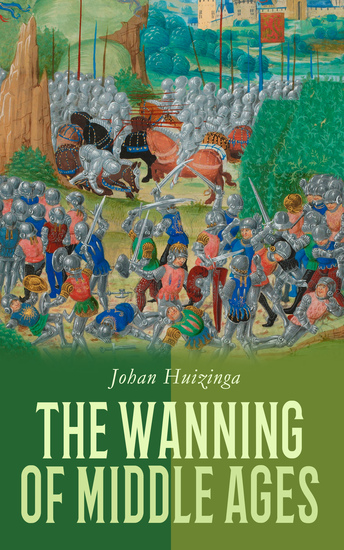
The Wanning of Middle Ages - A Study of the Forms of Life Thought and Art in France and the Netherlands in the XIVth and XVth Centuries - cover
LER

The Wanning of Middle Ages - A Study of the Forms of Life Thought and Art in France and the Netherlands in the XIVth and XVth Centuries

Johan Huizinga

Tradutor Frederik Jan Hopman

Editora: e-artnow

  • 0
  • 0
  • 0

Sinopse

The Waning of the Middle Ages by Johan Huizinga presents a richly detailed examination of European society in the fourteenth and fifteenth centuries, illuminating the profound cultural, social, and religious currents that shaped a transitional period. In this masterful study, Huizinga focuses on the powerful interplay between spiritual devotion, chivalric ideals, and evolving artistic sensibilities. He reveals a world marked by heightened emotions, where codes of honor, courtly expressions of love, and vivid displays of pageantry coexisted with an undercurrent of pessimism, underscored by the ever-present specter of mortality.
Huizinga's work underscores how medieval thought, steeped in symbolism and ritual, gravitated toward dramatic expressions of faith. Imaginative depictions of sacred themes dominated art, literature, and social ceremonies, reflecting a culture acutely aware of both the fragility of life and the promise of salvation. At the same time, an emerging realism began to temper these symbolic forms, heralding a shift toward more pragmatic concerns and paving the way for the dawn of a new era.
Within this landscape, concepts of hierarchical order and chivalry intertwined, shaping political and military endeavors while also providing a framework for romantic and moral ideals. Huizinga deftly explores how these values influenced society at large, establishing a legacy that impacted subsequent theological debates and cultural developments. By tracing the gradual dissolution of medieval perspectives, he reveals the intricate nexus of belief, societal structures, and aesthetic practice that would eventually give rise to Renaissance innovations.
The enduring importance of The Waning of the Middle Ages lies in its nuanced portrayal of this complex epoch. Huizinga's visionary scholarship continues to resonate with historians, theologians, and cultural theorists, cementing his reputation as a pioneer in the field of cultural history. His legacy endures, demonstrating how deeply faith, art, and communal values are interwoven in the fabric of historical change.
Disponível desde: 03/04/2025.
Comprimento de impressão: 329 páginas.


Outros livros que poderiam interessá-lo

  • The Future and You - Reflections on Freedom Responsibility and What It Means to Be Human - cover

    The Future and You - Reflections...

    Emma Gilligan

    • 0
    • 0
    • 0
    A Reminder of the Rights We Can't Afford to Forget - 
    Reflections on Freedom, Responsibility and What It Means to Be Human 
    What holds us together when the world feels fractured? In The Future and You, Emma Gilligan offers a quiet but powerful meditation on the enduring role of human rights and how they can ground us in a shifting world. 
    Written as a letter to her great-nephew and future generations, this deeply personal book draws on Gilligan’s lifelong commitment to global justice and moral responsibility, from the war-torn landscapes of Chechnya and Ukraine to the lecture halls of Indiana University. With clarity and purpose, she reflects on freedom, duty, dignity and the fragile beauty of being human. 
    Presented as a series of reflections, each centered on a fundamental human right, the book blends Gilligan’s values and lived experience to offer a framework for daily life. 
    This is not a manifesto or a memoir. It’s a reminder that we don’t exist in a vacuum and that courage, compassion and responsibility are already within us. We need only return to them. 
    The Future and You invites readers to remember that the freedoms to speak openly, move freely, live securely and be cared for are not guaranteed — they must be protected, practiced and passed on. 
    If you're seeking resilience, understanding or a sense of direction in uncertain times, you’ll find insight and reassurance woven throughout this concise yet powerful read. Gilligan’s whimsical illustrations add warmth and imagination to her call for introspection and renewal. 
    Emma Gilligan is an award-winning scholar and co-founder of the U.S. State Department’s Atrocity Crimes Advisory Group for Ukraine. 
     
    Ver livro
  • The Conduct of Life - cover

    The Conduct of Life

    Ralph Waldo Emerson

    • 0
    • 0
    • 0
    "The Conduct of Life" by Ralph Waldo Emerson is a thought-provoking and inspiring collection of essays that explores the principles and virtues guiding a purposeful and ethical existence. In this enlightening work, Emerson imparts wisdom and guidance on how individuals can lead a meaningful life filled with integrity, self-reliance, and moral character. Throughout the essays, Emerson delves into the conduct and choices that shape human lives. He examines the importance of self-reliance, encouraging readers to trust their inner wisdom and cultivate their unique talents and capabilities. Emerson advocates for independence of thought and action, emphasizing the significance of forging one's path and not succumbing to the pressures of conformity. Read in English, unabridged.
    Ver livro
  • Summary: The Hundred Years' War on Palestine - A History of Settler Colonialism and Resistance 1917--2017: Key Takeaways Summary and Analysis - cover

    Summary: The Hundred Years' War...

    Brooks Bryant

    • 0
    • 0
    • 0
    DISCLAIMER: THIS IS NOT THE OFFICIAL BOOK. 
    This is a summary, and it does not accompany the official 
    "The Hundred Years' War on Palestine" by Rashid Khalidi presents a comprehensive history of the Palestinian-Israeli conflict from a Palestinian perspective. It begins with an 1899 letter from Yusuf Diya al-Khalidi, the author's ancestor, warning against Zionist plans in Palestine. Khalidi uses archival materials and family reports to challenge traditional narratives of the conflict as a mere clash over territory. He argues that it's a century-long colonial war against Palestinians, led by Zionists and later Israel, with support from Britain and the U.S. The book covers major events like the Balfour Declaration, the 1948 destruction of Palestine, and Israel’s 1982 Lebanon invasion. Khalidi aims to provide a balanced account, acknowledging Palestinian leadership flaws and the rise of national movements on both sides and offering a fresh perspective on an ongoing conflict.
    Ver livro
  • White Poverty - How Exposing Myths about Race and Class Can Reconstruct American Democracy - cover

    White Poverty - How Exposing...

    Reverend Dr. William Barber II,...

    • 0
    • 0
    • 0
    A generational work with far-ranging social and political implications, White Poverty promises to be one of the most influential books in recent years. 


    One of the most pernicious and persistent myths in the United States is the association of Black skin with poverty. Though there are forty million more poor white people than Black people, most Americans, both Republicans and Democrats, continue to think of poverty—along with issues like welfare, unemployment, and food stamps—as solely a Black problem. Why is this so? What are the historical causes? And what are the political consequences that result? 


    These are among the questions that the Reverend Dr. William J. Barber II, a leading advocate for the rights of the poor and the "closest person we have to Dr. King" (Cornel West), addresses in White Poverty, a groundbreaking work that exposes a legacy of historical myths that continue to define both white and Black people, creating in the process what might seem like an insuperable divide. Analyzing what has changed since the 1930s, when the face of American poverty was white, Barber, along with Jonathan Wilson-Hartgrove, addresses white poverty as a hugely neglected subject that just might provide the key to mitigating racism and bringing together tens of millions of working class and impoverished Americans.
    Ver livro
  • The Manipulation Defense - Strategies to Arm and Defend Yourself Against People Who Try to Manipulate You - cover

    The Manipulation Defense -...

    John D. Kody

    • 0
    • 0
    • 0
    Embark on a transformative journey with "The Manipulation Defense: Strategies to Arm and Defend Yourself Against People Who Try to Manipulate You," your ultimate guide to recognizing, resisting, and reclaiming control from manipulative influences in every corner of your life. 
    Delve into the nuanced dynamics of intimate relationships, uncovering the covert tactics used to erode your autonomy and learning the art of resilience against these subtle invasions. Navigate the treacherous waters of social and digital media, where manipulation often hides behind a veneer of connection, equipping yourself with critical discernment skills to separate genuine interactions from deceptive facades. 
    Dissect the insidious influence of advertising, exploring how manipulators skillfully play on your emotions and desires to shape your decisions and opinions. Penetrate the smoke and mirrors of political manipulation, gaining the insight needed to see through strategic narratives and resist the sway of hidden persuaders. 
    Yet, this book doesn't stop at exposure. It delves into the harrowing transformation of manipulation into emotional abuse, providing a lifeline of understanding, expert analysis, and real-life stories of resilience and empowerment. It guides you through a journey of healing and recovery, helping you to rebuild trust, establish firm boundaries, and cultivate a robust support network to shield against future manipulation. 
    But introspection is key. Reflect on your own behaviors and tendencies, ensuring you not only shield yourself from manipulation but also remain vigilant against unconsciously adopting manipulative habits. This book is your beacon, illuminating the path through the murky waters of manipulation and leading you towards authentic connections and a life of integrity.
    Ver livro
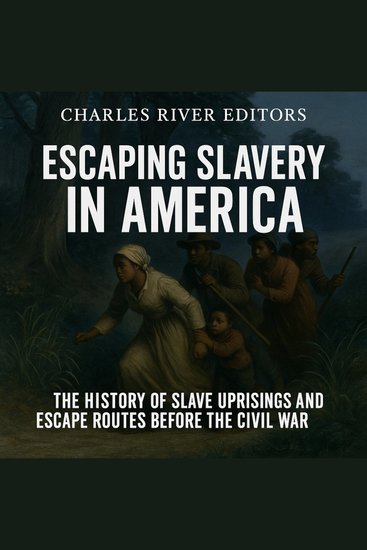
  • Escaping Slavery in America: The History of Slave Uprisings and Escape Routes Before the Civil War - cover

    Escaping Slavery in America: The...

    Charles River Editors

    • 0
    • 0
    • 0
    The Underground Railroad is one of the most taught topics to young schoolchildren, and every American is familiar with the idea of fugitive slaves escaping to Canada and the North with the help of determined abolitionists and even former escaped slaves like Harriet Tubman. The secrecy involved in the Underground Railroad made it one of the most mysterious aspects of the mid-19th century in America, to the extent that claims spread that 100,000 slaves had escaped via the Underground Railroad. Of course, from a practical standpoint, the Underground Railroad had to remain covert not only for the sake of thousands of slaves, but for a small army of men and women of every race, religion and economic class who put themselves in peril on an ongoing basis throughout the first half of the 19th century, and in the years leading up to the war.  
    	Over 150 years later, that same secrecy has helped the Underground Railroad become so romanticized and mythologized that people often visualize it in ways that were far different from reality. Before the American Civil War eliminated slavery, it was a fixture in North America for over 200 years, and by 1850 a trained slave was worth approximately $2,500, around 10 times the sum of a typical annual salary in that day. As a result, the economic dependence on slavery in the South was an extreme one, and in the wake of the Fugitive Slave Act, black people in the North were under constant pressure to defend their “credentials” to bounty hunters and owners. Between the value of slaves in America, rising abolitionist sentiment at home and overseas, and political debates promoting or hindering the movement toward equality, the era in which the Underground Railroad operated cannot be easily fit into a concise body of principles, actions or geography. 
    Ver livro