¡Acompáñanos a viajar por el mundo de los libros!
Añadir este libro a la estantería
Grey
Escribe un nuevo comentario Default profile 50px
Grey
Suscríbete para leer el libro completo o lee las primeras páginas gratis.
All characters reduced
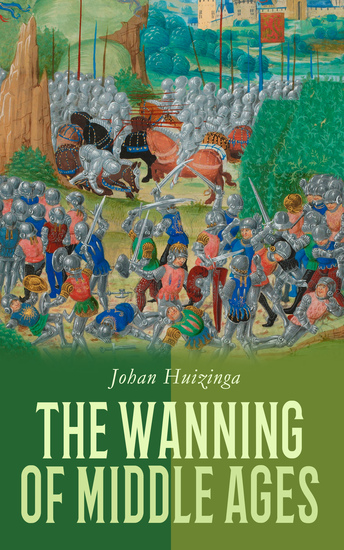
The Wanning of Middle Ages - A Study of the Forms of Life Thought and Art in France and the Netherlands in the XIVth and XVth Centuries - cover

The Wanning of Middle Ages - A Study of the Forms of Life Thought and Art in France and the Netherlands in the XIVth and XVth Centuries

Johan Huizinga

Traductor Frederik Jan Hopman

Editorial: e-artnow

  • 0
  • 0
  • 0

Sinopsis

The Waning of the Middle Ages by Johan Huizinga presents a richly detailed examination of European society in the fourteenth and fifteenth centuries, illuminating the profound cultural, social, and religious currents that shaped a transitional period. In this masterful study, Huizinga focuses on the powerful interplay between spiritual devotion, chivalric ideals, and evolving artistic sensibilities. He reveals a world marked by heightened emotions, where codes of honor, courtly expressions of love, and vivid displays of pageantry coexisted with an undercurrent of pessimism, underscored by the ever-present specter of mortality.
Huizinga's work underscores how medieval thought, steeped in symbolism and ritual, gravitated toward dramatic expressions of faith. Imaginative depictions of sacred themes dominated art, literature, and social ceremonies, reflecting a culture acutely aware of both the fragility of life and the promise of salvation. At the same time, an emerging realism began to temper these symbolic forms, heralding a shift toward more pragmatic concerns and paving the way for the dawn of a new era.
Within this landscape, concepts of hierarchical order and chivalry intertwined, shaping political and military endeavors while also providing a framework for romantic and moral ideals. Huizinga deftly explores how these values influenced society at large, establishing a legacy that impacted subsequent theological debates and cultural developments. By tracing the gradual dissolution of medieval perspectives, he reveals the intricate nexus of belief, societal structures, and aesthetic practice that would eventually give rise to Renaissance innovations.
The enduring importance of The Waning of the Middle Ages lies in its nuanced portrayal of this complex epoch. Huizinga's visionary scholarship continues to resonate with historians, theologians, and cultural theorists, cementing his reputation as a pioneer in the field of cultural history. His legacy endures, demonstrating how deeply faith, art, and communal values are interwoven in the fabric of historical change.
Disponible desde: 03/04/2025.
Longitud de impresión: 329 páginas.

Otros libros que te pueden interesar

  • Vanished: The Disappearance of Jack O'Sullivan - A True Mystery That Shook the Nation - cover

    Vanished: The Disappearance of...

    Dylan Hunter

    • 0
    • 0
    • 0
    The Disappearance of Jack O'Sullivan 
    In the early hours of March 1st, 2024, Jack O'Sullivan—a recent Exeter University graduate—vanished without a trace. A promising young law student on the cusp of a bright future, Jack’s sudden disappearance in the heart of Bristol shocked his family, friends, and the entire community. 
    The search for Jack becomes a harrowing journey of hope, heartache, and unanswered questions. As his mother, Catherine, relentlessly pushes forward, the investigation unravels new clues, disturbing theories, and an unnerving silence that grows harder to bear with each passing day. With law enforcement struggling to piece together the fragments of Jack’s final moments, his family is forced to take matters into their own hands, confronting not only the unknown but also a network of misinformation and desperate attempts to derail the truth. 
    The Disappearance of Jack O'Sullivan is an emotional and gripping true story of a family’s pursuit of justice, their fight against a flawed system, and the power of community in the face of unimaginable loss. Will Jack’s story have the closure they seek—or is the truth something they’ll never find? 
    Listen, as the mystery unfolds and the relentless search for answers keeps you on the edge of your seat until the very end.
    Ver libro
  • England’s Entry into North America: The History of the First English Expeditions and Settlements in the Western Hemisphere - cover

    England’s Entry into North...

    Editors Charles River

    • 0
    • 0
    • 0
    Nearly 20 years before Jamestown was settled, the English established one of the earliest colonies in North America around the Chesapeake Bay region, until the colony had over 100 inhabitants. Like other early settlements, Roanoke struggled to survive in its infancy, to the extent that the colony’s leader, John White, sailed back to England in 1587 in an effort to bring more supplies and help. However, the attempts to bring back supplies were thwarted by the Spanish in the midst of the Anglo-Spanish War going on at the time, and it was not until 1590 that White reached Roanoke again. What White found when he came back to Roanoke led to one of the most enduring mysteries in American history. Despite the fact he had left over 100 people in Roanoke in 1587, White returned to literally nothing. 
    	Jamestown is fondly remembered today for being the first permanent English settlement in the colonies, but it was not fondly remembered by those who lived and died there. The English quickly learned it would be difficult to establish a permanent settlement because of the poor weather, the swampy terrain, the hostile natives living nearby, and the general inexperience and ineptitude of the English settlers. During their first winter, everyone nearly starved, and more than half of the settlers died. By the end of the winter of 1609-1610, known as the “starving time”, barely 10% of the settlers were still alive.  
    	Though the Virginian colonists had difficulty in the beginning, by the late 1620s the Chesapeake area was thriving, having become a haven for those seeking economic opportunity in the new world. Pressures in England were growing as King Charles I was on the throne. Though Charles I himself was an Anglican, many suspected him of Catholic sympathies, a suspicion not alleviated by Charles I marriage to a French Catholic princess.
    Ver libro
  • The House That Match Built - cover

    The House That Match Built

    T.B. Barnes

    • 0
    • 0
    • 0
    The House That Match Built” by T.B. Barnes is a powerful memoir of survival, resilience, and hope, written to illuminate the path toward healing for those battling the shadows of mental health challenges. With raw honesty and profound vulnerability, Barnes recounts her journey from the depths of despair to the heights of empowerment, offering a testament to the indomitable human spirit. This deeply moving narrative explores the complexities of mental illness, the triumphs of reclaiming life from the grip of darkness, and the transformative power of purpose. Through her personal experiences, Barnes extends a lifeline to those who feel lost or alone in their battles, reminding them that they are never truly alone. More than a memoir, “The House That Match Built” is a beacon of understanding and compassion. It sheds light on the struggles faced by individuals and their loved ones, fostering empathy and encouraging a more supportive society. Barnes story is a testament to the enduring power of hope and the boundless potential for healing. This book serves as an inspiring guide for anyone navigating the labyrinth of mental health struggles, offering solace, encouragement, and the possibility of restoration.
    Ver libro
  • Chavín Civilization - The Religious Center That Unified the Andes - cover

    Chavín Civilization - The...

    Rolf Hedger

    • 0
    • 0
    • 0
    The Chavín civilization, one of the earliest and most influential cultures of ancient Peru, emerged in the Andean highlands around 900 BCE. It was a formative force in pre-Columbian history, laying the groundwork for later civilizations that dominated the region. The rise of Chavín was deeply connected to its strategic location, the innovations of its people, and the unique blend of religious and cultural influences that shaped its identity. 
    The Andean region, with its diverse geography of mountains, valleys, and coastal plains, played a crucial role in the development of early societies. The people who would come to form the Chavín civilization first settled in highland areas, where they mastered agricultural techniques suited to the challenging environment. The cultivation of staple crops such as maize, potatoes, and quinoa allowed for population growth and the establishment of permanent settlements. Llamas and alpacas provided transportation, wool, and meat, further supporting the stability of these early communities. Over time, these settlements evolved into more complex societies, characterized by social hierarchies and specialized labor. 
    One of the key factors that contributed to the emergence of the Chavín civilization was its strategic position at the crossroads of major trade routes. Chavín de Huántar, the civilization’s most important ceremonial center, was located in a valley that connected the coast, highlands, and jungle regions. This prime location allowed Chavín culture to serve as a unifying force in the Andes, facilitating the exchange of goods, ideas, and religious beliefs among different groups. As traders and pilgrims traveled to Chavín de Huántar, they encountered a sophisticated society with an advanced knowledge of art, architecture, and religion, all of which helped spread Chavín influence throughout the region.
    Ver libro
  • The Fly - An Appreciation - cover

    The Fly - An Appreciation

    Lucian of Samosata

    • 0
    • 0
    • 0
    Lucian of Samosata's beautiful description of a common fly. His satirical flourishes will leave the listener ever-the-more impressed with this most minute of creatures. A farcical journey, the Satirist takes us to the great halls of Heroes and Gods alike in this most apt comparison between the likes of Man and Fly.
    Ver libro
  • Accordion Eulogies - A Memoir of Music Migration and Mexico - cover

    Accordion Eulogies - A Memoir of...

    Noé Álvarez

    • 0
    • 0
    • 0
    Searching, propulsive, and deeply spiritual, Accordion Eulogies is an odyssey to repair a severed family lineage, told through the surprising history of a musical instrument 


    Growing up in Yakima, Washington, Noé Álvarez never knew his grandfather. Stories swirled around this mythologized, larger-than-life figure: That he had abandoned his family, and had possibly done something awful that put a curse on his descendants. About his grandfather, young Noé was sure of only one thing: That he had played the accordion. Now an adult, reckoning with the legacy of silence surrounding his family's migration from Mexico, Álvarez resolves both to take up the instrument and to journey into Mexico to discover the grandfather he never knew. 


    Álvarez travels across the US with his accordion, meeting makers and players in cities that range from San Antonio to Boston. He uncovers the story of an instrument that's been central to classic American genres, but also played a critical role in indigenous Mexican history. Like the accordion itself, Álvarez feels trapped between his roots in Mexico and the US. As he tries to make sense of his place in the world—as a father, a son, a musician—he gets closer to uncovering the mystery of his origins.
    Ver libro