Junte-se a nós em uma viagem ao mundo dos livros!
Adicionar este livro à prateleira
Grey
Deixe um novo comentário Default profile 50px
Grey
Assine para ler o livro completo ou leia as primeiras páginas de graça!
All characters reduced
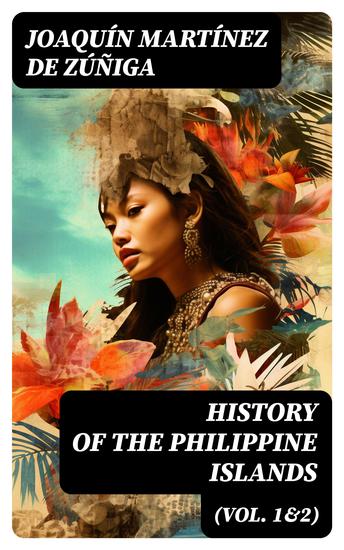
History of the Philippine Islands (Vol 1&2) - Enriched edition Their Discovery Population Language Government Manners Customs Productions and Commerce (Complete Edition) - cover
LER

History of the Philippine Islands (Vol 1&2) - Enriched edition Their Discovery Population Language Government Manners Customs Productions and Commerce (Complete Edition)

Joaquín Martínez de Zúñiga

Tradutor John Maver

Editora: DigiCat

  • 0
  • 0
  • 0

Sinopse

In "History of the Philippine Islands (Vol. 1 & 2)", Joaquín Martínez de Zúñiga offers a comprehensive and insightful examination of the Philippines from its earliest records to the late 19th century. His narrative weaves together rich historical accounts, vivid descriptions of the social and cultural fabric, and detailed observations of the islands' geography and demography. Employing a literary style infused with both scholarly rigor and engaging prose, Zúñiga situates his work within the broader context of colonial literature and historiography, making a vital contribution to the understanding of Philippine history during Spanish rule. Martínez de Zúñiga, a Spanish priest and historian, was deeply entrenched in the socio-political landscape of colonial Philippines. His firsthand experiences and scholarly background allowed him to explore the complexities of Filipino society and the impacts of colonialism. His dual perspective as both a participant and observer provides readers with a nuanced understanding of the cultural dynamics of the period, enriching the historical dialogue around the islands. I enthusiastically recommend this seminal work to historians, scholars, and anyone interested in the intricacies of Philippine history. Zúñiga's meticulous documentation and narrative artistry render it a vital resource that not only enlightens but also engages the reader in the rich tapestry of the Philippines' past.

In this enriched edition, we have carefully created added value for your reading experience:
- A succinct Introduction situates the work's timeless appeal and themes.
- The Synopsis outlines the central plot, highlighting key developments without spoiling critical twists.
- A detailed Historical Context immerses you in the era's events and influences that shaped the writing.
- A thorough Analysis dissects symbols, motifs, and character arcs to unearth underlying meanings.
- Reflection questions prompt you to engage personally with the work's messages, connecting them to modern life.
- Hand‐picked Memorable Quotes shine a spotlight on moments of literary brilliance.
- Interactive footnotes clarify unusual references, historical allusions, and archaic phrases for an effortless, more informed read.
Disponível desde: 16/11/2023.
Comprimento de impressão: 288 páginas.
Outros livros que poderiam interessá-lo

  • Prince The (Fingerprint Classics) - cover

    Prince The (Fingerprint Classics)

    Niccolò Machiavelli

    • 0
    • 0
    • 0
    The Prince by Niccolò Machiavelli is a timeless political treatise that explores the dynamics of power, leadership, and statecraft. Written in the early 16th century, this concise yet provocative work offers pragmatic advice to rulers on how to gain, maintain, and consolidate authority, often advocating for realism over idealism. Machiavelli examines historical examples and human behavior to present strategies that prioritize effectiveness over morality, making the book both influential and controversial. Its insights into political maneuvering and the nature of authority have cemented it as a foundational text in political philosophy and realpolitik.
    Ver livro
  • The Rise of Capitalism - How Market Economies Shaped Modern Wealth and Innovation - cover

    The Rise of Capitalism - How...

    Arlo Holders

    • 0
    • 0
    • 0
    The origins of capitalism can be traced back to the gradual shift from feudal economies to market-based systems. In medieval Europe, wealth was primarily tied to land ownership, with a rigid social hierarchy that limited economic mobility. The feudal system depended on agrarian production, where peasants worked the land owned by nobles in exchange for protection. However, as trade expanded and urban centers grew, the foundations of capitalism began to emerge. 
    One of the earliest indicators of this transformation was the rise of merchant guilds and early banking systems. As trade routes connected Europe, Asia, and the Middle East, merchants sought more efficient ways to conduct business, leading to the establishment of guilds that regulated commerce and maintained quality standards. Banking families, such as the Medici in Renaissance Italy, played a crucial role in financing trade and investment, paving the way for modern financial institutions. The shift toward money-based transactions rather than bartering allowed wealth to accumulate outside the traditional feudal framework. 
    Another key development was the concept of private property and individual ownership. In the late medieval period, the enclosure movement in England marked a significant departure from communal farming practices. Landowners began fencing off common lands for private use, displacing many rural laborers and forcing them to seek employment in emerging industries. This shift not only created a labor force for industrial production but also reinforced the idea that property and capital could be owned, bought, and sold freely—an essential pillar of capitalism.
    Ver livro
  • The Practice & Theory Of Bolshevism - cover

    The Practice & Theory Of Bolshevism

    Bertrand Russell

    • 0
    • 0
    • 0
    This book records Bertrand Russell's impressions of the new regime after a 1920 visit to Russia following the 1917 Bolshevik Revolution, including his meetings with Lenin, Trostky, and Gorky. It includes a chapter that was authored by Dora Black, educational theorist and feminist author, and Russell's spouse. This chapter was unfortunately removed in the second edition, which was issued after Dora and Bertrand divorced. 
     
    Bertrand Arthur William Russell, 3rd Earl Russell, OM, FRS was a British mathematician, philosopher, logician, and public intellectual.  
     
    In this rare one-of-a-kind audiobook adventure the listener is met with the unexpected nature of a grand literary trek. Here is an audio treat to startle the imagination, invigorate the mind, and touch the spirit of all who hear it. From the studios of veteran artists and producers who were amongst the very first to imagine that books might one day talk - first on tape and later in the digital realm. This audiobook is our gift to you - a group of collective artists who have made their production a life's work and joy. A true audio treasure!
    Ver livro
  • The Rising Kingdom - cover

    The Rising Kingdom

    Santiago Machain

    • 0
    • 0
    • 0
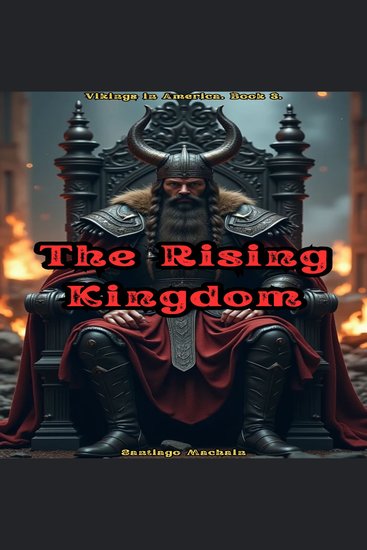
    The Rising Kingdom chronicles the pivotal era in Norumbega's history as it transforms from a fledgling settlement into a unified and resilient nation. Through the arrival of new European settlers, the forging of alliances, and the challenges of war and diplomacy, Norumbega's people confront questions of identity, governance, and coexistence. The narrative follows the city's leaders, artisans, and everyday citizens as they navigate the complexities of cultural integration, defend their homes during the Siege of Vinland, and ultimately craft the Treaty of the River—a landmark agreement that lays the foundation for peace and shared prosperity. As old traditions blend with new influences, Norumbega emerges as a beacon of hope, innovation, and unity in a changing world.
    Ver livro
  • Colombia's Economic Transformation - Historical Insights - cover

    Colombia's Economic...

    Anya Solace

    • 0
    • 0
    • 0
    Colombia's economic transformation has been a complex and dynamic process shaped by historical events, political decisions, and global economic trends. From its early indigenous trade systems to its current standing as one of Latin America's largest economies, Colombia's journey has been marked by periods of growth, crisis, and resilience. Understanding this transformation requires a deep dive into the key factors that have influenced its economy over the centuries. 
    The foundation of Colombia's economy was laid long before Spanish colonization. Indigenous communities engaged in agriculture, trade, and resource management, establishing early economic structures. However, the arrival of the Spanish in the early 16th century drastically altered the economic landscape. The Spanish introduced a mercantilist system that prioritized resource extraction, particularly gold, and forced indigenous labor into exploitative economic activities. This period also saw the beginnings of agricultural exports, as crops like sugar and tobacco became integral to the colonial economy. 
    Following independence in 1810, Colombia faced significant economic instability. The transition from colonial rule to a sovereign state disrupted established trade networks and led to political fragmentation. Wars of independence had devastated infrastructure and financial systems, leaving the new republic struggling to establish a stable economy. The 19th century saw slow economic progress, with regional economies developing independently and a reliance on agriculture persisting. Coffee emerged as Colombia's most valuable export by the late 19th century, setting the stage for greater economic integration and growth.
    Ver livro
  • Atlas: blueprints for the new world and the future of the human race - cover

    Atlas: blueprints for the new...

    DR SHAWN PRICE

    • 0
    • 0
    • 0
    The progress of the human race has been haphazard and inefficient with too much left to chance. We have been wasteful with our time, resources, and human effort. We have suffered unnecessarily with pointless wars and with billions still in poverty today. And now, our very existence is threatened by multiple Global Catastrophic Risks – from climate change and nuclear war, to AI and pandemics. But the global ‘order’ of today shows no chance of being able to solve and effectively coordinate the global responses so critically required to ensure the future of humanity. This is not good enough. It is far too soon for us to end. Our future, our potential as a species – we must protect and realise it. 
    This book explores what the human race could achieve with true global cooperation. 
    In this book are the Blueprints for the New World – with the global systems and institutions of the world re-engineered and re-designed to solve the global problems of today. To create the most prosperous Future of the Human Race. It explores the benefits of achieving global demilitarisation, a true global economy centred around Value creation and not consumerism, a new global currency and global language. The ability to effectively respond to global emergencies and threats, accelerating scientific progress through restructuring academia, global infrastructure projects such as a global electricity grid. True global justice crippling evil across the entire world. Reforming the global education system. Long term planning for the benefit of the entire human race. A global space agency to establish our foothold in space as fast as possible. And more. 
    No more should humanity blindly stumble forward into the future. It is time we finally took a firm hold of and controlled the destiny of the human race. 
    “The world is my country, all mankind are my brethren, and to do good is my religion.” 
    -   Thomas Paine
    Ver livro