Junte-se a nós em uma viagem ao mundo dos livros!
Adicionar este livro à prateleira
Grey
Deixe um novo comentário Default profile 50px
Grey
Assine para ler o livro completo ou leia as primeiras páginas de graça!
All characters reduced
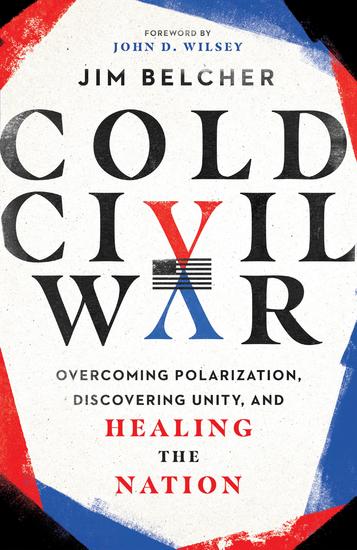
Cold Civil War - Overcoming Polarization Discovering Unity and Healing the Nation - cover
LER

Cold Civil War - Overcoming Polarization Discovering Unity and Healing the Nation

Jim Belcher

Editora: IVP

  • 0
  • 0
  • 0

Sinopse

America's political landscape is experiencing dangerous polarization and fragmentation, with the extremes pulling the country apart. Voices on the left and right clash over different worldviews, definitions of America, and what it means to be an American citizen. The levels of incivility and hostility lead some to invoke the language of a cold civil war or even a looming civil war: one that could split the country in two. Is there any way to step back from this dangerous precipice?
Political philosopher Jim Belcher shows that this is not merely a binary opposition between conservativism on the right and liberalism on the left, but also between conflicting visions of order and freedom on both sides. Through his unique quadrant framework, Belcher traces the people and movements in each position, examines their underlying narratives, and articulates their respective contributions and dangers. This quadrant framework not only reveals how polarization divides us but also shows us how to move beyond the right-left stalemate.
At the core of the competing visions are the seeds of a new vital center, a robust and surprising model that has the ability to transcend political tribalism and bring America back together again before it is too late.
Disponível desde: 22/03/2022.
Comprimento de impressão: 352 páginas.


Outros livros que poderiam interessá-lo

  • Revolution and Terror - cover

    Revolution and Terror

    Graeme Gill

    • 0
    • 0
    • 0
    This book is a study of the relationship between revolution and terror. Historically many have claimed that revolution inevitably devolves into terror, best reflected in the way in which after coming to power the revolutionary elite turns on itself, and one section of it uses terrorist means to eliminate another section. Graeme Gill argues that in order to understand the relationship between revolution and terror, it is necessary to distinguish between different types of terror. There are three such types: revolutionary terror, in which the aim is to destroy enemies and thereby consolidate the regime; transformational terror, designed to drive the politico-socio-economic transformation of society that is the purpose of the 'great' revolutions; and inverted terror, which is when terror is turned against part of the elite and regime more broadly. The analysis explains how these different types of terror are related to the revolutionary seizure of power, showing that revolutionary and transformational terror are organically connected to revolution while for inverted terror the connection is mediated through the leader. The argument is prosecuted through detailed analysis of the French, Russian, and Chinese revolutions. The study ends by assessing the contemporary salience of the lessons of the great revolutions in the light of the low level of violence in the negotiated revolutions of 1989.
    Ver livro
  • Black Utopias - Speculative Life and the Music of Other Worlds - cover

    Black Utopias - Speculative Life...

    Jayna Brown

    • 0
    • 0
    • 0
    In Black Utopias Jayna Brown takes up the concept of utopia as a way of exploring alternative states of being, doing, and imagining in Black culture. Musical, literary, and mystic practices become utopian enclaves in which Black people engage in modes of creative worldmaking. Brown explores the lives and work of Black women mystics Sojourner Truth and Rebecca Cox Jackson, musicians Alice Coltrane and Sun Ra, and the work of speculative fiction writers Samuel Delany and Octavia Butler as they decenter and destabilize the human, radically refusing liberal humanist ideas of subjectivity and species. Brown demonstrates that engaging in utopian practices Black subjects imagine and manifest new genres of existence and forms of collectivity. For Brown, utopia consists of those moments in the here and now when those excluded from the category human jump into other onto-epistemological realms. Black people—untethered from the hope of rights, recognition, or redress—celebrate themselves as elements in a cosmic effluvium.
    Ver livro
  • Confronting Saddam Hussein - George W Bush and the Invasion of Iraq - cover

    Confronting Saddam Hussein -...

    Melvyn P. Leffler

    • 0
    • 0
    • 0
    America's decision to go to war in Iraq in 2003 is arguably the most important foreign policy choice of the entire post–Cold War era. Nearly two decades after the event, it remains central to understanding current international politics and US foreign relations. 


    In Confronting Saddam Hussein, the eminent historian of US foreign policy Melvyn P. Leffler analyzes why the US chose war and who was most responsible for the decision. Employing a unique set of personal interviews with dozens of top officials and declassified American and British documents, Leffler vividly portrays the emotions and anxieties that shaped the thinking of the president after the shocking events of 9/11. He shows how fear, hubris, and power influenced Bush's approach to Saddam Hussein's Iraq. At the core of Leffler's account is his compelling portrait of Saddam Hussein. Rather than stressing Bush's preoccupation with promoting freedom or democracy, Leffler emphasizes Hussein's brutality, opportunism, and unpredictability and illuminates how the Iraqi dictator's record of aggression and intransigence haunted the president and influenced his calculations. Throughout, Leffler highlights the harrowing anxieties surrounding the decision-making process after the devastating attack on 9/11 and explains the roles of contingency, agency, rationality, and emotion.
    Ver livro
  • Book Review: Nudge by Richard H Thaler and Cass R Sunstein - A manifesto of libertarian paternalism - cover

    Book Review: Nudge by Richard H...

    50 50minutes

    • 0
    • 0
    • 0
    It can be hard for busy professionals to find the time to read the latest books. Stay up to date in a fraction of the time with this concise guide.Nudge: Improving Decisions About Health, Wealth and Happiness, by the Nobel Prize-winning economist Richard H. Thaler and the Harvard Law School professor Cass S. Sunstein, advocates libertarian paternalism, an approach by which individuals can be steered to make better decisions without taking away their freedom of choice. According to Thaler and Sunstein, humans are subject to biases and cognitive shortcomings which prevent them from always making the best decisions. By altering the way in which choices are presented, so-called "choice architects" can make people more likely to opt for a particular choice even if everything else in the situation remains the same. The idea of nudges has important applications in public policy, and the book has proved influential in numerous fields, from economics to philosophy.This book review and analysis is perfect for: • Students of economics, psychology and politics• Anyone who wants to know why we make the choices we do• Anyone who is curious about how public policy can shape our behaviourAbout 50MINUTES.COM|BOOK REVIEWThe Book Review series from the 50Minutes collection is aimed at anyone who is looking to learn from experts in their field without spending hours reading endless pages of information. Our reviews present a concise summary of the main points of each book, as well as providing context, different perspectives and concrete examples to illustrate the key concepts.
    Ver livro
  • The Dogs of Mariupol - Russia's Invasion and the Forging of Ukraine's Iron Generation - cover

    The Dogs of Mariupol - Russia's...

    Tom Mutch

    • 0
    • 0
    • 0
    When Russia invaded Ukraine in 2022, Kateryna hung up her dresses, Oksana and Stanislav put down their lawyers' briefs and Oksen slammed shut his philosophy textbooks. Alongside thousands of their fellow citizens, they strapped on armour, picked up weapons and chose to risk their lives for the freedom and independence of their homeland. Many would never return.
    Journalist Tom Mutch woke up in Kyiv on 24 February to a world changed for ever. Making a fateful choice to stay and cover the invasion, he witnessed the forging of an 'iron generation' of young Ukrainians. With first-hand reporting from all the major battlegrounds and front lines, The Dogs of Mariupol recounts the war's notorious encounters, such as the Battle of Kyiv and the Siege of Mariupol, but also uncovers untold stories, like the 1st Tank Brigade's desperate defence of Chernihiv and the civilian guerrilla army fighting overwhelming odds in Sumy.
    This is not a triumphalist account of Ukraine's fight, however. It painstakingly documents the immense human catastrophe wrought on Ukrainian society and the divisions between those who fought and those who fled. It also delves deeper into events to answer important historical questions: could the Russian plan to capture Kyiv have succeeded? Did Ukraine make a fatal error by committing for so long to the defence of Bakhmut? And with more western support, could Ukraine have won this terrible war outright?
    Ver livro
  • John Stuart Mill - A Very Short Introduction - cover

    John Stuart Mill - A Very Short...

    Gregory Claeys

    • 0
    • 0
    • 0
    John Stuart Mill (1806-73) is widely regarded as the leading liberal philosopher, economist, and political theorist of nineteenth century Britain. In his lifetime he was best known for his System of Logic (1843) and the Principles of Political Economy (1848). Today Mill is chiefly identified with On Liberty (1859), perhaps the definitive text of modern liberal statement of its subject, and probably the single most important work of modern political thought. Mill was also the first major male feminist thinker of the period (author of The Subjection of Women, 1869), and the first, as an MP, to introduce a bill for female enfranchisement before Parliament. 


    This Very Short Introduction offers a brief survey of the life and key ideas of this most influential Victorian British writer. Moving chronologically, Gregory Claeys outlines the philosophical background out of which Mill developed, chiefly through the ideas of Jeremy Bentham and James Mill. He demonstrates how Mill's personal life, especially his 'mental crisis' of 1827, and his relationship with Harriet Taylor, were integral to his intellectual development. Throughout Claeys considers Mill's key works set within the context of his lesser writings and correspondence, and discusses the more controversial aspects of his thought concerning religion, secularism, and birth control.
    Ver livro