Join us on a literary world trip!
Add this book to bookshelf
Grey
Write a new comment Default profile 50px
Grey
Subscribe to read the full book or read the first pages for free!
All characters reduced
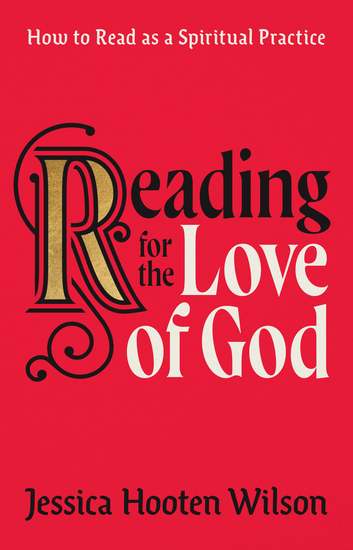
Reading for the Love of God - How to Read as a Spiritual Practice - cover

Reading for the Love of God - How to Read as a Spiritual Practice

Jessica Hooten Wilson

Publisher: Brazos Press

  • 0
  • 0
  • 0

Summary

"A timely and accessible primer."--Christian Century 
 
What if we viewed reading as not just a personal hobby or a pleasurable indulgence but also a spiritual practice that deepens our faith? 
 
In Reading for the Love of God, award-winning author Jessica Hooten Wilson does just that--and then shows readers how to reap the spiritual benefits of reading. She argues that the simple act of reading can help us learn to pray well, love our neighbor, be contemplative, practice humility, and disentangle ourselves from contemporary idols. 
 
This accessible and engaging guide outlines several ways Christian thinkers--including Augustine, Julian of Norwich, Frederick Douglass, and Dorothy L. Sayers--approached the act of reading. It also includes useful special features such as suggested reading lists, guided practices for approaching texts, and tips for meditating on specific texts or Bible passages. 
 
By learning to read for the love of God, readers will discover not only a renewed love of reading but also a new, vital spiritual practice to deepen their walk with God.
Available since: 03/28/2023.
Print length: 208 pages.

Other books that might interest you

  • US Citizenship Test Study Guide - A Complete Study Guide with Official USCIS Questions & Answers for Naturalization Test - cover

    US Citizenship Test Study Guide...

    Andrew Pendleton

    • 0
    • 0
    • 0
    Are you ready to take the next step towards becoming a proud US citizen? Look no further than our comprehensive "US Citizenship Test Study Guide"! Packed with official USCIS questions and answers, this guide is your ultimate companion to ace the naturalization test with confidence. 
    Do you struggle with understanding crucial documents? 
    Our guide breaks down essential documents, making them easy to comprehend and ensuring you're fully prepared for the citizenship process. 
    Are you worried about what to expect from the language and civics exams? 
    We provide detailed insights into what to expect from both the language and civics exams, helping you navigate the test with ease. 
    Do you make common mistakes during practice tests? 
    Learn from common mistakes highlighted in our guide, empowering you to avoid pitfalls and excel in your citizenship journey. 
    Not sure if you qualify for exemptions? 
    Fear not! Our guide clarifies exemptions and eligibility criteria in a fun and engaging way, ensuring you have all the information you need. 
    Key Benefits of Our Guide: 
    •	Access to 100 practice questions and answers meticulously curated to reflect the actual citizenship test. 
    •	Detailed explanations for each question, helping you understand concepts thoroughly. 
    •	Tips and strategies to boost your confidence and improve your test-taking skills. 
    •	Insights into common mistakes and how to avoid them, ensuring a smoother test experience. 
    •	Comprehensive coverage of crucial documents, language exam expectations, and civics exam insights. 
    Did you know? Our guide has helped thousands of aspiring citizens achieve their dream of US citizenship. 
    Our content is regularly updated to reflect the latest USCIS guidelines and requirements. 
    Don't wait any longer to embark on your citizenship journey.  
    Buy the "US Citizenship Test Study Guide" today and take the first step towards realizing your American dream!
    Show book
  • The Forgotten Slave Trade - The White European Slaves of Islam - cover

    The Forgotten Slave Trade - The...

    Simon Webb

    • 0
    • 0
    • 0
    Everybody knows about the transatlantic slave trade. A century before Britain became involved in this terrible business, whole villages and towns in England, Ireland, Italy, Spain, and other European countries were being depopulated by slavers, who transported the men, women, and children to Africa where they were sold. This is the forgotten slave trade; one which saw over a million Christians forced into captivity in the Muslim world. 


    Starting with the practice of slavery in the ancient world, Simon Webb traces the history of slavery in Europe, showing that the numbers involved were vast and that the victims were often treated far more cruelly than black slaves in America and the Caribbean. Castration, used very occasionally against black slaves taken across the Atlantic, was routinely carried out on an industrial scale on European boys who were exported to Africa and the Middle East. Most people are aware that the English city of Bristol was a major center for the transatlantic slave trade in the eighteenth century, but hardly anyone knows that 1,000 years earlier it had been an important staging-post for the transfer of English slaves to Africa. 


    This book will forever change how you view the slave trade and show that many commonly held beliefs about this controversial subject are almost wholly inaccurate and mistaken.
    Show book
  • Israel’s Wars: The History and Legacy of the Jewish State’s Most Important Military Conflicts - cover

    Israel’s Wars: The History and...

    Editors Charles River

    • 0
    • 0
    • 0
    On May 14, 1948, the British Mandate officially expired. That same day, the Jewish National Council issued the Declaration of the Establishment of the State of Israel. About 10 minutes later, President Truman officially recognized the State of Israel, and the Soviet Union also quickly recognized Israel. However, the Palestinians and the Arab League did not recognize the new state, and the very next day, armies from Egypt, Syria, Lebanon and Iraq invaded the former British Mandate to squelch Israel, while Saudi Arabia assisted the Arab armies. Jordan would also get involved in the war, fighting the Israelis around Jerusalem. The eventual armistice lines became known as the “Green Line,” and the conflict has continued to involve those lines and the issues that were contested in a war now nearly 70 years old. 
    In early June 1967, the Israelis captured Jordanian intelligence that indicated an invasion was imminent and thus launched preemptive strikes. Over the next six days, the Israelis overwhelmed the Egyptians in the west, destroying thousands of tanks and capturing the Gaza Strip and the entire Sinai Peninsula. At the same time, Israel drove the Jordanians out of Jerusalem and the West Bank, and it captured the Golan Heights from Syria near the border of Lebanon. In the span of a week, Israel had tripled the size of the lands it controlled. Israel had gone from less than 10 miles wide in some spots to over 200 miles wide from the Sinai Peninsula to the West Bank. Israel also unified Jerusalem. 
    On October 6, 1973, Syria and Egypt caught Israel off guard during the Jewish holy holiday of Yom Kippur, surprise attacking the Sinai Peninsula and Golan Heights. The Israelis turned the tide within a week, going on the counteroffensive and winning the war within 3 weeks.
    Show book
  • John Lennon: A short biography - 5 Minutes: Short on time - long on info! - cover

    John Lennon: A short biography -...

    5 Minutes, 5 Minute Biographies,...

    • 0
    • 0
    • 0
    John Lennon, founder of the Beatles and musical legend: Life and works in a short biography! Everything you need to know, brief and concise. Infotainment, education and entertainment at its best!
    Show book
  • Carthage - Its Carnage Its History and Its Resistance to the Romans - cover

    Carthage - Its Carnage Its...

    Kelly Mass

    • 0
    • 0
    • 0
    Carthage was an ancient city-state located in what is now modern-day Tunisia. Founded by Phoenician settlers in the ninth century BC, Carthage would rise to become one of the most influential and powerful empires of the ancient Mediterranean world, only to be destroyed by the Romans in 146 BC. Despite its destruction, the Romans later lavishly rebuilt it, cementing its place in history. During its peak in the fourth century BC, Carthage was the capital of the Carthaginian Empire, a force that dominated the western Mediterranean with unmatched power and influence. 
    The origins of Carthage can be traced back to around 814 BC, when settlers from Tyre, a prosperous Phoenician city-state in modern Lebanon, arrived on the northern coast of Africa. Following the fall of Phoenicia to the Neo-Assyrian Empire in the seventh century BC, Carthage emerged as an independent entity. Over time, it expanded its influence, securing political and economic control over vast territories across the western Mediterranean. By 300 BC, Carthage controlled a sprawling empire that included the coastal regions of northwest Africa, southern Iberia (modern-day Spain, Portugal, and Gibraltar), and a series of key islands such as Sicily, Sardinia, Corsica, Malta, and the Balearic Islands. This expansion was achieved through a complex network of colonies, vassal states, and satellite territories. 
    Carthage’s strategic location played a significant role in its success. Its access to fertile agricultural lands and critical maritime trade routes allowed the city to thrive economically and become one of the wealthiest and most powerful centers of commerce in the ancient world. Carthage’s trade network extended across the Mediterranean and beyond, reaching as far as West Asia, West Africa, and northern Europe.
    Show book
  • The Secrets of Silence - The Everyday Policing of Black Women and Their Stories about Violence - cover

    The Secrets of Silence - The...

    Shannon Malone Gonzalez

    • 0
    • 0
    • 0
    In The Secrets of Silence, Shannon Malone Gonzalez investigates how the policing of black women is tied to the policing of their stories. Over a period of four years, Malone Gonzalez conducted intimate life-history interviews with black women about their encounters, listening to those who had never shared their stories before, had never even been asked to, or had tried repeatedly to speak to those around them to no avail. They all described the unspoken or whispered connections in the ways officers and communities socially control black women to put them "in their place." Centering black women's searches for recognition of their violent encounters with police and other people in their lives, Malone Gonzalez examines the pervasive and often invisible forms of everyday policing that render black women's stories missing from official data, headlines, and community conversations.In this book Malone Gonzalez shows that policing is as much about silence as it is about violence. Black women's silenced stories, then, provide a way to name and critique the institutional and intimate forms of policing that break and bend black social relations into a complex web of social control. Drawing on abolition feminism and black knowledge traditions, she envisions storytelling—and listening—as a way to reimagine, remember, and reconnect in solidarity and worldbuilding.
    Show book