Join us on a literary world trip!
Add this book to bookshelf
Grey
Write a new comment Default profile 50px
Grey
Subscribe to read the full book or read the first pages for free!
All characters reduced
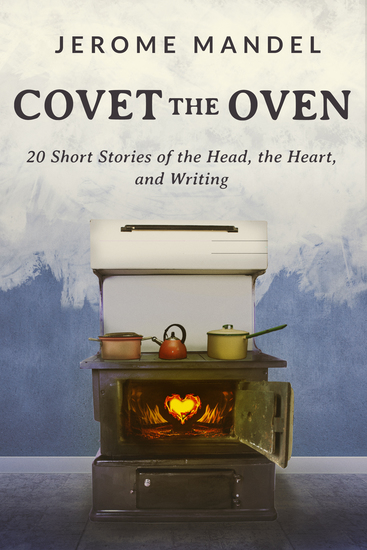
Covet the Oven - 20 Short Stories of the Head the Heart and Writing - cover

Covet the Oven - 20 Short Stories of the Head the Heart and Writing

Jerome Mandel

Publisher: Next Chapter

  • 0
  • 0
  • 0

Summary

This book of new stories by novelist and short story writer Jerome Mandel tells tales of the head, the heart, and writing – some gritty, some witty, some smooth.
 
With intelligence, sympathy, and a wry, often comic irony, they address loss and love, puzzlement and growing old, choices. In these stories cars break down, people make surprising announcements or do unexpected things. They die or don’t or can’t or sell metaphors.
 
Some people fall in love, misplace love, lose love. Some survive and thrive; others don’t. We learn more about them than they do.
 
"Jerome Mandel is an excellent writer. He brings to his stories deep compassion, emotional understanding, blended with scholarship and refinement." -Leslie Blanchard, Writer's Choice-
Available since: 04/26/2024.
Print length: 150 pages.

Other books that might interest you

  • The Short Stories of Leo Tolstoy - Epic collection of stories from the grandmaster of literature - cover

    The Short Stories of Leo Tolstoy...

    Leo Tolstoy

    • 0
    • 0
    • 0
    Leo Tolstoy was born in 1828 in the Russian province of Tula to a wealthy noble family. As a child, he had private tutors but he showed little interest in any formal education. When he went to the University of Kazan in 1843 to study oriental languages and law, he left without completing his courses.  Life now was relaxed and idle but with some writing also taking place.  Gambling debts forced an abrupt change of path and he joined the army to fight in the Crimean War.  He was commended for his bravery and promoted but was appalled at the brutality and loss of life.  He recorded these and other earlier experiences in his diaries which formed the basis of several of his works. 
     
    In 1852 ‘Childhood’ was published to immediate success and was followed by ‘Boyhood’ and ‘Youth’. 
     
    His experience in the army and the horrors he witnessed resulted in ‘The Cossacks’ in 1862 and the trilogy ‘Sevastopol Tales’. After the war he travelled around Europe, visiting London and Paris and meeting such luminaries as Victor Hugo and Charles Darwin.  
     
    It was now that Tolstoy began his masterpiece, ‘War and Peace’. Published in 1869 it was an epic work that changed literature. He quickly followed this with ‘Anna Karenina’.  
     
    These successes made Tolstoy rich and helped him accomplish many of his dreams but also brought problems as he grappled with his faith and the lot of the oppressed poor. These revolutionary views became so popular that the authorities now kept him under surveillance.  
     
    He led a life of asceticism and vegetarianism and put his socialist ideals into practice by establishing numerous schools for the poor and food programmes. He also believed in giving away his wealth, which caused much discord with his wife.  
     
    His writing continued to bring forth classics such as ‘The Death of Ivan Ilyich’ and many brilliant and incisive short stories such as ‘How Much Land Does A Man Need’.  
     
    In 1901 Tolstoy was excommunicated from the Church and controversially deselected for the Nobel Prize for Literature. 
     
    Whilst undertaking a pilgrimage by train in October 1910 with his daughter Aleksandra he caught pneumonia in the nearby town of Astapovo.  Leo Tolstoy died on November 9th, 1910, he was 82. 
    01 - Leo Tolstoy - A Short Story Collection - An Introduction 
    02 - Diary of a Lunatic by Leo Tolstoy 
    03 - A Dialogue Among Clever People by Leo Tolstoy 
    04 - Aloysha The Pot by Leo Tolstoy 
    05 - God Sees The Truth But Waits by Leo Tolstoy 
    06 - How Much Land Does A Man Need by Leo Tolstoy
    Show book
  • Ancient Beacon - cover

    Ancient Beacon

    Harold Anderson, Tom Lyons

    • 0
    • 0
    • 0
    It’s been hiding on Earth for millennia… 
    …but it was my job to hide it from you. If the American people knew what secrets lay beneath their feet, the U.S. government would have no way of controlling the paranoia that would ensue. 
    In Ancient Beacon, the second installment of The Palmdale Files, former agent Harold Anderson reveals the true story behind the discovery of a mysterious, terribly old, and not-of-this world relic found in a subterranean underwater cavern in New Mexico and the exceptional efforts the U.S. government went through to hide it. Ancient Beacon—also known as Event 348 Gamma—is the second in a series of forgotten and buried events the author once destroyed to protect the peace and security of the United States—events the government would rather hide forever. 
    The Palmdale Files share highlights from Harold Anderson's U.S. Air Force career, where he worked to defend the nation and the world from paranoid hysteria about unexplained phenomena and threats from above.
    Show book
  • Unwritten Novel An - From their pens to your ears genius in every story - cover

    Unwritten Novel An - From their...

    Virginia Woolf

    • 0
    • 0
    • 0
    Adeline Virginia Woolf was born on the 25th January 1882 in South Kensington in London. 
    Although lauded as a founder of modernist writing with such classics as ‘Orlando’, ‘Mrs Dalloway’ and ‘To the Lighthouse’ and, of course, many classic short stories, her background is filled with elements of tragedy that she somehow overcame to become such a revered writer.   Her mother died when she was 13, her half-sister Stella two years later and with it her first of several nervous breakdowns.  Appallingly it was later found that three of her half-brothers had sexually abused her so darkness must have seemed ever present.   
    She began writing professionally at age 20 but her father’s death two years later brought a complete mental collapse and she was briefly institutionalised.  Somehow she found within herself a literary career and with it great innovations in writing; she was a pioneer of “stream of consciousness”.    
    Her tight circle of friends were the founders of the Bloomsbury Group, a movement whose legacy still influences across the arts and society in many way to this day.   
    Whilst the dark periods continued to interrupt her emotional state her rate of work never ceased.  Until, on 28th March 1941, Woolf put on her overcoat, filled up its pockets with stones, and walked into the River Ouse, in Lewes, East Sussex and drowned herself.  Her body was not recovered until the 18th April.  She was 59. 
    She left behind a note which read in part “Dearest, I feel certain that I am going mad again.  I feel we can't go through another of those terrible times.  And I shan't recover this time.  I begin to hear voices, and I can't concentrate.  So I am doing what seems the best thing to do”.
    Show book
  • The Man Without A Country - cover

    The Man Without A Country

    Edward Everett Hale

    • 0
    • 0
    • 0
    Edward Everett Hale’s The Man Without a Country is a poignant and patriotic short story that explores the devastating consequences of exile and the importance of national identity. The story follows Philip Nolan, a young army officer who, in a moment of reckless defiance, renounces his country during a treason trial. As punishment, he is sentenced to spend the rest of his life at sea, never again hearing mention of the United States. Over the years, Nolan comes to deeply regret his actions, realizing the true meaning of belonging and patriotism as he drifts from one ship to another, forever a man without a home. 
    Narrated by Burt Glendower, this audiobook brings to life Hale’s moving and thought-provoking tale, which remains a powerful meditation on loyalty, identity, and the profound connection between an individual and their homeland. Originally published in 1863, The Man Without a Country was written during the American Civil War, serving as a cautionary tale meant to inspire national unity and devotion.
    Show book
  • someone birthed them broken - Stories - cover

    someone birthed them broken -...

    Ama Asantewa Diaka

    • 0
    • 0
    • 0
    “Delightfully assertive, subversive and vibrant... an original voice.” ––Imbolo Mbue, author of the New York Times bestseller and PEN/Faulkner Award for fiction winner Behold the Dreamers • ""A compelling delight""—Booklist 
    A visceral and candid portrait of today’s Ghanaian youth, told in interconnected short stories by acclaimed spoken-word artist and author of the poetry collection Woman, Eat Me Whole Ama Asantewa Diaka. 
    In this startling collection of short fiction, Ama Asantewa Diaka creates a vibrant portrait of young Ghanaians’ today, captured in the experiences of characters whose lives bump against one other in friendship, passion, hope, and heartache. Men like Opoku Sr., not yet forty and struggling to keep his family’s cocoa business afloat after his father’s unexpected passing. Opoku strains under the burden of caring for his eight younger siblings and the child whose mother ran off. When his new girlfriend tells him she’s pregnant, he knows he has nothing left to give. 
    Years later, that girlfriend’s son, Opoku Jr., now faces his own troubles, including his girlfriend Boatemaa, who (correctly) suspects he is sneaking around, and Amoafoa, the woman he’s seeing on the side. And there is John, who confides to his crush Baaba about a surprising encounter with a male friend over a game of FIFA; Baaba, who falls into a whirlwind romance with her professor that ends in violence; and their friend Ayeley, who is learning to accept pleasure after being raised to believe it is sinful. 
    Diaka charts this constellation of interconnected lives in thirteen stories, exploring themes which run through the collection like a current: corruption and economic hardship, trauma and infidelity, shame, neglect, and the tribulations of the female body. In telling their stories, Diaka illuminates hope, freedom, and triumph that can be found in the everyday—the bonds between women, the joys of love and sex and art and dancing, the possibility of repair and redemption. 
    Renowned for her spoken word artistry, Ama Asantewa Diaka demonstrates her lyrical brilliance in this emotionally rich work that unveils profound truths about her country, its inhabitants, and the universality of human experience.
    Show book
  • Anathema - From their pens to your ears genius in every story - cover

    Anathema - From their pens to...

    Alexander Kuprin

    • 0
    • 0
    • 0
    Alexander Kuprin was born in Narovchat, Penza in Russia on 7th September 1870. 
    At 3 his Father died and he and mother moved to Moscow. By 10 he was enrolled at the Second Moscow Military High School and there his interest in literature began. The Alexander Military Academy followed and two years later he was a sub-lieutenant and posted to an Infantry Regiment for a further four years. 
    Despite his duties he was a now a keen writer and published his first short story at this time. His military duties also garnered him experiences for his breakthrough work ‘The Duel’.  Leaving the military he left for Kiev to work for local newspapers.  He continued to publish both stories and novels and by 1901 he was in St Petersburg becoming part of a group that included Chekhov, Ivan Bunin, Maxim Gorky and Leonid Andreyev.  
    In the years that followed further controversial works and acclaim followed.  His comments on the regime meant he was also put under secret police surveillance.   
    As World War I erupted, Kuprin opened a military hospital but was then given command of an infantry company in Finland. He was soon discharged on grounds of ill health.  
    The October Revolution saw him praise Lenin, but he warned that the Bolsheviks threatened Russian culture and might cause further widespread suffering to the peasants.  As Civil War raged he took his family to Helsinki and then on to Paris. 
    Exile saw his talents decline further and his succumbing to alcoholism. He became lonely and withdrawn. The family's poverty increased his malaise.   
    In May 1937, the Kuprin’s returned to Moscow.  He now saw his work published but wrote almost nothing new.  In 1938 his health rapidly deteriorated.  Already suffering from a kidney problems and sclerosis, he had now developed cancer of the oesophagus.  
    Alexander Kuprin died on 25th August 1938.
    Show book