Junte-se a nós em uma viagem ao mundo dos livros!
Adicionar este livro à prateleira
Grey
Deixe um novo comentário Default profile 50px
Grey
Assine para ler o livro completo ou leia as primeiras páginas de graça!
All characters reduced
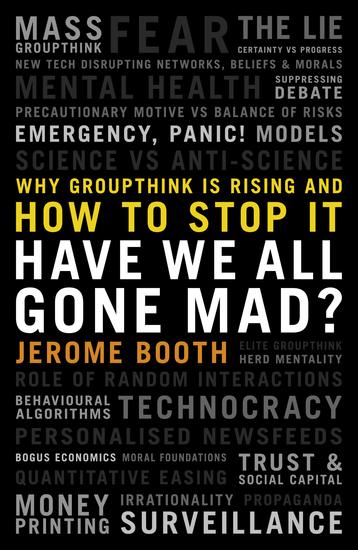
Have We All Gone Mad? Why groupthink is rising and how to stop it - Why groupthink is rising and how to stop it - cover
LER

Have We All Gone Mad? Why groupthink is rising and how to stop it - Why groupthink is rising and how to stop it

Jerome Booth

Editora: Biteback Publishing

  • 0
  • 0
  • 0

Sinopse

"With refreshingly clear-sighted analysis, Jerome Booth spells out how political, financial and social groupthink has damaged Britain – and, crucially, how we can tackle it. Highly recommended." – Liam Halligan, Daily Telegraph
"Most of the worst political decisions of recent years were made when all the mainstream politicians thought the same thing and no one challenged them. Jerome Booth wisely analyses why this situation happens so often and what can be done about it. Every politician and every decision-maker should read this book." – Lord Frost, former Cabinet Office minister
"It is a long time since I read a book with which I agreed so comprehensively." – Lord Lilley, former Secretary of State
***
We like to think of ourselves as rational, but human beings are fundamentally irrational creatures – and nowhere is that more apparent than in the fug of groupthink we see around us, from the boardroom to social media.
Of the various forms of collective irrationality, groupthink is particularly dangerous. It involves adherence to a faulty consensus, often has a binary moral dimension (one is seen as either virtuous or evil) and is sustained through fear to challenge. Counter-intuitively, the most intelligent and erudite amongst us are particularly susceptible, and when groupthink takes hold, vigorous efforts are made to shut down debate and to bully and punish transgressors.
As a result, toleration, liberalism, history, reason and science are under threat. Mass groupthink amongst both the elite and the masses affects millions of people. It has led to financial mismanagement leading up to the 2008 crisis and beyond; poor decision-making at the onset of Covid-19; exaggerated, unchallenged claims which have motivated nonsensical policies; and distortions in academia and journalism.
In this remarkable and prescient book, Dr Jerome Booth investigates why some of us have abandoned reason in favour of trite memes, intolerance and hatred. Have we all gone mad? Or can we identify the patterns and causes of what is happening and try to stop it?
Disponível desde: 29/11/2022.
Comprimento de impressão: 320 páginas.
Outros livros que poderiam interessá-lo

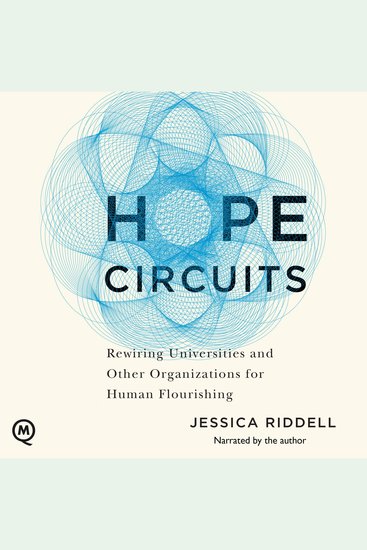
  • Hope Circuits - Rewiring Universities and Other Organizations for Human Flourishing - cover

    Hope Circuits - Rewiring...

    Jessica Riddell

    • 0
    • 0
    • 0
    How do we model abundance and generosity — in teaching, in learning, in leading organizations, particularly non-profits — when dealing with fiscal austerity and other forms of scarcity thinking? Hope Circuits explores this question, presenting sophisticated ideas that support democratizing higher education for everybody.
    		 
    Written in a conversational style that draws upon Jessica Riddell’s experience in governance, senior administration, and scholarship, the book is a how-to guide and thought leadership manifesto for developing the conceptual tools to seek solutions to higher education’s most pressing issues. Hope Circuits aims to rewire mindsets, perspectives, and behaviours to in turn rewire and renew the systems within which university stakeholders learn, live, and work. It tackles this challenging feat by suggesting ten tools to build hope circuits, a concept borrowed from neuroscience. 
    		 
    Riddell acknowledges that changing systems and deep cultures is not for the faint of heart; indeed, the more than 250 interviews conducted with thought partners for Hope Circuits expose how individuals who navigate complex systems regularly experience discomfort and even despair. In response, she shows us how to anchor a practice of hope in higher education with focus and intention, inviting others to adopt and adapt her approach.
    Ver livro
  • Manifesting Justice - Wrongly Convicted Women Reclaim Their Rights - cover

    Manifesting Justice - Wrongly...

    Valena Beety, Koa Beck

    • 0
    • 0
    • 0
    When Valena Beety first became a federal prosecutor, her goal was to protect victims, especially women, from cycles of violence. What she discovered was that not only did prosecutions often fail to help victims, they frequently relied on false information, forensic fraud, and police and prosecutor misconduct. 


    Seeking change, Beety began working in the Innocence Movement, helping to free factually innocent people through DNA testing and criminal justice reform. Manifesting Justice focuses on the shocking story of Beety's client Leigh Stubbs—a young, queer woman in Mississippi, convicted of a horrific crime she did not commit because of her sexual orientation. Beety weaves Stubbs's harrowing narrative through the broader story of a broken criminal justice system. 


    Drawing on interviews with both innocence advocates and wrongfully convicted women, along with Beety's own experiences as an expert litigator and a queer woman, Manifesting Justice provides a unique outsider/insider perspective. Beety expands our notion of justice to include not just people who are factually innocent, but those who are over-charged, pressured into bad plea deals, and over-sentenced. The result is a riveting and timely book that will transform our very ideas of crime and punishment, what innocence is, and who should be free.
    Ver livro
  • European Genocides - Details about the Holocaust and Yugoslavian War - cover

    European Genocides - Details...

    Kelly Mass

    • 0
    • 0
    • 0
    This audiobook contains two topics: 
    1 - The Yugoslavian Genocide is hard to explain. So many factors have contributed to the war, and eventually, the genocide in Bosnia, that many UN soldiers didn’t even know what to do with it. A lack of response, though, made the problem worse. And looking back on some of the cowardice and indifference, I’m sure many countries involved would like to go back in time and do it over. A combination of historical aspects such as the division of religion, the world wars, the Iron Curtain, and the fall of the Soviet Union were part of what led to a conflict that lasted for years in this sensitive region in Europe. Throughout the Bosnian War of 1992-- 1995, the Yugoslavian or Bosnian genocide describes either the Srebrenica massacre or the larger criminal activities against mankind and ethnic cleaning project performed by the Army of Republika Srpska (VRS) in areas controlled by the Army of Republika Srpska. 
    2 - Most people know what the Holocaust was. They have at least a vague image of what transpired in Europe during the 1940s. Still, the details may be blurry. So, let’s take a look at history and the events that shocked the world. And even though this was clearly not the first genocide in the world, it was one of particular proportions and scale, and therefore noteworthy. At the time of The Second World War, the Holocaust, also referred to as the Shoah, was a genocide of European Jews. Between 1941 and 1945, Nazi Germany and its allies killed around 6 million Jews in German-occupied Europe, representing about two-thirds of Europe's Jewish population.
    Ver livro
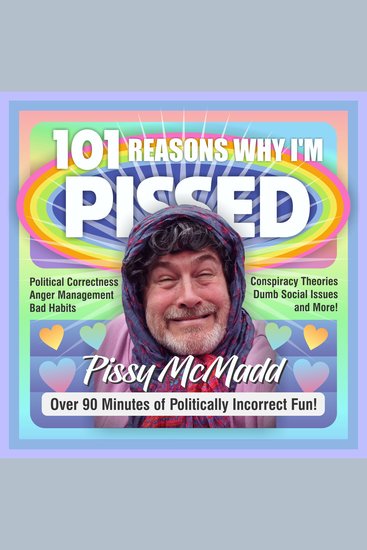
  • 101 Reasons Why I'm Pissed - Take a Humor Break from Political Correctness Social Issues Bad Habits Anger Management and Conspiracy Theories A Crazy Discussion with Pissy and Her Friends - cover

    101 Reasons Why I'm Pissed -...

    Pissy McMadd

    • 0
    • 0
    • 0
    Take a Humor Break from Political Correctness, Social Issues, Bad Habits, Anger Management, and Conspiracy Theories. A Crazy Unrehearsed and Hilarious 90+ Minute Discussion with Pissy McMadd and Her Friends!
    Ver livro
  • The Moral Sayings of Publius Syrus - cover

    The Moral Sayings of Publius Syrus

    Publius Syrus

    • 0
    • 0
    • 0
    The Moral Sayings of Publius Syrus, A Roman Slave is a collection of proverbs and aphorisms pulled from the many mimes and plays of Publius Syrus. Enslaved by the Romans in his youth, this witty man went on to conquer the Roman stage. These maxims, believed to have been collected in the 1st century AD, are all that remain of the great playwright’s work. Born in Syria in the 1st century BC, Publius Syrus was enslaved and brought to Rome by an army officer after the Romans conquered his native country. It was in Rome that he was given the name of Syrus, for his place of origin. He was then around 12 years old.This soldier had a patron who was delighted with the boy and requested that the soldier give Syrus to him. The soldier complied. Syrus’ new master found the boy witty and bright and was often entertained with his commentary. With such promise, the master provided Syrus with an education and later freed him. Syrus was immensely grateful and remained friends with his former master for the rest of his life. He took the surname Publius, which was probably the surname of his master.Newly free, Syrus traveled to Italy and began composing mimes—comical farces often used to “represent the failings and eccentricities of the higher classes, and the vulgar language and solecisms of the lower.” This combination of humor and moralism was widely popular among the Romans of the time, and Syrus earned great acclaim as a poet and actor. None of the great master’s plays have survived the ensuing centuries. But fortunately, many of his pithy maxims were collected from his plays, probably in the 1st century AD, and gathered into a single volume. This collection was translated from the Latin and first published in 1856.Included among the 1,087 proverbs are some that appear to be the foundation—or at least an early version—of sayings we still use today. While additional context regarding these quotes would be useful, they still have value on their own. These 1,087 proverbs
    Ver livro
  • George Soros - A Life In Full - cover

    George Soros - A Life In Full

    Peter L. W. Osnos

    • 0
    • 0
    • 0
    The name George Soros is recognized around the world. Universally known for his decades of philanthropy, progressive politics, and investment success, he is equally well known as the nemesis of the far right—the target of sustained attacks from nationalists, populists, authoritarian regimes, and anti-Semites—because of his commitment to open society, freedom of the press, and liberal democracy. At age ninety-one, Soros still looms large on the global stage, and yet the man himself is surprisingly little understood. 


    Biographers have attempted to tell the story of George Soros, but no single account of his life can capture his extraordinary, multifaceted character. Now, in this ambitious and revealing new book, Soros's longtime publisher, Peter L. W. Osnos, has assembled an intriguing set of contributors from a variety of different perspectives—public intellectuals (Eva Hoffman, Michael Ignatieff), journalists (Sebastian Mallaby, Orville Schell), scholars (Leon Botstein, Ivan Krastev), and nonprofit leaders (Gara LaMarche, Darren Walker)—to paint a full picture of the man beyond the media portrayals. 


    Through this kaleidoscope of viewpoints emerges a vivid and compelling portrait of this remarkable man's unique and consequential impact. It has truly been a life in full.
    Ver livro