¡Acompáñanos a viajar por el mundo de los libros!
Añadir este libro a la estantería
Grey
Escribe un nuevo comentario Default profile 50px
Grey
Suscríbete para leer el libro completo o lee las primeras páginas gratis.
All characters reduced
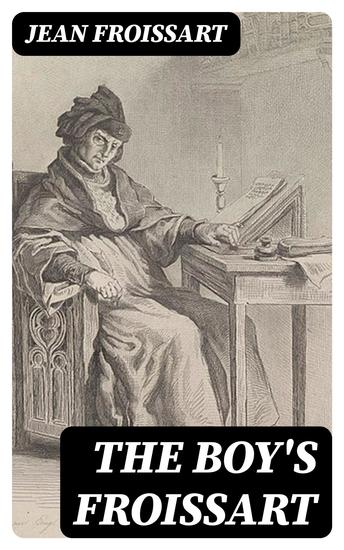
The boy's Froissart - Enriched edition Being Sir John Froissart's Chronicles of adventure battle and custom in England France Spain etc - cover

The boy's Froissart - Enriched edition Being Sir John Froissart's Chronicles of adventure battle and custom in England France Spain etc

Jean Froissart

Editorial: DigiCat

  • 0
  • 0
  • 0

Sinopsis

In 'The Boy's Froissart,' Jean Froissart presents a vivid and engaging retelling of his famed 'Chronicles,' focusing on the stirring events of the Hundred Years' War and the articulations of chivalric culture in 14th-century Europe. This adaptation employs a clear, accessible literary style, making the complexities of medieval history digestible for younger readers while preserving the captivating narratives and rich descriptions that characterize Froissart's original text. The historical context is meticulously maintained, with an emphasis on the social dynamics of knighthood, warfare, and the impact of conflict on everyday life across the realms of England and France. Jean Froissart was a chronicler, poet, and a prominent figure in medieval historiography, whose travels and connections to the courts of England and the Continent inspired much of his work. Growing up in the tumultuous environment of the Hundred Years' War, Froissart's passion for tales of noble exploits and his desire to document his era is evident in this adapted text, achieving a balance between historical authenticity and literary flair suitable for a younger audience. 'The Boy's Froissart' is highly recommended for educators and parents seeking to instill an appreciation for history in children. It serves as an excellent bridge for young readers to explore the medieval world, fostering both imagination and understanding, while introducing them to one of the most influential chronicles of the Middle Ages.

In this enriched edition, we have carefully created added value for your reading experience:
- A succinct Introduction situates the work's timeless appeal and themes.
- The Synopsis outlines the central plot, highlighting key developments without spoiling critical twists.
- A detailed Historical Context immerses you in the era's events and influences that shaped the writing.
- A thorough Analysis dissects symbols, motifs, and character arcs to unearth underlying meanings.
- Reflection questions prompt you to engage personally with the work's messages, connecting them to modern life.
- Hand‐picked Memorable Quotes shine a spotlight on moments of literary brilliance.
- Interactive footnotes clarify unusual references, historical allusions, and archaic phrases for an effortless, more informed read.
Disponible desde: 13/06/2022.
Longitud de impresión: 343 páginas.
Otros libros que te pueden interesar

  • Infinite Reality - Avatars Eternal Life New Worlds and the Dawn of the Virtual Revolution - cover

    Infinite Reality - Avatars...

    Anónimo

    • 0
    • 0
    • 0
    “Enough with speculation about our digital future. Infinite Reality is the straight dope on what is and isn’t happening to us right now, from two of the only scientists working on the boundaries between real life and its virtual extensions.” 
    —Douglas Rushkoff, author of Program or Be Programmed 
    Can our brains recognize where ""reality"" ends and ""virtual"" begins? Where will technology lead us in five, fifty, or five hundred years? An unrivaled guide to our digital future that has been cited by the Supreme Court, Infinite Reality is a mind-bending ""journey through the virtual universe"" (Wall Street Journal). Jim Blascovich and Jeremy Bailenson, two pioneering authorities, explore the profound potential of emerging technologies and reveal how our brains behave in digital worlds. 
     
    Along the way, Bailenson and Blascovich examine the timeless philosophical questions of the self and ""reality"" that arise through the digital experience; explain how virtual reality's latest and future forms—including immersive video games and social-networking sites—will soon be seamlessly integrated into our lives; show the many surprising practical applications of virtual reality, from education and medicine to sex and warfare; and probe further-off possibilities like ""total personality downloads"" that would allow your great-great-grandchildren to have a conversation with ""you"" a century or more after your death. 
    Equally fascinating, farsighted, and profound, Infinite Reality is an essential guide to our virtual future, where the experience of being human will be deeply transformed.
    Ver libro
  • Reconciling - A Lifelong Struggle to Belong - cover

    Reconciling - A Lifelong...

    Scott Steedman, Larry Grant

    • 0
    • 0
    • 0
    It's taken most of Larry Grant's long life for his extraordinary heritage to be appreciated. He was born in a hop field outside Vancouver in 1936, the son of a Musqueam cultural leader and an immigrant from a village in Guangdong, China. In 1940, when the Indian agent discovered that their mother had married a non-status man, Larry and his two siblings were stripped of their status. With one stroke of the pen, they were disenfranchised—no longer recognized as Indigenous. 
     
    Reconciling is a series of conversations between Larry and writer Scott Steedman as they visit pivotal geographical places together. Larry tells the story of his life, including his thoughts on reconciliation and the path forward for First Nations and Canada. His life echoes the barely known story of Vancouver and spans key events of the last two centuries, including Chinese immigration and the Head Tax, the ravages of residential school and now Indigenous revival and the accompanying change in worldview. 
     
    When Larry talks about reconciliation, he uses the verb reconciling, an ongoing, unfinished process we're all going through. "I have been reconciling my whole life, with my inner self," he explains. "To not belong was forced upon me by the colonial society that surrounded me. But reconciling with myself is part of all that."
    Ver libro
  • The Book of the Dead - An Egyptian Guide to the Afterlife - cover

    The Book of the Dead - An...

    Omar Khalil

    • 0
    • 0
    • 0
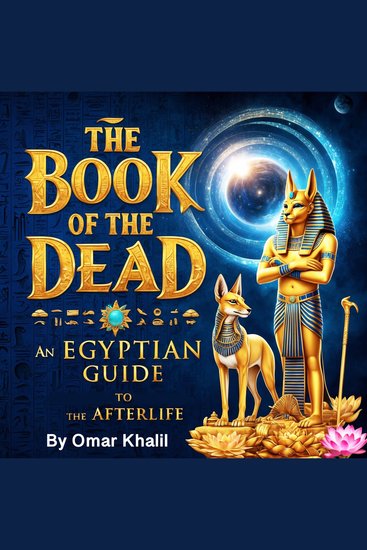
    To the ancient Egyptians, death was not the end—it was merely a transition to a new phase of existence. The afterlife was not a vague, distant concept but a vivid and essential part of their spiritual understanding. They believed in a continuation of life, one where the soul would live on in a realm filled with beauty, light, and eternal peace, provided certain conditions were met. This vision shaped much of their culture, from their art and architecture to their religious practices and personal values. 
    Central to this belief was the idea of the soul, which they saw as comprising multiple parts. The Ka was the life force, the vital essence that departed the body at death but still needed sustenance. The Ba represented personality and mobility—it was the part of the soul that could travel between the living world and the afterlife. The Akh, achieved through a successful transition and judgment, was the transformed spirit that lived among the gods. Each of these aspects had its own role to play in the journey beyond death, and maintaining their harmony was crucial. 
    Immortality was not automatic. It had to be earned through righteous living and proper burial. For the Egyptians, morality and order, guided by the principle of Ma’at—truth, balance, and justice—were essential. One had to live in accordance with Ma’at to hope for a favorable judgment in the afterlife. This belief extended into the funerary rituals, where the dead would be judged in the Hall of Two Truths, their heart weighed against the Feather of Ma’at to determine their fate.
    Ver libro
  • Love Beyond - A Mother's Heart a Son's Courageous Battle - cover

    Love Beyond - A Mother's Heart a...

    Dawn Lohr

    • 0
    • 0
    • 0
    In this powerful and intimate memoir, a mother chronicles her son's battle with depression, offering unprecedented insight into the complex world of mental illness through their dual perspectives.
    Ver libro
  • American Civil War in 1864 The: The History and Legacy of the War’s Penultimate Year - cover

    American Civil War in 1864 The:...

    Editors Charles River

    • 0
    • 0
    • 0
    Americans have long been fascinated by the Civil War, marveling at the size of the battles, the leadership of the generals, and the courage of the soldiers. Since the war's start over 150 years ago, the battles have been subjected to endless debate among historians and the generals themselves. The Civil War was the deadliest conflict in American history, and had the two sides realized it would take 4 years and inflict over a million casualties, it might not have been fought. Since it did, however, historians and history buffs alike have been studying and analyzing the biggest battles ever since.  
    	By the close of 1864, Abraham Lincoln had been reelected, the Union army had taken Nashville from General Hood, and Sherman had concluded his total war, “slash-and-burn” march of destruction to Savannah, Georgia, offering it as a Christmas present to Lincoln. Nevertheless, with everything seemingly falling to pieces, the South still held out hope of some sort of miracle, and Davis even attempted to send a peace delegation to meet with Lincoln in the early months of 1865. On January 28, 1865 as Union General Ulysses S. Grant was continuing to lay siege to Lee’s army at Petersburg, Virginia, Davis sent three commissioners headed by Vice-President Stephens to initiate informal peace talks with Lincoln. By February 3, however, the talks, known as the Hampton Roads Conference, came to a stalemate as Lincoln would accept nothing less than total union, while Davis would only accept Southern independence.  
    	Even at that point, the South was clearly on its last legs. General George H. Thomas destroyed John Bell Hood’s Confederate army at the battles of Nashville and Franklin, leaving only two large Confederate armies still in the field. Lee's army was weakened by desertion, lack of supplies and casualties, and Joseph E. Johnston’s army could barely resist against Sherman’s army as it was advancing north toward Virginia.
    Ver libro
  • Darkest Christmas - December 1942 and a World at War - cover

    Darkest Christmas - December...

    Peter Harmsen

    • 0
    • 0
    • 0
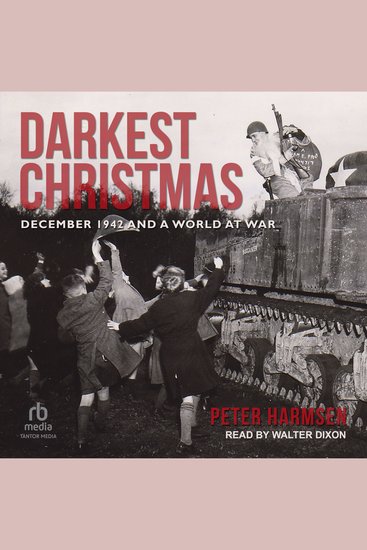
    December 1942 saw the bloodiest Christmas in the history of mankind. Men were killing each other in greater numbers than ever before. The Holocaust continued, and innocent civilians were murdered by the thousands throughout the evil Nazi empire, even as the perpetrators celebrated the birth of Christ. 


    Millions stationed in far-off lands amid the greatest conflict in human history feared this was their last Christmas in freedom, or their last Christmas alive. At the same time as the slaughter continued unabated, throughout the world there were random acts of kindness. These gestures also straddled religious barriers and sometimes included those of non-Christian faiths. 


    At the same time, Christmas 1942 saw the injunction of "good will to man" distorted in ugly and callous ways. In Berlin, Propaganda Minister Joseph Goebbels spent time with his family while still buried in feverish fantasies about the Jewish world conspiracy. 


    Christmas 1942 saw the entire range of man's conduct towards his fellow man, reflecting the extremes of behavior, good and bad, that World War II gave rise to. The way the holiday was marked around the world tells a deeper, more universal story of the human condition.
    Ver libro