¡Acompáñanos a viajar por el mundo de los libros!
Añadir este libro a la estantería
Grey
Escribe un nuevo comentario Default profile 50px
Grey
Suscríbete para leer el libro completo o lee las primeras páginas gratis.
All characters reduced
Volcano Edge Climb - cover

Volcano Edge Climb

Jasper Quincy

Traductor A AI

Editorial: Publifye

  • 0
  • 0
  • 0

Sinopsis

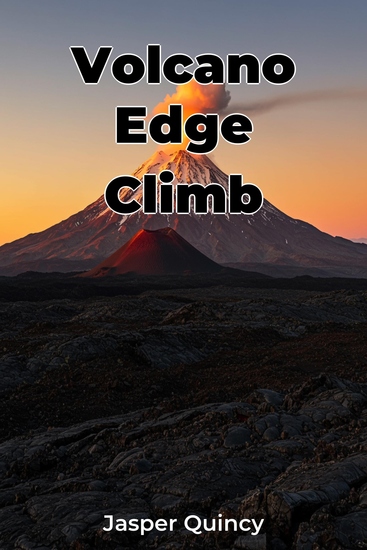
Volcano Edge Climb explores the thrilling yet perilous world of volcano climbing, offering a unique perspective on mountaineering in geologically active environments. It highlights how traditional climbing techniques fall short when facing seismic risk assessment, unstable volcanic terrain, and the dangers of sulfur exposure.

 
The book emphasizes the necessity of integrating real-time geological monitoring and specialized gear, advocating for a paradigm shift in climbing practices to ensure climber safety. For instance, understanding plate tectonics, the driving force behind volcanism, becomes crucial for anticipating potential hazards.

 
The book begins by establishing a solid scientific foundation, introducing key concepts in volcanology and seismology. It progresses to discuss essential gear modifications, risk assessment strategies, and ethical considerations for responsible exploration. By blending scientific rigor with practical advice, Volcano Edge Climb bridges the gap between earth science and adventure.

 
The book also uses case studies and expert interviews to support its arguments, making it an invaluable resource for experienced climbers and earth science enthusiasts alike.
Disponible desde: 02/05/2025.
Longitud de impresión: 79 páginas.
Otros libros que te pueden interesar

  • The Evolution of Peru's Economy - A Historical Perspective - cover

    The Evolution of Peru's Economy...

    Anya Solace

    • 0
    • 0
    • 0
    Peru’s economy has undergone a remarkable transformation over the centuries, shaped by geography, cultural heritage, and global economic forces. From the highly organized economic structures of pre-Colonial civilizations to the challenges of modern globalization, Peru’s development reflects a complex interplay of resource management, foreign influence, and domestic policies. Understanding the evolution of Peru’s economy requires a historical perspective that highlights the fundamental shifts in trade, industry, and governance that have defined the nation’s financial landscape.  
      
    The economic foundations of Peru were deeply influenced by its diverse geography and rich natural resources. The Andes, Amazon rainforest, and coastal plains provided a variety of ecosystems that supported agriculture, mining, and trade. Long before Spanish colonization, the Andean civilizations, particularly the Incas, developed sophisticated economic systems that relied on communal labor, redistribution networks, and agricultural innovations. These early economic structures created a foundation for productivity and social organization that persisted even after European intervention.  
      
    The arrival of the Spanish in the 16th century drastically altered Peru’s economic trajectory. The colonial period introduced extractive systems, such as the encomienda and mita, which forced indigenous populations into labor-intensive industries, particularly silver mining. This period established Peru as a key contributor to the Spanish Empire’s wealth but also entrenched an economic model centered on resource extraction and dependency on European markets. The restrictions imposed by Spain limited Peru’s economic autonomy, setting the stage for struggles following independence. 
    Ver libro
  • Igloo Dwellers Were My Church - cover

    Igloo Dwellers Were My Church

    John R Sperry

    • 0
    • 0
    • 0
    Anglican bishop John R. Sperry spent 20 years with the Inuit in a tiny and isolated Canadian Arctic community. ... Sperry travelled on his rounds by dogteam across the sea ice and snow-covered land, to visit Inuit camps…
    Ver libro
  • Wayfarer: Love loss and life on Britain’s ancient paths - cover

    Wayfarer: Love loss and life on...

    Phoebe Smith

    • 0
    • 0
    • 0
    Shortlisted for the Edward Stanford Travel Book of the Year 2025A Financial Times best summer travel book of 2024Travel Book of the Year at the Inspire Global Media Awards 
    'A powerfully delicate book of love, loss and discovery, along paths of emotional understanding and physical wonder.' Raynor Winn 
    On an assignment to walk the most famous pilgrimage in the world – the Camino de Santiago, in northern Spain – Phoebe Smith somehow lost her way. 
    Having spent a lifetime exploring unfamiliar places, she quit her dream job, ended her long-term relationship and headed home to North Wales to discover the point to… everything. 
    In her search for answers she found herself – quite by accident – walking some of Britain’s oldest pilgrim paths. And by following these old ways, she ended up confronting past traumas that she thought she had laid to rest. 
    But while it follows holy trails, this is not a book about religion. From losing her mother as a teenager to surviving toxic relationships, Phoebe offers an unflinchingly honest look at her battle with an eating disorder, depression, and the pitfalls of newfound singledom. 
    Skilfully weaving together Phoebe’s own story with those of countless travellers past and present, Wayfarer reveals how nature and place can heal past wounds, offering a pathway to salvation she’d never thought existed. 
    In this award-winning autobiography, Smith takes us on a journey through Europe, her words painting vivid images of the walks and hikes she undertakes. Her memoirs are not just travelogues, but essays of self-discovery and healing. 
    For fans of Raynor Winn (Landlines), Stephen Neale (The South West Coast Path), Will Millard (The Way of the Hermit), Steve Davison (15 Short Walks on Dartmoor North), and Daniel Start (Wild Guide Lake District and Yorkshire Dales). 
    HarperCollins 2024
    Ver libro
  • Tokugawa Shogunate - Peace Isolation and the Preservation of Samurai Culture - cover

    Tokugawa Shogunate - Peace...

    Rolf Hedger

    • 0
    • 0
    • 0
    The Tokugawa Shogunate, also known as the Edo period (1603–1868), was a time of unprecedented peace and stability in Japan, following centuries of war and political fragmentation. This era began with the victory of Tokugawa Ieyasu at the Battle of Sekigahara in 1600, a decisive conflict that allowed him to consolidate power over the warring daimyo. Three years later, in 1603, he was granted the title of shogun by the emperor, officially marking the beginning of Tokugawa rule. 
    Ieyasu’s triumph at Sekigahara was not merely a military success but also a demonstration of his strategic brilliance and political foresight. By carefully forging alliances and exploiting rivalries among the daimyo, he ensured that his Tokugawa clan would emerge as the dominant force in Japan. Once in power, Ieyasu took immediate steps to secure his family’s hold over the nation. He redistributed land among the daimyo, rewarding loyal vassals and weakening potential threats. This reorganization of landholdings laid the foundation for the centralized feudal system that would define the Tokugawa era. 
    Although Ieyasu formally retired in 1605, passing the title of shogun to his son Tokugawa Hidetada, he continued to wield significant influence from behind the scenes. His retirement was a strategic move designed to solidify the legitimacy of hereditary succession, ensuring that the Tokugawa family would maintain control for generations. This transition of power set a precedent for stability, preventing the kind of succession disputes that had plagued previous shogunates.
    Ver libro
  • Short Stories in Spanish For Beginner Learners - Quickly Improve Your Reading Speaking and Confidence in Spanish the Fun Way — with Powerful Vocab Tools and Exercises - cover

    Short Stories in Spanish For...

    Mind Smith

    • 0
    • 0
    • 0
    * Over 10,000 students have skyrocketed their learning so far with our short stories books * 
    The only beginner Spanish short stories book with bilingual summaries, quizzes, translations + a 7-day challenge — your complete starter kit! 
    What if Spanish felt so easy you didn't need translations or apps, even as a beginner… and reading just flowed? You could feel confident in record time. These engaging short stories make learning natural, fun, and confidence-building, while giving you tools that no textbook or app could. 
    What you’ll get: 
    ✅ 15 Culturally-relevant stories that are fun to listen to in 10 minutes or less 
    ✅ Chapter summaries in both languages so you don't get stuck 
    ✅ Quizzes, vocab lists and verb conjugations - to solidify your learning 
    ✅ English translations to check your understanding and build confidence 
    ✅ 7-Day Spanish Reading Challenge - your step-by-step plan to build momentum and confidence in just one week ($20 value) 
    ✅ Our Exclusive “Cheat Sheet” of 500 Spanish Words You Already Know – to instantly boost your vocab and confidence ($20 value) 
    Designed for beginners with at least a little bit of experience*, and intermediate learners. Focused primarily on Latin American Spanish and culture (but the Spanish you learn will 100% work in Spain too!) 
    Use the 7-Day Challenge and see the difference. If you don’t feel more confident after reading the stories and completing the challenge, Amazon’s easy returns have you covered. 
    Ready to drastically boost your confidence in reading, speaking and thinking in Spanish? Grab your copy and start reading today.
    Ver libro
  • How to Be a Backpacker - The Best Advice Given by an Experienced Traveler - cover

    How to Be a Backpacker - The...

    Travis Durham

    • 0
    • 0
    • 0
    This short and simple guide is a must-have to get the most out of your backpacking journey! 
    Backpackers are explorers, and sometimes, they are like little heroes who aren’t afraid to step out of their comfort zone to experience some new food, culture, language, or landscape. But with travelling, challenges are bound to be on your path. In order to be prepared and prevent the most unwanted difficulties on your trip, a guide has been put together to aid you. 
    In this guide, you will find handy tips that relate to:Avoiding scams, pickpocketing, and being taken advantage ofLowering your costs by 90 percent by knowing where to go or what to buyWhat to add to your checklist and your backpack before you goHow to make sure you are physically prepared and taken care ofKeeping your possessions safeTips on finding the best deals on flights and airfaresSafety tips and surprisingly handy knick-knacks you can use to store your itemsWalking and hiking tips to keep your feet healthy and avoid blisters or injuriesLittle things you can do to give back to the community and the people you purchase items from 
    Don’t wait. Get your copy now!
    Ver libro