Join us on a literary world trip!
Add this book to bookshelf
Grey
Write a new comment Default profile 50px
Grey
Subscribe to read the full book or read the first pages for free!
All characters reduced
Pony Express - cover

Pony Express

Jasper Quincy

Translator A AI

Publisher: Publifye

  • 0
  • 0
  • 0

Summary

"Pony Express" explores the brief but vital role of this high-speed mail service in connecting a divided nation on the brink of the Civil War. More than just a romanticized tale of the Wild West, the Pony Express provided a crucial communication link between the East and West coasts, especially as California's gold rush boomed. During this period, news could take months to travel across the American West, but the Pony Express cut that time to around ten days, delivering urgent political and economic news. 

 
The book examines the establishment and operation of the Pony Express, the experiences of its riders, and its lasting impact on national unity. It highlights how the relay stations and carefully selected routes enabled riders to cover vast distances, facing harsh weather and potential dangers along the way. 

 
Using primary sources such as diaries and letters, the book unfolds chronologically, starting with the historical context and key figures, then detailing the riders' experiences and the service's ultimate demise with the completion of the transcontinental telegraph.
Available since: 03/21/2025.
Print length: 58 pages.
Other books that might interest you

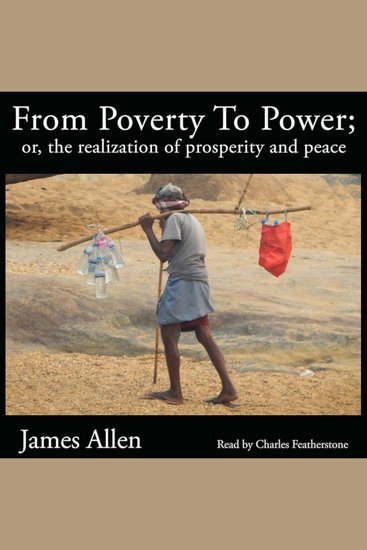
  • From Poverty To Power - The first and most powerful of his books originally subtitled The Realization of Prosperity and Peace - cover

    From Poverty To Power - The...

    James Allen

    • 0
    • 0
    • 0
    Before the global sensation As a Man Thinketh, there was From Poverty to Power (1901), James Allen‘s first and, in his view, more significant work. Unlike other books, it was written while he was still working as a journalist, and before the success of As A Man Thinketh. Written with an energy and directness that defined his emerging philosophy in its earliest stages, this book presents a foundational exploration of spiritual law that Allen felt his later, more popular work only hinted at. 
    The book is structured in two distinct parts: "The Path to Prosperity" and "The Way of Peace" . In the first, Allen argues that enduring external success is not a matter of chance, but the inevitable result of inward mental adjustment and growth . The second part shifts to the pursuit of inner tranquility, guiding the reader toward a state of calm beyond the reach of outer turmoil . 
    Conceived as "a book for all those who are in search of better conditions, wider freedom, and increased usefulness," From Poverty to Power is a concise and potent statement of the principles that would define the modern self-help movement.
    Show book
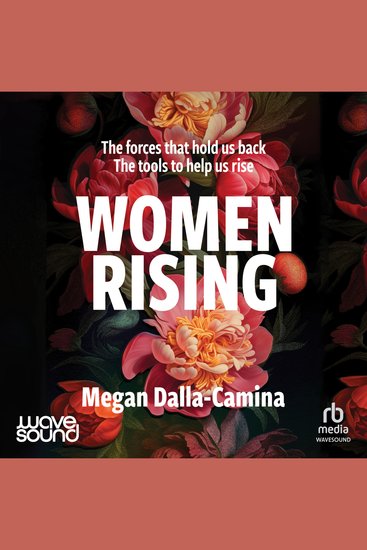
  • Women Rising - cover

    Women Rising

    Megan Dalla-Camina

    • 0
    • 0
    • 0
    It’s time to create a future where feminine power and leadership is celebrated. It’s time for a radical awakening and a revolution. It’s time for women to rise. 
     
    In Women Rising, you’ll discover how to recognise and resist the very real forces of power that limit how you work and live as a woman. Are you tired of being asked to ‘lean in,’ fit in, perform and conform? The truth is that women today continue to be constrained by pervasive ideas about how we ‘should’ act and behave. 
     
    To break free, we need to understand the forces that limit our potential. Those forces are external and internal, without and within, and they sabotage the very success we work so hard for. In Women Rising, author and award-winning empowerment expert Megan Dalla-Camina shows you how to see and cut the invisible strings holding you back. 
     
    Women Rising unveils the 6 external paradoxes that impact how women lead and succeed. You’ll uncover how these power paradoxes affect our visibility, empowerment, confidence, success, motherhood and leadership. 
     
    Turning inward, you’ll discover how our internal narratives, the stories we tell ourselves, can also serve to keep us stuck. Women Rising unmasks 13 archetypes that keep us striving for impossible standards as a Perfectionist, an Overachiever, a Good Girl, a People Pleaser and more. 
     
    Finally, Women Rising illuminates the path forward. It shares real, practical tools and strategies that women everywhere can use to craft a future where we succeed on our own terms. Grounded in leadership experience from the world’s largest organisations, Megan Dalla-Camina’s hands-on toolkit shows you how to find your vision and purpose — and evolve as a confident, authentic leader. 
     
    It's time to rise and to step into your power. This guide will show you how.
    Show book
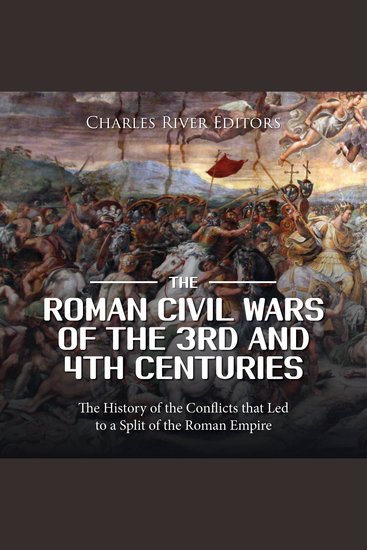
  • Roman Civil Wars of the 3rd and 4th Centuries The: The History of the Conflicts that Led to a Split of the Roman Empire - cover

    Roman Civil Wars of the 3rd and...

    Editors Charles River

    • 0
    • 0
    • 0
    The 50 years following the assassination of Severus Alexander on March 19, 235 CE has been generally regarded by academics as one of the lowest points in the history of the Roman Empire. This stands in stark contrast to the previous 150 years, which included the reigns of the Five Good Emperors and has been universally praised as one of the high points of the empire. Severus Alexander was the last of the Severan emperors, and the subsequent years of crisis (235-285 CE) were characterized by a series of short reigns, usually ending in the violent death of the reigning emperor. 
    At the same time, this period of time also saw the empire beset by threatening forces on all sides. The Romans faced a newly resurgent Persia in the east, as well as significant forces from German tribes on the Rhine and Goths along the Danube. The various conflicts would result in the unprecedented death of a sitting emperor in battle, which took place in 251 with Emperor Decius, and Emperor Valerian was captured in 260 CE.  
    Diocletian's reign would see reforms put into place to achieve the desired end of the Imperial Crisis, and several of the emperors before him may well have had the ability to manage the reform process, but the army’s power and willingness to use and abuse power ensured that few of them truly had a chance to really make their marks. It was the worst period in the history of the Roman Empire to that point, even as it forced the Romans to deal with belligerent foreign powers and problems created by the emergence of increasingly powerful and populous provinces. 
    The pressures created by population growth, both within the empire and outside of it, have been thoroughly researched, but more recently, issues created by climate change have also commanded attention.
    Show book
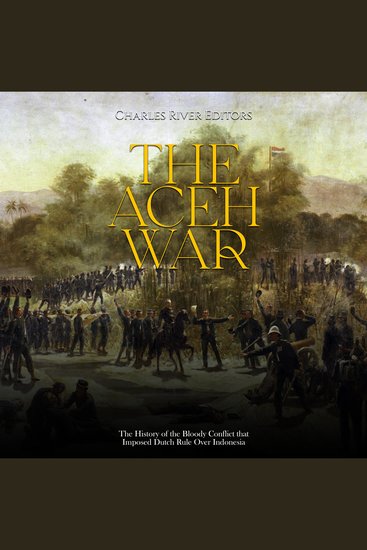
  • Aceh War The: The History of the Bloody Conflict that Imposed Dutch Rule Over Indonesia - cover

    Aceh War The: The History of the...

    Editors Charles River

    • 0
    • 0
    • 0
    During the 17th century, the Netherlands, despite having only 1.5 million people in 1600, became a global maritime and trading power. By contrast, France at the time had 20 million people, Spain had 8 million, and England had 5 million. Nevertheless, Amsterdam became one of the most important urban centers in the world and the location of the world’s first stock market, and Dutch merchant ships and pirates plied the Atlantic Ocean, the Indian Ocean, and the Pacific Ocean. The Dutch acquired colonies in the East Indies, where they seized control of the spice trade from the Portuguese, and in the West Indies, they acquired a number of islands from the Spanish (several of which are still Dutch today). They became the only Westerners who were allowed to trade with Shogunate Japan from a small island next to Nagasaki, and they settled the town that ultimately became New York City. Naturally, all of this imperialism generated enormous amounts of wealth that flowed into the Netherlands. 
    	Naturally, not everybody welcomed the Europeans, and some of the fiercest opposition came from the Sultanate of Aceh. Aceh is now a part of Indonesia, but the people have stubbornly maintained a unique sense of self-identity based on a quite distinct and separate history. Once a major political and military power in the Indian Ocean, its power gradually declined over a period of several centuries, but Aceh successfully maintained its independence until 1873, when the Dutch invaded. The war between the Dutch and the Acehnese was the longest and bloodiest of the many Dutch military campaigns in Indonesia. Even after the Dutch technically subdued them, insurgency campaigns would last well into the 20th century, and sporadic fighting was still ongoing as the Japanese pushed across the Pacific in the 1930s and 1940s. 
    Show book
  • Berlin Wall The: The History and Legacy of the World's Most Notorious Wall - cover

    Berlin Wall The: The History and...

    Charles River Editors

    • 0
    • 0
    • 0
    Though it never got “hot,” the Cold War was a tense era until the dissolution of the USSR, and nothing symbolized the split more than the Berlin Wall, which literally divided the city. Berlin had been a flashpoint even before World War II ended, and the city was occupied by the different Allies even as the close of the war turned them into adversaries. After the Soviets’ blockade of West Berlin was prevented by the Berlin Airlift, the Eastern Bloc and the Western powers continued to control different sections of the city, and by the 1960s, East Germany was pushing for a solution to the problem of an enclave of freedom within its borders. West Berlin was a haven for highly-educated East Germans who wanted freedom and a better life in the West, and this “brain drain” was threatening the survival of the East German economy.  
    	In order to stop this, access to the West through West Berlin had to be cut off, so in August 1961, Soviet premier Nikita Khrushchev authorized East German leader Walter Ulbricht to begin construction of what would become known as the Berlin Wall. The wall, begun on Sunday August 13, would eventually surround the city, in spite of global condemnation, and the Berlin Wall itself would become the symbol for Communist repression in the Eastern Bloc. It also ended Khrushchev’s attempts to conclude a peace treaty among the Four Powers (the Soviets, the Americans, the United Kingdom, and France) and the two German states.  
    	The wall would serve as a perfect photo-opportunity for two presidents (Kennedy and Reagan) to hammer the Soviet Communists and their repression, but the Berlin Wall would stand for nearly 30 years, isolating the East from the West. It is estimated about 200 people would die trying to cross the wall to defect to the West. 
    Show book
  • Mystical Hermetic & Christian Dialogues: Beyond the Nag Hammadi Canon - Egyptian Wisdom the Divine Mind and the Ascent of the Soul - cover

    Mystical Hermetic & Christian...

    Various Hermetic & Early...

    • 0
    • 0
    • 0
    What if you could hear the whispered hymns of desert sages as they charted the soul’s climb beyond the stars? 
    The Mystical Hermetic & Christian Dialogues audiobook (approx. 3 hrs 45 min) brings ancient voices to life with immersive narration, gentle ambient tones, and strategic pauses for reflection.  
    Listen as: 
    •	A master intones the Discourse on the Eighth and Ninth, lifting you sphere by sphere toward the Divine. 
    •	Worshippers chant the Prayer of Thanksgiving, their reverence echoing in a stone-vaulted sanctuary. 
    •	Hermes Trismegistus explains sacred mysteries in the Perfect Discourse, rebutted by a Christian monk who quotes the Gospel of John. 
    •	Scholarly interludes supply concise context so you never lose the thread of these soaring visions. 
    Perfect for meditation walks, late-night study, or seekers hungry for wisdom beyond the ordinary page.
    Show book