¡Acompáñanos a viajar por el mundo de los libros!
Añadir este libro a la estantería
Grey
Escribe un nuevo comentario Default profile 50px
Grey
Suscríbete para leer el libro completo o lee las primeras páginas gratis.
All characters reduced
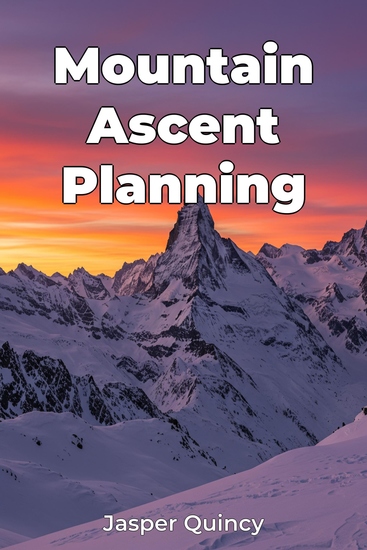
Mountain Ascent Planning - cover

Mountain Ascent Planning

Jasper Quincy

Traductor A AI

Editorial: Publifye

  • 0
  • 0
  • 0

Sinopsis

Mountain Ascent Planning explores the crucial science and strategy required for safe and successful high-altitude mountaineering, emphasizing the interplay of acclimatization, gear management, and oxygen utilization. It highlights how understanding these elements is crucial as inadequate preparation can quickly turn a challenging climb into a life-threatening situation. The book uniquely combines traditional mountaineering knowledge with scientific research, illustrating that summit success relies on a deep understanding of environmental factors and risk mitigation through meticulous planning.

 
The book begins by outlining the physiological challenges of high altitude, like hypoxia and altitude sickness, before delving into acclimatization strategies and equipment analysis. It emphasizes phased ascent approaches and individualized acclimatization schedules. Through case studies of past expeditions, successes and failures are analyzed using data from physiological monitoring and weather observations. This approach demonstrates how an interdisciplinary understanding informs effective mountaineering strategies.

 
Targeting experienced mountaineers and outdoor professionals, the book progresses by connecting physiology, engineering, and environmental science to inform planning. While focusing on ascent planning and execution, it excludes aspects like rock climbing techniques. Ultimately, Mountain Ascent Planning provides a data-driven, holistic approach to help readers optimize their high-altitude performance and expedition safety.
Disponible desde: 07/04/2025.
Longitud de impresión: 84 páginas.

Otros libros que te pueden interesar

  • Smelling the Breezes - A Journey through the High Lebanon in 1957 - cover

    Smelling the Breezes - A Journey...

    Ralph Izzard, Molly Izzard

    • 0
    • 0
    • 0
    Smelling the Breezes is an inspiring family adventure, a three-hundred-mile walk down the spine of the Lebanon with four children, two donkeys and Elias, the family's gardener, nursemaid and friend. The journey took them over towering passes, through immense gorges and into the lives of mountain villages and highland herdsmen. The presence of four small but redoubtable blonde children proved a passport at every door, whatever the politics, religion or ethnicity of the household. Smelling the Breezes is a magnificent portrait of Lebanon in all its rich complexity and easy charm: broken castles, hashish smugglers, clan feuds, festivals, forgotten temples, secretive headquarters and hospitable sheikhs.
    Ver libro
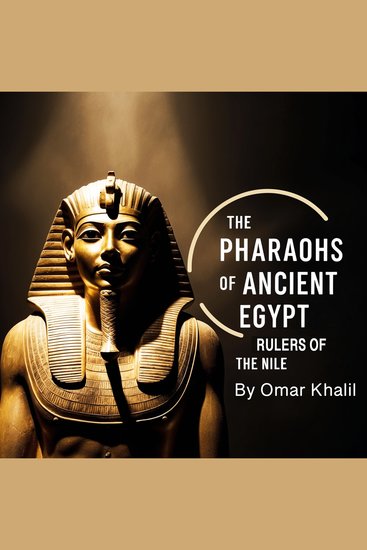
  • The Pharaohs of Ancient Egypt - Rulers of the Nile - cover

    The Pharaohs of Ancient Egypt -...

    Omar Khalil

    • 0
    • 0
    • 0
    The emergence of the pharaohs marked the beginning of one of history’s most iconic civilizations. In the early dynastic period around 3100 BCE, Egypt underwent a dramatic transformation as Upper and Lower Egypt were unified under a single ruler, traditionally identified as King Narmer or Menes. This unification not only established centralized rule but also laid the foundations for a dynastic tradition that would endure for millennia. The pharaoh, whose name means “great house,” came to be seen as both a political leader and a divine figure, embodying the will of the gods on earth. 
    As Egypt’s first kings consolidated power, they created administrative systems to manage resources, command armies, and oversee large-scale construction projects. Hierarchical governance emerged, with officials and scribes acting under the pharaoh’s authority to maintain order throughout the land. This new system allowed the pharaohs to centralize authority, control the fertile Nile Valley, and ensure the production and redistribution of grain and other goods, which became critical for sustaining a growing population and for asserting royal dominance. 
    Religious ideology played a key role in solidifying the power of the pharaohs. They were often depicted as the sons of deities, particularly associated with the sun god Ra and the sky god Horus. Temples were erected not just as places of worship, but as instruments of royal propaganda, showcasing the divine legitimacy of the ruler. Rituals, festivals, and monumental inscriptions reinforced the pharaoh’s sacred status and his role in maintaining ma’at, the cosmic order of balance and harmony.
    Ver libro
  • Bay Curious - Exploring the Hidden True Stories of the San Francisco Bay Area - cover

    Bay Curious - Exploring the...

    Olivia Allen-Price

    • 0
    • 0
    • 0
    Curious about the San Francisco Bay Area? With explorations into unique local legends, interesting landmarks, and uncovered histories, Bay Curious is a fun, quirky guide to the secret stories of the Bay Area for visitors, newcomers, and California natives alike. 


    Who was America's first and only Emperor? Why are there ships buried under the streets of San Francisco? Was the word "hella" really created in the East Bay? Bay Curious brings you the answers to these questions and much more through fun and fascinating deep-dives into hidden gems of Bay Area trivia, history, and culture. 


    Based on the award-winning KQED podcast of the same name, Bay Curious brings a fresh eye to some of its most popular pieces and expands to cover stories unique to this book. With subjects ranging from Marin's redwood forests to the Winchester Mystery House, from the Black Panther Party's school program to the invention of the Mai Tai, Bay Curious gives you the entertaining and informative, weird and wonderful true stories of the San Francisco Bay Area.
    Ver libro
  • From Saginaw to Srinagar - My Journey from the Familiar to the Faraway - cover

    From Saginaw to Srinagar - My...

    Marilyn C. Murphy

    • 0
    • 0
    • 0
    There is so much to experience and learn about the world—both without and within. But you won’t discover it unless you leave home and everything you’ve known. Follow your inner compass. Take a risk. Go! Just go!
    Ver libro
  • Acropolis and the Agora The: The History of Ancient Athens’ Most Important Sites - cover

    Acropolis and the Agora The: The...

    Editors Charles River

    • 0
    • 0
    • 0
    The Acropolis, which literally means “a city on the heights,” is a citadel whose currently surviving structures were mostly built during the 5th century B.C. in honor of Athena, the patron goddess of Athens. It functioned as a sacred precinct that contained the city’s most important religious and municipal structures, many of which have remained relatively intact for over 2,000 years. The Propylaea (the gateway to the Acropolis), the Parthenon (the principal shrine to the goddess), the Erechtheion (a shrine that supposedly houses the burial grounds of mythical Athenian kings), and the Temple of Athena Nike all survive to this day, and for these reasons, the Acropolis is perhaps the definitive and most eloquent expression of classical architecture, if not of the classical form itself. The Acropolis, which literally means “a city on the heights,” is a citadel whose currently surviving structures were mostly built during the 5th century B.C. in honor of Athena, the patron goddess of Athens.  
    	The center of political and commercial interaction in the Ancient Greek polis was the agora. The word essentially means a gathering place or an open space, and in all Greek city states, the agora was central to all aspects of daily life and commerce. As the agora developed as a civic space, particularly from the 6th century B.C. onward in Athens, the architectural splendor of the buildings associated with it became an ever more obvious demonstration of the power and glory of Athenian democracy. 	In its earliest forms, an agora in maritime cities was invariably situated near the sea, while in inland urban centers, it was usually located at the foot of the hill that normally provided the city’s ultimate defense. The agora was always the oldest part of any city and, as such, and as well as being the commercial hub of the area, also became the center of the religious and political life of the polis.
    Ver libro
  • Brazilian Adventure - cover

    Brazilian Adventure

    Peter Fleming

    • 0
    • 1
    • 0
    It began with an advertisement in The Times: 'Leaving England June, to explore rivers Central Brazil, if possible ascertain fate Colonel Fawcett; abundance game, big and small; exceptional fishing; room two more guns.' Colonel Fawcett and his son Jack had embarked on a journey in 1925 in search of a supposed lost city in the Amazon and were never seen again. This expedition was too much of a temptation for Peter Fleming, a young journalist with energy and an appetite for adventure. The journey, which begins in a
    reckless spirit of can-do frivolity, slowly darkens into something very personal and deeply testing 'for which Rider Haggard might have written the plot and Conrad designed the scenery.' Fleming recounts it in brilliant prose, leavening the danger with humour and honesty.
    Ver libro