¡Acompáñanos a viajar por el mundo de los libros!
Añadir este libro a la estantería
Grey
Escribe un nuevo comentario Default profile 50px
Grey
Suscríbete para leer el libro completo o lee las primeras páginas gratis.
All characters reduced
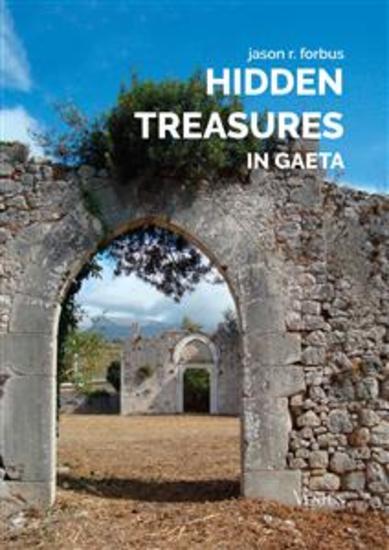
Hidden Treasures in Gaeta - cover

Hidden Treasures in Gaeta

Jason R. Forbus

Editorial: Ventus

  • 0
  • 0
  • 0

Sinopsis

Hidden Treasures in Gaeta offers a fresh perspective on the city, rediscovering historically significant sites within its urban fabric and in the countryside. Through photographs of interiors, exteriors, and aerial views, the book develops a historical and documentary narrative of the places visited, informing and simultaneously guiding the reader on an engaging journey. Far from the crowded squares and beaches, Gaeta will surprise you.
Disponible desde: 20/02/2024.
Longitud de impresión: 118 páginas.

Otros libros que te pueden interesar

  • Sengoku - Warring States and the Path to Unification - cover

    Sengoku - Warring States and the...

    Rolf Hedger

    • 0
    • 0
    • 0
    The Sengoku period, meaning “Warring States,” was one of the most turbulent and transformative eras in Japanese history. Lasting from the mid-15th century to the early 17th century, it was marked by ceaseless conflict, shifting alliances, and the gradual disintegration of centralized authority. The roots of this period can be traced back to the decline of the Ashikaga Shogunate, the Ōnin War, and the rise of regional warlords known as daimyo, each vying for control over Japan’s fractured political landscape. 
    The Ashikaga Shogunate, which had ruled Japan since the early 14th century, gradually lost its grip on the country due to internal corruption, weak leadership, and an inability to maintain order. By the mid-15th century, the shogunate had become largely symbolic, with real power resting in the hands of feudal lords. These tensions erupted into full-scale conflict with the outbreak of the Ōnin War (1467–1477), a devastating civil war primarily fought in and around Kyoto. What began as a succession dispute within the shogunate spiraled into a nationwide conflict, leading to the destruction of Kyoto and the collapse of central authority. 
    With the Ashikaga Shogunate rendered powerless, Japan entered a chaotic era where military might determined control. Local daimyo, originally appointed as provincial governors, seized the opportunity to establish autonomous domains. These warlords fortified their territories, raised armies, and engaged in relentless battles to expand their influence. The traditional system of hereditary rule began to erode as capable military leaders, often of humble origins, overthrew established families. This period saw the rise of powerful daimyo such as the Takeda, Uesugi, and Hojo clans, each striving to dominate the fractured nation.
    Ver libro

  • Egyptian Warfare - Battles Strategies and Military Innovations - cover

    Egyptian Warfare - Battles...

    Omar Khalil

    • 0
    • 0
    • 0
    In the earliest periods of Ancient Egypt, military organization was relatively simplistic, reflecting the needs of a society transitioning from small, independent communities to a unified state. During the Predynastic and Early Dynastic periods, military efforts were often led by local chieftains or emerging kings, whose power was consolidated through the control of small, regional armies. These early forces primarily consisted of able-bodied men called upon when conflicts arose, rather than a standing army.  
    The unification of Upper and Lower Egypt under King Narmer marked a significant turning point in the military structure. With this unification came the need for more organized military strategies to maintain control over the expansive territories. The pharaoh, regarded as both a political and military leader, played a central role in directing military campaigns and defending borders. Early depictions on palettes and reliefs show the pharaoh as a warrior, symbolizing strength and divine authority in battle. This image was crucial in asserting dominance and maintaining internal order. 
    Weapons used during this time were relatively basic, often crafted from stone, wood, and copper. Warriors wielded maces, spears, and simple bows, which were effective in close combat and hunting but limited in more advanced warfare. Shields made from animal hides provided some defense, but armor was scarce, as mobility remained more valued than heavy protection. Chariots, which would later become integral to Egyptian military prowess, had not yet been introduced, and combat primarily involved foot soldiers engaging in skirmishes.
    Ver libro
  • The Lost Art of Being Lost - cover

    The Lost Art of Being Lost

    Roger Wheelock

    • 0
    • 0
    • 0
    "A wonderful ramble across worlds that really don't exist anymore. Filled with enormous charm and rare insight." - Michael Elcock 
    "At once wise, thoughtful, intimate, wistful, and loving...(with) much human goodness, a good helping of miracles, and more than a few luminous moments. It is also a cry for reflection on the state of the natural world, and a call to action. Generous and exuberant." Colin Browne
    Ver libro
  • Skiing Around The World - Launching Oneself From Places On Top Of The Planet! - cover

    Skiing Around The World -...

    Owen Jones

    • 0
    • 0
    • 0
    Embark on a thrilling journey into the heart of extreme skiing with our exploration, Skiing Around The World. This book invites you to delve into the adrenaline-charged world of those who dare to defy gravity, pushing the boundaries of conventional skiing into uncharted territory. From the formidable slopes of Chamonix to the untouched powder of Alaska's vast wilderness, we unravel the tales of intrepid skiers navigating the steepest descents our planet has to offer. Join us as we venture into the back-country, where untracked snow and the raw beauty of nature set the stage for an exhilarating dance with gravity. Safety gear in hand and skills finely tuned, these thrill-seekers document their descents, sharing the heart-stopping moments and awe-inspiring landscapes through the lens of extreme skiing films. Skiing Around The World is your passport to the world of skiing, where every descent is a conquest, every slope a challenge, and every adventure an ode to the indomitable spirit of those who seek the thrill of the steepest descents on Earth. Get ready to experience the rush, the beauty, and the sheer audacity of extreme skiing like never before.
    Ver libro
  • Crisis on Mount Hood - Stories from a Hundred Years of Mountain Rescue - cover

    Crisis on Mount Hood - Stories...

    Christopher Van Tilburg

    • 0
    • 0
    • 0
    In Crisis on Mount Hood, author and emergency room doctor Christopher Van Tilburg looks at the history of America's oldest all-volunteer mountain rescue team, the Hood River Crag Rats, and his own three-decade commitment to search and rescue. Centered on Oregon's iconic 11,249-foot-high Mount Hood, considered by many to be the world's most-climbed glaciated peak, this dramatic narrative leads listeners through a century of life-and-death challenges. 


    Covering the past, present, and future of Mount Hood, Van Tilburg highlights the titans of mountain rescue, the ways that outdoor recreation has changed over time, the challenging effects of climate change, and, most of all, the unwavering passion of search and rescue volunteers.
    Ver libro
  • Jura Wine - cover

    Jura Wine

    Wink Lorch

    • 0
    • 2
    • 0
    Jura Wine with local food and travel tips is the ultimate insiders’ guide to this tiny wine region in eastern France. The book uncovers the mystery and of the Jura region and its myriad wine styles, which have caught the imagination of wine lovers worldwide. Author Wink Lorch includes insight into the region’s history and culture, unravels the complications of its appellations, terroir and wine styles, and shares often untold stories of over 90 wine producers from the smallest to the largest. Local food and travel tips are a bonus.Foreword by Raymond Blanc. Illustrated with more than 200 colour photographs, detailed maps and diagrams. Wink Lorch has been a writer and educator on wine for many years, and her books appeal to wine professionals and wine lovers alike. Living partly in the French Alps, only a couple of hours from the Jura region, she has written about the region’s wine, food and tourism for many international magazines and books.Winner of the André Simon Best Drinks Book Prize 2014, Jura Wine was described by Eric Asimov of the New York Times as ‘A complete yet concise, politely opinionated guide to this region and its captivating wines and food’.
    Ver libro