Junte-se a nós em uma viagem ao mundo dos livros!
Adicionar este livro à prateleira
Grey
Deixe um novo comentário Default profile 50px
Grey
Assine para ler o livro completo ou leia as primeiras páginas de graça!
All characters reduced
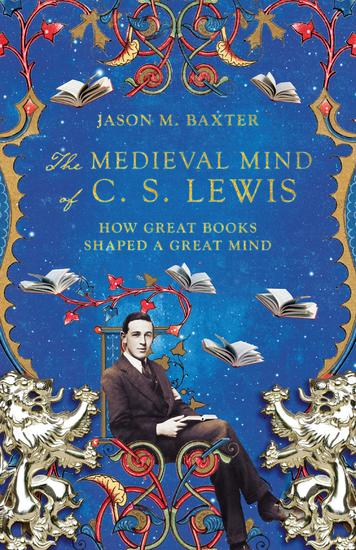
The Medieval Mind of C S Lewis - How Great Books Shaped a Great Mind - cover
LER

The Medieval Mind of C S Lewis - How Great Books Shaped a Great Mind

Jason M. Baxter

Editora: IVP Academic

  • 0
  • 0
  • 0

Sinopse

C. S. Lewis had one of the great minds of the twentieth century.
Many readers know Lewis as an author of fiction and fantasy literature, including the Chronicles of Narnia and the Space Trilogy. Others know him for his books in apologetics, including Mere Christianity and The Problem of Pain. But few know him for his scholarly work as a professor of medieval and Renaissance literature.
What shaped the mind of this great thinker? Jason Baxter argues that Lewis was deeply formed not only by the words of Scripture and his love of ancient mythology, but also by medieval literature. For this undeniably modern Christian, authors like Dante and Boethius provided a worldview that was relevant to the challenges of the contemporary world.
Here, readers will encounter an unknown figure to guide them in their own journey: C. S. Lewis the medievalist.
Disponível desde: 15/03/2022.
Comprimento de impressão: 176 páginas.

Outros livros que poderiam interessá-lo

  • The 'Hood Comes First - Race Space and Place in Rap and Hip-Hop - cover

    The 'Hood Comes First - Race...

    Murray Forman

    • 0
    • 0
    • 0
    The 'Hood Comes First looks at the increasingly specific emphasis on real neighborhoods and streets in rap music and hip hop culture as an urgent response to the cultural and geographical ghettoization of black urban communities. Examining rap music, along with ancillary hip hop media including radio, music videos, rap press and the cinematic 'hood genre, Murray Forman analyzes hip hop culture's varying articulations of the terms "ghetto," "inner-city," and "the 'hood," and how these spaces, both real and imaginary, are used to define individual and collective identity.Negotiating academic, corporate, and "street" discourses, Forman assesses the dynamics between race, social space and youth. Race, class and national identification are recast and revised within rap's spatial discourse, concluding with the construction of "the 'hood," a social and geographic symbol that has become central to concepts of hip hop authenticity. Additionally, the book analyzes the processes within the music and culture industries through which hip hop has been amplified and disseminated from the 'hood to international audiences.
    Ver livro
  • Nana Said don't eat that - cover

    Nana Said don't eat that

    Aroara

    • 0
    • 0
    • 0
    Another lesson from Nana about not eating off the floor. Enjoyed by children and caregivers. Open the conversation of food boundaries, healthy eating, and consequences with your young reader.
    Ver livro
  • Quakers and the Amish The: The History and Legacy of the Two Unique Religious Communities - cover

    Quakers and the Amish The: The...

    Editors Charles River

    • 0
    • 0
    • 0
    Few today know much about the Quakers. Whenever the subject of Quakerism slips into conversation, most picture a rosy-cheeked fellow in a simple black overcoat, and a wide brim hat atop his thick, cloud-white hair, inspired by the famous logo of the Quaker Oats company. In spite of the stereotype, Quakers today come in all colors, shapes, and sizes, with the more liberal folk sporting trendy haircuts, tattoos, and various piercings. They call themselves “Friends,” a starkly different but very devout following of God. They strive for a world empowered by peace and acceptance, an ambitious mission fueled by diversity, blind to race, gender, or creed. 
    Buggies, straw hats, long and plain dresses in shades of blue and black, charming log cabins reminiscent of the Little House on the Prairie – this is often the mental image that comes to mind when one thinks of the Amish. Nowadays, many have become accustomed to being within a 10 foot radius of at least 3 pieces of technology every hour of the day. World news and current events has never been more readily available, accessible by just a touch of a fingertip. Yet there exists a collection of cultures worldwide that steer clear of contemporary society for a range of reasons. 
    Americans have heard of the Amish, but most know little about them. They are often seen as unconventional and strictly religious, but quiet, calm folk who keep to themselves. Those who have heard of them know of their rejection of electricity and most, if not all modern aspects of life. Those who have taken a gander at the dozens of “reality shows” that have sprung up over recent years may have even heard of the ever-so-famous – but often inaccurately depicted – Rumspringa. But beyond the buggies and prayer bonnets lies an intriguing culture that has remained strictly loyal to its roots.
    Ver livro
  • Justinian: The Emperor Who Built an Empire… and Doomed It - The Ambition Triumphs and Tragedies of Byzantium’s Greatest Emperor - cover

    Justinian: The Emperor Who Built...

    Phil J. Ponce

    • 0
    • 0
    • 0
    Dive into the gripping history of Emperor Justinian, the ruler who sought to restore the Roman Empire to its former glory but instead left a legacy of both brilliance and downfall. Through conquests, legal reforms, and architectural wonders, Justinian reshaped the Byzantine world-yet his ambitious vision led to economic strain and political unrest. This audiobook unpacks the triumphs and tragedies of his reign, offering a compelling portrait of one of history’s most fascinating figures.
    Ver livro
  • Sumerians - Their History Religion and Inventions - cover

    Sumerians - Their History...

    Kelly Mass

    • 0
    • 0
    • 0
    The Sumerians were the people from Sumer, the first recognized society in the historic area of southern Mesopotamia (now southern Iraq), developed throughout the 6th and 5th centuries BC throughout the Chalcolithic and early Bronze Ages. In addition to age-old Egypt, the Caral-Supe culture, the Indus Valley civilization, the Minoan civilization, and age-old China, it is also one of the world's early civilizations. Sumerian farmers who lived along the Tigris and Euphrates valleys grew a great deal of grain and other items, which allowed them to establish metropolitan towns. Before 3000 BC, there was proto-writing. The earliest files date from between 3500 and 3000 BC and are from the cities of Uruk and Jemdet Nasr. 
    Most historical analysts believe that Sumer was first completely occupied between c. 5500 and 4000 BC by a West Asian population who spoke the Sumerian language, a non-Semitic and non-Indo-European agglutinative language isolate (as evidenced by the names of cities, rivers, standard professions, and so on). It wasn't an inflected language, in contrast to its Semitic cousins. 
    Go ahead and get stared, and get to know more about the Sumerians, what they did, who they were, and why so many people know so little about them.
    Ver livro
  • The Age of Empires - Conquest and Colonization - cover

    The Age of Empires - Conquest...

    Nova Ashford

    • 0
    • 0
    • 0
    The Age of Empires, a period marked by conquest and colonization, spans several centuries and had a profound impact on global history. From the late 15th century through the early 20th century, European powers embarked on ambitious campaigns of territorial expansion, driven by the pursuit of wealth, resources, and political dominance. This era saw the rise and fall of vast empires, each of which left an indelible mark on the world. The motivations behind empire-building were multifaceted, rooted in the quest for economic gain, military supremacy, and the spread of cultural, religious, and political ideologies. 
    The Age of Empires can trace its origins to the Renaissance, a period of intellectual and cultural awakening in Europe. The revival of classical learning, coupled with advancements in navigation, shipbuilding, and cartography, laid the groundwork for the age of exploration. This era saw European nations eager to find new trade routes and territories, driven by the promise of wealth from spices, silks, and other exotic goods. The expansion of European power also coincided with a period of intense competition among European states, each vying to claim territories and secure dominance over lucrative trade routes. 
    In 1492, Christopher Columbus’ famous voyage to the New World marked the beginning of a new era in exploration and conquest. Columbus’ journey, sponsored by Spain, led to the discovery of the Americas, setting off a wave of Spanish, Portuguese, British, French, and Dutch exploration and colonization. Spain and Portugal were the earliest and most successful empires in this period, establishing colonies in the Americas, Africa, and Asia. The Spanish empire, in particular, amassed incredible wealth through the exploitation of native populations and the vast resources found in the Americas, including precious metals like gold and silver.
    Ver livro