¡Acompáñanos a viajar por el mundo de los libros!
Añadir este libro a la estantería
Grey
Escribe un nuevo comentario Default profile 50px
Grey
Suscríbete para leer el libro completo o lee las primeras páginas gratis.
All characters reduced
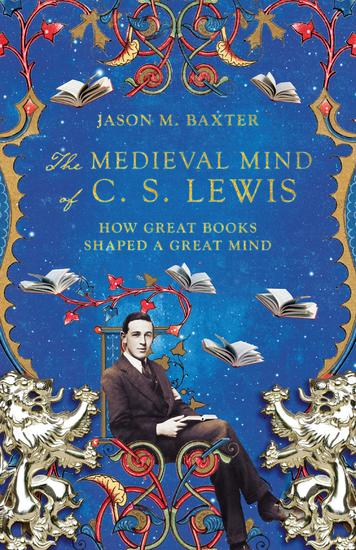
The Medieval Mind of C S Lewis - How Great Books Shaped a Great Mind - cover

The Medieval Mind of C S Lewis - How Great Books Shaped a Great Mind

Jason M. Baxter

Editorial: IVP Academic

  • 0
  • 0
  • 0

Sinopsis

C. S. Lewis had one of the great minds of the twentieth century.
Many readers know Lewis as an author of fiction and fantasy literature, including the Chronicles of Narnia and the Space Trilogy. Others know him for his books in apologetics, including Mere Christianity and The Problem of Pain. But few know him for his scholarly work as a professor of medieval and Renaissance literature.
What shaped the mind of this great thinker? Jason Baxter argues that Lewis was deeply formed not only by the words of Scripture and his love of ancient mythology, but also by medieval literature. For this undeniably modern Christian, authors like Dante and Boethius provided a worldview that was relevant to the challenges of the contemporary world.
Here, readers will encounter an unknown figure to guide them in their own journey: C. S. Lewis the medievalist.
Disponible desde: 15/03/2022.
Longitud de impresión: 176 páginas.
Otros libros que te pueden interesar

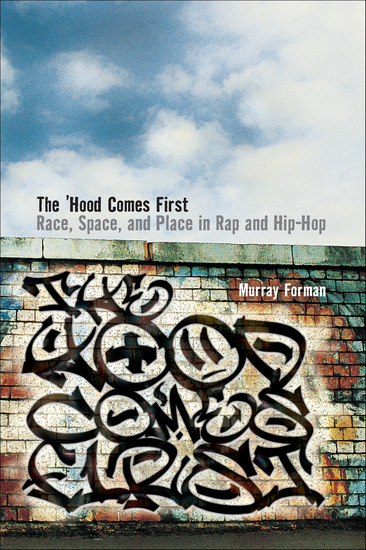
  • The 'Hood Comes First - Race Space and Place in Rap and Hip-Hop - cover

    The 'Hood Comes First - Race...

    Murray Forman

    • 0
    • 0
    • 0
    The 'Hood Comes First looks at the increasingly specific emphasis on real neighborhoods and streets in rap music and hip hop culture as an urgent response to the cultural and geographical ghettoization of black urban communities. Examining rap music, along with ancillary hip hop media including radio, music videos, rap press and the cinematic 'hood genre, Murray Forman analyzes hip hop culture's varying articulations of the terms "ghetto," "inner-city," and "the 'hood," and how these spaces, both real and imaginary, are used to define individual and collective identity.Negotiating academic, corporate, and "street" discourses, Forman assesses the dynamics between race, social space and youth. Race, class and national identification are recast and revised within rap's spatial discourse, concluding with the construction of "the 'hood," a social and geographic symbol that has become central to concepts of hip hop authenticity. Additionally, the book analyzes the processes within the music and culture industries through which hip hop has been amplified and disseminated from the 'hood to international audiences.
    Ver libro
  • Haggai - The World English Bible Book 37 (Unabridged) - cover

    Haggai - The World English Bible...

    Various Authors

    • 0
    • 0
    • 0
    The Book of Haggai is a book of the Hebrew Bible or Tanakh, and is the third-to-last of the Minor Prophets. It is a short book, consisting of only two chapters. The historical setting dates around 520 BC before the Temple had been rebuilt.
    Ver libro
  • Athenian Agora and Roman Forum The: The Beating Hearts of the Ancient World’s Most Famous Cities - cover

    Athenian Agora and Roman Forum...

    Editors Charles River

    • 0
    • 0
    • 0
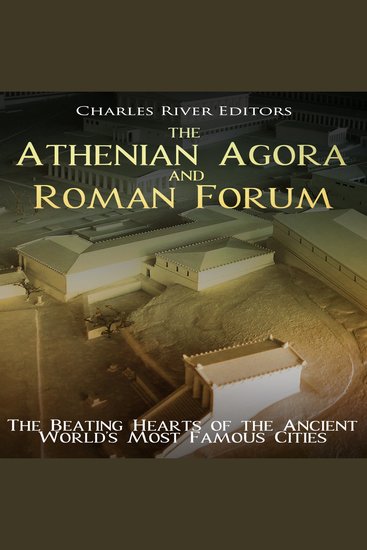
    The center of political and commercial interaction in the Ancient Greek polis was the agora. The word essentially means a gathering place or an open space, and in all Greek city states, the agora was central to all aspects of daily life and commerce. As the agora developed as a civic space, particularly from the 6th century BCE onward in Athens, the architectural splendor of the buildings associated with it became an ever more obvious demonstration of the power and glory of Athenian democracy. In its earliest forms, an agora in maritime cities was invariably situated near the sea, while in inland urban centers, it was usually located at the foot of the hill that normally provided the city’s ultimate defense. The agora was always the oldest part of any city and, as such, and as well as being the commercial hub of the area, also became the center of the religious and political life of the polis. In Homer’s time, an agora might have seats for the comfort of the citizens that had assembled to consult with one another. The city’s oldest sanctuaries were always located either in or very close to the agora itself, and the first festive games were held in its open space.  
    The Roman Empire is the most famous in history, and the center of the far-reaching empire’s activities was located in the Forum, a low area between the Capitoline and Palatine hills in Rome. The topography held a great deal of significance for Romans, and consequently so many layers of myth were laid on top of the landscape and buildings that it is difficult to separate legend from actual historical fact. As a low-lying area near the Tiber river, the Forum was subject to much flooding, and even into the 20th century, the Forum area could flood upwards of over 40 feet above sea level. This would factor significantly in the imagination of Romans, who later ascribed the flooding with saving the city’s founders, Romulus and Remus, from execution.
    Ver libro
  • Cleopatra VII: The Last Queen of Egypt – Power Love and Betrayal - The Untold Story of Cleopatra’s Rise Her Love Affairs with Caesar & Mark Antony and Her Tragic Fall - cover

    Cleopatra VII: The Last Queen of...

    Clifton Larson

    • 0
    • 0
    • 0
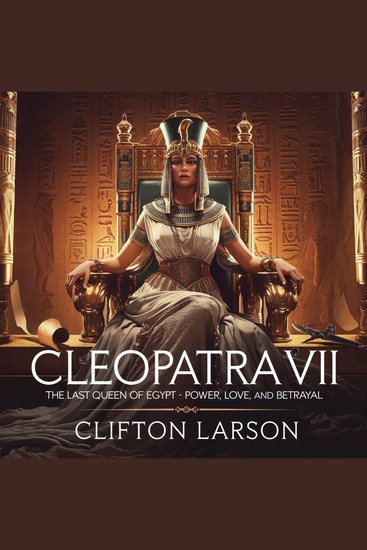
    Cleopatra VII, the last Pharaoh of Egypt, was more than just a queen—she was a warrior, a strategist, and a lover who defied the world’s greatest empires. From her dramatic rise to power to her legendary affairs with Julius Caesar and Mark Antony, Cleopatra’s story is one of ambition, intelligence, and heartbreak. This immersive audiobook takes you deep into the political intrigue, passion, and betrayal that defined her reign. Discover the real Cleopatra—beyond the myths and Hollywood portrayals—in a gripping tale of love, war, and destiny.
    Ver libro
  • Middle Ages - European History in the Era of the Dark Ages - cover

    Middle Ages - European History...

    Kelly Mass

    • 0
    • 0
    • 0
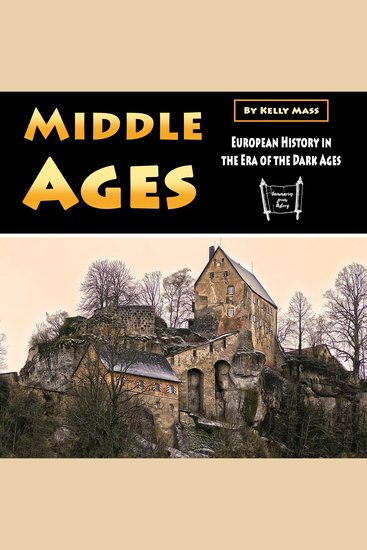
    In the history of Europe, the Middle Ages or middle ages time period lasted around from the 5th to the late 15th centuries, likewise to the Post-classical period of worldwide history. It started with the fall of the Western Roman Empire and transitioned into the Renaissance and the Age of Discovery. The Middle Ages is the middle period of the 3 conventional departments of Western history: classical antiquity, the middle ages period, and the contemporary period. The middle ages period is itself partitioned into the Early, High, and Late Middle Ages. 
    Population decrease, counter-urbanization, the collapse of central authority, invasions of countries, and mass moves of tribe, which had started in Late Antiquity, continued into the Early Middle Ages. The massive movements of the Migration Period, including but not limited to numerous Germanic tribes, formed new kingdoms in what stayed of the Western Roman Empire. In the 7th century, North Africa and the Middle East-- once part of the Byzantine Empire-- came under the rule of the Umayyad Caliphate, an Islamic empire, after conquest by Muhammad's followers. 
    Explore more about this long time in history, a dark time when people faced countless challenges to their survival.
    Ver libro
  • Egyptian Mythology and Religion - Gods Legends and Rituals - cover

    Egyptian Mythology and Religion...

    Omar Khalil

    • 0
    • 0
    • 0
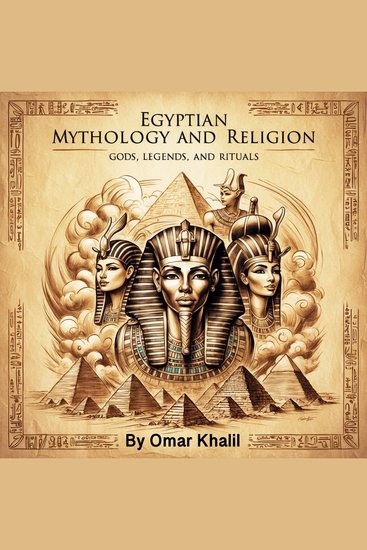
    Egyptian mythology is a vast and intricate belief system that shaped the religious and cultural identity of ancient Egypt for thousands of years. Rooted in a deep connection with nature, the cosmos, and the divine, these myths provided explanations for the creation of the world, the role of gods, and the afterlife. Unlike other mythologies, Egyptian beliefs were not static; they evolved over time, adapting to political changes and regional influences while maintaining core spiritual principles. 
    The origins of Egyptian mythology can be traced back to the early dynastic period, though many of its concepts likely predate written history. Ancient Egyptians believed that the universe emerged from a primordial chaos, giving rise to powerful deities who shaped the world. Myths were recorded on temple walls, tombs, and papyrus scrolls, serving both religious and educational purposes. These stories were not merely symbolic; they were deeply woven into daily life, influencing laws, traditions, and the duties of rulers. 
    The geography of Egypt played a crucial role in shaping its mythology. The Nile River, essential for agriculture and survival, became a central symbol of life and renewal, often associated with gods like Osiris and Hapi. The vast deserts surrounding Egypt were seen as chaotic and dangerous, embodying forces of disorder such as the god Set. The sun’s daily journey across the sky was one of the most significant celestial events, leading to the worship of Ra, the sun god, as a dominant figure in Egyptian religious thought.
    Ver libro