Unisciti a noi in un viaggio nel mondo dei libri!
Aggiungi questo libro allo scaffale
Grey
Scrivi un nuovo commento Default profile 50px
Grey
Iscriviti per leggere l'intero libro o leggi le prime pagine gratuitamente!
All characters reduced
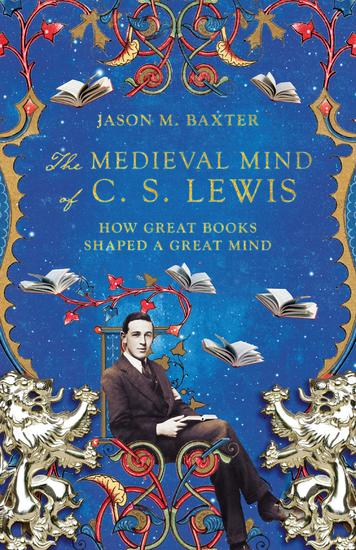
The Medieval Mind of C S Lewis - How Great Books Shaped a Great Mind - cover

The Medieval Mind of C S Lewis - How Great Books Shaped a Great Mind

Jason M. Baxter

Casa editrice: IVP Academic

  • 0
  • 0
  • 0

Sinossi

C. S. Lewis had one of the great minds of the twentieth century.
Many readers know Lewis as an author of fiction and fantasy literature, including the Chronicles of Narnia and the Space Trilogy. Others know him for his books in apologetics, including Mere Christianity and The Problem of Pain. But few know him for his scholarly work as a professor of medieval and Renaissance literature.
What shaped the mind of this great thinker? Jason Baxter argues that Lewis was deeply formed not only by the words of Scripture and his love of ancient mythology, but also by medieval literature. For this undeniably modern Christian, authors like Dante and Boethius provided a worldview that was relevant to the challenges of the contemporary world.
Here, readers will encounter an unknown figure to guide them in their own journey: C. S. Lewis the medievalist.
Disponibile da: 15/03/2022.
Lunghezza di stampa: 176 pagine.

Altri libri che potrebbero interessarti

  • The 'Hood Comes First - Race Space and Place in Rap and Hip-Hop - cover

    The 'Hood Comes First - Race...

    Murray Forman

    • 0
    • 0
    • 0
    The 'Hood Comes First looks at the increasingly specific emphasis on real neighborhoods and streets in rap music and hip hop culture as an urgent response to the cultural and geographical ghettoization of black urban communities. Examining rap music, along with ancillary hip hop media including radio, music videos, rap press and the cinematic 'hood genre, Murray Forman analyzes hip hop culture's varying articulations of the terms "ghetto," "inner-city," and "the 'hood," and how these spaces, both real and imaginary, are used to define individual and collective identity.Negotiating academic, corporate, and "street" discourses, Forman assesses the dynamics between race, social space and youth. Race, class and national identification are recast and revised within rap's spatial discourse, concluding with the construction of "the 'hood," a social and geographic symbol that has become central to concepts of hip hop authenticity. Additionally, the book analyzes the processes within the music and culture industries through which hip hop has been amplified and disseminated from the 'hood to international audiences.
    Mostra libro
  • The Beginner's Guide To Ketamine Therapy For Mental Health - cover

    The Beginner's Guide To Ketamine...

    Leah Benson

    • 0
    • 0
    • 0
    Imagine you could take a medically ordered prescription and an afternoon off for a temporarily mind-altering experience. By doing this once a week for several weeks, you might dramatically increase the effectiveness of your psychotherapy. It would have no medical risk, wouldn’t cost a lot (comparatively speaking) and might even save time and money by speeding the therapeutic process. During the experience, a friend would be with you for safety and support. Later, you would discuss each experience with your therapist to ensure you fully integrated what you’d gone through. Would you do it?The goal of this book is to help you decide.
    Mostra libro
  • Mercury and Gemini: The History and Legacy of NASA’s Groundbreaking Spaceflight Programs - cover

    Mercury and Gemini: The History...

    Editors Charles River

    • 0
    • 0
    • 0
    The successful Apollo 11 mission was certainly an astonishing technological triumph, but what is less well remembered now are that many programs preceded Apollo and were essential to its success. Project Mercury was one of those, and in many ways it represented the greatest step forward in terms of the conquest of space. Before Project Mercury, there was no certainty that a human could survive the rigors of a space launch or live outside Earth’s atmosphere. There was no agreement on just what an astronaut should be, and various individuals involved debated whether they should be pilots, technicians, scientists, or even merely observers in an automated craft. Before Project Mercury, no one was entirely certain what a rocket capable of taking a person into space would look like, or even whether building such a craft was within the capabilities of engineering in the 1950s. 
    Gemini also marked another important milestone as America finally surpassed the Soviet Union in space technology. Before Gemini, the US was playing a desperate game of catch-up as it attempted to match Soviet accomplishments. The last Project Mercury flight launched in May 1963, and before then, Russia had put the first satellite in Earth’s orbit and the first man in space and had followed these with longer flights than the tiny Mercury spacecraft. In terms of military significance, it was recognized that the ability to dominate space was very important, and to many people in America, it seemed that Russia was well on the way to doing this. No one could have guessed that it would be almost three years before the next American manned space flight occurred when Gemini 3 left the launch pad in March 1965. It seemed to many people that the Russian lead in space exploration had become unassailable and, in order to reestablish the credibility of the US space program, the Gemini flights simply had to succeed.
    Mostra libro
  • The Plot Module - The Ultimate Chapter-by-Chapter Guide on How to Write a Novel Outline - cover

    The Plot Module - The Ultimate...

    Jason Hamilton

    • 0
    • 0
    • 0
    Looking for an easy, step-by-step solution to plot your novel from start to finish? 
    Jason Hamilton—overnight YouTube success and practicing fantasy author—introduces The Plot Module, a groundbreaking guide that simplifies novel plotting like never before. This comprehensive 40-chapter roadmap tells you exactly what to include in each chapter, bridging the gaps most story structure books leave behind. 
    Discover:A Detailed 40-Chapter Blueprint: Know precisely what happens in every chapter.Adaptable Methods for Any Novel Length: Customize the module for shorter or longer works.Seamless Integration of Subplots and Viewpoints: Effortlessly manage multiple narratives.Proven Techniques from an Active Author: Apply strategies Jason uses in his own writing.Harnessing Technology for Writing: Enhance creativity and efficiency with modern tools. 
    With clear instructions and practical advice, The Plot Module empowers you to turn your ideas into a compelling, well-structured novel without the guesswork. Say goodbye to plot struggles and hello to a clear path forward. 
    Join writers who have unlocked their creative potential with The Plot Module. Now it's your turn to bring your story to life.
    Mostra libro
  • Renaissance - The European Cultural Artistic Political and Economic Rebirth - cover

    Renaissance - The European...

    Kelly Mass

    • 0
    • 0
    • 0
    When we think of the Renaissance, we often think of paintings. And indeed, many painters and sculptors were part of the artistic transformation the Renaissance caused. But there was more. The Renaissance basically formed a period of collective enlightenment and freedoms that put an end to certain tyrannies and false notions from the Middle Ages. 
    The Renaissance is a time in European history marking the shift from the Middle Ages to modernity and covering the 15th and 16th centuries, identified by an effort to restore and exceed ideas and accomplishments of classical antiquity. It happened after the Crisis of the Late Middle Ages and was related to great social change. Aside from the basic periodization, advocates of a "long Renaissance" might put its start in the 14th century and its end in the 17th century. 
    Rather than a few years or specific dates, let’s take a look at what the extensive time period of the Renaissance provided, and what it leaves us with today.
    Mostra libro
  • Egyptian Monuments and Their Mysteries - Exploring the Wonders of the Past - cover

    Egyptian Monuments and Their...

    Omar Khalil

    • 0
    • 0
    • 0
    The origins of ancient Egyptian civilization can be traced back to the unification of Upper and Lower Egypt around 3100 BCE. This pivotal event, credited to the legendary Pharaoh Narmer (also known as Menes), set the stage for one of the most enduring and influential cultures in human history. The unification marked the beginning of the Early Dynastic Period, a time when Egypt's first pharaohs established the framework for the country’s political, religious, and social systems. 
    The Early Dynastic Period laid the foundation for the powerful centralized government that would come to define Egypt. The kings of this era solidified their authority by consolidating control over both the Upper and Lower Nile Valleys, establishing cities and building monumental architecture, such as the earliest royal tombs. This period was characterized by the development of hieroglyphic writing, which enabled the preservation of royal decrees, religious texts, and monumental inscriptions. 
    As Egypt's civilization evolved, it entered the Old Kingdom period, often referred to as the "Age of the Pyramids." During this time, Egypt reached its peak in terms of architectural achievements, most notably the construction of the Great Pyramids at Giza. The Old Kingdom saw the consolidation of the pharaohs’ divine status as intermediaries between the gods and the people. The power of the pharaohs was reinforced by their role in overseeing monumental construction projects and religious rituals that were believed to sustain cosmic order.
    Mostra libro