Junte-se a nós em uma viagem ao mundo dos livros!
Adicionar este livro à prateleira
Grey
Deixe um novo comentário Default profile 50px
Grey
Assine para ler o livro completo ou leia as primeiras páginas de graça!
All characters reduced
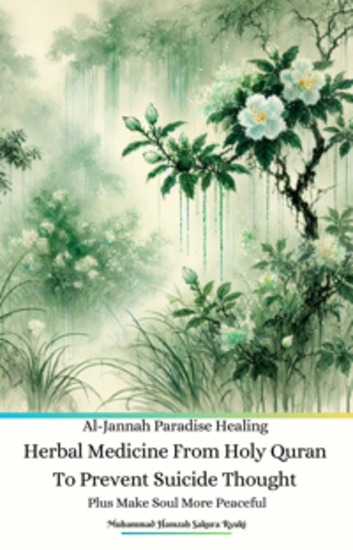
Al-Jannah Paradise Healing Herbal Medicine From Holy Quran To Prevent Suicide Thought plus Make Soul More Peaceful - cover
LER

Al-Jannah Paradise Healing Herbal Medicine From Holy Quran To Prevent Suicide Thought plus Make Soul More Peaceful

Jannah Firdaus Mediapro, Muhammad Hamzah Sakura Ryuki

Editora: Jannah Firdaus Mediapro Studio

  • 0
  • 0
  • 0

Sinopse

Islamic psychiatry has a rich history spanning over 1,400 years, with its foundations deeply rooted in Islamic teachings and early medical advancements. During the Islamic Golden Age (8th–14th centuries), scholars integrated knowledge from Greek, Persian, and Indian medicine with Islamic philosophy and ethics. The Holy Quran and Hadith emphasized the importance of mental well-being, encouraging treatment rather than stigmatization. Early Muslim physicians like Al-Razi (Rhazes) and Ibn Sina (Avicenna) advanced psychiatric medicine by distinguishing between mental and physical illnesses.Al-Razi established one of the first psychiatric wards in Baghdad in the 9th century, advocating for humane treatment of patients. Ibn Sina's "Canon of Medicine" described various mental disorders, including melancholia and mania, offering systematic classifications that influenced both Islamic and European medical traditions. Hospitals (Bimaristans) across the Islamic world, from Damascus to Cairo, provided specialized care for mental illnesses, using music therapy, cognitive exercises, and medication derived from herbs. Muslim scholars also developed early concepts of psychotherapy, emphasizing spiritual healing alongside medical treatment. In Islamic medicine, suicidal thoughts have been addressed with a holistic approach that integrates spiritual, psychological, and medical perspectives.Early Muslim physicians, such as Al-Razi and Ibn Sina, recognized suicide as a serious mental health concern, often linked to conditions like melancholia (depression) or excessive stress. They advocated for compassionate care rather than punishment, emphasizing therapy, social support, and lifestyle adjustments to alleviate distress. Al-Balkhi (9th century) in his book Masalih al-Abdan wa al-Anfus (Sustenance for Bodies and Souls) described depression in detail and suggested that negative thoughts should be countered with cognitive techniques — an approach similar to modern cognitive behavioral therapy (CBT). Bimaristans (hospitals) in cities like Baghdad and Cairo provided treatment for mental disorders, incorporating music therapy, exercise, and herbal medicine alongside spiritual counseling to address suicidal tendencies.Islamic teachings view life as sacred, and suicide is discouraged, but individuals struggling with suicidal thoughts are seen as needing help, not condemnation. Scholars like Al-Ghazali emphasized the role of faith in coping with psychological distress, advocating for mindfulness (muraqabah), prayer, and seeking social support. Contemporary research on Islamic perspectives in psychiatry continues to explore how faith-based interventions, such as Quranic therapy and Islamic psychotherapy, can support individuals with suicidal ideation. Modern Muslim mental health practitioners integrate these historical insights with contemporary psychiatric treatments, promoting a balanced approach that addresses both spiritual and psychological well-being. The Quran provides guidance on mental health, emotional well-being, and coping with distress, offering comfort to those struggling with suicidal thoughts. Several verses emphasize patience, hope, and reliance on Allah SWT (God) in times of hardship.
Disponível desde: 04/03/2025.

Outros livros que poderiam interessá-lo

  • Healing Sexual Trauma Guided Journal - Writing and Somatic Practices to Help You Process Heal and Feel Safe - cover

    Healing Sexual Trauma Guided...

    MFT Erika Shershun

    • 0
    • 0
    • 0
    If you've experienced rape, sexual abuse, molestation, or sexual trauma, you may feel as if you've lost your sense of self. You may have difficulty setting boundaries or building satisfying sexual relationships. And you may struggle with intense emotions such as sadness, shame, or anger. This compassionate journal can help you release your difficult thoughts and feelings on the page and gain insight for powerful personal growth. 


    Drawing on the mind-body techniques of somatic therapy, The Healing Sexual Trauma Guided Journal offers insightful writing prompts to help you explore your emotions, overcome internalized shame, and heal your traumatized nervous system. 


    Make this journal yours, and discover ways to: 


    ● Ground yourself through the act of writing 


    ● Celebrate your strengths 


    ● Cultivate self-compassion and mindfulness 


    What happened to you isn't your fault, and it doesn't have to define you. With the right tools, you can live a full and satisfying life beyond sexual trauma. This guided journal can help you get started today.
    Ver livro
  • The Alamo - The Fight for Texas - cover

    The Alamo - The Fight for Texas

    Nova Ashford

    • 0
    • 0
    • 0
    The Battle of the Alamo, fought in 1836, is one of the most iconic events in American history. Situated in the heart of modern-day Texas, the Alamo has come to symbolize sacrifice, courage, and defiance. To understand the significance of the battle, it is essential to first explore the events that led to this dramatic confrontation. The road to the Alamo was shaped by a series of political, social, and military tensions that spanned several years. 
    The conflict between Mexico and the growing population of Anglo settlers in Texas began with the Mexican War of Independence (1810-1821), which freed Mexico from Spanish rule. However, the new Mexican government struggled to control its vast northern territories, including Texas. In the early 1820s, Mexico encouraged settlement in Texas to help secure the region and promote economic development. Anglo settlers, many from the United States, flocked to Texas, hoping for fertile land and opportunities for growth. Over time, these settlers outnumbered the native Mexican population, and cultural tensions began to rise. 
    In 1829, Mexico, under President Vicente Guerrero, passed laws to curb slavery, which greatly alarmed many of the settlers who depended on slave labor. By the mid-1830s, tensions had escalated, as settlers pushed for greater autonomy from the central government in Mexico City, which they felt was increasingly distant and unresponsive to their needs. Meanwhile, Mexico’s leadership was determined to maintain control over Texas and prevent it from slipping into rebellion.
    Ver livro
  • Senility And the Brain Cells - Ojai 1980 - Dialogue 8 - cover

    Senility And the Brain Cells -...

    Jiddu Krishnamurti

    • 0
    • 0
    • 0
    Senility and the brain cells - 1 June 1980  
    • Is the human brain deteriorating? 
    • The human brain is not a particular brain, it doesn’t belong to me or to anyone 
    else, it is the human brain which has evolved for millions of years. 
    • Can the brain not only be aware of its own movement but can the brain itself 
    have enough energy to break all patterns and move out of it? 
    • Is psychological knowledge not in itself a factor of the shrinking of the brain? 
    • The ending of suffering comes about when the self, which is built up through 
    time, is no longer there. 
    • If there is an insight into the nature of time the very brain cells which are part 
    of time break down. The brain cells mutate, bring about a change in 
    themselves. 
    • Meditation is insight.
    Ver livro
  • Wabi-Sabi Unveiled: Embracing the Beauty of the Imperfect Now - A Practical Guide to Mindful Living and Inspired Creativity - cover

    Wabi-Sabi Unveiled: Embracing...

    Natalie Evans

    • 0
    • 0
    • 0
    "Wabi-Sabi Unveiled: Embracing the Beauty of the Imperfect Now - A Practical Guide to Mindful Living and Inspired Creativity" is a captivating exploration into the ancient Japanese philosophy of Wabi-Sabi, inviting readers on a transformative journey to discover the profound beauty in imperfection and the simplicity of the present moment. Authored by Natalie Evans, this book is a practical guide, offering a unique blend of mindfulness principles and creative insights to empower individuals to pursue a more meaningful and fulfilling life. 
    The essence of Wabi-Sabi lies in appreciating the beauty found in the imperfect, impermanent, and incomplete aspects of life. As readers delve into the pages of this book, they are introduced to the core principles of Wabi-sabi philosophy and its application in everyday living. The author skillfully weaves anecdotes, practical exercises, and contemplative reflections, providing readers with actionable steps to incorporate Wabi-Sabi into their lives. 
    The book goes beyond a theoretical exploration of Wabi-Sabi, offering a hands-on approach to mindful living and inspired creativity. Readers are guided through exercises encouraging them to embrace imperfections, cultivate gratitude, and develop a heightened awareness of the present moment. The author emphasizes the importance of slowing down, savoring life's nuances, finding joy in simplicity, and fostering a sense of balance and tranquility.
    Ver livro
  • History of Norway: A Captivating Guide to Norwegian History - cover

    History of Norway: A Captivating...

    Captivating History

    • 0
    • 0
    • 0
    Did you know that the Vikings from Norway were the first to inhabit Greenland? 
    They were also the first people to settle in Iceland and the Faroes Islands. They also founded the first true cities of Ireland. Although Vikings are a huge part of the history of Norway, the era in which they lived was very short. 
    Norway wasn’t a defined country or even a region in its early history. It was geographically, culturally, and linguistically inseparable from the rest of Scandinavia. Therefore, its history is deeply influenced by not only its inhabitants but also its neighbors. 
    Norway is a unique country located on the fringes of Europe. Its climate and geographical position determined the lifestyle of the people inhabiting it. It was never an easy life. The constant scarcity of arable land, the vast distances they had to traverse due to the myriad of fjords and mountains, and the long and harsh winters in the inland areas made Norwegians constantly struggle for a better life. 
    Norway was also often a target of much stronger neighboring kingdoms, mainly Denmark and Sweden. From the 16th to 19th centuries, Norway was part of a union with first Denmark and then Sweden. None of the unions was a Norwegian choice. And even though the people were aware of the deep connection they shared with the rest of Scandinavia, they had a distinctive Norwegian identity. It was this identity that pushed Norway to fight for its independence. 
    You will find out:Where did the first Norwegians come from?How did the early Bronze Age societies live in the harsh environment of Scandinavia?Why did the Iron Age come so late to Scandinavia?Were the Vikings simply pirates or farmers with a higher cause?How did the Vikings live, and who were the first Norwegian chieftains?And much more 
     Click the “add to cart” button to learn more about the History of Norway!
    Ver livro
  • The Divorce Comeback - Healing Self-Love & Starting Fresh - cover

    The Divorce Comeback - Healing...

    Love Guru

    • 0
    • 0
    • 0
    This audiobook is narrated by an AI Voice.   
    A broken marriage doesn’t mean a broken life. The Divorce Comeback is your guide to healing, rediscovering your worth, and building a stronger future after separation. 
    Written by Loveguru, this heartfelt and empowering audiobook helps you move from grief to growth — transforming pain into peace and heartbreak into freedom. Through emotional healing practices, mindset shifts, and self-love rituals, you’ll learn how to: 
    Let go of guilt, anger, and the need for closure 
    Rebuild self-confidence and emotional balance 
    Cope with loneliness and rediscover your identity 
    Set healthy boundaries with your ex 
    Create a joyful, independent life you truly love 
    Divorce is not your ending — it’s your comeback story. Find your strength, reclaim your voice, and start fresh with clarity, peace, and purpose. 
    Keywords: divorce recovery, breakup healing, self-love after divorce, emotional healing, relationship closure, new beginnings, empowerment, resilience, self-discovery, boundaries, confidence rebuilding, mindfulness, single life, letting go, healing after breakup.
    Ver livro