Junte-se a nós em uma viagem ao mundo dos livros!
Adicionar este livro à prateleira
Grey
Deixe um novo comentário Default profile 50px
Grey
Assine para ler o livro completo ou leia as primeiras páginas de graça!
All characters reduced
Bog-land studies - cover
LER

Bog-land studies

Jane Barlow

Editora: Good Press

  • 0
  • 0
  • 0

Sinopse

In "Bog-land Studies," Jane Barlow meticulously explores the intricate tapestry of Ireland's bogs, employing a blend of poetic prose and scientific observation. The book delves into the ecological significance of these unique landscapes, juxtaposed with rich cultural narratives that have emerged from them. Barlow's literary style is characterized by her vivid imagery and lyrical language, inviting readers to contemplate the beauty of the Irish wilderness while also addressing the environmental challenges confronting these biodiverse environments. Her work is set against the backdrop of late 19th-century Irish literature, echoing the Romantic period's preoccupation with nature and embedding a local ethos into the broader environmental discourse of her time. Jane Barlow, an accomplished Irish author and journalist, was deeply influenced by her upbringing in County Wicklow, where the lush landscapes shaped her literary vision. Her keen interest in nature and ecology, coupled with her commitment to the Irish cultural revival, inspired her to document the lesser-known aspects of indigenous landscapes and their importance to Irish identity. This background is reflected in her nuanced exploration of the interplay between humans and nature in "Bog-land Studies." This book is a must-read for those fascinated by natural history, ecology, and the intersection of culture and environment. Barlow's evocative narratives not only enrich the reader's understanding of bog ecosystems but also ignite a passion for preserving these critical landscapes. Whether you are a scholar, a nature enthusiast, or simply in search of profound literary engagement with the natural world, "Bog-land Studies" promises to be a captivating journey into the heart of Ireland's bogs.
Disponível desde: 24/04/2025.
Comprimento de impressão: 200 páginas.


Outros livros que poderiam interessá-lo

  • On Assisted Suicide - cover

    On Assisted Suicide

    Stephanie Gray Connors

    • 0
    • 0
    • 0
    Assisted suicide and euthanasia are being legalized or at least debated throughout much of the world today. But should suicide ever be assisted? When someone is suffering and no longer wants to live, and asks another to help him end his life, what is the right response? In this powerful volume in Word on Fire’s Dignity Series, Stephanie Gray Connors engages both the mind and the heart in answering these increasingly urgent questions. Through ten proposed principles to help guide the conversation, On Assisted Suicide will draw readers into the mysteries of joy and suffering, life and death, and the unconditional dignity of the human person.   Why dignity? Because human dignity (dignitas, the worthiness of each person) is the foundation of all human society. Jacques Maritain, the Catholic philosopher who helped draft the United Nations Declaration of Human Rights, affirmed this in saying, “The privilege connected with the dignity of the person is inalienable, and human life involves a sacred right.”  In a time of political polarization, social division, and the ongoing “culture wars,” the Dignity Series aims to refocus our attention on human dignity. The series enters into the great mystery of human life with wonder and reverence, and unflinchingly faces grave threats to human dignity, many of them ignored in the culture today.  Each volume in the series will examine one of those threats, drawing on rational argument, spiritual sources, and above all, personal stories that take readers into the lived experience on the frontier of the issue. This broad mix of ideas and approaches acknowledges that a wide variety of backgrounds and personalities shape how we interact with these questions—and that if a book is to help us grow, it has to stir our hearts as well as activate our minds. The Dignity Series emerges out of and points back to the whole-life ethic of Catholic social teaching, which is grounded in the principle of human dignity. “Social justice,” the Catechism of the Catholic Church teaches, “can be obtained only in respecting the transcendent dignity of man” (CCC 1929). And that dignity, on the Catholic reading, can only finally rest on our status as creatures made in the image and likeness of God (Gen. 1:26). However, these books are for anyone—Catholic or non-Catholic, religious or nonreligious—who wrestles with these issues and longs to see a more informed and considerate approach to them.  To see a full list of titles in the Dignity Series, please visit www.wordonfire.org/dignity.
    Ver livro
  • Turing's Vision - How AI is Shaping the World - cover

    Turing's Vision - How AI is...

    Pietro Perconti, Alessio Plebe

    • 0
    • 0
    • 0
    Chat-GPT, humanoid robotics, and self-driving cars are just a few of the things that are changing our everyday lives. The rapid advancement of AI is eroding one by one all the cornerstones considered unique of human nature: language, consciousness, creativity, and moral responsibility. The book argues that the revolution we are facing is driven by Alan Turing's "vision". This vision rests on the idea that intelligence is not an intrinsic property of human beings, but is a way in which matter is functionally organized and an attribute we are naturally inclined to ascribe to certain entities. For decades we have pretended that this idea does not have the corrosive power that it actually does, perhaps more so than the Copernican and Darwinian revolutions. But now, given the achievements of new forms of computing based on deep learning and predictive coding, the most common intuitions can no longer avoid the dangerous Turing idea. 
     
    The book is intended for scholars, researchers, and listeners intrigued by the intersections across disciplines interested in understanding the philosophical, ethical, and social implications of Artificial Intelligence and its impact on human nature.
    Ver livro
  • Caribbean Herbalism - Traditional Wisdom and Modern Herbal Healing - cover

    Caribbean Herbalism -...

    Aleya Fraser

    • 0
    • 0
    • 0
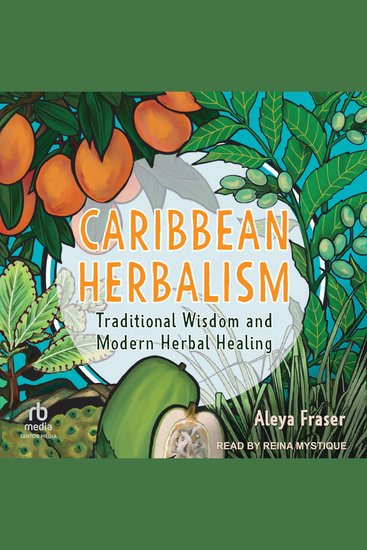
    For millennia, people have utilized plants as foods, medicines, hallucinogens, clothing, shelter, perfumes, dyes, and even poisons. In the Caribbean, medicinal and practical use of plants began with its first inhabitants, the Amerindians. New plants and knowledge were introduced through both triangular trade with Asia, Africa, and Europe and the enslavement of Africans and Indians from Southeast Asia, culminating in the modern-day system of Caribbean herbalism.Caribbean Herbalism tells the rich and complex stories of Caribbean people and the plants that have sustained them. Inside you'll find: 
    A practical guide to a meaningful selection of herbs and their traditional usesBotanical field notes and drawings that tell the stories of the Indigenous, African, East Indian, and European plants that inhabit the regionCulturally important traditions, remedies, and recipesInterviews with Caribbean people 
     
    This book offers practical tools you need to build a relationship with plants and make common Caribbean herbal remedies like bush teas, bush baths, herbal wines, infused alcohols and oils, and more!
    Ver livro
  • The Beginning of Infinity - cover

    The Beginning of Infinity

    David Deutsch

    • 0
    • 0
    • 0
    This work provides a concise synthesis of the key insights and analysis from The Beginning of Infinity. It is an independent summary, not the original book, and has no affiliation with or endorsement from the original publication. Created for readers who want a clear, thought-provoking overview, it distills the central themes and ideas while preserving the depth and relevance of the work. 
    A wide-ranging meditation on knowledge, this book argues that good explanations and critical inquiry can, in principle, lead to unlimited progress. It weaves together quantum physics, computation, philosophy, morality and politics to defend a bold form of rational optimism about the human future.
    Ver livro
  • Global Brain - The Evolution of Mass Mind from the Big Bang to the 21st Century - cover

    Global Brain - The Evolution of...

    Howard Bloom

    • 0
    • 0
    • 0
    In this extraordinary follow-up to the critically acclaimed The Lucifer Principle, Howard Bloom—one of today’s preeminent thinkers—offers us a bold rewrite of the evolutionary saga. He shows how plants and animals (including humans) have evolved together as components of a worldwide learning machine. He describes the network of life on Earth as one that is, in fact, a “complex adaptive system,” a global brain in which each of us plays a sometimes conscious, sometimes unknowing role. And he reveals that the World Wide Web is just the latest step in the development of this brain. These are theories as important as they are radical. 
    Informed by twenty years of interdisciplinary research, Bloom takes us on a spellbinding journey back to the big bang to let us see how its fires forged primordial sociality. As he brings us back via surprising routes, we see how our earliest bacterial ancestors built multitrillion-member research-and-development teams a full 3.5 billion years ago. We watch him unravel the previously unrecognized strands of interconnectedness woven by crowds of trilobites, hunting packs of dinosaurs, flocks of flying lizards, troops of baboons making communal decisions, and adventurous tribes of protohumans spreading across continents but still linked by primitive forms of information networking. We soon find ourselves reconsidering our place in the world. Along the way, Bloom offers us exhilarating insights into the strange tricks of body and mind that have organized a variety of life forms: spiny lobsters, which, during the Paleozoic Era, participated in communal marching rituals; and bees, which, during the age of dinosaurs, conducted collective brainwork. This fascinating tour continues on to the sometimes brutal subculture wars that have spurred the growth of human civilization since the Stone Age. Bloom shows us how culture shapes our infant brains, immersing us in a matrix of truth and mass delusion that we think of as reality. 
    Global Brain is more than just a brilliantly original contribution to the ongoing debate on the inner workings of evolution; it is a “grand vision,” says the eminent evolutionary biologist David Sloan Wilson, a work that transforms our very view of who we are and why.
    Ver livro
  • Aequanimitas and Other Addresses - cover

    Aequanimitas and Other Addresses

    Sir William Osler

    • 0
    • 0
    • 0
    This book is a compilation of twenty-two addresses given by Sir William Osler in various settings. He spoke on the philosophical and moral foundations of medical science, giving instruction to the student the teacher, the physician and the nurse. In his own eloquent words, "we are here not to get all we can out of life for ourselves, but to try to make the lives of others happier... The practice of medicine is an art, not a trade; a calling, not a business; a calling in which your heart will be exercised equally with your head. Often the best part of your work will have nothing to do with potions and powders, but with the exercise of and influence of the strong upon the weak, of the righteous upon the wicked, of the wise upon the foolish." - Summary by Luke Sartor
    Ver livro