Junte-se a nós em uma viagem ao mundo dos livros!
Adicionar este livro à prateleira
Grey
Deixe um novo comentário Default profile 50px
Grey
Assine para ler o livro completo ou leia as primeiras páginas de graça!
All characters reduced
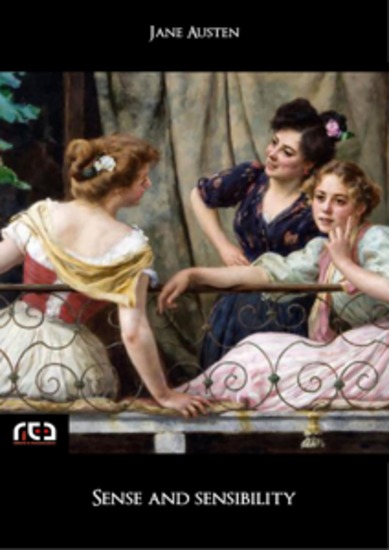
Sense and sensibility - cover
LER

Sense and sensibility

Jane Austen

Editora: REA Multimedia

  • 0
  • 0
  • 0

Sinopse

Sense and Sensibility is the first novel by the English author Jane Austen, published in 1811. On his deathbed, Henry Dashwood gets John, his son by his first wife, to promise to take care of his stepmother and half-sisters, Elinor, Marianne and Margaret, from his inheritance. But Fanny, John's wife, persuades her husband not to support them financially, leaving them to survive on a greatly reduced income.
Fanny’s brother Edward Ferrars comes on a visit, but when Elinor and he seem to be growing close, Fanny warns Mrs Dashwood that Edward is destined for higher things by their mother. Affronted by this, Mrs Dashwood decides to move her family to Barton Cottage in Devonshire, which has been offered her at a low rent by her second cousin, Sir John Middleton. Later, while dining with the Middletons at Barton Park, Marianne attracts the attention of a family friend, Colonel Brandon. However, he is aged thirty-five, which seems much too old to the romantic sensibility of sixteen-year-old Marianne.
Disponível desde: 07/02/2025.
Outros livros que poderiam interessá-lo

  • The Facts in the Case of Monsieur Valdemar - From their pens to your ears genius in every story - cover

    The Facts in the Case of...

    Edgar Allan Poe

    • 0
    • 0
    • 0
    Edgar Poe was born in Boston Massachusetts on 19th January 1809. His father abandoned his family the following year and within a year his mother had died leaving him an orphan.   
    He was taken in by the Allan family but never formally adopted although he now referred to himself as Edgar Allan Poe.  His father alternatively spoiled or chastised him and tension was frequent over gambling debts and monies for his education.  His university years to study ancient and modern languages was cut short by lack of money and he enlisted as a private in the army claiming he was 22, it is more probable he was 18. After 2 years he obtained a discharge in order to take up an appointment at the military academy, West Point, where he failed to become an officer. 
    Poe had released his 1st poetry volume in 1827 and after his 3rd turned to prose and placing short stories in several magazines and journals.  At age 26 he obtained a licence to marry his cousin.  She was a mere 13 but they stayed together until her death from tuberculosis 11 years after. 
    In January 1845 ‘The Raven’ was published and became an instant classic.  Thereafter followed the prose works for which he is now so rightly famed as a master of the mysterious and the macabre. 
    Edgar Allan Poe died at the tragically early age of 40 on 7th October 1849 in Baltimore, Maryland. Newspapers at the time reported Poe's death as ‘congestion of the brain’ or ‘cerebral inflammation’, common euphemisms for death from disreputable causes such as alcoholism but the actual cause of death remains a mystery.
    Ver livro
  • Ben Pitcher's Elly - Mann delves into the human psyche with great touch in this story of murder and parenting - cover

    Ben Pitcher's Elly - Mann delves...

    Mary E Mann

    • 0
    • 0
    • 0
    Mary Rackham was born in Norwich on 14th August 1848 to a merchant family.  Little is known of her early life and her biography only re-appears in September 1871 with marriage to Fairman Joseph Mann, a farmer with 800 acres.   
     
    Mary moved to Shropham, Norfolk and became involved with the workhouse, visiting the sick and other unfortunates of the parish, her observations and experiences a valuable source for her later stories.  
     
    She took up writing, partly to offset the dreary village life of her surroundings, in the 1880s and published her first novel, ‘The Parish of Hilby’ (1883) at her own expense. It was well received by the critics.  
     
    Thus began a career that spanning three decades provided thirty-three novels, hundreds of short stories, and fourteen plays.  Her work was largely focused on rural life in Norfolk and centered on the fictional town of Dulditch, with grim but authentic accounts of poverty and deprivation.  
     
    Her marriage produced one boy and three girls. With her husband's death in 1913, she moved to Sheringham.  
     
    She is regarded as a major contributor to East Anglian literature with particular praise given to her short stories. 
     
    Mary E Mann died on 19th May 1929.  She was 80.  Her grave-marker is a carved open book with the epitaph ‘We bring our years to an end, as if it were a tale that is told’. 
     
    Life in ‘Ben Pitcher's Elly’ is degrading, awful and unvarnished.  The chances of this young girl having a happy life are remote but her story must be heard.
    Ver livro
  • Bellerophon To Anteia - From their pens to your ears genius in every story - cover

    Bellerophon To Anteia - From...

    Mary Butts

    • 0
    • 0
    • 0
    Mary Frances Butts was born on 13th December 1890 in Poole, Dorset. 
    Her early years were spent at Salterns, an 18th-century house overlooking Poole Harbour.  Sadly in 1905 her father died, and she was sent for boarding at St Leonard's school for girls in St Andrews. 
    Her mother remarried and, from 1909, Mary studied at Westfield College in London, and here, first became aware of her bisexual feelings.  She was sent down for organising a trip to Epsom races and only completed her degree in 1914 when she graduated from the London School of Economics.  By then Mary had become an admirer of the occultist Aleister Crowley and she was given a co-authorship credit on his ‘Magick (Book 4)’. 
    In 1916, she began the diary which would now detail her future life and be a constant reference point for her observations and her absorbing experiences. 
    During World War I, she was doing social work for the London County Council in Hackney Wick, and involved in a lesbian relationship.  Life changed after meeting the modernist poet, John Rodker and they married in 1918. 
    In 1921 she spent 3 months at Aleister Crowley's Abbey of Thelema in Sicily; she found the practices dreadful and also acquired a drug habit.  Mary now spent time writing in Dorset, including her celebrated book of short stories ‘Speed the Plough’ which saw fully develop her unique Modernist prose style. 
    Europe now beckoned and several years were spent in Paris befriending many artists and writing further extraordinary stories.   
    She was continually sought after by literary magazines and also published several short story collections as books. Although a Modernist writer she worked in other genres but is essentially only known for her short stories.  Mary was deeply committed to nature conservation and wrote several pamphlets attacking the growing pollution of the countryside. 
    In 1927, she divorced and the following year her novel ‘Armed with Madness’ was published.  A further marriage followed in 1930 and time was spent attempting to settle in London and Newcastle before setting up home on the western tip of Cornwall.  By 1934 the marriage had failed. 
    Mary Butts died on 5th March 1937, at the West Cornwall Hospital, Penzance, after an operation for a perforated gastric ulcer. She was 46.
    Ver livro
  • History of Herodotus The - Book 1: Clio (Unabridged) - cover

    History of Herodotus The - Book...

    Herodotus, George Rawlinson

    • 0
    • 0
    • 0
    One of the masterpieces of classical literature, the "Histories" describes how a small and quarrelsome band of Greek city states united to repel the might of the Persian empire. But while this epic struggle forms the core of his work, Herodotus' natural curiosity frequently gives rise to colorful digressions - a description of the natural wonders of Egypt; an account of European lake-dwellers; and far-fetched accounts of dog-headed men and gold-digging ants. With its kaleidoscopic blend of fact and legend, the "Histories" offers a compelling Greek view of the world of the fifth century BC.
    BOOK 1: CLIO: These are the researches of Herodotus of Halicarnassus, which he publishes, in the hope of thereby preserving from decay the remembrance of what men have done, and of preventing the great and wonderful actions of the Greeks and the barbarians1 from losing their due meed of glory.
    Ver livro
  • Les Misérables: Volume 1: Fantine - Book 2: The Fall (Unabridged) - cover

    Les Misérables: Volume 1:...

    Victor Hugo

    • 0
    • 1
    • 0
    Victor-Marie Hugo (26 February 1802 - 22 May 1885) was a French poet, novelist, essayist, playwright, and dramatist of the Romantic movement. During a literary career that spanned more than sixty years, he wrote abundantly in an exceptional variety of genres: lyrics, satires, epics, philosophical poems, epigrams, novels, history, critical essays, political speeches, funeral orations, diaries, and letters public and private, as well as dramas in verse and prose.
    BOOK 2: THE FALL: Early in the month of October, 1815, about an hour before sunset, a man who was travelling on foot entered the little town of D The few inhabitants who were at their windows or on their thresholds at the moment stared at this traveller with a sort of uneasiness.
    Ver livro
  • Animal Farm - cover

    Animal Farm

    George Orwell

    • 0
    • 0
    • 0
    Animal Farm is an allegorical novella by George Orwell, first published in England on 17 August 1945. The book tells the story of a group of farm animals who rebel against their human farmer, hoping to create a society where the animals can be equal, free, and happy. Ultimately, however, the rebellion is betrayed, and the farm ends up in a state as bad as it was before, under the dictatorship of a pig named Napoleon. 
    According to Orwell, the fable reflects events leading up to the Russian Revolution of 1917 and then on into the Stalinist era of the Soviet Union. Orwell, a democratic socialist, was a critic of Joseph Stalin and hostile to Moscow-directed Stalinism, an attitude that was critically shaped by his experiences during the Spanish Civil War. The Soviet Union had become a brutal dictatorship built upon a cult of personality and enforced by a reign of terror. In a letter to Yvonne Davet, Orwell described Animal Farm as a satirical tale against Stalin ("un conte satirique contre Staline"), and in his essay "Why I Write" (1946), wrote that Animal Farm was the first book in which he tried, with full consciousness of what he was doing, "to fuse political purpose and artistic purpose into one whole". 
    The original title was Animal Farm: A Fairy Story, but U.S. publishers dropped the subtitle when it was published in 1946, and only one of the translations during Orwell's lifetime kept it. Other titular variations include subtitles like "A Satire" and "A Contemporary Satire". Orwell suggested the title Union des républiques socialistes animales for the French translation, which abbreviates to URSA, the Latin word for "bear", a symbol of Russia. It also played on the French name of the Soviet Union, Union des républiques socialistes soviétiques. 
    Ver livro