¡Acompáñanos a viajar por el mundo de los libros!
Añadir este libro a la estantería
Grey
Escribe un nuevo comentario Default profile 50px
Grey
Suscríbete para leer el libro completo o lee las primeras páginas gratis.
All characters reduced
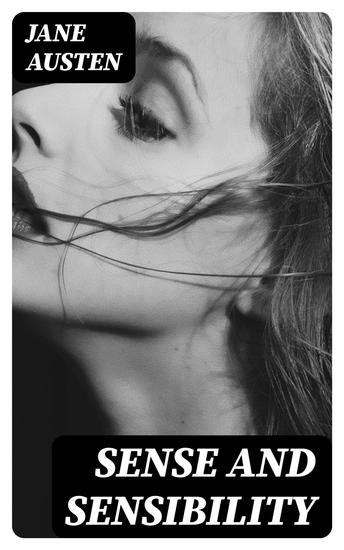
Sense and Sensibility - Enriched edition - cover

Sense and Sensibility - Enriched edition

Jane Austen

Editorial: DigiCat

  • 0
  • 0
  • 0

Sinopsis

Jane Austen's "Sense and Sensibility" is a masterful exploration of the complexities of love, social class, and the tensions between reason and emotion in early 19th-century England. Through the intertwining lives of the Dashwood sisters, Elinor and Marianne, Austen deftly employs ironic wit and subtle character development to examine the societal expectations that govern women's choices. The novel is notable for its rich characterization and its keen observations of human relationships, painting a vivid portrait of the struggles faced by women in a patriarchal society, all while employing a sharp, engaging narrative style that has become a hallmark of Austen's work. Jane Austen, born in 1775, was an astute observer of the social dynamics of her era, shaped by her own experiences in a genteel but financially precarious environment. Her keen insight into the mores and foibles of the English gentry inspired her to craft narratives that depict not only romantic entanglements but also the economic realities that influenced those relationships. "Sense and Sensibility" reflects her deep understanding of the societal constraints placed upon women and her advocacy for emotional authenticity. This novel is indispensable for readers who seek a nuanced examination of love's contradictions amid societal pressure. With its engaging prose and timeless themes, "Sense and Sensibility" offers both an intimate portrayal of sisterhood and a critique of social conventions, making it essential reading for anyone who appreciates literary depth and historical context.

In this enriched edition, we have carefully created added value for your reading experience:
- A succinct Introduction situates the work's timeless appeal and themes.
- The Synopsis outlines the central plot, highlighting key developments without spoiling critical twists.
- A detailed Historical Context immerses you in the era's events and influences that shaped the writing.
- An Author Biography reveals milestones in the author's life, illuminating the personal insights behind the text.
- A thorough Analysis dissects symbols, motifs, and character arcs to unearth underlying meanings.
- Reflection questions prompt you to engage personally with the work's messages, connecting them to modern life.
- Hand‐picked Memorable Quotes shine a spotlight on moments of literary brilliance.
- Interactive footnotes clarify unusual references, historical allusions, and archaic phrases for an effortless, more informed read.
Disponible desde: 13/11/2022.
Longitud de impresión: 332 páginas.

Otros libros que te pueden interesar

  • A Cullenden of Virginia - From their pens to your ears genius in every story - cover

    A Cullenden of Virginia - From...

    Thomas Wolf

    • 0
    • 0
    • 0
    Thomas Clayton Wolfe was born at the family home, 92 Woodfin Street, in Asheville, North Carolina on October 3rd, 1900.  
    Aged 15, Wolfe began his studies at the University of North Carolina at Chapel Hill (UNC) where he enrolled in a playwriting course. Wolfe graduated in 1920 and enrolled at the Graduate School for Arts and Sciences at Harvard. Here he studied playwriting under the tutelage of George Pierce Baker. In 1922 he received his master's degree from Harvard.  
    Wolfe now began the transition from studying to commercial playwright. He went to New York in November, 1923 trying to sell his plays to Broadway.  The Theatre Guild came close to producing Welcome to Our City but in the end declined.  Wolfe now believed his style of writing was more suited to fiction.  Grasping the opportunity this afforded him he sailed to England in October 1924 to write and from there on to France, Italy and Switzerland. 
    In 1926 Wolfe began writing a novel, O Lost. This would eventually become Look Homeward, Angel. It was based on his years in Asheville. The original manuscript of O Lost was over 1100 pages. Maxwell Perkins, one of the great book editors of the age, worked at his publishers, Scribner’s and he began to focus the book, cutting and re-shaping it to center it on the character of Eugene.   
    The novel was published in 1929. It was a success.   
    Wolfe now committed the next 4 years to writing a multi-volume epic entitled The October Fair.  At Scribner’s Perkins once more decided to edit it down to a single volume; Of Time and the River.  It was even more successful than his first. It was hailed as the literary event of 1935 and cemented his reputation as one of America’s foremost novelists.  
    In 1938, after submitting his new opus, which ran to an incredible one million words, to his new editor, Edward Aswell, Wolfe left to tour the West, a part of the country he had never before visited. Whilst travelling Wolfe became ill with pneumonia and spent three weeks in a Seattle hospital. Complications arose. The prognosis was serious.  He was diagnosed with miliary tuberculosis of the brain. 
    On September 6th, he was sent to Baltimore's Johns Hopkins Hospital for treatment. The ensuing operation revealed that the disease had overrun the entire right side of his brain.  
    Thomas Clayton Wolfe never regained consciousness and died shortly before his 38th birthday on September 15th, 1938.
    Ver libro
  • Champagne - cover

    Champagne

    Anton Chekhov

    • 0
    • 0
    • 0
    Champagne is a short story by Anton Pavlovich Chekhov, written in 1887.
    The story is written in the first person. The young head of a remote railway stop lived with his wife and without children in solitude, amusing himself with vodka and watching passing trains.
    Life was boring. One day before celebrating the New Year, he sat with his wife at the festive table, drank enough and thought about boredom. We waited for the clock to show the arrival of the New Year. At five minutes to twelve he uncorked the bottle, the cork flew out, and the bottle slipped out of his hands and fell to the floor. The wife greeted Happy New Year with frightened eyes. She knew that the falling bottle was a bad omen and meant that something bad would happen in the new year.
    After arguing with his wife, the narrator left the house thinking that this had already happened to them, that the worst could not happen. He remembered his dead parents, how he was kicked out of the gymnasium, how he wandered around with nothing to do and friends. He did not love his wife; he married when he was still a boy.
    Returning home, he saw his wife cheerful - "good aunt" Natalya Petrovna, the wife of the hero's wife's uncle, a woman of free behavior, came to them for three days. At dinner, "aunt" and "nephew" drank well, they became dizzy, and their romance began (a terrible, mad whirlwind). In this whirlwind, the hero loses his wife, mistress, and job. He asks "what else bad could happen to me?"
    Ver libro
  • Wuthering Heights - cover

    Wuthering Heights

    Emily Bronte

    • 0
    • 0
    • 0
    Wuthering Heights is the only novel by the English author Emily Brontë, initially published in 1847 under her pen name "Ellis Bell". It concerns two families of the landed gentry living on the West Yorkshire moors, the Earnshaws and the Lintons, and their turbulent relationships with the Earnshaws' foster son, Heathcliff. The novel, influenced by Romanticism and Gothic fiction, is considered a classic of English literature. 
    Wuthering Heights was accepted by publisher Thomas Newby along with Anne Brontë's Agnes Grey before the success of their sister Charlotte Brontë's novel Jane Eyre, but they were published later. After Emily's death, Charlotte edited a second edition of Wuthering Heights, which was published in 1850. 
    Wuthering Heights is now widely considered to be one of the greatest novels ever written in English, but contemporaneous reviews were polarised. It was controversial for its depictions of mental and physical cruelty, including domestic abuse, and for its challenges to Victorian morality, religion, and the class system. 
    CREATED: 
    Narrated by Abigail Weir 
    Author: Emily Brontë 
    Date of original publication: 1847 
    Genre: novel 
    Language : English 
    Version : unabridged, full/complete 
    Without subtitles
    Ver libro
  • Tono-Bungay - Book the Third: The Great Days of Tono-Bungay (Unabridged) - cover

    Tono-Bungay - Book the Third:...

    H. G. Wells

    • 0
    • 0
    • 0
    Herbert George "H. G." Wells (1866 - 1946) was an English writer.
    He was prolific in many genres, including the novel, history, politics, social commentary, and textbooks and rules for war games. Wells is now best remembered for his science fiction novels and is called a "father of science fiction"
    BOOK THE THIRD: THE GREAT DAYS OF TONO-BUNGAY: But now that I resume the main line of my story it may be well to describe the personal appearance of my uncle as I remember him during those magnificent years that followed his passage from trade to finance. The little man plumped up very considerably during the creation of the Tono-Bungay property, but with the increasing excitements that followed that first flotation came dyspepsia and a certain flabbiness and falling away.
    Ver libro
  • Joseph Conrad: The Complete Novels - cover

    Joseph Conrad: The Complete Novels

    Joseph Conrad

    • 0
    • 0
    • 0
    What happens when civilization is tested at its moral edge?
    
    The Complete Novels of Joseph Conrad brings together the full novelistic legacy of one of the most influential writers in modern literature. Known for his profound psychological insight and moral complexity, Conrad explored power, isolation, loyalty, and the fragile boundary between order and chaos.
    
    Set aboard ships, in remote colonies, and within the human mind itself, Conrad's novels confront the ethical consequences of empire and ambition. His layered narratives and atmospheric prose reveal how individuals struggle with conscience, responsibility, and identity under extreme pressure.
    
    Challenging, immersive, and deeply resonant, Conrad's work helped shape literary modernism and continues to speak powerfully to the moral dilemmas of the modern world.
    
    Inside this eBook, you'll explore:
    
    All novels by Joseph Conrad in one complete collection
    
    Iconic works such as Heart of Darkness, Lord Jim, and Nostromo
    
    Themes of moral conflict, isolation, and imperial power
    
    A cornerstone of modernist and world literature
    
    Studied worldwide and endlessly discussed, Joseph Conrad's novels remain essential reading for anyone drawn to serious fiction, ethical inquiry, and literary mastery.
    
    Journey into the depths of conscience and sea alike. Buy now and experience the complete novels of Joseph Conrad.
    Ver libro
  • Curious Case of Benjamin Button The - Unabridged - cover

    Curious Case of Benjamin Button...

    F. Scott Fitzgerald

    • 0
    • 0
    • 0
    F. Scott Fitzgerald created the novella "The Curious Case of Benjamin Button" as a short story, originally published in Collier's magazine in 1922.  It tells the tale of Benjamin, son of Roger Button, who was born as an old man and who, over the course of his life, miraculously ages backwards. Beginning life as an octogenarian in his crib, Benjamin grows "older" while his body, conversely, appears younger and younger with each passing birthday. The story takes us through Benjamin's entire life; his difficult adolescence, his marriage, life as a soldier and father and, ultimately, his inevitable descent into infanthood.  At once hilarious, frightening and satiric, Fitzgerald's wonderful story has been adapted for both the stage and screen and is presented here in its original, unabridged format.
    Ver libro