¡Acompáñanos a viajar por el mundo de los libros!
Añadir este libro a la estantería
Grey
Escribe un nuevo comentario Default profile 50px
Grey
Suscríbete para leer el libro completo o lee las primeras páginas gratis.
All characters reduced
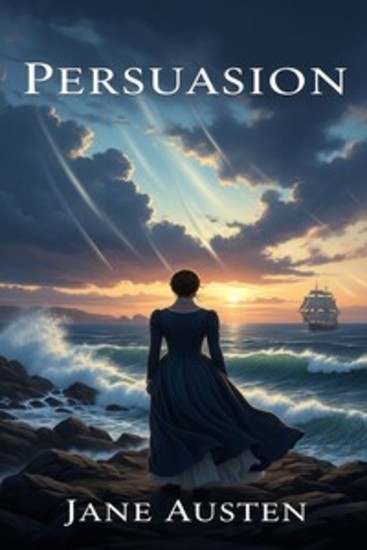
Persuasion - cover

Persuasion

Jane Austen

Editorial: Bu Classics Books

  • 0
  • 0
  • 0

Sinopsis

Anne Elliot faces the haunting ghost of a lost love when the man she was persuaded to reject returns with fame and fortune. Amidst the fading grandeur of the English gentry, she must find the courage to reclaim her happiness against the weight of social pressure. This elegant narrative serves as a poignant study of second chances and enduring devotion.
Disponible desde: 06/03/2026.
Longitud de impresión: 334 páginas.

Otros libros que te pueden interesar

  • The Secret Garden - cover

    The Secret Garden

    Frances Hodgson Burnett

    • 0
    • 0
    • 0
    Unlock the magic of "The Secret Garden" by Frances Hodgson Burnett, a timeless tale of renewal and discovery. Mary Lennox, a spoiled and lonely orphan, finds herself in her uncle's gloomy Yorkshire estate. Her curiosity leads her to an abandoned and hidden garden. As she breathes life back into it, Mary, along with newfound friends Colin and Dickon, experiences a profound transformation. Through nature's healing power, the garden becomes a sanctuary of hope, friendship, and inner growth.
    Ver libro
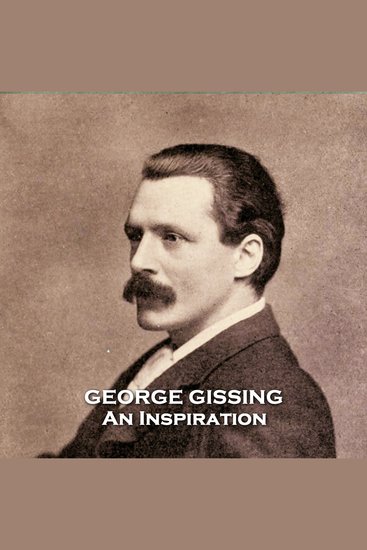
  • Inspiration An - From their pens to your ears genius in every story - cover

    Inspiration An - From their pens...

    George Gissing

    • 0
    • 0
    • 0
    George Robert Gissing was born on November 22nd, 1857 in Wakefield, Yorkshire.  
    He was educated at Back Lane School in Wakefield. Gissing loved school. He was enthusiastic with a thirst for learning and always diligent.  By the age of ten he was reading Dickens, a lifelong hero. 
    In 1872 Gissing won a scholarship to Owens College. Whilst there Gissing worked hard but remained solitary. Unfortunately, he had run short of funds and stole from his fellow students. He was arrested, prosecuted, found guilty, expelled and sentenced to a month's hard labour in 1876. 
    On release he decided to start over.  In September 1876 he travelled to the United States. Here he wrote short stories for the Chicago Tribune and other newspapers. On his return home he was ready for novels. 
    Gissing self-published his first novel but it failed to sell.  His second was acquired but never published. His writing career was static.  Something had to change.  And it did. 
    By 1884 The Unclassed was published.  Now everything he wrote was published. Both Isabel Claren-don and Demos appeared in 1886. He mined the lives of the working class as diligently as any capitalist. 
    In 1889 Gissing used the proceeds from the sale of The Nether World to go to Italy. This trip formed the basis for his 1890 work The Emancipated. 
    Gissing's works began to command higher payments. New Grub Street (1891) brought a fee of £250.  
    Short stories followed and in 1895, three novellas were published; Eve's Ransom, The Paying Guest and Sleeping Fires. Gissing was careful to keep up with the changing attitudes of his audience.  
    Unfortunately, he was also diagnosed as suffering from emphysema. The last years of his life were spent as a semi-invalid in France but he continued to write. 1899; The Crown of Life. Our Friend the Charlatan appeared in 1901, followed two years later by The Private Papers of Henry Ryecroft. 
    George Robert Gissing died aged 46 on December 28th, 1903 after catching a chill on a winter walk.
    Ver libro
  • A Midsummer Night’s Dream - cover

    A Midsummer Night’s Dream

    Pierre Arthur Laure, William...

    • 0
    • 0
    • 0
    Shakespeare’s most imaginative and merry play is set in an enchanted wood amidst fairies and sprites. 
    When Oberon, King of the Fairies, uses his magic upon four runaway lovers in a midsummer wood outside Athens, chaos ensues. Who really loves whom? Meanwhile, a band of well-meaning but bungling local actors have their rehearsal sabotaged by the mischievous Puck, who bewitches their leader, Bottom, and Titania, the Fairy Queen. The result is a lively and anarchic comedy which can only be resolved by an elaborate disentangling of spells. 
    Hermia is played by Amanda Root, Oberon by David Harewood, and Bottom by Roy Hudd. 
    ACT IScene 1. In Athens, preparations are underway for the wedding of Duke Theseus to Hippolyta, Queen of the Amazons. An angry father, Egeus, comes to the ducal palace and accuses Lysander of bewitching his daughter Hermia, even though she is already betrothed to Demetrius. Hermia confesses her love for Lysander, and Theseus tells her that according to the law, she must either die or enter a nunnery if she refuses to marry the man chosen by her father. He gives her until the new moon to decide. Hermia and Lysander decide to run away; they agree to meet the following night in a wood outside the city. They tell Helena, Hermia’s childhood friend, of their plan; she, however, is in love with Demetrius, who has rejected her for Hermia, and she hopes to regain his favor by telling him of the lovers’ intentions.Scene 2. A group of Athenian workmen, “rude mechanicals,” are preparing an entertainment to be performed at the Duke’s wedding. They have chosen “the most lamentable comedy and most cruel death of Pyramus and Thisby.” 
    ACT IIScene 1. In a wood near Athens, Oberon and Titania, King and Queen of the Fairies, argue over a changeling boy. Titania has adopted him, but Oberon wants him for an attendant. When Titania refuses to give in, Oberon summons his servant, the mischievous sprite Puck. Oberon instructs him to find an enchanted flower, the juice of which, when laid on a sleeper’s eyelid, will cause him or her to fall in love with the first creature seen on awaking. He thus hopes to force her into giving him the boy. While Puck is gone, Oberon observes Helena and Demetrius, who have followed Hermia and Lysander into the wood. Demetrius rejects Helena peremptorily. When Puck returns with the flower, Oberon tells him to lay some of its juice on the eye of the “disdainful youth,” whom he will know by his Athenian clothes.Scene 2. Oberon squeezes the juice of the magic flower on Titania’s eyelids. Lysander and Helena fall asleep nearby. Puck mistakes Lysander for Demetrius and drops the juice on his eye. Demetrius and Helena arrive and Lysander awakes, promptly falling in love with Helena. Hermia wakes to find herself left alone. 
    ACT IIIScene 1. Near where Titania lies sleeping, the “rude mechanicals” rehearse their play. Puck, who has been watching the rehearsal with amusement, places the head of an ass on Bottom’s shoulders. His fellow actors run away terrified. Titania awakes and falls instantly in love with Bottom.Scene 2. Oberon is delighted at what has happened to Titania, but angered when he realizes that the sprite has mistaken Lysander for Demetrius. To right the error, he lays juice on the lids of the sleeping Demetrius. When the young man wakes, the first person he sees is Helena, and he duly falls in love with her. Helena, now beloved of both the youths, is certain they are teasing her cruelly. Hermia is distraught when Lysander rejects her and accuses Helena of stealing her beloved. Lysander and Demetrius leave to settle their quarrel over Helena by combat, but Oberon orders Puck to send them to sleep. Puck then lays an antidote to the love juice on Lysander’s eyelids. Meanwhile Helena and Hermia fall asleep beside their lovers. 
    ACT IVScene 1. Oberon sees Titania sleeping beside Bottom. He pities her and, on undoing the spell, they are reconciled. Puck removes Bottom’s
    Ver libro

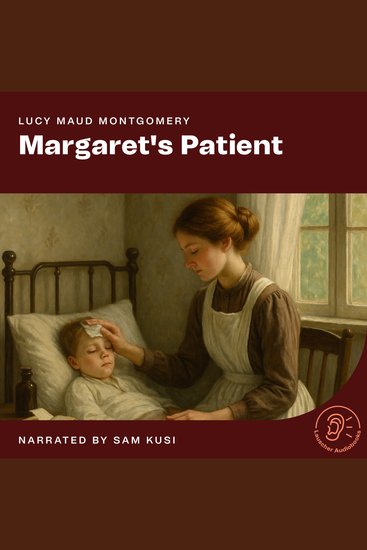
  • Margaret's Patient - cover

    Margaret's Patient

    Lucy Maud Montgomery

    • 0
    • 0
    • 0
    Lucy Maud Montgomery (November 30, 1874 – April 24, 1942), published as L. M. Montgomery, was a Canadian author best known for a series of novels beginning in 1908 with Anne of Green Gables. The book was an immediate success. The title character, orphan Anne Shirley, made Montgomery famous in her lifetime and gave her an international following.
    Margaret's Patient: Margaret paused a moment at the gate and looked back at the quaint old house under its snowy firs with a thrill of proprietary affection. It was her home; for the first time in her life she had a real home, and the long, weary years of poorly paid drudgery were all behind her.
    Ver libro
  • The Call Of The Wild - cover

    The Call Of The Wild

    Jack London

    • 0
    • 0
    • 0
    Published in 1903, "The Call of the Wild" is one of Jack London's most renowned novels. Set during the 1890s Klondike Gold Rush, it tells the story of Buck, a large and pampered dog who is stolen from his home in California and sold into the brutal life of an Alaskan sled dog. As he confronts the harsh conditions of the wilderness, hunger, and violent encounters with both animals and humans, Buck's primordial instincts resurface. The novel is a powerful exploration of nature, survival, and the transformative power of the wild.
    Ver libro
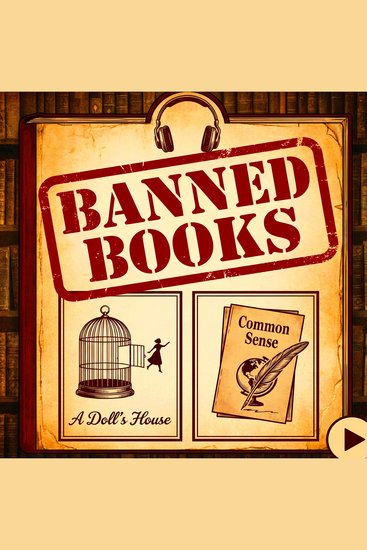
  • Banned Books – A Doll’s House + Common Sense - cover

    Banned Books – A Doll’s House +...

    Henrik Ibsen, Thomas Paine

    • 0
    • 0
    • 0
    Banned Books – A Doll’s House + Common Sense brings together two groundbreaking works that reshaped modern thought, challenged social norms, and sparked cultural revolutions. This dual‑volume release pairs Henrik Ibsen’s iconic drama A Doll’s House with Thomas Paine’s fiery political manifesto Common Sense, offering listeners a powerful journey through ideas that once shook the world. 
     
    In A Doll’s House, Ibsen exposes the constraints placed on women in 19th‑century society through the story of Nora Helmer, a wife and mother who begins to question the roles imposed upon her. The play’s bold critique of marriage, gender expectations, and personal freedom made it one of the most controversial works of its time. 
     
    In Common Sense, Thomas Paine delivers a passionate argument for American independence, written in clear, direct language that ignited a political movement. His call for liberty, self‑governance, and the rejection of monarchy became one of the most influential texts of the American Revolution. 
     
    Together, these works highlight the enduring power of banned and challenged literature — stories and ideas that refuse to remain silent. 
    Perfect for listeners who enjoy classic literature, political philosophy, feminist history, and culturally significant works that continue to inspire debate today.
    Ver libro