Junte-se a nós em uma viagem ao mundo dos livros!
Adicionar este livro à prateleira
Grey
Deixe um novo comentário Default profile 50px
Grey
Assine para ler o livro completo ou leia as primeiras páginas de graça!
All characters reduced
Mansfield Park - cover
LER

Mansfield Park

Jane Austen

Editora: Madeley publishing

  • 0
  • 0
  • 0

Sinopse

Mansfield Park is the third published novel by the English author Jane Austen, first published in 1814 by Thomas Egerton. A second edition was published in 1816 by John Murray, still within Austen's lifetime. The novel did not receive any public reviews until 1821.
The novel tells the story of Fanny Price, starting when her overburdened family sends her at the age of ten to live in the household of her wealthy aunt and uncle and following her development into early adulthood. From early on critical interpretation has been diverse, differing particularly over the character of the heroine, Austen's views about theatrical performance and the centrality or otherwise of ordination and religion, and on the question of slavery. Some of these problems have been highlighted in the several later adaptations of the story for stage and screen.
Disponível desde: 01/09/2024.

Outros livros que poderiam interessá-lo

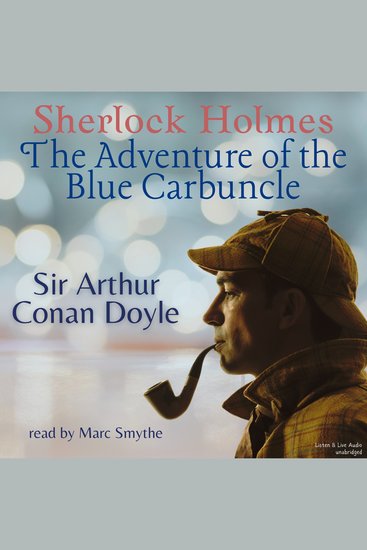
  • Sherlock Holmes: The Adventure of the Blue Carbuncle - cover

    Sherlock Holmes: The Adventure...

    Sir Arthur Conan Doyle

    • 0
    • 0
    • 0
    The Adventure of The Blue Carbuncle, one of the 56 short Sherlock Holmes stories written by British author Sir Arthur Conan Doyale, is the seventh story of 12 in The Adventure of Sherlock Holmes. The story was first published in Strand Magazine in January 1892. 
    A "Blue Carbuncle" is stolen from a hotel suite, and a former felon is soon arrested. However, an acquaintance of Holmes discovers the carbuncle in the throat of a Christmas goose. 
    Holmes traces the owner of the goose, but soon determines that he was not the thief by offering him a replacement goose. The detective continues his search, first to an inn and then to a dealer in Covent Garden. The dealer refuses to provide Holmes with information about the source of the goose, but Holmes observes another man trying to find the same information, and confronts him. The man, the head attendant at the hotel, confesses to his crime. Holmes allows him to remain free, arguing that prison could make him a hardened criminal later. 
    ©2016 Rick Sheridan (P)2016 Rick Sheridan
    Ver livro
  • Samuel The Seeker - cover

    Samuel The Seeker

    Upton Sinclair

    • 0
    • 0
    • 0
    “Samuel the Seeker” by Upton Sinclair is a thought-provoking social and political satire. The novel follows the journey of Samuel Prescott, an idealistic young farm boy who strikes out on his own to strike it rich when his father dies shortly after losing all of his savings in a bad stock market investment. Samuel encounters a variety of characters, from the fiendish and jaded Capitalists to the sainted Socialists, with the righteous religious and the purchased politicians and police along the way. This rags-to-rags story examines every form of social injustice and societal ill through the eyes of Samuel.
    Ver livro
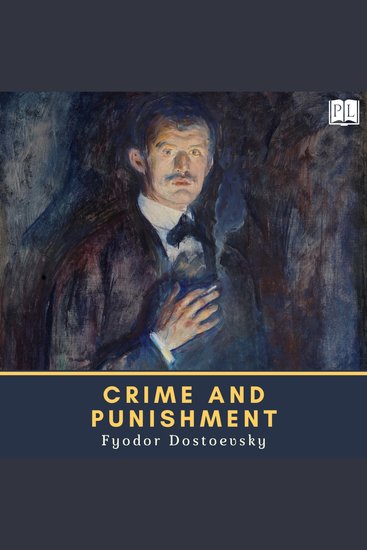
  • Crime and Punishment - cover

    Crime and Punishment

    Fyodor Dostoevsky

    • 0
    • 0
    • 0
    Crime and Punishment tells the story of Rodion Raskolnikov, an ex-student who plans to murder a pawnbroker to test his theory of personality. Having accomplished the deed, Raskolnikov struggles with mental anguish while trying to both avoid the consequences and hide his guilt from his friends and family.
    Dostoevsky's original idea for the novel centered on the Marmeladov family and the impact of alcoholism in Russia, but inspired by a double murder in France he decided to rework it around the new character of Raskolnikov. The novel was first serialized in The Russian Messenger over the course of 1866, where it was an instant success. It was published in a single volume in 1867. Presented here is Constance Garnett's 1914 translation.
    Ver livro
  • The Song of Roland - cover

    The Song of Roland

    Anonymous

    • 0
    • 0
    • 0
    The Song of Roland is an epic poem, originally sung in Old French. It tells the story of the Battle of Roncevaux Pass in 778. This is an English translation. (Introduction by Joy Chan)
    Ver livro
  • A Legend - From their pens to your ears genius in every story - cover

    A Legend - From their pens to...

    Alexander Kuprin

    • 0
    • 0
    • 0
    Alexander Kuprin was born in Narovchat, Penza in Russia on 7th September 1870. 
    At 3 his Father died and he and mother moved to Moscow. By 10 he was enrolled at the Second Moscow Military High School and there his interest in literature began. The Alexander Military Academy followed and two years later he was a sub-lieutenant and posted to an Infantry Regiment for a further four years. 
    Despite his duties he was a now a keen writer and published his first short story at this time. His military duties also garnered him experiences for his breakthrough work ‘The Duel’.  Leaving the military he left for Kiev to work for local newspapers.  He continued to publish both stories and novels and by 1901 he was in St Petersburg becoming part of a group that included Chekhov, Ivan Bunin, Maxim Gorky and Leonid Andreyev.  
    In the years that followed further controversial works and acclaim followed.  His comments on the regime meant he was also put under secret police surveillance.   
    As World War I erupted, Kuprin opened a military hospital but was then given command of an infantry company in Finland. He was soon discharged on grounds of ill health.  
    The October Revolution saw him praise Lenin, but he warned that the Bolsheviks threatened Russian culture and might cause further widespread suffering to the peasants.  As Civil War raged he took his family to Helsinki and then on to Paris. 
    Exile saw his talents decline further and his succumbing to alcoholism. He became lonely and withdrawn. The family's poverty increased his malaise.   
    In May 1937, the Kuprin’s returned to Moscow.  He now saw his work published but wrote almost nothing new.  In 1938 his health rapidly deteriorated.  Already suffering from a kidney problems and sclerosis, he had now developed cancer of the oesophagus.  
    Alexander Kuprin died on 25th August 1938.
    Ver livro
  • Eugene Onegin - cover

    Eugene Onegin

    Alexander Puskin

    • 0
    • 0
    • 0
    Eugene Onegin by Alexander Pushkin is a dazzling masterpiece of Russian literature—a novel in verse that blends romance, wit, irony, and profound psychological insight. Often regarded as the cornerstone of modern Russian fiction, this elegant and emotionally resonant work captures the spirit of an era while exploring timeless themes of love, regret, pride, and fate.
    
    The story follows Eugene Onegin, a sophisticated yet disillusioned young aristocrat who inherits a country estate and retreats from the glittering social life of the city. Intelligent but emotionally detached, Onegin moves through life with cool indifference, guided more by boredom than passion. His quiet provincial surroundings introduce him to a circle of contrasting personalities, including the dreamy and sincere Tatyana Larina, whose heartfelt confession of love becomes one of the most famous moments in literary history.
    
    Through Pushkin's lyrical and playful verse, readers witness the consequences of missed opportunities and careless choices. Onegin's rejection of genuine affection, his strained friendship with the idealistic poet Vladimir Lensky, and the tragic duel that follows set into motion a chain of events that reshape his life. Years later, when circumstances change and emotions mature, the past returns with bittersweet intensity.
    
    Pushkin's narrative voice is as captivating as his characters—charming, reflective, and often ironic. He skillfully blends social commentary with intimate emotion, painting a vivid portrait of early 19th-century Russian society while revealing the universal struggles of youth and self-discovery. Beneath its graceful poetry lies a deep meditation on human nature, the passage of time, and the weight of regret.
    
    Both romantic and tragic, playful and philosophical, Eugene Onegin remains one of literature's most enduring works. Its unforgettable characters and musical language have inspired generations of writers, composers, and readers. At once a love story and a study of character, this novel in verse stands as Pushkin's crowning achievement and a timeless exploration of the choices that define a life.
    Ver livro