Junte-se a nós em uma viagem ao mundo dos livros!
Adicionar este livro à prateleira
Grey
Deixe um novo comentário Default profile 50px
Grey
Assine para ler o livro completo ou leia as primeiras páginas de graça!
All characters reduced
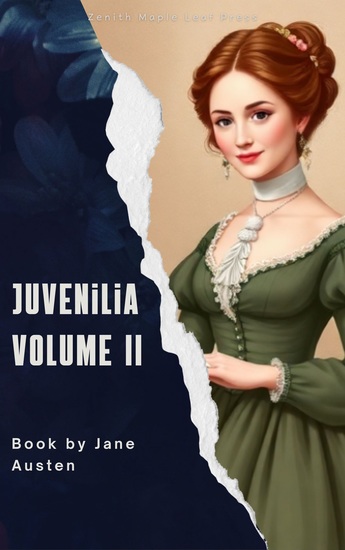
Juvenilia Volume II - The Playful and Satirical Early Works of a Literary Legend - cover
LER

Juvenilia Volume II - The Playful and Satirical Early Works of a Literary Legend

Jane Austen, Zenith Maple Leaf Press

Editora: Zenith Maple Leaf Press

  • 0
  • 0
  • 0

Sinopse

The wit was there from the very beginning.

Juvenilia – Volume II continues the delightful journey into Jane Austen's earliest writings, offering more short stories, satirical sketches, and playful narratives penned during her teenage years. These works brim with spirited heroines, absurd adventures, and Austen's unmistakable gift for poking fun at society and romance.

From clever parodies of sentimental fiction to sharp character studies, this collection captures Austen's youthful imagination in full bloom—providing a rare, unfiltered look at the genius that would one day create Pride and Prejudice, Emma, and Sense and Sensibility.

"An intimate window into Austen's early creative genius." – Literary Classics Review
"Hilarious, bold, and brilliantly satirical—proof that Austen's wit was innate." – The Guardian

✅ Why Readers Love It:

✍ A deeper exploration of Austen's formative years

😂 Biting humor and playful social commentary

📚 Essential for Austen fans and literary historians

🎯 Click 'Buy Now' to enjoy the lively charm and fearless humor of Jane Austen's teenage pen.
Disponível desde: 15/08/2025.
Comprimento de impressão: 146 páginas.
Outros livros que poderiam interessá-lo

  • Story of the Youth Who Went Forth to Learn What Fear Was The - Story Time Episode 49 (Unabridged) - cover

    Story of the Youth Who Went...

    Brothers Grimm

    • 0
    • 0
    • 0
    A father had two sons. The dimwitted younger son, when asked by his father what he would like to learn to support himself, said he would like to learn how to shudder (as in, learn to have fear). A sexton told the father that he could teach the boy. After teaching him to ring the church bell, he sent him one midnight to ring it and came after him, dressed as a ghost. The boy demanded an explanation. When the sexton did not answer, the boy, unafraid, pushed him down the stairs, breaking his leg.
    Ver livro
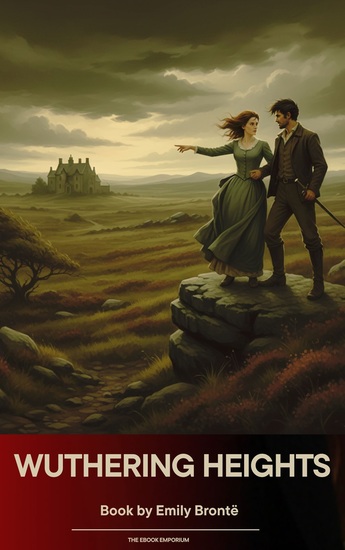
  • Wuthering Heights - cover

    Wuthering Heights

    Emily Brontë

    • 0
    • 0
    • 0
    "I am Heathcliff! He's always, always in my mind: not as a pleasure, any more than I am always a pleasure to myself, but as my own being."
    
    On the bleak and wind-swept Yorkshire moors, a storm of human passion rages. When the orphan Heathcliff is brought to Wuthering Heights, he forms an unbreakable, primal bond with Catherine Earnshaw. But when social ambition and betrayal tear them apart, Heathcliff's love curdles into a decades-long vendetta. Emily Brontë's only novel is a wild, elemental force of nature that defies the conventions of Victorian morality and romance.
    
    A Study in Duality and Conflict: The novel is structured around the stark opposition between two households: the chaotic, ancient Wuthering Heights and the sheltered, civilized Thrushcross Grange. As the story descends through two generations, readers witness the devastating effects of inherited trauma and the relentless pursuit of vengeance that threatens to consume both families.
    
    The Ultimate Anti-Hero: In Heathcliff, Brontë created literature's most enduring and polarizing figure—a Byronic hero driven by a love so absolute it becomes a curse. Haunted by ghosts both literal and figurative, the characters of Wuthering Heights exist in a world where the boundary between the living and the dead is as thin as the mist on the moors. It is a masterpiece of psychological intensity and Gothic horror.
    
    An unfiltered cry of the soul. Purchase "Wuthering Heights" today and experience the most haunting romance ever written.
    Ver livro
  • The Cossacks - cover

    The Cossacks

    Leo Tolstoy

    • 0
    • 0
    • 0
    "The Cossacks live not by the dictates of the world but by a code woven from their own history and way of life."
    
    Published in 1883 and set in the Caucasus, The Cossacks follows the journey of Dmitry Andreich Olenin, a young nobleman who, disillusioned with his privileged life and a failed love affair, leaves Moscow on a quest to find meaning and serenity among the people of the Caucasus. He embarks on a journey southward and eventually joins a regiment stationed in mountainous Cossack country, where he takes part in the daily life of a Cossack village and encounters cultural tensions between the Russian troops and the local Cossacks, who have a complex relationship marked by historical enmity.
    
    The novel explores themes of love, identity, and the stark contrasts between different ways of life, inviting the audience to reflect on the complexities of human relationships and cultural understanding.
    Leo Tolstoy (1828–1910) was a Russian novelist, philosopher, and social reformer, widely regarded as one of the greatest writers of all time. He is best known for his epic novels War and Peace and Anna Karenina, both celebrated for their intricate character development and profound exploration of moral dilemmas and human nature. In his later years, Tolstoy experienced a spiritual awakening which led him to reject materialism and embrace a life of simplicity, seeking to align his life with his beliefs about non-violence and compassion. Tolstoy's legacy endures not only through his literary masterpieces but also through his profound impact on literature and philosophy.
    Ver livro
  • Overcoat and Other Stories The - Audiobook - cover

    Overcoat and Other Stories The -...

    Nikolai Gogol, Classic...

    • 0
    • 0
    • 0
    This collection brings together some of Nikolai Gogol's most unforgettable tales, including the haunting The Overcoat, the surreal The Nose, and the eerie Viy. Gogol blends absurdity with pathos, the supernatural with the grotesque, and comedy with quiet tragedy.Whether it's the tale of a downtrodden clerk whose stolen coat leads to a ghostly revenge, or the madman who believes he's the King of Spain, these stories dive into the depths of the human soul. The Overcoat and Other Stories is a mesmerizing introduction to Gogol's singular style and a cornerstone of Russian literary heritage.
    Ver livro
  • A Son At The Front - cover

    A Son At The Front

    Edith Wharton

    • 0
    • 0
    • 0
    In the realm of classic literature, there exists a treasure trove of stories that capture the essence of human emotions and experiences during times of conflict. One such masterpiece is "A Son at the Front," a novel written by Edith Wharton and published in 1923. This poignant work of fiction delves into the lives of its characters against the backdrop of World War I, weaving a narrative that explores themes of love, sacrifice, and the unrelenting toll of war. 
     
    The story primarily revolves around the protagonist, John Campton, an American painter residing in Paris. John is a devoted father, and his world revolves around his beloved son, George. The novel traces John's inner turmoil as he wrestles with his desire to protect his son from the horrors of war while also coming to terms with his own artistic ambitions. 
     
    As the novel unfolds, we witness the complex interplay of personal and societal forces on the characters. John Campton's internal conflict reflects the broader dilemma faced by countless individuals during the Great War. The choice between pursuing one's creative aspirations and succumbing to the overwhelming demands of duty and patriotism is a recurring theme that resonates with readers even today. 
     
    Edith Wharton, celebrated for her incisive social commentary and keen insight into human nature, portrays the characters in "A Son at the Front" with depth and nuance. John's struggles are a testament to the emotional turmoil experienced by parents who see their children heading to the frontlines of battle. The fear, anxiety, and helplessness that John grapples with are emotions that transcend time and place, making his character all the more relatable to modern readers.
    Ver livro
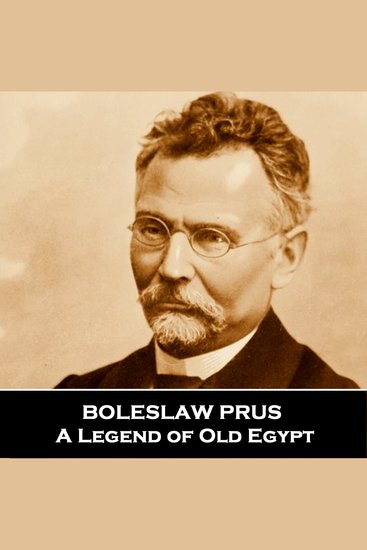
  • A Legend of Old Egypt - From their pens to your ears genius in every story - cover

    A Legend of Old Egypt - From...

    Boleslaw Prus

    • 0
    • 0
    • 0
    Aleksander Głowacki who wrote under the nom de plume Boleslaw Prus was born on 20th August 1847 at Hrubieszów in the Kingdom of Poland, at that time, controlled by the Russian Empire. 
    At three his mother died and then at nine his father.  Female relatives helped raise him but at 15 he joined the Polish uprising against the might of Imperial Russia.  Wounded on the battlefield, arrested and imprisoned, he was later released into the care of a relative and resumed secondary school and then Warsaw University but poverty forced him to leave after two years.  At some point he developed agoraphobia which often caused problems. 
    In 1869, he enrolled in the Forestry Department at Puławy but was soon sacked and so he began a system of self-education that led to work as a newspaper columnist on a wide-ranging series of topics that eventually became the ‘Weekly Chronicles’ and spanned 40 years. 
    With his finances now stabilized he married and then adopted his late brother-in-law’s son.  
    It seems he had doubts as to the scale of his talents and early on adopted the name ‘Boleslaw Prus’ for both his journalistic and literary offerings. 
    His work as a short-story writer met with much acclaim. He wrote several dozen of them, originally published in newspapers and ranging in length from micro-story to novella. His keen observation of everyday life and sense of humor are evident in them.  
    During his career he also wrote novels. After ‘Pharoah’, in 1895, he embarked on a four-month journey taking in Berlin, Dresden, Nuremberg, Rapperswil in Switzerland, where he stayed for two months, and his final destination, Paris.  Here his agoraphobia was so bad he couldn’t cross the Seine.  
    However, his writing continued and in 1911 his novel ‘Changes’, though uncompleted, began to be serialised.  It was never finished. 
    Boleslaw Prus died on 19th May 1912, at his Warsaw apartment.  He was 64.  A National Hero, thousands attended both his funeral service and interment.
    Ver livro