Junte-se a nós em uma viagem ao mundo dos livros!
Adicionar este livro à prateleira
Grey
Deixe um novo comentário Default profile 50px
Grey
Assine para ler o livro completo ou leia as primeiras páginas de graça!
All characters reduced
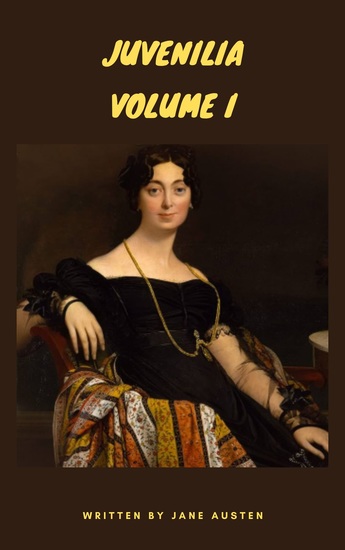
Juvenilia - Volume I - The Early Works of Jane Austen - cover
LER

Juvenilia - Volume I - The Early Works of Jane Austen

Jane Austen, Zenith Crescent Moon Press

Editora: Zenith Crescent Moon Press

  • 0
  • 0
  • 0

Sinopse

🌟 Discover the Beginnings of a Literary Genius with "Juvenilia - Volume I"! 🌟

Step back in time and explore the early writings of one of literature's most beloved authors, Jane Austen. "Juvenilia - Volume I" offers a fascinating glimpse into the youthful imagination and budding talent of Austen, showcasing her wit, creativity, and keen observations of human nature. 📚✨

Written between the ages of 11 and 18, these early works include charming stories, lively sketches, and playful parodies that hint at the brilliance of Austen's later novels. From humorous tales of romantic entanglements to satirical takes on society, "Juvenilia - Volume I" is a delightful collection that will captivate both devoted Austen fans and newcomers alike. 🌸💕

Dive into Austen's world and witness the development of her unique voice and narrative style. "Juvenilia - Volume I" provides valuable insights into the mind of a young writer who would go on to create some of the most enduring works of English literature. This eBook edition brings Austen's early masterpieces to a new generation of readers, offering a convenient and beautifully formatted version of these captivating stories. 🌟📖

🔖 Click "Buy Now" to add "Juvenilia - Volume I" to your collection and enjoy the enchanting early works of Jane Austen! 🔖
Disponível desde: 11/03/2025.
Comprimento de impressão: 121 páginas.

Outros livros que poderiam interessá-lo

  • A Journey of Little Profit - From their pens to your ears genius in every story - cover

    A Journey of Little Profit -...

    John Buchan

    • 0
    • 0
    • 0
    The Scottish novelist John Buchan enjoyed a remarkable career as politician, historian and Governor General. He was born John Buchan on 26th August 1875 and later added 1st Baron Tweedsmuir PC GCMG GCVO CH to his name.  
    Buchan studied at Hutchesons’ Grammar School, Glasgow and at seventeen won a scholarship to the University of Glasgow to study classics. There he began to write poetry. In 1895 he transferred to Oxford to continue his study of Classics and in 1896 ‘Sir Quixote of the Moors’ was published followed by the non-fiction ‘Scholar-Gipsies’. His prolific literary output now hardly faltered. 
    He graduated in 1900 and became the private secretary to Alfred Milner, the High Commissioner for Southern Africa and other colonies. Buchan found the same inspiration in the African landscape as he had in the Scottish Borders, and would later set many works here. Returning to London he became a partner in a publishing house, and garnered an editorial role at The Spectator. He also completed his law studies. He was called to the bar in 1901 but never practiced.  
    On 15th July 1907 Buchan married Susan Charlotte Grosvenor, the cousin of the Duke of Westminster. In 1910 he wrote ‘Prester John’, the first of a series set in South Africa.  
    In 1911 Buchan entered politics as a Unionist candidate in the Scottish Borders advocating the support of free trade, women’s suffrage, national insurance, and reducing the power of the House of Lords.  
    The Great War saw Buchan writing for the War Propaganda Bureau and as Times correspondent in France. In 1915, he published ‘The Thirty-Nine Steps’, his most famous book and a follow-up Richard Hannay novel, ‘Greenmantle’, in 1916.  
    In 1916 Buchan enlisted in the Intelligence Corps which included writing speeches for Sir Douglas Haig. By 1917 he was Director of Information under Lord Beaverbrook. Buchan called it “the toughest job he ever took on”. He somehow found time to assist in a history of the war magazine. This was later published in 24 volumes: Nelson’s History of the War. 
    After the war his writing focused on historical studies. In 1927 Buchan became the Unionist Party Member of Parliament for the Combined Scottish Universities. In a speech to Parliament he said “I believe every Scotsman should be a Scottish nationalist. If it could be proved that a Scottish parliament were desirable… Scotsmen should support it.”  
    Over the next decade he continued to distinguish himself politically and in literature.  On the 1st June 1935 he became 1st Baron Tweedsmuir of Elsfield in the County of Oxford.  
    He was now also given the position of Governor General in Canada and resolved to travel all over Canada to gain a better insight of the country. Having crossed both length and breadth he saw the cultural shift between areas and their common ground and helped bring about a clear national Canadian identity. 
    On the 6th February 1940 he collapsed from a stroke and sustained a very serious head injury in falling. Two rounds of surgery to stabilise his condition were unsuccessful and Buchan died on the 11th February. After a state funeral in Ottawa his ashes were returned to his estate in Oxfordshire.
    Ver livro
  • Les Misérables: Volume 5: Jean Valjean - Book 1: The War Between Four Walls (Unabridged) - cover

    Les Misérables: Volume 5: Jean...

    Victor Hugo

    • 0
    • 0
    • 0
    Victor-Marie Hugo (26 February 1802 - 22 May 1885) was a French poet, novelist, essayist, playwright, and dramatist of the Romantic movement. During a literary career that spanned more than sixty years, he wrote abundantly in an exceptional variety of genres: lyrics, satires, epics, philosophical poems, epigrams, novels, history, critical essays, political speeches, funeral orations, diaries, and letters public and private, as well as dramas in verse and prose.
    BOOK 1: THE WAR BETWEEN FOUR WALLS: The two most memorable barricades which the observer of social maladies can name do not belong to the period in which the action of this work is laid. These two barricades, both of them symbols, under two different aspects, of a redoubtable situation, sprang from the earth at the time of the fatal insurrection of June, 1848, the greatest war of the streets that history has ever beheld.
    Ver livro
  • Nostromo - cover

    Nostromo

    Joseph Conrad

    • 0
    • 0
    • 0
    Nostromo by Joseph Conrad: Set in the fictional South American country of Costaguana, "Nostromo" is a gripping tale of political intrigue, revolution, and human greed. The novel follows the life of the enigmatic protagonist, Nostromo, a respected and trusted figure in the port town of Sulaco. As the political landscape shifts and a silver mine becomes the focal point of power struggles, Nostromo finds himself Qembroiled in a web of deceit and betrayal. Joseph Conrad's masterful prose and deep exploration of human nature create a timeless work that delves into themes of corruption, the allure of wealth, and the consequences of ambition. 
     
    Joseph Conrad Joseph Conrad was a renowned English novelist and one of the most significant literary figures of the late 19th and early 20th centuries. A master storyteller, Conrad's works often explored the human psyche and the complexities of human nature. His experiences as a sailor heavily influenced his writing, and many of his novels, such as "Heart of Darkness," "Lord Jim," and "Nostromo," showcased his deep understanding of the sea and the human condition. Conrad's profound insights into the darkness and moral ambiguity within individuals have made his literature enduring and relevant, leaving a lasting impact on the world of literature and beyond.
    Ver livro
  • Toomai of the Elephants - The First Jungle Book - cover

    Toomai of the Elephants - The...

    Rudyard Kipling

    • 0
    • 0
    • 0
    "Toomai of the Elephants" is a short story by Rudyard Kipling about a young elephant-handler. It was first published in the December 1893 issue of St. Nicholas magazine and reprinted in the collection of Kipling short stories, The Jungle Book (1894).
    Toomai's father rides Kala Nag the elephant to catch wild elephants in the hills. Toomai comes to help and risks his life throwing a role up to one of the drivers. His father forbids him to enter the elephant enclosure again. One night he follows the elephant hunters, and is picked up by Kala Nag; he rides into the elephants' meeting place in the jungle, where they dance. On his return he is welcomed by both hunters and elephants.
    Ver livro
  • Great Gatsby The - Audiobook - cover

    Great Gatsby The - Audiobook

    Francis Scott Fitzgerald,...

    • 0
    • 0
    • 0
    The Great Gatsby is a dazzling portrayal of the American Dream—and its disillusionment—set during the roaring 1920s. Narrated by the reflective Nick Carraway, the novel centers around the mysterious and fabulously wealthy Jay Gatsby, who throws lavish parties in hopes of rekindling a lost romance with the beautiful Daisy Buchanan. Beneath the glamour and jazz-age extravagance, the story unfolds as a haunting critique of ambition, love, and the pursuit of happiness in a world driven by materialism.Fitzgerald's lyrical prose captures both the enchantment and emptiness of high society, making The Great Gatsby a profound and enduring classic. With its themes of longing, illusion, and social decay, the novel continues to resonate as a cautionary tale about the cost of chasing dreams in a world where reality rarely matches fantasy.
    Ver livro
  • Salammbo - cover

    Salammbo

    Gustave Flaubert

    • 0
    • 0
    • 0
    "Salammbo" by Gustave Flaubert is a lush, exotic tale set in ancient Carthage during the Mercenary Revolt. The story revolves around Salammbo, the daughter of Carthaginian general Hamilcar Barca, and Matho, a rebel leader who becomes obsessed with her. Flaubert paints a vivid picture of opulence, war, and religious fervor, blending grandeur with visceral detail. Themes of passion, betrayal, and the clash of civilizations drive the narrative as Salammbo embarks on a perilous mission to reclaim a sacred veil. Rich in sensory imagery and historical depth, the novel explores the tension between spirituality and earthly desires. A masterpiece of literary realism, it immerses readers in a world of beauty, brutality, and doomed love.
    Ver livro