Rejoignez-nous pour un voyage dans le monde des livres!
Ajouter ce livre à l'électronique
Grey
Ecrivez un nouveau commentaire Default profile 50px
Grey
Abonnez-vous pour lire le livre complet ou lisez les premiĂšres pages gratuitement!
All characters reduced
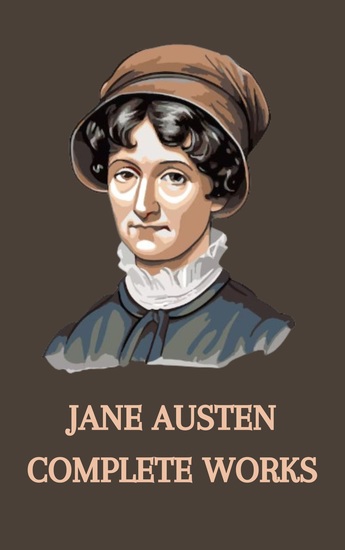
Jane Austen - The Complete Works - cover

Jane Austen - The Complete Works

Jane Austen, Zenith Crescent Moon Press

Maison d'édition: Zenith Crescent Moon Press

  • 0
  • 0
  • 0

Synopsis

Immerse yourself in the elegant world of romance and sharp social commentary with Jane Austen Complete Works 📖✹. This cherished collection brings together all the novels of one of the most beloved authors in literary history 🌟📚.
From the enduring romance of Pride and Prejudice 💞 to the quiet resilience in Persuasion 💌, and the sparkling wit of Emma đŸŽ©, Austen's works offer an enchanting journey into 19th-century England. These timeless stories reveal the complexities of relationships, the nuances of societal norms, and the resilience of the human spirit, all delivered with Austen's signature charm and intelligence 🌾.
🌟 Why Readers Adore It

This collection is a must-have for anyone who cherishes beautifully crafted novels that continue to inspire and delight. 📚✹
Click "Buy Now" to experience Jane Austen's literary brilliance 🚀
Disponible depuis: 25/03/2025.
Longueur d'impression: 3120 pages.

D'autres livres qui pourraient vous intéresser

  • Book of Good Counsels - From the Sanskrit of the "Hitopadesa" - cover

    Book of Good Counsels - From the...

    Sir Edwin Arnold

    • 0
    • 0
    • 0
    The term ‘Hitopadesha’ is a combination of two Sanskrit terms, ‘Hita’ (welfare/ benefit) and ‘Upadesha’ (counsel). As the term suggests, The Hitopadesha is a collection of tales that gives good counsel. Hitopadesa was presumably written by Narayan Pandit and is an independent treatment of the Vishnu Sarman's Panchatantra (3rd century BC) which it resembles in form. In Hitopadesha, Vishnu Sarman is depicted as a Sage who undertakes to give good counsel to the sons of Sudarsana, the king of Pataliputra, through stories within stories involving talking animals. The dating of Hitopadesha is problematic as no other work by Narayan Pandit is known. The earliest manuscript of Hitopadesha dates from 1373; it could be of East Indian origin during the Pala Empire (8th-12th centuries).This book is a condensed but faithful transcript of Hitopadesha in sense and manner rendered in English by Sir Edwin Arnold. Sir Edwin says in the Preface that the Hitopadesa may be styled 'The father of all Fables'; for "from its numerous translations come Esop and Piplay and in latter days, 'Reineke Fuchs'." Summary by Jothi
    Voir livre
  • The Food of the Gods and How It Came to Earth - cover

    The Food of the Gods and How It...

    H. G. Wells

    • 0
    • 0
    • 0
    "In the world of the small, the large is always a monster."
    
    What happens when science outpaces morality? When two eccentric scientists, Mr. Bensington and Professor Redwood, develop "Herakleophorbia"—a substance that allows for continuous, limitless growth—they envision a world of giant livestock and abundant food. Instead, they unleash a biological revolution. From giant wasps and man-eating rats to a new generation of human "Giants" who stand forty feet tall, the world is irrevocably changed. Wells uses this fantastic premise to craft a biting satire of a society that fears progress and a moving epic about the struggle for a larger, more noble existence.
    
    The Chaos of the Small: The first half of the novel is a brilliant dark comedy. Due to the negligence of a pair of sloppy caretakers, the "Food" leaks into the English countryside, creating a nightmare of gargantuan pests. Wells meticulously describes the terror of a world where common insects and rodents become apex predators, forcing humanity to confront the dangers of its own tinkering.
    
    The War of the Worlds (Small vs. Large): As the human "Children of the Food" grow to adulthood, they find themselves outcasts in a world built for "little people." The novel shifts from science fiction to political allegory, as the "old" world, led by the populist politician Caterham (the "Jack the Giant-killer"), attempts to suppress and destroy the giants. It is a powerful meditation on the "growing pains" of civilization and the fear of the unknown.
    
    A Prophecy of the Future: Wells leaves the reader with a haunting question: Can humanity evolve fast enough to inhabit the world its science has created? The Food of the Gods is an essential read for anyone interested in the ethics of biotechnology and the eternal struggle between the status quo and the future.
    
    Witness the growth of a new world. Purchase "The Food of the Gods" today and see the world through the eyes of a giant.
    Voir livre
  • Frankenstein - cover

    Frankenstein

    Mary Shelley

    • 0
    • 0
    • 0
    Newly updated to feature award-winning narrator, Christopher Tester!


    Frankenstein is one of the earliest examples of science fiction, introducing the prototypical “mad scientist” who creates a monster who destroys everyone and everything that is dear to him. The scientist is the eponymous character of the novel but the name, Frankenstein, has become popularly attached to the creature itself, who has become one of the best-known monsters in the history of motion pictures and a constant reference point in popular culture. The novel has spoken to technological and cultural anxieties from the Enlightenment to the age of Big Tech as it engages with the ethics of technology and scientific discovery, and the power of knowledge. Perhaps its most lasting legacy, however, is that the monster comes to represent anyone who doesn't fit into societal norms; the creature experiences forms of alienation that are oddly relatable to modern life.


    Cover illustrated by: James Jeffers
     
    James Jeffers is a queer illustrator whose work explores the delightful world of the fantastique through colors, shapes, and whimsy.
    Voir livre
  • The Arrow of Gold - cover

    The Arrow of Gold

    Joseph Conrad

    • 0
    • 0
    • 0
    The Arrow of Gold is one of Joseph Conrad's most romantic and reflective novels, blending political intrigue, personal obsession, and moral conflict into a richly atmospheric narrative. Set against the revolutionary movements of late nineteenth-century Europe, the novel explores the complex relationship between love, loyalty, and idealism.
    
    The story follows an unnamed narrator, a young seaman drawn into the shadowy world of political conspiracies and clandestine operations. His life becomes entangled with Doña Rita de Lastaola, a mysterious and fiercely independent woman devoted to a revolutionary cause. Known for her beauty, wealth, and emotional reserve, Doña Rita embodies both devotion and detachment, inspiring intense loyalty while remaining ultimately unreachable.
    
    As the narrator assists in secret missions involving arms smuggling and political plots, he finds himself torn between his romantic devotion to Doña Rita and his growing awareness of the moral ambiguities surrounding the revolutionary struggle. Conrad presents political idealism not as a heroic certainty, but as a force capable of both noble sacrifice and destructive obsession.
    
    Told with Conrad's characteristic psychological depth and subtle irony, The Arrow of Gold is less a tale of action than a meditation on memory, desire, and the illusions that shape human lives. The novel's reflective tone and layered narration reveal how personal longing can become inseparable from political faith.
    
    Melancholic, introspective, and deeply human, The Arrow of Gold stands as a thoughtful examination of unfulfilled love and lost causes, offering readers a quieter yet powerful expression of Conrad's enduring literary vision.
    Voir livre
  • Mathias Sandorf - cover

    Mathias Sandorf

    Jules Verne

    • 0
    • 0
    • 0
    Mathias Sandorf is one of Jules Verne's most dramatic and politically charged adventure novels, often regarded as his tribute to The Count of Monte Cristo. Set against the turbulent backdrop of 19th-century Europe, the story weaves together revolution, betrayal, endurance, and justice in a sweeping journey across continents.
    
    The novel follows Count Mathias Sandorf, a Hungarian patriot falsely accused of treason after a conspiracy for national independence is uncovered by treachery. Condemned to imprisonment under brutal conditions, Sandorf seemingly perishes—yet fate has other plans. Years later, he reemerges under a new identity, having survived unimaginable hardships and traveled across Europe, the Mediterranean, and North Africa.
    
    As Sandorf patiently executes an intricate plan to expose his enemies and restore honor to the innocent, the narrative unfolds through daring escapes, secret alliances, advanced scientific methods, and relentless pursuit. Verne blends thrilling adventure with political intrigue, emphasizing themes of resilience, justice, loyalty, and the moral consequences of betrayal.
    
    Rich in geographic detail and marked by constant movement, Mathias Sandorf is a powerful tale of perseverance and revenge shaped by a journey across continents. It stands as one of Jules Verne's most mature and emotionally compelling works—an epic adventure that combines suspense, intelligence, and the timeless quest for freedom and redemption.
    Voir livre
  • The Song of Justice - From their pens to your ears genius in every story - cover

    The Song of Justice - From their...

    Rainer Maria Rilke

    • 0
    • 0
    • 0
    RenĂ© Karl Wilhelm Johann Josef Maria Rilke was born into a troubled marriage on the 4th December 1875 in Prague, then part of the Austro-Hungarian Empire.  His mother, having previously lost a baby girl, would dress the young boy up in girl’s clothing.   
    Later his father dispatched him to a military academy at age 10 but after a miserable 5 years the young Rilke left due to illness and instead entered first Prague and then Munich and finally Berlin university to study art history, philosophy and literature. 
    His initial forays into literature was in poetry.  His intense, mystical and lyrical style was much admired and over time inspired many in succeeding generations.    
    His short prose collection ‘Stories of God’, written in an impassioned burst over several nights was published in 1900 and offers a beguiling view of much of Rilke’s influences and outlook.  
    The following year he married the pioneering sculptor and artist Clara Westhoff.  The union produced one child, a daughter Ruth.   
    He lived in Paris for most of the Century’s first decade where he mixed with many great minds of the time.  Although he continued to write he also worked as a secretary to the sculptor, Rodin.   
    It was only after they settled in Switzerland in 1919 that his writing output was in full flow.  Here he wrote profusely in both German and French, which included much on his previous travels, his left-wing sympathies, his religious and existential thoughts, all part of a unique and consummate style. 
    From 1923 on, Rilke increasingly struggled with his health which was now in constant decline and often spent time rehabilitating at a sanatorium.   
    Rainer Maria Rilke died of leukaemia on the 29th December 1926 in Montreux, Switzerland.  He was 51.
    Voir livre