¡Acompáñanos a viajar por el mundo de los libros!
Añadir este libro a la estantería
Grey
Escribe un nuevo comentario Default profile 50px
Grey
Suscríbete para leer el libro completo o lee las primeras páginas gratis.
All characters reduced
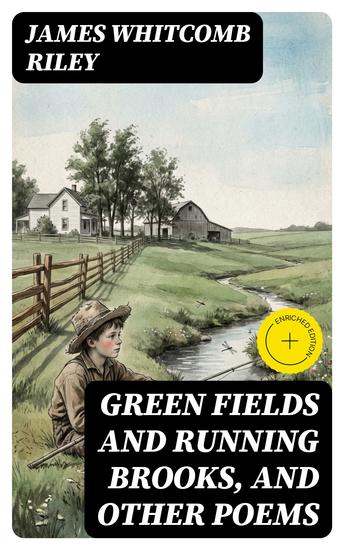
Green Fields and Running Brooks and Other Poems - Enriched edition - cover

Green Fields and Running Brooks and Other Poems - Enriched edition

James Whitcomb Riley

Editorial: DigiCat

  • 0
  • 0
  • 0

Sinopsis

In "Green Fields and Running Brooks, and Other Poems," James Whitcomb Riley captures the essence of rural American life through a rich tapestry of evocative imagery and heartfelt themes. The collection is marked by Riley's unique use of dialect and vernacular speech, which infuses his verses with authenticity and warmth. His poems reflect a deep appreciation for nature, nostalgia, and the simplicity of country living, while also addressing the poignant experiences of childhood and the passage of time. This literary work serves as a bridge between the Romantic ideals of nature and the emerging modernist sensibilities of the late 19th century, illustrating how personal landscapes can resonate universally. James Whitcomb Riley, often hailed as the "Poet of the People," drew heavily upon his Midwestern roots and childhood experiences in Indiana. Surrounded by the verdant landscapes and rural culture of his youth, Riley's work became a reflection of the values, joys, and struggles of ordinary Americans. His celebrated blend of humor and pathos offers insights into the collective memory of his time, making poetry accessible to a broad audience. "Green Fields and Running Brooks" is a must-read for anyone who cherishes the beauty of nature and the intricacies of human emotion. Riley's lyrical verse will resonate with lovers of American poetry, inviting readers to immerse themselves in the serene yet vibrant world he so beautifully portrays.

In this enriched edition, we have carefully created added value for your reading experience:
- A comprehensive Introduction outlines these selected works' unifying features, themes, or stylistic evolutions.
- A Historical Context section situates the works in their broader era—social currents, cultural trends, and key events that underpin their creation.
- A concise Synopsis (Selection) offers an accessible overview of the included texts, helping readers navigate plotlines and main ideas without revealing critical twists.
- A unified Analysis examines recurring motifs and stylistic hallmarks across the collection, tying the stories together while spotlighting the different work's strengths.
- Reflection questions inspire deeper contemplation of the author's overarching message, inviting readers to draw connections among different texts and relate them to modern contexts.
- Lastly, our hand‐picked Memorable Quotes distill pivotal lines and turning points, serving as touchstones for the collection's central themes.
Disponible desde: 15/09/2022.
Longitud de impresión: 70 páginas.

Otros libros que te pueden interesar

  • When Winston Went to War with the Wireless - cover

    When Winston Went to War with...

    Jack Thorne

    • 0
    • 0
    • 0
    In May 1926, Britain grinds to a halt, as workers down tools for the General Strike.
    With the printing presses shut down, the only sources of news are the government's British Gazette, edited by Chancellor of the Exchequer Winston Churchill, and the independent, fledgling British Broadcasting Company, led by John Reith. The stage is set for a fierce battle over control of the news and who gets to define the truth.
    Jack Thorne's When Winston Went To War With The Wireless is a gripping play about the birth of a great British institution and its efforts to stay impartial. It premiered at the Donmar Warehouse, London, in June 2023, directed by Katy Rudd, with Stephen Campbell Moore as Reith, Adrian Scarborough as Churchill, and Haydn Gwynne as Stanley Baldwin.
    'Jack Thorne never ceases to stimulate and entertain'Evening Standard
    Ver libro
  • Paradise Lost - cover

    Paradise Lost

    John Milton

    • 0
    • 0
    • 0
    Paradise Lost is an epic poem written by the Puritan English poet John Milton between 1658 and 1663, and published in 1667. This is a period of English history which encompasses the end of Oliver Cromwell's Commonwealth and the restoration of the monarchy in 1660.
    Perhaps reflecting some of his country's turmoil during Milton's life, Paradise Lost deals with revolution in Heaven by Satan and his followers against God, their defeat and banishment to Hell, and their subsequent plotting of revenge, leading ultimately to Satan beguiling Eve in Paradise to taste the fruit of the Tree of Knowledge against the explicit command of God. Milton's vivid and poetic description of these events is both dramatic and compelling. The work gained swift acceptance and has always remained a popular and important part of English literature.
    Originally published in ten books, a second edition was published in 1674 arranged into twelve books, the form in which it appears here.
    Ver libro
  • Dance of Death The (Part 1 & 2) - cover

    Dance of Death The (Part 1 & 2)

    August Strindberg

    • 0
    • 0
    • 0
    Come join me as we enter the scene of a remote military outpost where we'll experience the tumultuous relationship between two embittered souls as they confront the harsh realities of their disintegrating marriage. Oh how lives of others can be so easily dismantled by the whims of the few. 
    "I have lived a life of quiet desperation, clinging to the illusion of happiness. But now, as I stand on the precipice of oblivion, I see the truth with startling clarity. We are all prisoners of our own making, trapped in cages of our own design. And yet, even in the darkest of times, there is a flicker of light. A spark of hope that refuses to be extinguished. I may be flawed, imperfect, but I am still alive. And as long as there is life, there is the possibility of change."
    Ver libro
  • The Milk Hours - Poems - cover

    The Milk Hours - Poems

    John James

    • 0
    • 0
    • 0
    Winner of the Max Ritvo Poetry Prize, The Milk Hours is an elegant debut that searches widely to ask what it means to exist in a state of loss. 
    “We lived overlooking the walls overlooking the cemetery.” So begins the title poem of this collection, whose recursive temporality is filled with living, grieving things, punctuated by an unseen world of roots, bodies, and concealed histories. Like a cemetery, too, The Milk Hours sets unlikely neighbors alongside each other: Hegel and Murakami, Melville and the Persian astronomer al-Sufi, enacting a transhistorical poetics even as it brims with intimacy. These are poems of frequent swerves and transformations, which never stray far from an engagement with science, geography, art, and aesthetics, nor from the dream logic that motivates their incessant investigations. 
    Indeed, while John James begins with the biographical—the haunting loss of a father in childhood, the exhausted hours of early fatherhood—the questions that emerge from his poetic synthesis are both timely and universal: what is it to be human in an era where nature and culture have fused? To live in a time of political and environmental upheaval, of both personal and public loss? How do we make meaning, and to whom—or what—do we turn, when such boundaries so radically collapse?
    Ver libro
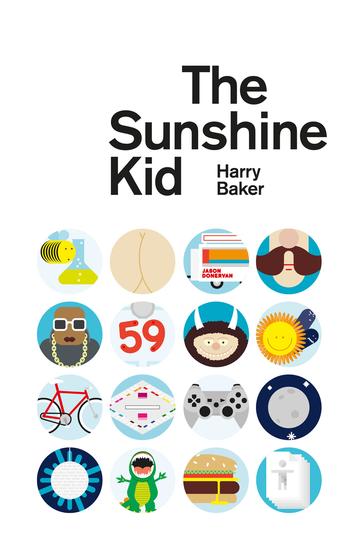
  • The Sunshine Kid - cover

    The Sunshine Kid

    Harry Baker

    • 0
    • 0
    • 0
    When Harry Baker first started writing rap infused poetry he was advised to "write about what you know" so instead of writing about killing people, or driving fast cars (over people), he wrote about mathematics.
    
    It is not all complex maths and algebra however but throughout Harry applies his mathematician's mind to conjuring complex rhythms that have to be read out loud to be believed.
    Ver libro
  • Twas the Night Before Christmas - Unabridged - cover

    Twas the Night Before Christmas...

    Clement C. Moore

    • 0
    • 0
    • 0
    "Twas the Night Before Christmas," was originally published anonymously in 1823 as "A Visit from St. Nicholas." Perhaps the most famous Christmas poem of all time, it relates the story of a father awoken from his sleep on Christmas Eve by Santa Claus - St. Nick in the poem - who lands with his sleigh and "eight tiny reindeer" on the roof of the house, comes down the chimney and delivers toys to the family. He then departs, calling out as he flies away the famous closing line: "Happy Christmas to all, and to all a good night!"   A Christmas classic for two centuries, "Twas the Night Before Christmas" was claimed by author Clement C. Moore in 1837 and is presented here in its original and unabridged form.
    Ver libro