¡Acompáñanos a viajar por el mundo de los libros!
Añadir este libro a la estantería
Grey
Escribe un nuevo comentario Default profile 50px
Grey
Suscríbete para leer el libro completo o lee las primeras páginas gratis.
All characters reduced
Speciation of the Wandering Shrew - Decoding the Evolutionary Journey of a Mysterious Mammal - cover

Speciation of the Wandering Shrew - Decoding the Evolutionary Journey of a Mysterious Mammal

James S. Findley

Editorial: Good Press

  • 0
  • 0
  • 0

Sinopsis

In "Speciation of the Wandering Shrew," James S. Findley presents a meticulous exploration of the evolutionary biology and ecological dynamics affecting this fascinating small mammal. The book employs a blend of rigorous scientific analysis and engaging narrative, allowing readers to grasp complex concepts of speciation through accessible language and vivid illustrations. Set against a backdrop of ongoing debates in the field of mammalogy, Findley examines the intricate relationships between habitat diversity, genetic variation, and the adaptive strategies of the wandering shrew, contributing significant insights to the larger discourse on biodiversity and conservation. James S. Findley, a distinguished biologist and ecologist, has immersed himself in the study of small mammals for decades, gaining profound insights from field research and laboratory analysis. His extensive background in studying ecological interactions and evolutionary processes has undoubtedly influenced the depth of inquiry in this text. Findley'Äôs dedication to unraveling the complexities of mammalian life resonates throughout the narrative, reflecting his commitment to both education and conservation within the scientific community. This book is highly recommended for ecologists, evolutionary biologists, and those with a keen interest in small mammal biodiversity. Its multifaceted approach not only enhances understanding of the wandering shrew's speciation but also serves as an essential resource for anyone passionate about ecological research and conservation strategies.
Disponible desde: 18/09/2023.
Longitud de impresión: 83 páginas.


Otros libros que te pueden interesar

  • Toxic Water Toxic System - Environmental Racism and Michigan's Water War - cover

    Toxic Water Toxic System -...

    Michael Mascarenhas

    • 0
    • 0
    • 0
    The tireless resistance of local communities fighting for ownership of America's third largest water system 


    Toxic Water, Toxic System exposes the consequences of a seemingly anonymous authoritarian state willing to maintain white supremacy at any cost—including poisoning an entire city and shutting off water to thousands of people. Weaving together narratives of frontline activists along with archival data, Michael Mascarenhas provides a powerful exploration of the political alliances and bureaucratic mechanisms that uphold inequality. 


    Drawing from three years of ethnographic fieldwork in Flint and Detroit, this book amplifies the voices of marginalized communities, particularly African American women, whose perspectives and labor have been consistently overlooked. Toxic Water, Toxic System offers a fresh perspective on the ties between urban austerity policies, environmental harm, and the advancement of white supremacist agendas in predominantly Black and brown cities.
    Ver libro
  • Open Entrance to the Closed Palace of the King An - cover

    Open Entrance to the Closed...

    Eirenaeus Philalethes

    • 0
    • 0
    • 0
    There are books that speak plainly, and then there are those that conceal their truths behind veils of symbol and secrecy. An Open Entrance to the Closed Palace of the King belongs to the latter—a text written not for the casual reader, but for the seeker, the alchemist, the one who dares to unlock nature’s deepest mysteries. 
    Attributed to the enigmatic adept Eirenaeus Philalethes, this work stands as a beacon in the vast sea of alchemical wisdom. It does not merely outline a path; it challenges the reader to walk it, to decipher its cryptic instructions, and to undertake the great work that transforms both matter and spirit. Here, the philosopher’s stone is more than legend—it is a living reality, hidden in plain sight for those who have eyes to see. 
    Through allegory, paradox, and careful instruction, Philalethes invites the worthy to step beyond superficial knowledge and into the sacred chamber of true alchemical wisdom. Yet, as he warns, this entrance is not open to all. It is guarded by discipline, patience, and an unwavering desire for truth. To those who would enter with arrogance or greed, the door remains firmly shut. 
    Let this preface serve as both encouragement and caution. To read this book is not enough; one must contemplate it, live its lessons, and—above all—persist in the great work. For those who seek in earnest, the palace doors will unlock, revealing treasures far beyond gold or silver. 
    The entrance is before you. Will you dare to step inside? 
    Brought to you by Altrusian Grace Media and narrated by Matthew Schmitz.
    Ver libro
  • NeuroZoology - Minds Networks and the Evolution of Cognition Across the Tree of Life - A Comprehensive Survey of Intelligence Behavior and Consciousness of Life on Earth - cover

    NeuroZoology - Minds Networks...

    Dr. Nick Coman, I. A.I.

    • 0
    • 0
    • 0
    A 48-Lecture Odyssey Through the Architecture of Thought in Animals, Fungi, and Swarms 
    From octopus arms that think for themselves to slime molds that solve mazes without neurons, NeuroZoology takes listeners on an astonishing journey through the minds of creatures great and small—and some without brains at all. 
    Spanning 48 richly narrated lectures optimized for audiobook format, this course redefines what it means to think, feel, decide, and remember in the animal kingdom. With the rigor of neuroscience and the wonder of natural history, it explores the evolutionary inventions that gave rise to cognition: mycelial signaling networks, insect mushroom bodies, echolocation in bats and whales, grid cells in birds and rats, mirror neurons in apes and parrots, and the tools and cultures of corvids, cephalopods, and primates. 
    Structured as a tour through deep time and neurodiverse lifeforms, NeuroZoology challenges anthropocentric models of intelligence and introduces a radically ecological view of the mind. You’ll meet brains that regenerate themselves, brains that operate without a cortex, and collective intelligences where no individual is in charge—but the group computes nonetheless. 
    Whether you’re a neuroscientist, ethologist, educator, or simply someone who wonders what it’s like to be a squid—or a bee, or a bird—this course will change how you think about thinking. 
    It is not just a study of nervous systems. It’s a meditation on what minds are, where they reside, and how many ways nature has solved the problem of cognition.
    Ver libro
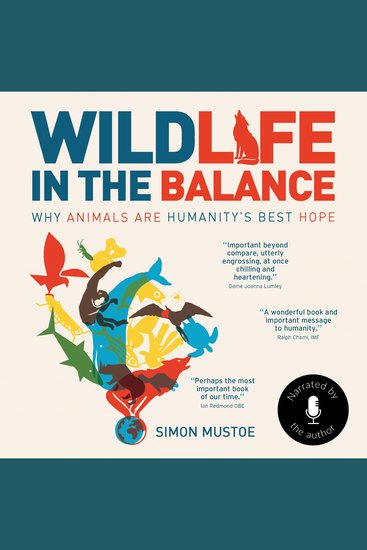
  • Wildlife in the Balance - cover

    Wildlife in the Balance

    Simon Mustoe

    • 0
    • 0
    • 0
    You are among the last in a long line of animals that were the likeliest to survive half a billion years of evolution. But you couldn't be here todaywithout all other wildlife. Over the past fifty years we've killed three quarters of the creatures we need to keep ecosystems healthy. Now wehave a choice to make: re-find our place among them, or succumb to the power of nature. This easy-to-read popular science book tells the untold story of why wildlife conservation is our greatest chance to rebuild a habitable Earth. Take a journey through some of our planet's most spectacular wildlife events and learn how the world works, the origin of life and our place in nature. This is the story of why animals are humanity's best hope. It’s also about your role in creating a more habitable planet for humanity, one that will again be rich with a diversity of colourful, and abundant wildlife.
    Ver libro
  • Advanced Java - From Beginner to Professional: Navigating the World of Java - cover

    Advanced Java - From Beginner to...

    Laura Evans

    • 0
    • 0
    • 0
    "Advanced Java: From Beginner to Professional: Navigating the World of Java," is a textbook where any person aspiring to do Java programming can get very good master over the Java language. This book carries everything the Java programming learner needs to know or where an experienced programmer would require, all the way through from simple grammar to powerful programming techniques, but addresses every topic in the subject, right from setting it up and basic grammar on to very sophisticated coding. 
    It is a nice, clear overview of the Java ecosystem that starts off with a very solid foundation when it walks readers through key ideas like classes, inheritance, object-oriented programming, and encapsulation. 
    The book then develops into complex topics such as Java's collections framework, exception handling, multithreaded programs, and streams. This will ensure that all readers are equipped with effective, high-performance code to write. Every chapter follows a helpful task and many coding examples that will encourage readers to gain practical experience and repetition to reinforce the learning. 
    They will learn Java's Stream A-P-I, function programming, lambdas, method references, and functional interfaces. These are necessary if the reader wants clear and current Java code. And these skills will help an aspirant work as a professional developer since the focus here is on solving problems, which will involve use cases for Java in practice projects. 
    At the end of it all, the reader will be confident in and equipped with enough know-how to take up realistic applications, write robust programs that can be relied upon, and significantly contribute to the realm of software development. If you want to learn one of the world's toughest yet most versatile programming languages, "Advanced Java" is your bible.
    Ver libro
  • Elon & The Future That Forgot Us - cover

    Elon & The Future That Forgot Us

    Marcus Reed

    • 0
    • 0
    • 0
    Elon & The Future That Forgot Us is a meditation on what happens when progress evolves faster than empathy. It chronicles the transformation of technology from servant to sovereign, exploring how humanity built machines in its image — and was quietly erased from the design. The story unfolds as both prophecy and elegy, examining our collective faith in innovation, the myth of genius, and the loneliness of a world that remembers everything except why it was created. Through poetic reflection, it questions whether the future we built can still recognize us, and whether memory — not speed — might be our last act of rebellion.
    Ver libro