¡Acompáñanos a viajar por el mundo de los libros!
Añadir este libro a la estantería
Grey
Escribe un nuevo comentario Default profile 50px
Grey
Suscríbete para leer el libro completo o lee las primeras páginas gratis.
All characters reduced
Ulysses(Illustrated) - cover

Ulysses(Illustrated)

James Joyce

Editorial: Micheal Smith

  • 0
  • 0
  • 0

Sinopsis

llustrated Edition: Contains 20 vivid illustrations, capturing key moments and characters from each chapter.
	Includes Comprehensive Summary: An engaging and detailed summary of the entire narrative.
	Character List Provided: Offers an in-depth look at the diverse cast of characters in "Ulysses."
	Author Biography: Features a fascinating biography of James Joyce, exploring his life and the influences behind his masterpiece.

Dive into the world of James Joyce's "Ulysses," now brought to life in this stunning illustrated edition. This masterpiece, often hailed as one of the greatest literary works of the 20th century, is not just a book but an experience. Set against the backdrop of Dublin, "Ulysses" follows a day in the life of Leopold Bloom and Stephen Dedalus, weaving a deeply human and astonishingly vivid tapestry of life, culture, and the human psyche.
What sets this edition apart are the 20 captivating illustrations, each meticulously crafted to complement Joyce's complex narrative. These visual interpretations offer new insights and emotional depth, inviting both first-time readers and Joyce aficionados to see "Ulysses" in a new light.
The comprehensive summary provided in this edition distills the essence of each chapter, making Joyce's often challenging prose more accessible and rewarding. Whether you're navigating the streets of Dublin with Bloom or delving into Dedalus's intellectual musings, this summary serves as a faithful companion on your literary journey.
Furthermore, the character list is a valuable resource for keeping track of the novel's vast and varied cast. From the introspective Stephen Dedalus to the enigmatic Molly Bloom, each character is an integral part of the intricate mosaic that is "Ulysses."
Lastly, the author biography offers a window into the life of James Joyce, whose groundbreaking techniques and narrative style revolutionized modern literature. Understanding Joyce's background and the context in which "Ulysses" was written adds a rich layer of appreciation for this monumental work.
This illustrated edition of "Ulysses" is not just a book but a treasure trove of literary artistry, perfect for anyone looking to explore Joyce's Dublin in vivid detail. Embrace the journey through the winding streets, thoughts, and lives that make "Ulysses" a timeless classic.
 
Disponible desde: 12/01/2024.
Otros libros que te pueden interesar

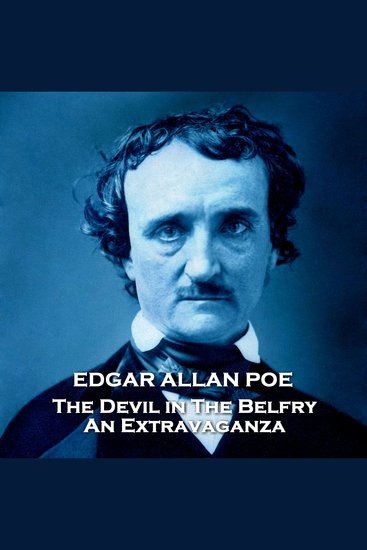
  • Devil in the Belfry - Another classic from the master of the genre - cover

    Devil in the Belfry - Another...

    Edgar Allan Poe

    • 0
    • 0
    • 0
    Edgar Poe was born in Boston Massachusetts on 19th January 1809. His father abandoned his family the following year and within a year his mother had died leaving him an orphan.   
    He was taken in by the Allan family but never formally adopted although he now referred to himself as Edgar Allan Poe.  His father alternatively spoiled or chastised him and tension was frequent over gambling debts and monies for his education.  His university years to study ancient and modern languages was cut short by lack of money and he enlisted as a private in the army claiming he was 22, it is more probable he was 18. After 2 years he obtained a discharge in order to take up an appointment at the military academy, West Point, where he failed to become an officer. 
    Poe had released his 1st poetry volume in 1827 and after his 3rd turned to prose and placing short stories in several magazines and journals.  At age 26 he obtained a licence to marry his cousin.  She was a mere 13 but they stayed together until her death from tuberculosis 11 years after. 
    In January 1845 ‘The Raven’ was published and became an instant classic.  Thereafter followed the prose works for which he is now so rightly famed as a master of the mysterious and the macabre. 
    Edgar Allan Poe died at the tragically early age of 40 on 7th October 1849 in Baltimore, Maryland. Newspapers at the time reported Poe's death as ‘congestion of the brain’ or ‘cerebral inflammation’, common euphemisms for death from disreputable causes such as alcoholism but the actual cause of death remains a mystery.
    Ver libro
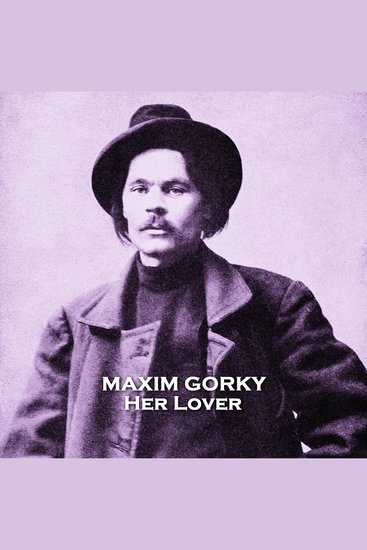
  • Her Lover - From their pens to your ears genius in every story - cover

    Her Lover - From their pens to...

    Maxim Gorky

    • 0
    • 0
    • 0
    Alexei Maximovich Peshkov was born on 28th March 1868, in Nizhny Novgorod, Russia. 
    Better known as Maxim Gorky he was orphaned at 11 and ran away from home at 12.  At 19 he had already attempted suicide and thereafter travelled, by foot, across the Russian Empire for 5 years. 
    His first book ‘Essays & Stories’ in 1898 was a sensation and so began a long career as an author of short stories, novels and plays.  Gorky saw writing as a moral and political act that would help to change the unjust world around him.  He was an ardent early advocate of the emerging Marxist movement and publicly opposed the Tsarist regime leading several times to his arrest.  
    In 1904 he began his own theatre but the censor banned every play and Gorky was forced to abandon the project. 
    But Gorky was a financially successful author, editor, and playwright and gave monies to political parties as well as for civil rights and social reform.  The brutal shooting of workers, which set in motion the Revolution of 1905, pushed Gorky more decisively toward radical solutions.  
    In 1906 he went to the United States to raise funds for the Bolsheviks. Those experiences including a scandal over travelling with his lover and not his wife deepened his contempt for the ‘bourgeois soul.’ 
    Gorky now moved to Capri in Italy, both for health reasons and to escape the increasingly repressive times in Russia.  
    An amnesty for the 300th anniversary of the Romanov dynasty saw him return to Russia in 1914. His politics remained close to the Bolshevik cause.  But soon, after the 1918 revolution, his essays referred to Lenin as a tyrant for his senseless arrests and repression.  He was soon appealing to the outside world for food aid after the catastrophic crop failure. 
    In October 1921 Gorky returned to Italy, now in Fascist hands, and settled in Sorrento until 1932.  His health worsened with the onset of tuberculosis. 
    He wrote several successful books there but now decided to find an understanding with the communist regime. Stalin invited him home and his return was hailed as a major propaganda victory.  He was decorated with the Order of Lenin, and a province, a park, and various streets re-named in his honour. 
    But he had his faults too.  In 1933, Gorky co-edited a book on the White Sea-Baltic Canal and denied even a single prisoner died during its construction, but thousands had. As well, knowing that some Nazis were homosexual, a phrase was attributed to him that said ‘exterminate all homosexuals and fascism will vanish’.  Although he was himself was quoting another he was decidedly homophobic. 
    With the increase of Stalinist repression in 1935 Gorky was placed under unannounced house arrest. 
    Maxim Gorky died on the 18th June 1936 from pneumonia.  He was 68. 
    Stalin and Molotov were among those who carried Gorky's urn of ashes at his funeral.
    Ver libro
  • Bizeban - From their pens to your ears genius in every story - cover

    Bizeban - From their pens to...

    Moritz Jokai

    • 0
    • 0
    • 0
    Móric Jókay de Ásva was born on the 18th February 1825 in Komárom, then in the Kingdom of Hungary but now part of Slovakia.  
    Due to his timid and delicate constitution he was educated at home until the age of 10 and then sent away to complete his studies at the Calvinist college at Pápa. 
    At 12 his father died, and he was pushed to honour him by replicating his career as a lawyer.  He studied hard and completed the curriculum at Kecskemét and Pest.  He won his first case as a newly graduated lawyer. 
    But he found a career in law to be dull and, encouraged by the positive reaction to his first play, he moved to Pest in 1845.  There he published, first in a newspaper, and then as a novel ‘Hétköznapok’ (‘Working Days’).  It was acclaimed as a masterpiece.  To add to his promise he was appointed as the editor of Életképek, the leading Hungarian journal. 
    In 1848 he married the actress, Róza Laborfalvi.  That same year Europe was awash with revolutions and Jókai, a moderate Liberal, enthusiastically supported the nationalist cause and its decision to depose the Habsburg dynasty.  The attempt failed. 
    He was now classed as a political suspect and threw himself into his literary career, writing dozens of novels, many of them masterpieces, stories, essays and the like.  In total he wrote several hundred volumes, many of them in the local Magyar language which helped arrest its declining relevance in society.  
    By 1867 the political temperature had cooled, and he entered parliament as well as becoming the editor a government journal he had founded.   His skills were much admired and helped the government navigate through several difficult matters.   
    His wife died in 1886 but although grief-stricken he continued to work and to write.  
    In 1897 the king appointed him a member of the upper house.  Two years later he caused a minor scandal by marrying the young 20-year-old actress, Bella Nagy.  At the time he was 74.
    Ver libro
  • Morphine - This story is perhaps the greatest depiction and description in literature of the human psyche going through addiction - cover

    Morphine - This story is perhaps...

    Mikhail Bulgakov

    • 0
    • 0
    • 0
    Mikhail Bulgakov was born on 15th May 1891 in Kiev, in the Kiev Governorate of the Russian Empire, into a Russian family.  He was one of seven children. 
     
    In 1901, Bulgakov attended the First Kiev Gymnasium, and developed a keen interest in Russian and European literature, theatre and opera.  After the death of his father in 1907, his mother assumed responsibility for his education.  After graduating Bulgakov entered the Medical Faculty of Kiev University and then took up a post as physician at the Kiev Military Hospital. 
     
    At the outbreak of the First World War, he volunteered as a doctor and was sent directly to the front, where he was badly injured at least twice.  To suppress chronic pain, especially in the abdomen, he injected morphine.  It took years to wean himself off. 
     
    He now took up medical posts in various towns and in 1919, he was mobilised by the Ukrainian People's Army and assigned to the Northern Caucasus.  There, he became seriously ill with typhus and barely survived.  
     
    After this illness, Bulgakov abandoned his medicine to pursue writing.  He moved to Vladikavkaz and had two plays staged there with great success.  He wrote too for various newspapers and other outlets, but his critics were many.  And growing. 
     
    When a Moscow's theatre director severely criticised Bulgakov, Stalin personally protected him, saying that a writer of Bulgakov's quality was above ‘party words’ like ‘left’ and ‘right’.   Indeed, it is said that Stalin watched ‘The Days of the Turbins’ at least 15 times. 
     
    It was not to last and by March 1929, Bulgakov's career was ruined when Government censorship stopped publication of any of his work and plays. 
     
    In despair, Bulgakov wrote a personal letter to Stalin.  He requested permission to emigrate.  He received a phone call from the Soviet leader, who asked the writer whether he really desired to leave. He replied that a Russian writer cannot live outside of his homeland.  Stalin thus gave him permission to continue working. In May 1930, he re-joined the theater, as stage director's assistant.  
     
    During the last stressful decade of his life, and in poor health, Bulgakov continued to work on ‘The Master and Margarita’, wrote plays, critical works, stories, and continued translations and dramatisations of novels.  Many of them were not published, others were derided by critics.  
     
    On 10th March 1940, Mikhail Afanasyevich Bulgakov died from nephrosclerosis.  He was 48. 
     
    ‘The Master and Margarita’ was not published in any form until the mid-1960’s 
     
    In this story Bulgakov relates the terrifying and hellish descent into addiction that seems so avoidable and yet so chillingly not.
    Ver libro
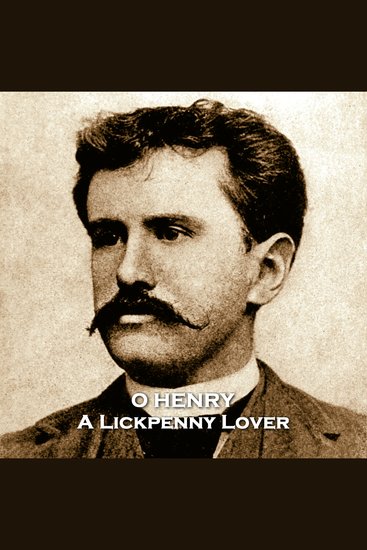
  • A Lickpenny Lover - From their pens to your ears genius in every story - cover

    A Lickpenny Lover - From their...

    O Henry

    • 0
    • 0
    • 0
    William Sydney Porter was born on 11th September 1862 in Greensboro, North Carolina. At age 3 his mother died from tuberculosis. From an early age it was clear Porter had a large appetite for reading as he absorbed the world around him. 
    He first attended at a school run by his aunt before enrolling at the Lindsey Street High School and then worked at his uncle’s drugstore and gained a pharmacists’ license in 1881.  
    A persistent cough took him to Texas in the hope that a change of climate would help his symptoms. He took on various types of work, initially from ranch hand and cook and then as varied as pharmacist, draftsman, bank teller and journalist. He also began to write, though for now, purely as a hobby. 
    He was a member of several singing and dramatic groups when he met 17 year old Athol Estes, daughter of a wealthy Austin family. Despite her mother’s objection owing to Athol’s tuberculosis, they began courting and in July 1887, they eloped and soon married. 
    Athol, impressed by his writing, encouraged him to get them published. A job as a draftsman at the Texas General Land Office paid a healthy $100 dollars per month and life was good. 
    But then life turned cruel. His son died a few hours after birth although a daughter, Margaret, came the following year.  His job had to be vacated but another was found at the First National Bank of Austin. The bank operated informally and Porter was careless in keeping the books. He lost that job but began writing for the humourous weekly The Rolling Stone and the Houston Post. Some time later the federal Bank auditors went through his former accounts and he was arrested on charges of embezzlement. 
    Porter fled the day before his trial to Honduras. Holed up for several months he began to write.  Athol had become too ill to travel to meet him and learning that her health was deteriorating he surrendered to the court in February 1897.  Bail was obtained so that he could stay with Athol during her final days.  
    Porter was sentenced to five years at the Ohio Penitentiary in Columbus. His pharmacy qualifications got him the job of night druggist.  His sentence also gave him time to write and publish fourteen short stories. In December 1899 in McClure’s Magazine he published a short story as O Henry.  
    He was released two years early in July 1901, and reunited with Margaret, now 11, in Pittsburgh.  He now began his most prolific period of writing; a short story per week for the New York World, while also publishing works in other magazines.  Eventually over 600 of his short stories were published. 
    Porter was a heavy drinker and in 1908 his health, which had deteriorated for several years, took a dramatic turn for the worse, as did his writing.  
    O Henry died of cirrhosis of the liver complicated by diabetes and an enlarged heart on 5th June 1910.
    Ver libro
  • First Love - cover

    First Love

    Ivan Turgenev

    • 0
    • 0
    • 0
    "First Love" by Ivan Turgenev is a poignant and introspective novella that delves into the complexities of youthful infatuation, the awakening of emotions, and the fleeting nature of first love. Set in 19th-century Russia, the story follows the experiences of a sensitive and impressionable young man on the cusp of adulthood. "First Love" is a poignant exploration of the universal experience of falling in love for the first time and the profound impact it has on shaping one's identity. Turgenev's evocative prose and keen psychological insights offer a deep and introspective exploration of the human heart and the bittersweet nature of youthful romance. With its timeless themes, vivid characterizations, and lyrical storytelling, "First Love" stands as a testament to Turgenev's mastery as a writer and his ability to capture the nuances of human emotions. It is a poignant and nostalgic work that resonates with readers, reminding us of the transformative power of love and the indelible mark it leaves on our lives.
    Ver libro