Junte-se a nós em uma viagem ao mundo dos livros!
Adicionar este livro à prateleira
Grey
Deixe um novo comentário Default profile 50px
Grey
Assine para ler o livro completo ou leia as primeiras páginas de graça!
All characters reduced
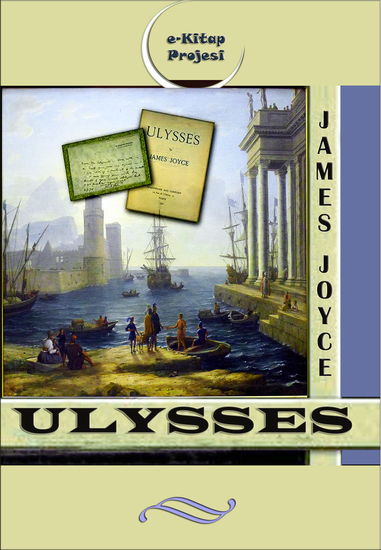
Ulysses - cover
LER

Ulysses

James Joyce

Editora: E-Kitap Projesi & Cheapest Books

  • 0
  • 0
  • 0

Sinopse

The book consists of 18 chapters, each covering roughly one hour of the day, beginning around 8 a.m. and ending sometime after 2 a.m. the following morning. Each chapter employs its own literary style, and parodies a specific episode in Homer's Odyssey. Furthermore, each chapter is associated with a specific colour, art or science, and bodily organ. This combination of kaleidoscopic writing with an extreme formal schematic structure renders the book a major contribution to the development of 20th-century modernist literature. The use of classical mythology as an organising framework, the near-obsessive focus on external detail, and the occurrence of significant action within the minds of characters have also contributed to the development of literary modernism. Nevertheless, Joyce complained that, "I may have oversystematised Ulysses," and played down the mythic correspondences by eliminating the chapter titles that had been taken from Homer.

As he was completing work on Dubliners in 1906, Joyce considered adding another story featuring a Jewish advertising canvasser called Leopold Bloom under the title Ulysses. Although he did not pursue the idea further at the time, he eventually commenced work on a novel using both the title and basic premise in 1914. The writing was completed in October 1921. Three more months were devoted to working on the proofs of the book before Joyce halted work shortly before his self-imposed deadline, his 40th birthday (2 February 1922).
This publication encountered censorship problems in the United States; serialisation was halted in 1920 when the editors were convicted of publishing obscenity. Although the conviction was based on the "Nausicaä" episode of Ulysses, The Little Review had fuelled the fires of controversy with dada poet Elsa von Freytag-Loringhoven's defence of Ulysses in an essay "The Modest Woman." Joyce's novel was not published in the United States until 1933.

With the appearance of both Ulysses and T. S. Eliot's poem, The Waste Land, 1922 was a key year in the history of English-language literary modernism.

In Ulysses, Joyce employs stream of consciousness, parody, jokes, and virtually every other established literary technique to present his characters. The action of the novel, which takes place in a single day, 16 June 1904, sets the characters and incidents of the Odyssey of Homer in modern Dublin and represents Odysseus (Ulysses), Penelope and Telemachus in the characters of Leopold Bloom, his wife Molly Bloom and Stephen Dedalus, parodically contrasted with their lofty models.

The book explores various areas of Dublin life, dwelling on its squalor and monotony. Nevertheless, the book is also an affectionately detailed study of the city, and Joyce claimed that if Dublin were to be destroyed in some catastrophe it could be rebuilt, brick by brick, using his work as a model. To achieve this level of accuracy, Joyce used the 1904 edition of Thom's Directory—a work that listed the owners and/or tenants of every residential and commercial property in the city. He also bombarded friends still living there with requests for information and clarification.
Disponível desde: 10/02/2024.
Comprimento de impressão: 800 páginas.

Outros livros que poderiam interessá-lo

  • Ruined a Little When We Are Born - Stories - cover

    Ruined a Little When We Are Born...

    Tara Isabel Zambrano

    • 0
    • 0
    • 0
    For fans of Carmen Maria Machado and Jhumpa Lahiri, Ruined a Little When We Are Born delivers a stunning exploration of family and motherhood against the backdrop of Indian diaspora and culture. Tara Isabel Zambrano weaves elements from both the physical and supernatural worlds to beg the question: are we all ruined a little from our first breath? 


    A young couple ponders their opposing religions after one of them finds a cow's tongue left on their porch. A widow helps her neighbor mourn the death of his wife by burying the woman's belongings in the backyard. A mother forces her daughter to undergo various rituals to lighten her skin to find a good match. And when a man needs a son as his heir, he brings his new, much younger wife to live with his current wife and daughter, changing his daughter's life in ways she couldn't have imagined. 


    In stunning prose, Zambrano's stories traverse the delights and fears of parenthood in terrifying clarity, exploring the suppression and display of desire in women and girls in daring candor.
    Ver livro
  • Sportsman's Sketches - cover

    Sportsman's Sketches

    Ivan Turgenev

    • 0
    • 0
    • 0
    A Sportsman's Sketches (Russian: ??????? ????????; also known as The Hunting Sketches and Sketches from a Hunter's Album) was an 1852 collection of short stories by Ivan Turgenev. It was the first major writing that gained him recognition. He wrote this collection of short stories based on his own observations while hunting at his mother’s estate at Spasskoye, where he learned of the abuse of the peasants and the injustices of the Russian system that constrained them. The frequent abuse of Turgenev by his mother certainly had an effect on this work. The stories were first published in The Contemporary with each story separate before appearing in 1852 in book form. He was about to give up writing when the first story, "Khor and Kalinich," was well received. This work is part of the Russian realist tradition in that the narrator is usually an uncommitted observer of the people he meets. - Summary by Wikipedia
    Ver livro
  • Eve's Diary (version 2) - cover

    Eve's Diary (version 2)

    Mark Twain

    • 0
    • 0
    • 0
    Eve's Diary is a comic short story by Mark Twain. It was first published in the 1905 Christmas issue of the magazine Harper's Bazaar, and in book format in June 1906 by Harper and Brothers publishing house. It is written in the style of a diary kept by the first woman in the Judeao-Christian creation myth, Eve, and is claimed to be "translated from the original MS." The "plot" of this novel is the first-person account of Eve from her creation up to her burial by, her mate, Adam, including meeting and getting to know Adam, and exploring the world around her, Eden. The story then jumps 40 years into the future after the Fall and expulsion from Eden. It is one of a series of books Twain wrote concerning the story of Adam and Eve, including 'Extracts from Adam's Diary,' 'That Day In Eden,' 'Eve Speaks,' 'Adam's Soliloquy,' and the 'Autobiography of Eve.' Eve's Diary has a lighter tone than the others in the series, as Eve has a strong appreciation for beauty and love. The book may have been written as a posthumous love-letter to Mark Twain's wife Olivia Langdon Clemens, or Livy, who died in June 1904, just before the story was written. Mark Twain is quoted as saying, "Eve's Diary is finished - I've been waiting for her to speak, but she doesn't say anything more." The story ends with Adam's speaking at Eve's grave, "Wherever she was, there was Eden." (Introduction by Wikipedia)
    Ver livro
  • The Pit and the Pendulum - cover

    The Pit and the Pendulum

    Edgar Allan Poe

    • 0
    • 0
    • 0
    This audiobook is narrated by an AI Voice.  
    The times of the Spanish Inquisition. A prisoner awaits the verdict of the cruel judges. His hopes for freedom - much like burning candles - rapidly diminish. 
    He is sentenced to death and confined in a chamber that resembles a tomb. The vision of impending death terrifies him, causing him to lose consciousness several times. The image of the Father of Time painted on the ceiling, along with the deadly pendulum and a mysterious well, does not help in finding solace or preparing for death.
    Ver livro
  • The Mysterious Ship - cover

    The Mysterious Ship

    H. P. Lovecraft

    • 0
    • 0
    • 0
    This story is unique because it doesn’t look like other short stories. It seems more like a draft of a book that is going to be made. There are two versions of this story: the short one and the long one. The short is originally published in Royal Press in 1902 and the long version was edited by anonymous.  "The Mysterious Ship" is a fascinating and sinister story about the ship. The ship is enigmatic because when it appeared – one person would disappear. The captain of the ship should be caught to solve that mystery. But who is he? Maybe, he is not even a human. Read the book to solve the mystery of the ship.A SmartTouch Media production.
    Ver livro
  • The Japanese Quince - From their pens to your ears genius in every story - cover

    The Japanese Quince - From their...

    John Galsworthy

    • 0
    • 0
    • 0
    John Galsworthy was born on the 14th August 1867 on the family estate, Parkfield, in Kingston-upon-Thames.  His family’s wealth came from the shipping industry 
    At age nine he began his education at Saugeen, a Bournemouth preparatory school, before moving to Harrow school in 1881, distinguishing himself as an athlete.  
    Galsworthy attended New College, Oxford to read law and left with a second-class degree with honours in 1889. The bar called him in 1890 but Galsworthy decided he would rather run the family’s shipping business. This also meant travelling to destinations such as Vancouver, South Africa and Australia. 
    In 1895 Galsworthy began a decade long affair with Ada Nemesis Pearson Cooper, the wife of his first cousin. It was only when, in 1905, she divorced and married Galsworthy that their affair became known. 
    His literary career began in 1897 with a short story volume, ‘From the Four Winds’, with the pseudonym John Sinjohn as were three further works. Under his own name, in 1904, came ‘The Island Pharisees’, a novel of social observation, seasoned with flashes of satire and propaganda. He also switched from small, independent publishers to the larger Heinemann and to whom he remained for the duration of his career. 
    1906 saw first major play, ‘The Silver Box’, and the novel ‘The Man of Property’. Each to considerable acclaim. The latter was the first in ‘The Forsyte Saga’ trilogy written between 1906 and 1921. It dealt with the questions of status, class and materialism through Soames Forsyte, who is acutely aware of his ‘new money’ status. Jealous of his wife, his machinations drive her into the arms of another. Soames engages in a terrible revenge with terrible consequences.  
    His social agenda was enlightened particularly in his condemnation over the use of solitary confinement in prisons, his attacks on theatrical censorship and campaigning for animal rights. 
    Galsworthy, having been passed over for active service, spent much of the First World War working as an orderly in a field hospital in France. 
    Despite his it was only in 1920 that he had his first blockbuster play ‘The Skin Game’, a melodrama dealing with ethics, property and class.  
    In 1920 ‘In Chancery’ also arrived with further discourse on the marital disharmony between Soames Forsyte and his wife.  
    The appreciation of his work gradually shifted from plays to novels, particularly through his detailing English social difference, tension and pretension with the Forsytes.  A second trilogy, ‘A Modern Comedy’, followed, examining his love for his daughter Fleur and the English commercial upper-middle class, its ideologies and Soames’ poisonous materialism.  
    Having rejected a knighthood in 1918 he was appointed, in 1929, to the Order of Merit. Galsworthy spent his last years writing a third Forsythe trilogy, ‘End of the Chapter’.   
    In 1932 he was awarded the Nobel Prize, but by now failing health meant he was too ill to attend the ceremony. 
    John Galsworthy died at his Hampstead home of a brain tumour on 31st January, 1933. He was cremated and his ashes scattered from an aeroplane over the South Downs.
    Ver livro