¡Acompáñanos a viajar por el mundo de los libros!
Añadir este libro a la estantería
Grey
Escribe un nuevo comentario Default profile 50px
Grey
Suscríbete para leer el libro completo o lee las primeras páginas gratis.
All characters reduced
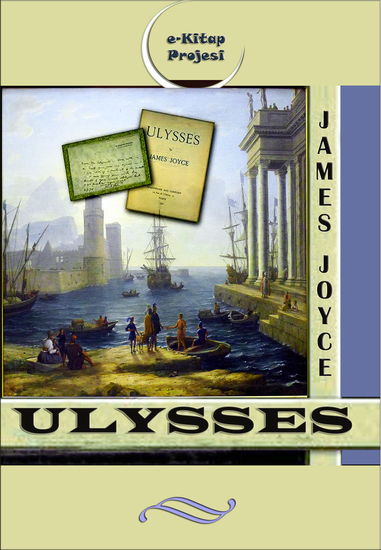
Ulysses - cover

Ulysses

James Joyce

Editorial: E-Kitap Projesi & Cheapest Books

  • 0
  • 0
  • 0

Sinopsis

The book consists of 18 chapters, each covering roughly one hour of the day, beginning around 8 a.m. and ending sometime after 2 a.m. the following morning. Each chapter employs its own literary style, and parodies a specific episode in Homer's Odyssey. Furthermore, each chapter is associated with a specific colour, art or science, and bodily organ. This combination of kaleidoscopic writing with an extreme formal schematic structure renders the book a major contribution to the development of 20th-century modernist literature. The use of classical mythology as an organising framework, the near-obsessive focus on external detail, and the occurrence of significant action within the minds of characters have also contributed to the development of literary modernism. Nevertheless, Joyce complained that, "I may have oversystematised Ulysses," and played down the mythic correspondences by eliminating the chapter titles that had been taken from Homer.

As he was completing work on Dubliners in 1906, Joyce considered adding another story featuring a Jewish advertising canvasser called Leopold Bloom under the title Ulysses. Although he did not pursue the idea further at the time, he eventually commenced work on a novel using both the title and basic premise in 1914. The writing was completed in October 1921. Three more months were devoted to working on the proofs of the book before Joyce halted work shortly before his self-imposed deadline, his 40th birthday (2 February 1922).
This publication encountered censorship problems in the United States; serialisation was halted in 1920 when the editors were convicted of publishing obscenity. Although the conviction was based on the "Nausicaä" episode of Ulysses, The Little Review had fuelled the fires of controversy with dada poet Elsa von Freytag-Loringhoven's defence of Ulysses in an essay "The Modest Woman." Joyce's novel was not published in the United States until 1933.

With the appearance of both Ulysses and T. S. Eliot's poem, The Waste Land, 1922 was a key year in the history of English-language literary modernism.

In Ulysses, Joyce employs stream of consciousness, parody, jokes, and virtually every other established literary technique to present his characters. The action of the novel, which takes place in a single day, 16 June 1904, sets the characters and incidents of the Odyssey of Homer in modern Dublin and represents Odysseus (Ulysses), Penelope and Telemachus in the characters of Leopold Bloom, his wife Molly Bloom and Stephen Dedalus, parodically contrasted with their lofty models.

The book explores various areas of Dublin life, dwelling on its squalor and monotony. Nevertheless, the book is also an affectionately detailed study of the city, and Joyce claimed that if Dublin were to be destroyed in some catastrophe it could be rebuilt, brick by brick, using his work as a model. To achieve this level of accuracy, Joyce used the 1904 edition of Thom's Directory—a work that listed the owners and/or tenants of every residential and commercial property in the city. He also bombarded friends still living there with requests for information and clarification.
Disponible desde: 10/02/2024.
Longitud de impresión: 800 páginas.

Otros libros que te pueden interesar

  • Practice - cover

    Practice

    Ross Gay, Noah Davis

    • 0
    • 0
    • 0
    A 45-year-old Black man. A 24-year-old white man. Both writers. One a teacher; the other his student. Before the pandemic separated them, Ross Gay and one of his graduate poetry students, Noah Davis, met regularly to play one-on-one basketball. It was a real hard workout. After each session they were moved to exchange letters about basketball and so much more. Gay and Davis, who both attended college on sports scholarships, have taught and coached basketball, and love the sport—its beauty, its athleticism—see their letters as a way to work through some of the larger issues inherent in sports, from misogyny to race to competition, and as their friendship deepens, basketball becomes a springboard for talking how men relate to each other and to the world. All while never losing sight of how playing games brings them delight, which is, of course, Gay’s signature subject.
    Ver libro
  • Down Syndrome So What! - cover

    Down Syndrome So What!

    Éléonore Laloux

    • 0
    • 0
    • 0
    "We have to fight for Down's syndrome. People see people with Down's syndrome as abnormal. Those who make fun of me, I ignore. Period. That's how I feel as a Down's sufferer. You have to say to yourself: 'I've got more chromosomes than them.'" 
    When Éléonore was born, the doctors considered her a "chromosomal aberration" and urged her parents not to get attached to her. With Down's syndrome and a heart defect, they gave her little chance of survival. 
    Twenty-eight years later, Éléonore is more alive than ever. Now an independent adult, she recounts her years of struggle with her parents to remain in a mainstream environment, and her refusal to be reduced to her illness. With humor, she shares her daily life, between her two-room apartment, her "job," her tumultuous love affairs and her passion for pop rock. 
    Éléonore is determined to change people's perception of Down's Syndrome.
    Ver libro
  • Wrestling for Truth - One Man’s Search for Health Family and the Ideal Life - cover

    Wrestling for Truth - One Man’s...

    Blake Shumate

    • 0
    • 0
    • 0
    At a time when faith, determination, and health have become more vital in times of uncertainty, Blake Shumate’s story of struggle, triumph, and an inexplicable disease is a powerful testimony of redemption and the will to live a meaningful life.
    Ver libro
  • United States of True Crime: Connecticut - The Most Chilling Cases in All 50 States - cover

    United States of True Crime:...

    Ashley Hudson

    • 0
    • 0
    • 0
    United States of True Crime is an anthology series with books devoted to the most disturbing cases in each of the 50 states. This book focuses on ten of the most chilling crimes in Connecticut history. 
    True crime junkies may recognize some of the highly publicized cases, but also included are lesser-known, equally unsettling crimes. 
    The cases included in this book: 
    Steven Hayes & Joshua Komisarjevski: Followed a mother and her eleven-year-old daughter in a horrific attack that left only the father of the family alive 
    Amy Archer-Gilligan: Systematically poisoned at least five elderly men in her care 
    Fotis Dulos: Suspected of murdering his missing wife, whose body has never been recovered 
    Michael Ross: Serial killer responsible for the death of eight women and the last person executed in the state of Connecticut 
    The Unsolved Disappearance of William "Billy" Smolinski Jr.: Thirty-one-year-old man missing almost two decades. His family lobbied for national changes in missing persons protocol 
    Bonnie Foreshaw: Convicted of the murder of a pregnant women but granted clemency 
    Qinxuan Pan: Charged with the shooting death of a Yale student in an unrequited love triangle 
    William Devin Howell: Serial killer who lived with the bodies of his victims in his van 
    Michael Skakel: Convicted of murdering his fifteen-year-old neighbor but released after a Supreme Court decision 
    La Amistad Mutiny and Court Case: Kidnapped Africans killed the crew of the slave ship, and the precedent-setting case played out in the Supreme Court
    Ver libro
  • The Importance of Not Being Ernest - My Life with the Uninvited Hemingway - cover

    The Importance of Not Being...

    Mark Kurlansky

    • 0
    • 0
    • 0
    The New York Times–bestselling author of Salt examines the intersections between his life and Ernest Hemingway’s in this mix of travel memoir and history. 
     
    By a series of coincidences, Mark Kurlansky’s life has always been intertwined with Ernest Hemingway’s legend, starting with being in Idaho the day of Hemingway’s death. The Importance of Not Being Ernest explores the intersections between Hemingway’s and Kurlansky’s lives, resulting in creative accounts of two inspiring writing careers. Travel the world with Mark Kurlansky and Ernest Hemingway in this personal memoir, where Kurlansky details his ten years in Paris and his time as a journalist in Spain—both cities important to Hemingway’s adventurous life and prolific writing. 
     
    Paris, Basque Country, Havana and Idaho.Get to know the extraordinary people he met there—those who had also fallen under the Hemingway spell, including a Vietnam veteran suffering from the same syndrome the author did, two winners of the Key West Hemingway look-alike contest, and the man in Idaho who took Hemingway hunting and fishing. 
     
    In The Importance of Not Being Ernest, find:A memoir full of entertaining and illuminative storiesLittle-known historical facts about Hemingway’s lifeAnecdotes about those who suffer from what the Kurlansky calls “hemitis” 
     
    Readers of Haruki Murakami’s What I Talk About When I Talk About Running, John Steinbeck’s Travels with Charley in Search of America, or The Boys will love The Importance of Not Being Ernest. 
     
    Praise for The Importance of Not Being Ernest 
     
    “An absolute delight! Full of personality, Kurlansky’s book will enchant history, literature, and Hemingway fans alike.” —Library Journal (starred review)
    Ver libro
  • A Sense of the Future - From their pens to your ears genius in every story - cover

    A Sense of the Future - From...

    Martin Swayne

    • 0
    • 0
    • 0
    The bookshelves of British literature are incredible collections that have gathered together centuries of very talented authors.  From these Isles their fame spread and whilst among their number many are now forgotten or neglected their talents endure.  Among them is Martin Swayne.
    Ver libro