¡Acompáñanos a viajar por el mundo de los libros!
Añadir este libro a la estantería
Grey
Escribe un nuevo comentario Default profile 50px
Grey
Suscríbete para leer el libro completo o lee las primeras páginas gratis.
All characters reduced
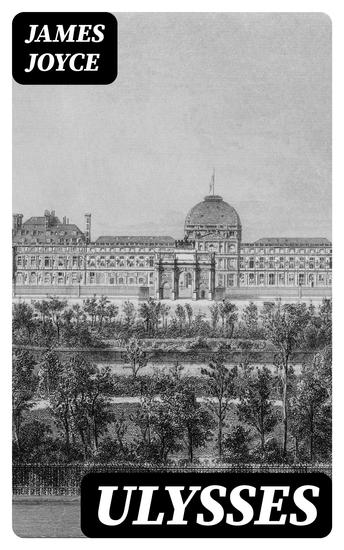
Ulysses - cover

Ulysses

James Joyce

Editorial: DigiCat

  • 0
  • 0
  • 0

Sinopsis

James Joyce's "Ulysses" is a monumental modernist novel that chronicles a single day in the life of Leopold Bloom as he traverses Dublin on June 16, 1904. The narrative employs a stream-of-consciousness technique that intricately weaves the mundane with the profound, showcasing a kaleidoscope of thoughts, emotions, and encounters. Joyce masterfully fuses a multitude of literary styles, from parody and pastiche to lyrical prose, all while paying homage to Homer's epic "Odyssey." Its bold structure and innovative use of language situate "Ulysses" as a cornerstone of early 20th-century literature, inviting readers to engage deeply with its themes of identity, alienation, and the search for meaning in everyday life. James Joyce (1882-1941), an Irish novelist and seminal figure in modernist literature, was deeply influenced by his own upbringing and experiences in Dublin. His previous works, such as "A Portrait of the Artist as a Young Man" and "Dubliners," laid the groundwork for the exploration of personal and cultural complexities that he would fully realize in "Ulysses." Joyce's innovative narrative style was driven by a desire to capture the essence of human consciousness and the intricate web of human relationships. "Ulysses" is a must-read for anyone interested in exploring the depths of human experience through innovative narrative form. It challenges and invites readers to participate in an intricately woven tapestry of life, encouraging a profound reconsideration of the ordinary. Joyce's work remains as relevant today, offering insightful reflections on the human condition that resonate across time and place.
Disponible desde: 16/08/2022.
Longitud de impresión: 1513 páginas.
Otros libros que te pueden interesar

  • The Adventure of the Tall Man - cover

    The Adventure of the Tall Man

    Arthur Conan Doyle

    • 0
    • 0
    • 0
    When searching through Conan Doyle's papers, Hesketh Pearson, a biographer of his, came across a plan for an unwritten story. As Richard Lancelyn Green notes, "there is no evidence to show that it is by [Conan Doyle] and strong internal evidence to suggest that it's not". Various authors have attempted to complete the story (named "The Adventure of the Tall Man" by Peter Haining) and put it alongside the canon. Some are very close to Doyle's plot, others including variations. However no 'official' completion has been made.
    Ver libro
  • Dead Souls - cover

    Dead Souls

    Nikolai Gogol

    • 0
    • 0
    • 0
    Dead Souls by Nikolai Gogol is a satirical exploration of 19th-century Russian society through the eyes of Pavel Chichikov, a cunning opportunist. Traveling across the countryside, Chichikov buys "dead souls"—deceased serfs still registered on census records—to secure loans and wealth. His scheme exposes the corruption, greed, and absurdities of landowners he encounters. Each character represents a caricature of human folly, from miserly farmers to pompous nobles. As Chichikov’s plan unravels, Gogol critiques the moral decay of imperial Russia, blending dark humor with social commentary. The novel remains an unfinished masterpiece, leaving readers pondering the fate of its antihero and the soulless world he inhabits.
    Ver libro
  • 3 Stories About - Poverty & Struggle - A trio of classic tales perfect for a commute walk or quiet night in - cover

    3 Stories About - Poverty &...

    Anton Chekhov, O Henry, Mary Mackay

    • 0
    • 0
    • 0
    There is something about the number 3.    
     
    The Ancient Greeks believed 3 was the perfect number, and in China 3 has always been a lucky number, and they know a thing or two.   
     
    Most religions also have 3 this and 3 that and, of course, in these more modern times, three’s a crowd may be too many, except when it’s a ménage à trois.  It seems good things usually come in threes. 
     
    Whatever history and culture says WE think 3, a hat-trick of stories, is a great number to explore themes and literary avenues that classic authors were so adept at creating. 
     
    From their pens to your your ears.  
     
    01 - 3 Stories About - Poverty & Struggle 
    02 - The Gift of the Magi by O Henry 
    03 - Vanka by Anton Chekhov 
    04  - The Hired Baby, A Romance of the London Streets by Mary Mackay writing as Marie Corelli
    Ver libro
  • Home Life Relayed - BBC presents a live show from a family house with disastrous consequences - cover

    Home Life Relayed - BBC presents...

    E M Delafield

    • 0
    • 0
    • 0
    Edmée Elizabeth Monica Dashwood, née de la Pasture, and more commonly known as E M Delafield, was born in Steyning, Sussex on 9th June 1890.   
     
    Raised in the fading years of the Victorian era with its Empire and strict moral codes Delafield, not yet married at twenty-one, joined a French religious order, in Belgium, but soon decided that this was a totally wrong choice for her.   
     
    Her next challenge was her work during the horror of the First World War.  Delafield decided to take up a position as a nurse in a Voluntary Aid Detachment in Exeter.  It was whilst here that she managed to write her first novel, ‘Zella Sees Herself’.   
     
    With the end of the war new opportunities were sought and she now took up a position for the South-West Region of the Ministry of National Service in Bristol.  With it came enough time to write two more novels: ‘The War Workers’ (1918) and ‘The Pelicans’ (1918).   
     
    On 17th July 1919, she married Colonel Arthur Paul Dashwood, OBE, an engineer responsible for building the massive docks at Hong Kong Harbour.  The marriage produced two children; Lionel and Rosamund.  That same year her fourth novel, ‘Consequences’, was published.   
     
    The couple spent their early years in Malaya but returned to England to live in Croyle, an old house in Kentisbeare, Devon.  Delafield continued to collect responsibilities and organise whatever she could.  At the initial meeting of the Kentisbeare Women's Institute, Delafield was unanimously elected president, and also became a Justice of the Peace, raised the children and, of course, continued to write her best-selling novels.   
     
    Her greatest work is undoubtedly the largely autobiographical ‘Diary of a Provincial Lady’, which is a simply structured journal of the life of an upper-middle class Englishwoman, living mostly in a Devon village of the 1930s.  It spawned several best-selling sequels.  Her works also includes stage and radio plays, film scripts and short stories.  
     
    After the death of her son in 1940, her health began to markedly decline.    
     
    E M Delafield died on 2nd December 1943 after collapsing whilst giving a lecture in Oxford.  She was 53.
    Ver libro
  • The Iliad - cover

    The Iliad

    Homer Homer

    • 0
    • 0
    • 0
    An ancient Greek epic poem in dactylic hexameter that is traditionally attributed to Homer, The Iliad is usually dated to the 8th century BC and is considered to be among the oldest extant works of Western literature. Set during the Trojan War -- the ten-year siege of the city of Troy by a coalition of Mycenaean Greek states -- The Iliad tells of the battles and events that occur during a few weeks near the war's end, when a a quarrel between the leader of the Greeks, King Agamemnon, and the Greek's greatest warrior, Achilles, reaches a climax.
    Ver libro
  • The Tragedy Of Macbeth - The Classic Tale - cover

    The Tragedy Of Macbeth - The...

    William Shakespeare

    • 0
    • 0
    • 0
    "What’s done cannot be undone." 
     
    The Tragedy of Macbeth is a play by William Shakespeare. It is thought to have been first performed in 1606. It dramatizes the damaging physical and psychological effects of political ambition on those who seek power. Of all the plays that Shakespeare wrote during the reign of James I, Macbeth most clearly reflects his relationship with King James, patron of Shakespeare's acting company. It was first published in the Folio of 1623, possibly from a prompt book, and is Shakespeare's shortest tragedy. 
     
    A brave Scottish general named Macbeth receives a prophecy from a trio of witches that one day he will become King of Scotland. Consumed by ambition and spurred to action by his wife, Macbeth murders King Duncan and takes the Scottish throne for himself. He is then wracked with guilt and paranoia. Forced to commit more and more murders to protect himself from enmity and suspicion, he soon becomes a tyrannical ruler. The bloodbath and consequent civil war swiftly take Macbeth and Lady Macbeth into the realms of madness and death. 
     
    Shakespeare's source for the story is the account of Macbeth, King of Scotland, Macduff, and Duncan in Holinshed's Chronicles (1587), a history of England, Scotland, and Ireland familiar to Shakespeare and his contemporaries, although the events in the play differ extensively from the history of the real Macbeth. The events of the tragedy are usually associated with the execution of Henry Garnet for complicity in the Gunpowder Plot of 1605. 
     
    In the backstage world of theatre, some believe that the play is cursed, and will not mention its title aloud, referring to it instead as "The Scottish Play". The play has attracted some of the most renowned actors to the roles of Macbeth and Lady Macbeth.
    Ver libro