Join us on a literary world trip!
Add this book to bookshelf
Grey
Write a new comment Default profile 50px
Grey
Subscribe to read the full book or read the first pages for free!
All characters reduced
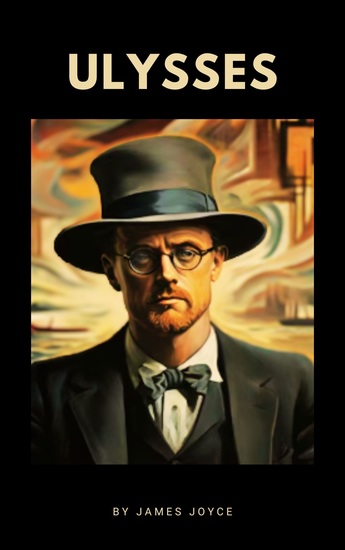
Ulysses - Embark on an Epic Journey with James Joyce's "Ulysses - cover

Ulysses - Embark on an Epic Journey with James Joyce's "Ulysses

James Joyce, Zenith Crescent Moon Press

Publisher: Zenith Crescent Moon Press

  • 0
  • 0
  • 0

Summary

Dive into the intricate and mesmerizing world of James Joyce's "Ulysses," a groundbreaking novel that has captivated readers and scholars for decades. This literary masterpiece takes you on a journey through the streets of Dublin, following the lives of Leopold Bloom, Stephen Dedalus, and other unforgettable characters over the course of a single day. 📚✨

"Ulysses" is renowned for its innovative narrative techniques, rich symbolism, and profound exploration of human consciousness. Joyce's masterful prose weaves together a tapestry of thoughts, emotions, and experiences, creating a vivid and immersive reading experience. 🌆🧠

Discover the beauty and complexity of Joyce's writing as you navigate the novel's intricate structure and delve into its many layers of meaning. "Ulysses" challenges and rewards readers with its depth, making it a must-read for literature enthusiasts and anyone seeking a deeper understanding of the human condition. 🌍❤️

Praised by literary critics and celebrated as one of the greatest works of modernist literature, "Ulysses" has left an indelible mark on the literary world. This eBook edition brings Joyce's epic novel to a new generation of readers, offering a convenient and beautifully formatted version of this timeless classic. 🌟📖

🔖 Click "Buy Now" to add "Ulysses" to your collection and embark on an unforgettable literary adventure! 🔖
Available since: 03/11/2025.
Print length: 710 pages.

Other books that might interest you

  • The Influence of Greek and Roman Cultures on Egypt - cover

    The Influence of Greek and Roman...

    Omar Khalil

    • 0
    • 0
    • 0
    The interaction between Greek, Roman, and Egyptian civilizations represents one of the most dynamic periods of cultural blending in ancient history. As neighboring powers came into contact through trade, diplomacy, and conquest, their customs, ideas, and beliefs began to intertwine, giving rise to a unique fusion that would leave a lasting imprint on Egyptian society. This chapter explores how these cultural exchanges began and how they shaped Egypt during the Hellenistic and Roman periods. 
    The initial encounter between Egypt and the Greeks occurred long before Alexander the Great’s arrival, through trade across the Mediterranean. However, it was Alexander’s conquest of Egypt in 332 BCE that marked a significant turning point. His establishment of the city of Alexandria set the stage for a new era, where Greek customs and governance took root alongside ancient Egyptian traditions. The subsequent Ptolemaic dynasty, descended from one of Alexander’s generals, became a bridge between Greek and Egyptian worlds, adopting pharaonic symbols while introducing Hellenistic art, language, and administrative systems. 
    Cultural transmission was not solely the result of conquest—it also flourished through everyday interactions. Greek settlers in Egypt brought with them their language, religion, and lifestyle, but they also adapted to local customs, often integrating Egyptian deities and rituals into their own belief systems. Temples began to reflect a blend of architectural styles, and literature began to emerge in both Greek and Demotic scripts, reflecting a hybrid intellectual life.
    Show book
  • The History of the Prominent Algonquian Tribes - cover

    The History of the Prominent...

    Editors Charles River

    • 0
    • 0
    • 0
    Throughout the 19th century, American settlers pushing across the Western frontier came into contact with diverse American tribes, producing a series of conflicts ranging from the Great Plains to the Southwest, from the Trail of Tears to the Pacific Northwest. Indian leaders like Geronimo became feared and dreaded men in America, and Sitting Bull’s victory over George Custer’s 7th Cavalry at Little Bighorn was one of the nation’s most traumatic military endeavors. Given this history, it’s no surprise that the Shawnee continue to be closely associated with their most famous leader, Tecumseh, the most famous Native American of the early 19th century. While leading the Shawnee, he attempted to peacefully establish a Native American nation east of the Mississippi River in the wake of the American Revolution. One of the most famous Native American tribes on the Great Plains is the Cheyenne, and their fame may be surpassed only by their influence on American history. 
    Like other notable Plains tribes, the Arapaho split off from other groups around the 16th-17th centuries and shifted from a sedentary agricultural society to the kind of nomadic group many envision when thinking of groups on the Plains. That nomadic lifestyle brought them into contact with the Sioux and Cheyenne, both of whom became allies as white settlers pushed west and led to conflicts. The United States sought to defuse tensions with natives during the westward push by drafting treaties regarding major pieces of land, often without understanding the complex structure of the various tribes, and subgroups within those tribes. 
    Outside of the Midwest, the Chippewa are not as well-known as other Native American tribes like the Sioux or Cherokee, but they have long been one of the biggest groups in all of North America. Not surprisingly, their presence around the Great Lakes region made them especially important to early European explorers who sailed the St. Lawrence.
    Show book
  • Ramesses the Great - Egypt's King of Kings - cover

    Ramesses the Great - Egypt's...

    Toby Wilkinson

    • 0
    • 0
    • 0
    The life, dramatic reign, and enduring legacy of the pharaoh Ramesses the Great, with lessons for the present, from internationally acclaimed Egyptologist Toby Wilkinson 
     
    Ramesses II ruled the Nile Valley and the wider Egyptian empire from 1279 to 1213 B.C., one of the longest reigns in pharaonic history. He was a cultural innovator, a relentless self-promoter, and an astute diplomat—the peace treaty signed after the Battle of Kadesh was the first in recorded history. He outbuilt every other Egyptian pharaoh, leaving behind the temples of Abu Simbel; the great hypostyle hall of Karnak; the tomb for his wife Nefertari; and his own memorial, the Ramesseum. 
     
    His reputation eclipsed that of all other pharaohs as well: he was decried in the Bible as a despot, famed in literature as Ozymandias, and lauded by early antiquarians as the Younger Memnon. His rule coincided with the peak of ancient Egypt’s power and prosperity, the New Kingdom (1539–1069 B.C.). 
     
    In this authoritative biography, Toby Wilkinson considers Ramesses’ preoccupations and preferences, uncovering the methods and motivations of a megalomaniac ruler, with lessons for our own time.
    Show book
  • Israel Alone - cover

    Israel Alone

    Bernard-Henri Levy

    • 0
    • 0
    • 0
    On October 8, 2023, Bernard-Henri Lévy flew to Israel to bear witness to the unprecedented invasion and massacre committed by Hamas. Israel Alone begins here and weaves in Lévy's fifty years on the ground in Israel, from his first trip in 1967, his experiences writing on all the conflicts since, and his participation in various peace plans and contacts with all the Israeli leaders. 


    From his unique philosophical and humanist perspective, Lévy analyzes the ultimate evil unleashed on Israel on October 7 and delves into how the Islamic Republic of Iran, Russia, radical Islamist groups, Turkey, and China have played roles and profited from this tragedy. The book addresses how October 7, though historic in scope, became, within weeks, a "detail" in the global consciousness amid a worldwide eruption of anti-Semitism, cloaked in anti-Zionism. 


    Lévy deconstructs the arguments of those calling for a "cease-fire now" without the release of all hostages and of those who demand that October 7 be seen within a greater "context." Lévy's meditation on the soul of Zionism and Israel shows why this war is existential, not only for Israel but for the global West. And yet, despite the urgency and critical nature of this war, Israel takes it on alone. Lévy analyzes, today, why this is so and why Israel's solitude is greater than ever.
    Show book
  • The Nurse’s Naughty Tease - Lesbian First Time Sex - cover

    The Nurse’s Naughty Tease -...

    Laura Vixen

    • 0
    • 1
    • 0
    A visit to the new college nurse provides an unexpected delight for Julia when she sees a curvy figure in a tight, white uniform. It brings a fantasy to life and her interest doesn’t go unnoticed. An invite to Miss Lopez’s room that very evening is one she isn’t about to turn down and it gets her under the control of a teasing nurse who likes to play.  
    Show book
  • Mysterious Advanced Astronomy in Mesoamerica - cover

    Mysterious Advanced Astronomy in...

    NORAH ROMNEY

    • 0
    • 0
    • 0
    Of all the geographical classifications of the indigenous cultures of America that inhabited the continent, only the region called Mesoamerica had, from very early in its history, the use of letters to transmit messages. It is known that the Inca cultures and perhaps some of those that preceded them used a system to memorize stories, but such systems never used signs with values, whether they were logographic or phonetic. This uniqueness places the Mesoamerican area on a par with the cultures of the old continent and Asia, concerning the transmission of the historical memory of its peoples. 
    All writing is an information storage system. Indeed, long before writing was invented, human memory existed, and often specific groups of people were trained to ensure the community safeguarding their past. However, there is a significant difference between the transmission of information in written form, that is, utilizing sculpted or painted drawings or signs, and that is, therefore, more efficient and easier to save than that which depends only on the memory and oral transmission.
    Show book