¡Acompáñanos a viajar por el mundo de los libros!
Añadir este libro a la estantería
Grey
Escribe un nuevo comentario Default profile 50px
Grey
Suscríbete para leer el libro completo o lee las primeras páginas gratis.
All characters reduced
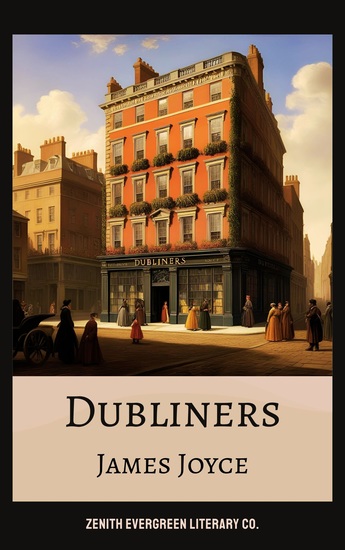
Dubliners - A Masterpiece of Modernist Short Fiction - cover

Dubliners - A Masterpiece of Modernist Short Fiction

James Joyce, Zenith Evergreen Literary Co.

Editorial: Zenith Evergreen Literary Co.

  • 0
  • 0
  • 0

Sinopsis

Ordinary lives. Extraordinary insight.

Dubliners, the groundbreaking collection by literary titan James Joyce, captures the everyday moments of working-class Dubliners with unflinching honesty and emotional precision. Each story, from Araby to The Dead, paints a vivid portrait of paralysis, routine, epiphany, and the small, personal struggles that define a life.

Written in prose both sparse and poetic, Joyce's characters are deeply human, caught in quiet conflicts, failed dreams, and sudden revelations. The stories may be short, but the themes—identity, nationalism, alienation—are profound.

💬 "The modern short story begins here."
A must-read for fans of Virginia Woolf, Edgar Allan Poe, and Ernest Hemingway.

📖 Why You'll Love Dubliners
A cornerstone of literary modernism

Perfect for fans of thought-provoking, introspective fiction

Includes The Dead, widely regarded as one of the best short stories ever written

📣 Experience the Humanity Beneath the Surface.
Buy Dubliners today and rediscover how fiction can reflect reality in its quietest and most powerful forms.
Disponible desde: 16/04/2025.
Longitud de impresión: 215 páginas.

Otros libros que te pueden interesar

  • End of the Young Family Feud The (Unabridged) - cover

    End of the Young Family Feud The...

    L. M. Montgomery

    • 0
    • 0
    • 0
    Lucy Maud Montgomery (November 30, 1874 - April 24, 1942), published as L. M. Montgomery, was a Canadian author best known for a series of novels beginning in 1908 with Anne of Green Gables. The book was an immediate success. The title character, orphan Anne Shirley, made Montgomery famous in her lifetime and gave her an international following.
    The End of the Young Family Feud: A week before Christmas, Aunt Jean wrote to Elizabeth, inviting her and Alberta and me to eat our Christmas dinner at Monkshead. We accepted with delight. Aunt Jean and Uncle Norman were delightful people, and we knew we should have a jolly time at their house.
    Ver libro
  • Hound The (Unabridged) - cover

    Hound The (Unabridged)

    H. P. Lovecraft

    • 0
    • 0
    • 0
    The story opens with the unnamed narrator preparing to commit suicide. Lamenting his fate, he reflects upon the events which led him to this moment. The narrator and his friend, St. John, are a pair of loners who both have a deranged interest in robbing graves. They constantly defile crypts and often keep souvenirs of their nocturnal expeditions. Since they reside in the same house, they have the opportunity to set up a sort of morbid museum in their basement. Using the objects collected from the various graves they have robbed, the two men organize a private exhibition. The collection consists of headstones, preserved bodies, skulls, and several heads in different phases of decomposition. It also included statues, frightful paintings, and a locked portfolio bound in tanned human skin. One day, the two learn of a particular grave, which sparks a profound interest in them: an old grave in a Holland cemetery which holds a legendary tomb raider within, one who is said to have stolen, many years ago, a "potent thing from a mighty sepulchre." They travel to the old cemetery where the man was buried. The thought of exhuming the final resting place of a former grave robber is irresistibly appealing to them. That, and the fact that the body had been buried several centuries before, drives them to travel such long distances to reach the site. Upon reaching the old cemetery, they notice the distant baying of a giant hound in the distance. They ignore it and begin their excavation. After some time, they hit a solid object in the ground. Clearing the last of the dirt from it, the two men unearth a strange and elaborately-made casket. Upon opening the casket, they see that several places on the skeletal remains appear torn and shattered, as if attacked by a wild animal, yet the whole of the skeleton is still completely distinguishable. At that moment, they notice a jade amulet hanging from the skeleton's neck. They examine it and, after some observation, they recognize the amulet as one mentioned in "the forbidden Necronomicon of the mad Arab Abdul Alhazred." They immediately know they must have the amulet at all cost. They remove it from the skeleton and flee into the night. As they do, they notice once again the continuous sound of a baying hound in the distance. After they return home to England, strange events begin to occur. Odd sounds can be heard within and around their house, including the distant howling they heard in the cemetery. One night, St. John is violently attacked and killed by a mysterious creature, which the narrator claims the amulet had brought unto him. He destroys the macabre museum he and his friend made, before fleeing from the house and traveling to London. Still plagued by bizarre occurrences, he decides that he must return the amulet to its rightful owner. He travels to Holland, but the amulet is stolen from him before he can return it. The next day, he reads in the newspaper about a band of thieves savagely killed by an unknown creature. Slowly going insane, he returns to the churchyard and exhumes the coffin once more, only to find the skeleton within covered in caked blood and bits of flesh and hair, holding the lost amulet in its hand. Suddenly, the skeleton begins howling, the same howl that had tormented him since he first stole the amulet. The narrator flees the graveyard, succumbing to madness and despair. He states that he intends to kill himself with a revolver, believing death to be his only refuge from the crawling horror which grows within him.
    Ver libro

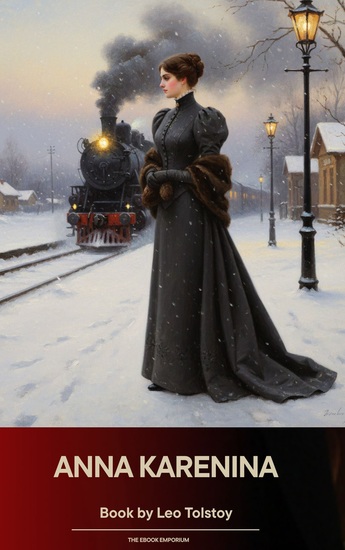
  • Anna Karenina - cover

    Anna Karenina

    Leo Tolstoy

    • 0
    • 0
    • 0
    "All happy families are alike; each unhappy family is unhappy in its own way."
    
    At the center of a glittering, suffocating Russian aristocracy stands Anna Karenina. Elegant and admired, her life is upended when she meets the dashing Count Vronsky. What begins as a spark ignites into a scandalous affair that defies the rigid social codes of St. Petersburg and Moscow, leading Anna toward an agonizing choice between her son, her status, and her heart. Parallel to Anna's descent is the story of Konstantin Levin, a man of the earth whose search for a meaningful life and true love offers a powerful meditation on faith, labor, and the soul.
    
    The Height of Literary Realism: Tolstoy does not just write characters; he breathes life into them. Through Anna's psychological depth and Levin's philosophical struggles, the novel explores the complexities of marriage, the hypocrisy of society, and the devastating consequences of living outside the "rules." It is a mirror held up to the human condition, capturing the ecstasy of love and the weight of despair with unmatched precision.
    
    A Panoramic Masterpiece: Anna Karenina is more than a romance. It is a vivid portrait of a nation in transition, grappling with the shift from feudal traditions to a modern industrial world. From high-stakes horse races and grand balls to the quiet intensity of the harvest in the Russian countryside, Tolstoy's prose transports you to a world of immense beauty and crushing consequence.
    
    Why It Endures: Whether it is the haunting symbolism of the railway or the profound debates on the meaning of life, Anna Karenina remains startlingly relevant. It asks the questions we still struggle with today: Can passion and duty coexist? What does it mean to live an authentic life? And is forgiveness ever truly possible?
    
    Lose yourself in the greatest story ever told. Purchase "Anna Karenina" today.
    Ver libro
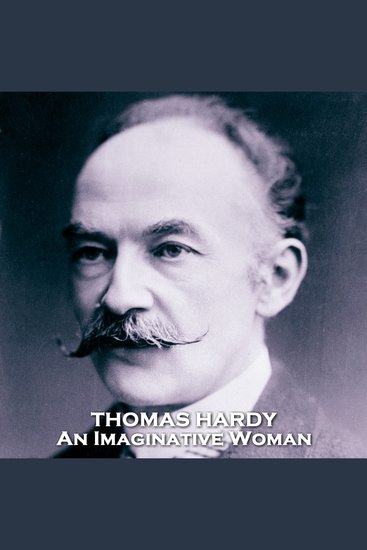
  • Imaginative Woman An - From their pens to your ears genius in every story - cover

    Imaginative Woman An - From...

    Thomas Hardy

    • 0
    • 0
    • 0
    Thomas Hardy was born in the hamlet of Upper Bockhampton about three miles east of Dorchester in Dorset, England, on 2nd June 1840.  
    Despite a fairly wide education and being an avid reader his parents thought it unlikely he would lead a successful scholarly or clerical career and he was apprenticed in 1856, at age 16, to a local architect whose speciality was in church restoration.  Hardy’s only opportunity to read was in the morning before work between the hours of five and eight.  
    On the back of a failed love affair he moved to London and spent five years working as an assistant to the architect Arthur Blomfield, also a restorer and designer of churches. Hardy though had by now become disillusioned with institutionalised forms of Christianity and abandoned any lingering hopes of ordination in the Anglican Church.  However, his writing of poetry was now flourishing, although it was still rejected for publication.  
    His novel ‘Desperate Remedies’, was published anonymously in 1871 and he now resolved to write full time though he was not yet in a position to achieve financial security or literary success. His second novel, ‘Under the Greenwood Tree’, appeared in 1872 and in 1873 ‘A Pair of Blue Eyes’, the most autobiographical of his works arrived. With ‘Far From the Madding Crowd’ in 1874, came critical acclaim, public attention and financial success. This was repeated in 1878 with ‘The Return of the Native’, and the ensuing years saw him rise to ever greater popularity.  
    His classic ‘The Mayor of Casterbridge’ arrived in 1886 and 5 years later ‘Tess of the d’Urbervilles’. The latter only saw publication after extensive alterations to its plot and the deletion of long passages to lessen the shock to the prudish Victorian audience who were dismayed by the seduction and ruin of a young girl by a rakish aristocrat.  
    ‘Jude the Obscure’, his last novel, suffered the same fate when it was published in 1895.  The uproar so disturbed him that he returned to poetry. In 1898 he had an earlier poetry collection, ‘Wessex Poems’ published. 
    Hardy spent the years between 1903 and 1908 writing ‘The Dynasts’, an epic poem on the Napoleonic Wars. 
    In his twilight years came honours and awards from the great and the good in recognition of his stature as one of the most outstanding of British authors across novels, short stories and poetry. George V conferred on him the Order of Merit in 1910. 
    From 1920 to 1927 he worked, in secret, on his autobiography, which was later published after his death as the work of his second wife, Florence Hardy.  
    Thomas Hardy OM died on the 11th January 1928. 
    His heart was buried alongside his first wife in Stinsford churchyard, Dorchester.
    Ver libro
  • The Ambassadors - cover

    The Ambassadors

    Henry James

    • 0
    • 0
    • 0
    "The Ambassadors" is a 1903 novel by Henry James, originally published as a serial in the North American Review (NAR). This dark comedy follows the journey of the protagonist, Lewis Lambert Strether, to Europe. His mission is to bring back the son of his widowed fiancée to the family business. The novel is entirely told from Strether's point of view, chronicling his transformation from an American to a European perspective.
    Ver libro
  • A Little Princess - cover

    A Little Princess

    Frances Hodgson Burnett

    • 0
    • 0
    • 0
    Journey into the poignant world of "A Little Princess" by Frances Hodgson Burnett, where resilience and imagination reign supreme. Young Sara Crewe, once wealthy and adored, faces a dramatic change in fortune when her father dies. Reduced to a servant at Miss Minchin's boarding school, Sara's unwavering kindness and vivid imagination transform her bleak surroundings. Through friendship and inner strength, she proves that true royalty lies in the heart, offering hope and courage to all who meet her.
    Ver libro