¡Acompáñanos a viajar por el mundo de los libros!
Añadir este libro a la estantería
Grey
Escribe un nuevo comentario Default profile 50px
Grey
Suscríbete para leer el libro completo o lee las primeras páginas gratis.
All characters reduced
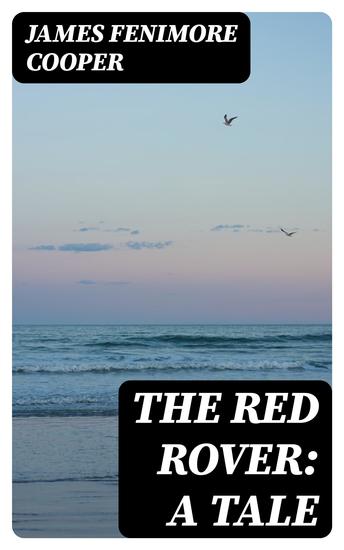
The Red Rover: A Tale - Enriched edition - cover

The Red Rover: A Tale - Enriched edition

James Fenimore Cooper

Editorial: DigiCat

  • 0
  • 0
  • 0

Sinopsis

In "The Red Rover: A Tale," James Fenimore Cooper weaves a gripping maritime adventure that intertwines themes of freedom, loyalty, and the tumultuous human condition against the backdrop of the early American frontier. The narrative unfolds aboard a pirate ship, exploring the moral complexities of heroism and villainy through rich, evocative prose characteristic of Cooper's style. His ability to create vivid characters and suspenseful scenarios reflects the romantic literary tradition of the early 19th century, while also delving into the fraught relationship between man and nature, a recurring theme in his body of work. James Fenimore Cooper, a seminal figure in early American literature, was profoundly influenced by his experiences growing up in New York and the maritime culture that surrounded him. His background in the Navy and a keen interest in the American Revolution imbued him with a unique perspective on the values of independence and adventure, which permeates "The Red Rover." Cooper's deep understanding of human psychology and societal conflict enabled him to craft complex characters that challenge readers' perceptions of morality. This novel is highly recommended for readers seeking a blend of thrilling adventure and profound philosophical inquiry. Cooper's compelling storytelling and exploration of complex themes provide not only entertainment but also food for thought, cementing "The Red Rover" as an essential read for enthusiasts of American literature and maritime tales.

In this enriched edition, we have carefully created added value for your reading experience:
- A succinct Introduction situates the work's timeless appeal and themes.
- The Synopsis outlines the central plot, highlighting key developments without spoiling critical twists.
- A detailed Historical Context immerses you in the era's events and influences that shaped the writing.
- An Author Biography reveals milestones in the author's life, illuminating the personal insights behind the text.
- A thorough Analysis dissects symbols, motifs, and character arcs to unearth underlying meanings.
- Reflection questions prompt you to engage personally with the work's messages, connecting them to modern life.
- Hand‐picked Memorable Quotes shine a spotlight on moments of literary brilliance.
- Interactive footnotes clarify unusual references, historical allusions, and archaic phrases for an effortless, more informed read.
Disponible desde: 15/09/2022.
Longitud de impresión: 409 páginas.

Otros libros que te pueden interesar

  • Blessed Are the Meek - From their pens to your ears genius in every story - cover

    Blessed Are the Meek - From...

    Mary Webb

    • 0
    • 0
    • 0
    Mary Gladys Meredith was born on 25th March 1881 at Leighton Lodge in the village of Leighton, near Shrewsbury in Shropshire.  
    Mary was home-schooled by her father before being sent to a finishing school in Southport in 1895. Her longs walks in the countryside helped her develop a heightened sense of observation and description, of both people and places, which later infused both her poetry and prose. 
    When she was 20 she developed symptoms of Graves' disease, a thyroid disorder that caused bulging protuberant eyes and throat goitre. This caused life-long ill health and was a possible contributor to her early death.  
    Mary was first published as a teenager when her brother sent to a local newspaper her poem on a recent rail accident.  Mary, who was in the habit of destroying her work was appalled though placated when she discovered that it had received some positive appreciation in readers letters. 
    1912 brought marriage to Henry Bertram Law Webb, a teacher. He supported her literary work which, in 1917, resulted in the publication of her novel ‘The Golden Arrow.’ 
    A few years later they acquired a property in London where, it was hoped, recognition of her literary talents would be more easily recognised.   
    Her 1924 novel, ‘Precious Bane’, won the Prix Femina Vie Heureuse, the prestigious French literary prize awarded by an all-female jury. 
    Most of her poetry and various other works were only published after her death. 
    By 1927 her health was deteriorating and her marriage failing.   
    Mary Webb died on 8th October 1927 at St Leonards-on-Sea, East Sussex.  She was 46.
    Ver libro
  • Virginia Woolf - Six of the Best - Their legacy in 6 classic stories - cover

    Virginia Woolf - Six of the Best...

    Virginia Woolf

    • 0
    • 0
    • 0
    Six has always been a number we group things around – Six of the best, six of one half a dozen of another, six feet under, six pack, six degrees of separation and a sixth sense are but a few of the ways we use this number. 
     
    Such is its popularity that we thought it is also a very good way of challenging and investigating an author’s work to give width, brevity, humour and depth across six of their very best. 
     
    In this series we gather together authors whose short stories both rivet the attention and inspire the imagination to visit their gems in a series of six, to roam across an author’s legacy in a few short hours and gain a greater understanding of their writing and, of course, to be lavishly entertained by their ideas, their narrative and their way with words. 
     
    These stories can be surprising and sometimes at a tangent to what we expected, but each is fully formed and a marvellous adventure into the world and words of a literary master.
    Ver libro
  • After the Funeral - From their pens to your ears genius in every story - cover

    After the Funeral - From their...

    Mary Butts

    • 0
    • 0
    • 0
    Mary Frances Butts was born on 13th December 1890 in Poole, Dorset. 
    Her early years were spent at Salterns, an 18th-century house overlooking Poole Harbour.  Sadly in 1905 her father died, and she was sent for boarding at St Leonard's school for girls in St Andrews. 
    Her mother remarried and, from 1909, Mary studied at Westfield College in London, and here, first became aware of her bisexual feelings.  She was sent down for organising a trip to Epsom races and only completed her degree in 1914 when she graduated from the London School of Economics.  By then Mary had become an admirer of the occultist Aleister Crowley and she was given a co-authorship credit on his ‘Magick (Book 4)’. 
    In 1916, she began the diary which would now detail her future life and be a constant reference point for her observations and her absorbing experiences. 
    During World War I, she was doing social work for the London County Council in Hackney Wick, and involved in a lesbian relationship.  Life changed after meeting the modernist poet, John Rodker and they married in 1918. 
    In 1921 she spent 3 months at Aleister Crowley's Abbey of Thelema in Sicily; she found the practices dreadful and also acquired a drug habit.  Mary now spent time writing in Dorset, including her celebrated book of short stories ‘Speed the Plough’ which saw fully develop her unique Modernist prose style. 
    Europe now beckoned and several years were spent in Paris befriending many artists and writing further extraordinary stories.   
    She was continually sought after by literary magazines and also published several short story collections as books. Although a Modernist writer she worked in other genres but is essentially only known for her short stories.  Mary was deeply committed to nature conservation and wrote several pamphlets attacking the growing pollution of the countryside. 
    In 1927, she divorced and the following year her novel ‘Armed with Madness’ was published.  A further marriage followed in 1930 and time was spent attempting to settle in London and Newcastle before setting up home on the western tip of Cornwall.  By 1934 the marriage had failed. 
    Mary Butts died on 5th March 1937, at the West Cornwall Hospital, Penzance, after an operation for a perforated gastric ulcer. She was 46.
    Ver libro
  • Modest Proposal A - Audiobook - cover

    Modest Proposal A - Audiobook

    Jonathan Swift, Classic...

    • 0
    • 0
    • 0
    A Modest Proposal is a biting satirical essay in which Jonathan Swift "proposes" that impoverished Irish families could ease their financial troubles by selling their babies as food to the rich. Written in 1729, this shocking and brilliantly ironic work criticizes British colonial rule and social indifference.Swift's deadpan tone and exaggerated logic make this short piece a masterpiece of satire. Behind its dark humor lies a powerful critique of exploitation, injustice, and the failure of political solutions. It remains one of the most famous and disturbing essays in the English language.
    Ver libro
  • Aunt Kipp - cover

    Aunt Kipp

    Louisa May Alcott

    • 0
    • 0
    • 0
    Louisa May Alcott’s Aunt Kipp is a warm and witty tale of family trials, truth-telling children, and the reform of a difficult relative. 
    Polly Snow, her frail mother, and her mischievous younger brother “Toady” struggle to make ends meet while depending on the uncertain goodwill of their wealthy but domineering Aunt Kipp. With her towering black bonnet, sharp tongue, and constant reminders of her fragile health, Aunt Kipp seems to hold her fortune—and their future—over them like a storm cloud. But through humor, honesty, and unexpected affection, this domestic comedy reveals the power of kindness and change of heart. 
    Filled with Alcott’s trademark blend of sentiment, humor, and social observation, Aunt Kipp is both a sharp portrait of Victorian family life and a heartwarming reminder that it’s never too late to love and be loved.
    Ver libro
  • The Cat That Walked by Himself - The First Jungle Book - cover

    The Cat That Walked by Himself -...

    Rudyard Kipling

    • 0
    • 0
    • 0
    'The Cat that Walked by Himself' is one of the most well-loved of Kipling's Just So Stories.
    This is a story about a cat who liked to walk wherever he wanted. Everything happened at those times when the animals were wild. They lived separately from people. The man was also wild. But he met the woman. She found a nice dry cave and made it their house. They were happy there. One evening the wild dog came to the cave. The woman promised the dog tasty bones for guarding her cave. Later the wild cow and the wild horse also came. She promised fresh grass to the cow and the horse for fresh milk and help with the housework. The cat watched it. He also wanted to be near fire and drink warm milk. Still the cat wanted to walk by himself as usual. The woman did not need such an animal. She needed useful animals. So she made a bargain with the cat.
    Ver libro