Junte-se a nós em uma viagem ao mundo dos livros!
Adicionar este livro à prateleira
Grey
Deixe um novo comentário Default profile 50px
Grey
Assine para ler o livro completo ou leia as primeiras páginas de graça!
All characters reduced
Emotional Intelligence: How to Connect Deeply Communicate Effectively (A Guide to Developing Emotional Intelligence and Ensuring Psychological Safety) - cover
LER

Emotional Intelligence: How to Connect Deeply Communicate Effectively (A Guide to Developing Emotional Intelligence and Ensuring Psychological Safety)

James Davis

Editora: James Davis

  • 0
  • 0
  • 0

Sinopse

This book also addresses emotional intelligence in relationships. Emotional regulation, along with the ability to express positive and negative emotions constructively, shows the maturity many people look for in a partner. This book on controlling emotions is great to work through together!Mastering these principles helps with toughness, resilience, understanding others, and looking after personal needs. Due to the unique style, this book can also teach emotional intelligence for teens. The books about emotional health help develop a high EQ capacity, which is essential for navigating school. The book also includes information on overcoming emotional challenges, mastering mood, positive thinking, and more that teens find helpful.Discover:	How emotional intelligence serves as a powerful tool for building trust, strengthening relationships, and enhancing collaboration in teams.	Valuable insights into the ways emotional intelligence impacts decision-making, conflict resolution, and overall productivity.	Tools for navigating difficult conversations, resolving conflicts, and promoting inclusive collaboration.	Real-life examples and case studies showcasing the transformative power of emotional intelligence in action.This is your chance to shine and all you need to do is read and take notice of the chapters that lie ahead. When you do, you will surprise yourself because all you needed was guidance. Taking the right direction gets you there quickly while most people these days seem to prefer their lives to be hit and miss and end up stressed and out of control of their lives. Want all that to change? Then get this book, and you will learn how to do just that. 
Disponível desde: 22/02/2025.
Comprimento de impressão: 60 páginas.
Outros livros que poderiam interessá-lo

  • Fort Pillow and the Crater: The History of the Most Notorious Battles Where the Confederates Massacred Black Soldiers - cover

    Fort Pillow and the Crater: The...

    Editors Charles River

    • 0
    • 0
    • 0
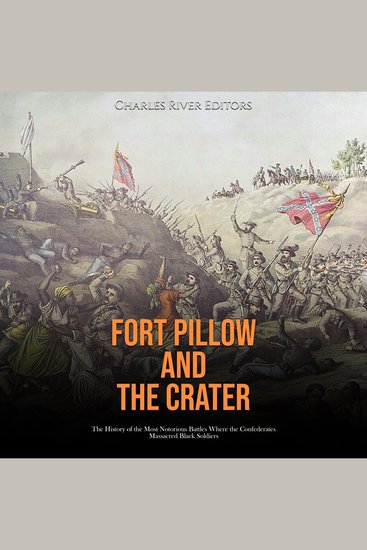
    As far as skirmishes go, Fort Pillow was a completely unremarkable fight. Before attacking, Forrest demanded the unconditional surrender of the Union garrison, a normal custom of his, and he warned the Union commanding officer that he would not be responsible for his soldiers’ actions if the warning went unheeded. What made Fort Pillow markedly different was that a sizable amount of the Union garrison defending the Fort was comprised of black soldiers, which particularly enraged Confederate soldiers whenever they encountered those they viewed as former slaves in the field. It is still unclear exactly how the fighting unfolded, but what is clear is that an unusually high percentage of Union soldiers were killed, and the Confederates were accused of massacring black soldiers after they had surrendered. Primary sources tell conflicting accounts of what happened at Battle of Fort Pillow, leaving scholars to piece together the battle and determine whether Confederate soldiers purposely shot Union soldiers after they had surrendered. 
    The mine that precipitated the Battle of the Crater during the Siege of Petersburg produced one of the most amazing scenes of the entire Civil War. The force of the explosion created a crater that was nearly 200 feet long, 100 feet wide, and 30 feet deep. Remnants of the crater can still be seen today. But through a mix of bad luck, fog of war, and incompetent leadership, the Union assault that followed the explosion was badly bungled. Instead of capturing Petersburg, the Battle of the Crater was a Union debacle that left more than 4,000 Union soldiers killed, wounded, or captured. The Confederates lost about 1,500, with nearly 300 of them being casualties of the initial explosion. The Battle of the Crater didn’t help the Confederates much in front of Petersburg, but it remains the most memorable and controversial battle of the entire siege.
    Ver livro
  • Christianization of Rome The: The History of the Roman Empire’s Religious Conversion - cover

    Christianization of Rome The:...

    Charles River Editors

    • 0
    • 0
    • 0
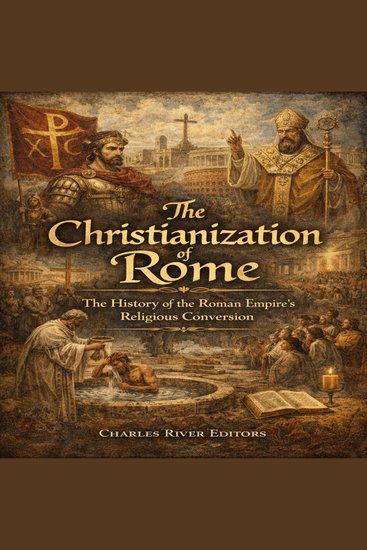
    It would be hard if not outright impossible to overstate the impact Roman Emperor Constantine I had on the history of Christianity, Rome, and Europe as a whole. Best known as Constantine the Great, the kind of moniker only earned by rulers who have distinguished themselves in battle and conquest, Constantine remains an influential and controversial figure to this day. He achieved enduring fame by being the first Roman emperor to personally convert to Christianity, and for his notorious Edict of Milan, the imperial decree which legalized the worship of Christ and promoted religious freedom throughout the empire.  
    Moreover, even though he is best remembered for his religious reforms and what his (mostly Christian) admirers described as his spiritual enlightenment, Constantine was also an able and effective ruler in his own right. Rising to power in a period of decline and confusion for the Roman Empire, he gave it a new and unexpected lease on life by repelling the repeated invasions of the Germanic tribes on the Northern and Eastern borders of the Roman domains, even going so far as to re-expand the frontier into parts of Trajan’s old conquest of Dacia (modern Romania), which had been abandoned as strategically untenable.  
    Rome’s civil wars and imperial crisis might have destroyed a weaker empire, and the fact that they did not demonstrated the resilience of Roman institutions and the very concept of the Imperium Romanum. Through Constantine and Christianity, that idea survived in various incarnations, and it would serve as a model for the Byzantine Empire, the Holy Roman Empire, the Napoleonic Empire, Germany, and even Russia. It persists to this day via the European Union, a powerful reminder that even as the continent has been home to countless ethnicities, cultures, and religions, Europe clings to the notion of the Pax Romana.
    Ver livro
  • A History of Some of London’s Most Famous Landmarks - cover

    A History of Some of London’s...

    Editors Charles River

    • 0
    • 0
    • 0
    It almost goes without saying that Westminster Abbey is one of the foremost sites in Europe when it comes to being steeped in history. Dating back to the reign of William the Conqueror and the Norman conquest, Westminster Abbey has traditionally been the site of royal coronations, royal weddings, and royal burials, and anyone who enters can instantly feel that they are walking in the footsteps of some of the most influential figures in history, from Henry III to Queen Elizabeth I.  
    It’s impossible to fully appreciate the Tower of London without understanding its context. Like all fortresses, it was built to control and protect its surroundings, and the history of the Tower is bound up in the mutual histories of London and the Monarchy. The unfolding saga of war, imprisonment, glory, and treason in England can all be told through the lens of the Tower, and the lives that intersected with it. 
    When people think of the British Royal family, and more specifically where they live, the first image that often pops into mind is that of stately Buckingham Palace, with its changing of the guard and the occasional royal coach leaving or entering. Others may think of the royal country estate of Windsor Castle, a favorite of both Britain’s longest-reigning and second longest-reigning monarchs. And there was a time when both royal residences played second fiddle to a much better known home, the elegant Kensington Palace.  
    Big Ben is one of the most recognizable symbols of Britain, and indeed one of the most famous structures in the world. A quintessential part of London, every movie set in London features an establishing shot of Big Ben, and many guidebooks of London have the clock tower as its cover photo. London and Big Ben are forever linked in the consciousness of the Western world.
    Ver livro
  • Inner Space - Malibu 1971 - Dialogue 2 - cover

    Inner Space - Malibu 1971 -...

    Jiddu Krishnamurti

    • 0
    • 0
    • 0
    Inner space" - 26 March 1971. Duration: 61 minutes. 
    Is it possible to be free of the centre so that the centre doesn't create space around itself and build a wall? Can the centre be still or fade away? Can consciousness empty itself of its content? Is love within the field of consciousness?If you don't form an image now, the past images have no place. Are there environments which can be conducive to liberation? The company of the good doesn't teach me what is good and what is false or true. I have to see it.
    Ver livro
  • NASA’s Deadly Accidents - The History of the Disasters that Killed 17 Astronauts - cover

    NASA’s Deadly Accidents - The...

    Charles River Editors

    • 0
    • 0
    • 0
    As Apollo 11’s name suggests, there were actually a number of Apollo missions that came before, many of which included testing the rockets and different orbital and lunar modules in orbit. In fact, it wasn’t until Apollo 8 that a manned vehicle was sent towards the Moon and back, and before that mission, the most famous Apollo mission was Apollo 1, albeit for all the wrong reasons.  
    There were no delusions regarding the dangers of manned space travel, but they were brought home on January 27, 1967, when all three astronauts were killed by a fire that ignited in the cabin during a launch rehearsal. To this day, there is still debate over what ignited the fire, but the disaster made clear that the modules being used by NASA had a series of fatal flaws.  
    	In the decades after the Apollo program, American space shuttles flew over 130 missions and successfully completed over 98% of them, but unfortunately, the two most famous missions were the ones that ended tragically aboard the Challenger and Columbia. The Space Shuttle Challenger was the most heavily used space shuttle in the three years it was operational, carrying the first minority astronaut and woman astronaut into space. Challenger was also the first space shuttle to complete a landing at night.  
    	The notorious date of the Challenger disaster was commemorated by the crew of the Columbia while they were in space in 2003, and a few days later, on February 1, the Columbia was due to land at the Kennedy Space Center in Florida at 09:16. Only a few members of the press were present to watch the landing - this was, after all, supposed to be a routine return from a routine mission, the 113th for the shuttle program and the 28th for Columbia, one of the oldest Space Shuttles.
    Ver livro
  • The Pursuit of Dominance - 2000 Years of Superpower Grand Strategy - cover

    The Pursuit of Dominance - 2000...

    Christopher J. Fettweis

    • 0
    • 0
    • 0
    The United States is the most powerful actor in the international system, but it is facing a set of challenges that might lead to its decline as this century unfolds. 


    In The Pursuit of Dominance, Christopher J. Fettweis examines the grand strategy of previous superpowers to see how they maintained, or failed to maintain, their status. Over the course of six cases, from Ancient Rome to the British Empire, he seeks guidance from the past for present US policymakers. Like the United States, the examples Fettweis uses were the world's strongest powers at particularly moments in time, and they were hoping to stay that way. Rather than focusing on those powers' rise or how they ruled, however, Fettweis looks at how they sought to maintain their power. From these cases, one paramount lesson becomes clear: Dominant powers usually survive even the most incompetent leaders. Fettweis is most interested in how these superpowers defined their interests, the grand strategies these regimes followed to maintain superiority over their rivals, and how the practice of that strategy worked. 


    A sweeping history of grand strategy, The Pursuit of Dominance looks at the past 2,000 years to highlight what—if anything—current US strategists can learn from the experience of earlier superpowers.
    Ver livro