

¡Acompáñanos a viajar por el mundo de los libros!
Añadir este libro a la estantería
Grey
Escribe un nuevo comentario Default profile 50px
Grey
Suscríbete para leer el libro completo o lee las primeras páginas gratis.
All characters reduced
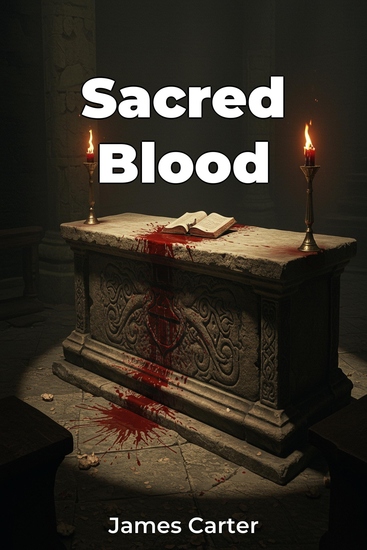
Sacred Blood - cover

Sacred Blood

James Carter

Traductor A Ai

Editorial: Publifye

  • 0
  • 0
  • 0

Sinopsis

Sacred Blood explores the profound and often paradoxical role of blood throughout history and across diverse cultures. It examines how this life-sustaining fluid, so intrinsically linked to death, has become a potent symbol in religious rituals, martyrdom narratives, and purification practices. The book delves into the human fascination with blood, revealing its power to evoke both life and death, purity and impurity.

 
The book approaches this complex topic by exploring three major themes: blood sacrifice, martyrdom, and purification. Beginning with an introduction to blood symbolism, it progresses through historical analyses of blood sacrifice in various religions, examines the role of blood in shaping narratives of martyrdom, and investigates the use of blood in purification rituals.

 
The unique value of Sacred Blood lies in its integrated approach, connecting these themes through the unifying lens of blood, offering a nuanced understanding of its cultural significance and symbolic purification. Drawing from religious texts, archaeological findings, and anthropological studies, the book argues that blood's enduring power stems from its liminal nature—existing on the threshold between life and death, the human and the divine.

 
This liminality makes blood a uniquely potent medium for conveying complex religious, social, and psychological meanings. For example, the act of martyrdom, where blood is shed as a testament to faith, becomes a powerful source of spiritual potency, demonstrating blood's central role in religious history.
Disponible desde: 27/02/2025.
Longitud de impresión: 56 páginas.

Otros libros que te pueden interesar

  • Plantagenet Princesses - The Daughters of Eleanor of Aquitaine and Henry II - cover

    Plantagenet Princesses - The...

    Douglas Boyd

    • 0
    • 0
    • 0
    A unique look at the lives of two daughters that highlights the dichotomy of lives of royal women, as both daughters and mothers of kings, who also knew both prison and power. 


    The names of few medieval monarchs and their queens are better known than Eleanor of Aquitaine, uniquely queen of France and queen of England, and her second husband Henry II. Although academically labeled "medieval," their era was the violent transition from the Dark Ages, when countries' borders were defined with fire and sword. If princes fought for their succession to crowns, the princesses were traded—usually by their mothers—to strangers for political power without the bloodshed. Years before what would today be marriageable age, royal girls were dispatched to countries whose speech was unknown to them and there became the property of unknown men. Eleanor's daughters Marie and Alix were abandoned in Paris when she divorced Louis VII of France. By Henry II, she bore Matilda, Aliénor, and Joanna. Joanna was imprisoned by William II of Sicily and worse treated by her brutal second husband in Toulouse. If Eleanor was libeled as a whore, Aliénor's descendants include two saints, Louis of France and Fernando of Spain. And then there were the illegitimate daughters, whose lives read like novels . . .
    Ver libro
  • 20 First Legislative Acts of the Russian Bolshevik Revolution - cover

    20 First Legislative Acts of the...

    Vladimir Lenin

    • 0
    • 0
    • 0
    Decrees were legislative acts of the highest Soviet institutions, primarily of the Council of People's Commissars (the highest executive body — Sovnarkom) and of VTsIK (the highest legislative body between sessions of the Congress of Soviets).
    The Bolshevik Initial Decrees were announced as soon as the Bolsheviks declared their success in the October Revolution (October 26, 1917). The Decrees seemed to conform to the popular Bolshevik slogan "Peace, Land and Bread". The slogan succinctly articulated the grievances of the Russian peasantry, armed forces and proletariat.
    The Bolsheviks were not opportunists but benevolent idealists; the point of the Decrees was to bring about a better quality of life for the Russian people. Regardless of which view is the more accurate account, it is clear from these opposing perspectives that the history of the Initial Decrees is a politically charged issue. This is perhaps because historians use the Decrees to try to discern whether the implementation of Marxist thought has totalitarian tendencies.
    Ver libro
  • The Healing Tree - An Adoptee's Story about Hurting Healing and Letting the Light Shine Through - cover

    The Healing Tree - An Adoptee's...

    Danielle Gaudette

    • 0
    • 0
    • 0
    "Our adopted angel"-that's what Danielle's adoptive parents called her. She grew up adored, doted on, and unconditionally loved. It wasn't until she was in college that she first felt a gnawing curiosity about her roots. From time to time, she would wonder: Where did this face come from? Where did this body come from? Where did this blood come from? Her search to find her biological parents had begun -one full of surprises and revelations. 
    After reuniting with her birth mother and uncovering the primal wound that lay deep within her-Danielle embarks on a twenty-year healing journey of self-discovery, reconciliation, and forgiveness. 
    At once a heartfelt memoir and a guide to self-awareness, Healing Tree offers a compassionate exploration of self, family, and what it means to be whole. Rooted in her twenty-year practice in Body & Brain holistic mind/body techniques, Danielle offers an approachable eight-step method for anyone wishing to heal from emotional or psychological wounds. This method invites readers to cultivate a loving relationship with their authentic selves and charts a pathway to inner peace. 
    For anyone who feels stuck, hurt, or rudderless in the sea of life, for anyone interested in doing the deep work of self-healing, becoming liberated, and realizing the potential to heal beyond themselves, Healing Tree is a source of direction, inspiration, and hope.
    Ver libro
  • Dust and Light - On the Art of Fact in Fiction - cover

    Dust and Light - On the Art of...

    Andrea Barrett

    • 0
    • 0
    • 0
    The celebrated National Book Award–winning writer's intimate exploration of how fact is transformed into fiction. 


    In this thoughtful collection of essays, Andrea Barrett draws from her experiences writing some of the most acclaimed historical fiction of our time to explore the mysteries and delights of the genre. Inspiration found in the past, she argues, can illuminate fiction, just as dust scatters light and makes the unseen visible. Delving into some of the largest questions in the genre—How does a writer find meaningful subject matter beyond the confines of their life? How are scraps of history transformed into a fully formed narrative?—Barrett explores how she came to create some of her beloved works and explores lessons gleaned from the work of such masters of historical fiction as Toni Morrison, Leo Tolstoy, Hilary Mantel, and Colm Tóibín. Candid and elegant, Dust and Light is the perfect book for anyone who loves reading fiction set in the past, as well as for anyone aspiring to write it.
    Ver libro
  • Random Fun Facts and Motivational Quotes (2-in-1) Bundle: An Amazing Collection of 1000 Interesting Facts and Trivia + 1000 Inspirational Quotes and Positive Affirmations for Success Wealth and More - cover

    Random Fun Facts and...

    Nazar Santoro, Matthew...

    • 0
    • 0
    • 0
    If knowledge is power and affirmations transform lives, then combining them makes you an unstoppable force.Learning a thousand facts guarantees that you know at least a thousand more things than the person standing next to you. This could help you win quizzes, boost your survival skills, and even save a life.Trivia junkies will love this! You’ll come across facts that enlighten you about the world, some that fill you with delight, and others that make you go “Wow!”Now that you’re brimming with knowledge, it’s time to change your life forever.Affirmations have been known to help people find love, lose weight, and attract wealth. With these 1000 motivational quotes developed by expert psychologist Adam Thielke, you’ll have enough material to:Build your self-confidenceAttain career goalsOvercome setbacks in lifeFind loveLose weightAttract wealthThis is the formula that makes you unstoppable!Get your copy of the Millennium Bundle (1000 interesting facts + 1000 motivational quotes) to brighten and improve your life.
    Ver libro
  • Russo-Turkish Wars The: The History and Legacy of the Conflicts Between the Russian Empire and Ottoman Empire - cover

    Russo-Turkish Wars The: The...

    Editors Charles River

    • 0
    • 0
    • 0
    In the wake of taking Constantinople, the Ottoman Empire would spend the next few centuries expanding its size, power, and influence, bumping up against Eastern Europe and becoming one of the world’s most important geopolitical players. It was a rise that would not truly start to wane until the 19th century, and in the centuries before the decline of the “sick man of Europe,” the Ottomans frequently tried to push further into Europe. 
    Some of those forays were memorably countered by Western Europeans and the Holy League, but the Ottomans’ most frequent foe was the Russian Empire, which opposed them for both geopolitical and religious reasons. From negotiations to battles, the two sides jockeyed for position over the course of hundreds of years, and the start of the fighting may have represented the Ottomans’ best chance to conquer Moscow and change the course of history. 
    By the 19th century, the tsar was notoriously referring to the Ottoman Empire as the “sick man of Europe,” and by the start of World War I, the Ottoman Empire was often described as a dwindling power, mired by administrative corruption, using inferior technology, and plagued by poor leadership. The general idea is that the Ottoman Empire was “lagging behind,” likely coming from the clear stagnation of the empire between 1683 and 1826. Yet it can be argued that this portrayal is often misleading and fails to give a fuller picture of the state of the Ottoman Empire. Looking at the reforms, technological advances and modernization efforts made by the Ottoman elite between 1826 and the beginning of World War I, one could really wonder why such a thirst for change failed to save the Ottomans when similar measures taken by other nations, such as Japan during the Meiji era, did in fact result in the rise of a global power in the 20th century.
    Ver libro
