¡Acompáñanos a viajar por el mundo de los libros!
Añadir este libro a la estantería
Grey
Escribe un nuevo comentario Default profile 50px
Grey
Suscríbete para leer el libro completo o lee las primeras páginas gratis.
All characters reduced
Straws and prayer-books; dizain des diversions - cover

Straws and prayer-books; dizain des diversions

James Branch Cabell

Editorial: Good Press

  • 0
  • 0
  • 0

Sinopsis

In "Straws and Prayer-Books; Dizain des Diversions," James Branch Cabell artfully constructs a collection of whimsical and philosophical reflections that navigate the complexities of human experience. The book is characterized by its lyrical prose and intricate wordplay, combining elements of fantasy and realism to explore themes of love, fate, and the nature of existence. Written against the backdrop of early 20th-century American literature, Cabell's work resonates with the Modernist quest for meaning, employing a dizzying array of characters and poetic forms to engage the reader's imagination and intellect. James Branch Cabell, an influential American author, was deeply immersed in the cultural and literary movements of his time, which shaped his unique vision and narrative style. Raised in Virginia, Cabell's experiences with Southern culture, classical literature, and the burgeoning modernist ideals informed his portrayal of life's absurdities and spiritual quests. His reputation as a master of fantasy and satire underscores a literary career that often blurred the lines between the mundane and the fantastical, making his works enduringly relevant. Readers seeking a thought-provoking exploration of the human condition will find "Straws and Prayer-Books" an enriching experience. With its rich imaginative texture and philosophical depth, this book invites reflection and contemplation, making it a compelling addition to the library of anyone interested in the interplay of humor and introspection in literature.
Disponible desde: 24/04/2025.
Longitud de impresión: 200 páginas.
Otros libros que te pueden interesar

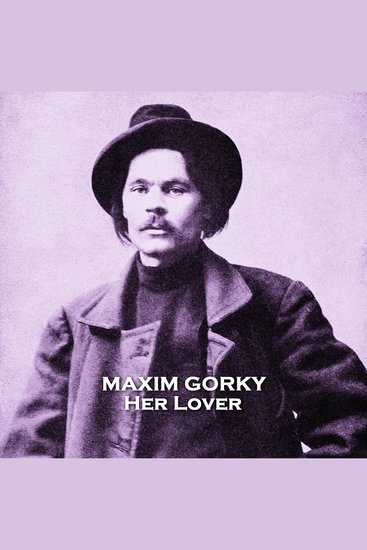
  • Her Lover - From their pens to your ears genius in every story - cover

    Her Lover - From their pens to...

    Maxim Gorky

    • 0
    • 0
    • 0
    Alexei Maximovich Peshkov was born on 28th March 1868, in Nizhny Novgorod, Russia. 
    Better known as Maxim Gorky he was orphaned at 11 and ran away from home at 12.  At 19 he had already attempted suicide and thereafter travelled, by foot, across the Russian Empire for 5 years. 
    His first book ‘Essays & Stories’ in 1898 was a sensation and so began a long career as an author of short stories, novels and plays.  Gorky saw writing as a moral and political act that would help to change the unjust world around him.  He was an ardent early advocate of the emerging Marxist movement and publicly opposed the Tsarist regime leading several times to his arrest.  
    In 1904 he began his own theatre but the censor banned every play and Gorky was forced to abandon the project. 
    But Gorky was a financially successful author, editor, and playwright and gave monies to political parties as well as for civil rights and social reform.  The brutal shooting of workers, which set in motion the Revolution of 1905, pushed Gorky more decisively toward radical solutions.  
    In 1906 he went to the United States to raise funds for the Bolsheviks. Those experiences including a scandal over travelling with his lover and not his wife deepened his contempt for the ‘bourgeois soul.’ 
    Gorky now moved to Capri in Italy, both for health reasons and to escape the increasingly repressive times in Russia.  
    An amnesty for the 300th anniversary of the Romanov dynasty saw him return to Russia in 1914. His politics remained close to the Bolshevik cause.  But soon, after the 1918 revolution, his essays referred to Lenin as a tyrant for his senseless arrests and repression.  He was soon appealing to the outside world for food aid after the catastrophic crop failure. 
    In October 1921 Gorky returned to Italy, now in Fascist hands, and settled in Sorrento until 1932.  His health worsened with the onset of tuberculosis. 
    He wrote several successful books there but now decided to find an understanding with the communist regime. Stalin invited him home and his return was hailed as a major propaganda victory.  He was decorated with the Order of Lenin, and a province, a park, and various streets re-named in his honour. 
    But he had his faults too.  In 1933, Gorky co-edited a book on the White Sea-Baltic Canal and denied even a single prisoner died during its construction, but thousands had. As well, knowing that some Nazis were homosexual, a phrase was attributed to him that said ‘exterminate all homosexuals and fascism will vanish’.  Although he was himself was quoting another he was decidedly homophobic. 
    With the increase of Stalinist repression in 1935 Gorky was placed under unannounced house arrest. 
    Maxim Gorky died on the 18th June 1936 from pneumonia.  He was 68. 
    Stalin and Molotov were among those who carried Gorky's urn of ashes at his funeral.
    Ver libro
  • The Road to Moresco - cover

    The Road to Moresco

    Mark Jamilkowski

    • 0
    • 0
    • 0
    At the turn of the 20th century, Maria-Luisa Moresco was not like most Italian women of her time. She was driven to achieve her professional aspirations when others looked for a happy and healthy family and a peaceful environment to call home. But when multiple tragedies struck – earthquakes and storms, unexpected deaths, World War II, broken relationships, even murders – she, and later her daughter Chiara, were forced to find a way forward despite their irreplaceable losses. Against the backdrop of a Europe in constant turmoil, their survival instincts, persistence, and resilience became their path forward. Discover more about these astounding, complicated, talented women in The Road to Moresco.
    Ver libro
  • The Power of Faith - cover

    The Power of Faith

    Brandon Huffman

    • 0
    • 0
    • 0
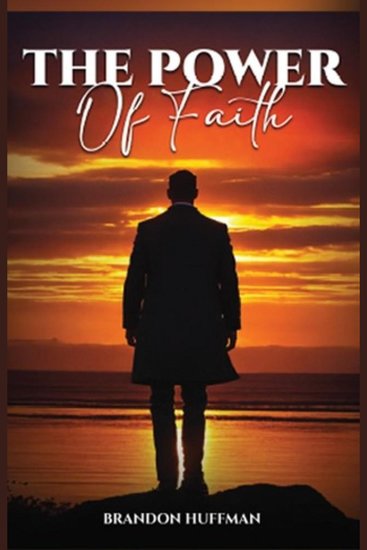
    Have you ever been cruising through life and thought everything was well? Then, bam, something hits you out of nowhere. Well, that happened to me one day. This autobiography discusses what happened and how my faith got me through the dark times. Follow my journey from my stroke to where I am today. I wrote this book to give readers hope that a life-changing event doesn't have to be the end. Someone can recover and get back to everyday life. The main theme is where there's a will, there's a way. 
    This book tells a story about how faith helped an ordinary person navigate hardships and develop a positive outlook on life.
    Ver libro
  • The Guv'nor In His Own Words - Conversations with the Bare Knuckle Fighting Legend - cover

    The Guv'nor In His Own Words -...

    Peter Gerrard

    • 0
    • 0
    • 0
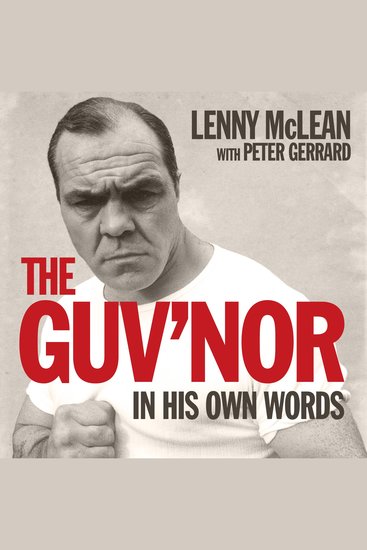
    Born in East London in 1949, Lenny McLean grew up in an area that had been ravaged by the Second World War. Although money was scarce and fighting was commonplace, a camaraderie and deep sense of honour and respect remained. A victim of violent abuse at the hands of his stepfather, Lenny spent much of his teenage life in borstal as he began to follow a life of crime. However, it was his ability as a fighter that was to turn his life around.Lenny McLean inspired fear in many, but respect from all, as he became a bare-knuckle fighting legend. His fame became even greater in later life, appearing in Guy Ritchie's Lock, Stock and Two Smoking Barrels just as his autobiography was reaching the top of the bestsellers chart. Lenny's untimely death from cancer in 1998 marked the beginning of the end of the old Cockney way of life and interest in his story has only increased since his passing, inspiring documentaries as well as a feature film, My Name is Lenny.In these unedited conversations between Lenny and his 'book man' Peter Gerrard, featuring many anecdotes that did not appear in The Guv'nor, we get to see the man behind the public image. As he looks back on his life, these transcripts reveal Lenny's humour and charm as well as the volatility that made him one of the most notorious figures ever to emerge from the East End.Although the original interview tapes have been lost, this immersive audiobook has replicated Lenny and Peter's conversations as they really happened.
    Ver libro
  • Charlie's Good Tonight - The Life the Times and the Rolling Stones: The Authorized Biography of Charlie Watts - cover

    Charlie's Good Tonight - The...

    Paul Sexton

    • 0
    • 0
    • 0
    “An affectionate portrait, one that recognizes Watts as musician, colleague, family man, obsessive collector and immaculate dresser.”—Sunday Times 
    “Sexton, a longtime Stones chronicler, tells Watts’s story with warmth and diligence.”—Observer 
    The fully authorized and official biography of legendary Rolling Stones drummer Charlie Watts, one of the world’s most revered and celebrated musicians of the last half century. 
    Forewords by Mick Jagger and Keith Richards 
    Charlie Watts was one of the most decorated musicians in the world, having joined the Rolling Stones, a few months after their formation, early in 1963. 
    A student of jazz drumming, he was headhunted by the band after bumping into them regularly in London’s rhythm and blues clubs. Once installed at the drum seat, he didn’t miss a gig, album or tour in his 60 years in the band. He was there throughout the swinging sixties, the early shot at superstardom and the Stones' world conquest; and throughout the debauchery of the 1970s, typified by 1972's Exile on Main St., considered one of the great albums of the century. By the 1980s, Charlie was battling his own demons, but emerged unscathed to enhance his unparalleled reputation even further over the ensuing decades. 
    Watts went through band bust-ups, bereavements and changes in personnel, managers, guitarists and rhythm sections, but remained the rock at the heart of the Rolling Stones for nearly 60 years—the thoughtful, intellectual but no less compelling counterpoint to the raucousness of his bandmates Keith Richards, Mick Jagger and Ronnie Wood. And this is his story. 
     
    Ver libro
  • Mikhail Gorbachev: The Life and Legacy of the Soviet Union’s Last Leader - cover

    Mikhail Gorbachev: The Life and...

    Editors Charles River

    • 0
    • 0
    • 0
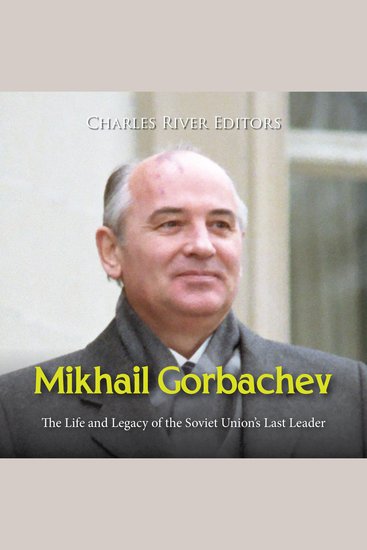
    After going through three elderly leaders in three years, Mikhail Gorbachev was chosen as the new General Secretary of the Soviet Union at the relatively youg age of 54 in March 1985. Gorbachev hoped to build the Soviet economy to relieve the persistent shortages of consumer goods it faced, which were caused by enormous military spending of the Soviet Union. Gorbachev tried to introduce some economic reforms, but they were blocked by communist hardliners. Gorbachev then came to the belief that the Soviet economy could not improved without political reform as well. 
    In comparison with other Soviet leaders, Gorbachev was leader of the USSR for a relatively short period, but the changes that took place under his leadership were monumental, including some that were intended and others that were unforeseen. Gorbachev oversaw the end of the Cold War and the peaceful transition away from communism in Central and Eastern Europe, and he ended the war in Afghanistan and many other proxy conflicts in the developing world. Gorbachev improved relations with the West and developed enough trust with President Ronald Reagan and President George H.W. Bush to decommission thousands of nuclear weapons. He also liberalized the political environment within the Soviet Union itself, increased accountability, and brought in a certain degree of democracy.  
    	Gorbachev was awarded the Nobel Peace Prize for these efforts in 1990, but his regime also left a legacy of turbulence and destruction in its wake. As a result of his policies, many Soviet people rose up against the status quo, demanding national self-determination and reviving old grievances. Gorbachev could not prevent the USSR from disbanding at the end of 1991, leaving much of the country’s economy in ruins and nationalist and ethnic conflicts that are still unresolved today.
    Ver libro