Join us on a literary world trip!
Add this book to bookshelf
Grey
Write a new comment Default profile 50px
Grey
Subscribe to read the full book or read the first pages for free!
All characters reduced
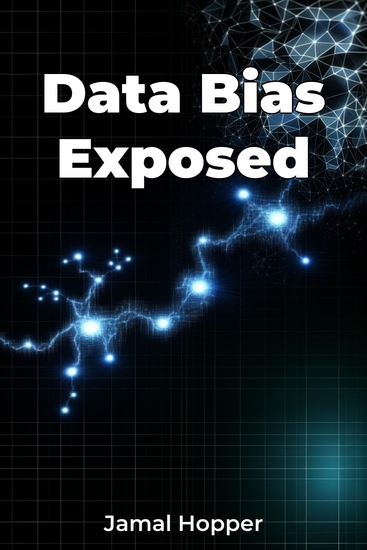
Data Bias Exposed - cover

Data Bias Exposed

Jamal Hopper

Publisher: Publifye

  • 0
  • 0
  • 0

Summary

"Data Bias Exposed" offers a compelling examination of how machine learning algorithms perpetuate and amplify human prejudices through biased training data, affecting millions of lives in crucial areas like healthcare, employment, and financial services.The book uniquely combines technical analysis with social justice perspectives, demonstrating how historical discriminatory practices continue to influence modern automated decision-making systems, creating what the author terms a "cycle of automated inequality."Through a well-structured progression, the book first introduces readers to real-world cases of algorithmic bias in familiar technologies like facial recognition and lending algorithms. It then delves into the technical and social mechanisms behind these biases, drawing from interdisciplinary research spanning computer science, sociology, and ethics. The analysis is supported by original interviews with AI researchers, affected communities, and industry leaders, providing a comprehensive view of both problems and potential solutions.The final section presents practical frameworks for developing more equitable AI systems, making this book particularly valuable for technology professionals and policymakers. By combining rigorous analysis with accessible explanations, the author bridges the gap between technical complexity and social impact, offering concrete tools for detecting and mitigating algorithmic bias. The book's approach to balancing innovation with equity makes it an essential resource for anyone concerned about the fair implementation of AI in society.
Available since: 01/11/2025.
Print length: 136 pages.

Other books that might interest you

  • What Happened to Millennials - In Defense of a Generation - cover

    What Happened to Millennials -...

    Charlie Wells

    • 0
    • 0
    • 0
    From an award-winning journalist, a reflective, smart, and deeply reported look at the millennial generation that draws on the experiences of five diverse individuals and explores where we go from hereWhat happened to millennials? At the birth of America's largest living generation, the outlook was strong: unparalleled economic growth, the emerging Internet, the rise of the cell phone, and a geopolitics that had allegedly reached "the end of history" all set expectations exceedingly high for a cohort entering adulthood at the dawn of the new millennium.That adulthood—a work in progress for more than a quarter century—has been disrupted by war, recession, pandemic, and a sharp turn toward cultural and economic polarization. It has also been endlessly critiqued by others as immature, lazy, weak, incomplete, selfish, and supposedly riddled with failure.Now, 25 years after the first millennials began turning 18, Bloomberg News reporter Charlie Wells comes to the generation's defense with a cultural history of an adulthood disrupted. Drawing on hundreds of hours of intimate interviews with five millennials from across the country, he explores how the biggest events, ideas, and transformations of the century played out in private lives.Between the data points and statistical studies, news reports and archival records, his brutally honest, on-the-record conversations about love, loss, work, addiction, tragedy, and sacrifice reveal how a generation once minimized can no longer be ignored.What Happened to Millennials charts a path from our nostalgic past to a better future, shaped by the challenges we have surmounted, the people we have loved, and the adults we have become.
    Show book
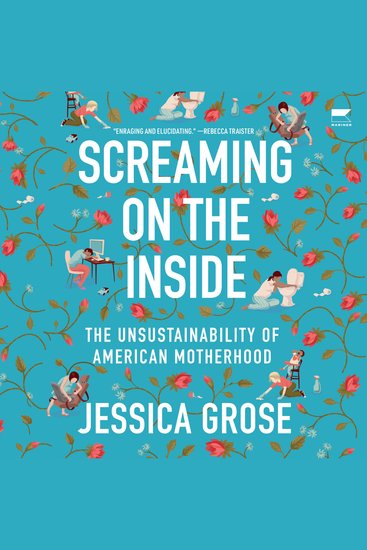
  • Screaming on the Inside - The Unsustainability of American Motherhood - cover

    Screaming on the Inside - The...

    Jessica Grose

    • 0
    • 0
    • 0
    In this timely and necessary book, New York Times opinion writer Jessica Grose dismantles two hundred years of unrealistic parenting expectations and empowers today’s mothers to make choices that actually serve themselves, their children, and their communities 
    Close your eyes and picture the perfect mother. She is usually blonde and thin. Her roots are never showing and she installed that gleaming kitchen backsplash herself (watch her TikTok for DIY tips). She seamlessly melds work, wellness and home; and during the depths of the pandemic, she also ran remote school and woke up at 5 a.m. to meditate. 
    You may read this and think it’s bananas; you have probably internalized much of it. 
    Journalist Jessica Grose sure had. After she failed to meet every one of her own expectations for her first pregnancy, she devoted her career to revealing how morally bankrupt so many of these ideas and pressures are. Now, in Screaming on the Inside, Grose weaves together her personal journey with scientific, historical, and contemporary reporting to be the voice for American parents she wishes she’d had a decade ago. 
    The truth is that parenting cannot follow a recipe; there’s no foolproof set of rules that will result in a perfectly adjusted child. Every parent has different values, and we will have different ideas about how to pass those values along to our children. What successful parenting has in common, regardless of culture or community, is close observation of the kind of unique humans our children are. In thoughtful and revelatory chapters about pregnancy, identity, work, social media, and the crisis of the Covid-19 pandemic, Grose explains how we got to this moment, why the current state of expectations on mothers is wholly unsustainable, and how we can move towards something better. 
    Supplemental enhancement PDF accompanies the audiobook.
    Show book
  • Inner Peace Manual - cover

    Inner Peace Manual

    Rev. Dr Cindy Paulos

    • 0
    • 0
    • 0
    Rev. Dr. Cindy Paulos is a music producer, author/poet, lyricist, composer-producer, artist and longtime Radio Announcer on multiple stations for KAOI RADIO in Maui, Hawaii, and KUOS in Sedona which she co-founded. She has hosted the longest running talk show on Maui for 30 years. She was honored to be awarded UNESCO Center for Peace announces 2020 Cross-Cultural & Peace Crafter Award Laureates She also received the 2021 Gandhi Peace Award and was named Outstanding Metaphysician and Media Personality by the Harvest Convention. She founded the Peace Projects as a result of honoring those awards, and decided to write a book about peace that came many interviews on this subject. 
    This is a book which is not only a "manual" of sorts for achieving inner peace, but more than that, this crucial piece of art is also something that you and your loved ones will cherish for generations to come! Why? 
    Because the more you read it, over and over from beginning to end, you will realize something new and different each time! A new and special series of revelations will come upon you like a gentle wave or breeze across a sandy shore, clearing a path, if you will, to exploring even more adventures! A continual uncovering, if-you-will, of the miracles of life itself, and on-goingly, as if you were a child looking at the beauty of a flower for the first time. 
    How does Cindy accomplish this? Through a series of instructions and exercises, examples of meditations for your enjoyment, the Infinite Beauty and Wisdom of her poetry, crafted by the mind and the heart of the Infinite Itself, I dare to add! 
    Cindy's book is an important EXPERIENCE, not to be overlooked, nor taken lightly, yet celebrated with the same joy that you experienced as a child, untainted and innocent. Allow yourself to be TRANSFORMED through this work. 
    Read less
    Show book
  • Battle of Woody Point The: The History of the Confrontation that Led to the Deaths of the First American Settlers in the Pacific Northwest - cover

    Battle of Woody Point The: The...

    Editors Charles River

    • 0
    • 0
    • 0
    The fur trade had its tensions, but for many years, traders and natives worked out their own systems, times, and traditions, allowing many different groups to interact and even compete without issues that led to war. Though native groups sometimes found themselves in conflicts based on long-standing rivalries or relations with the Europeans, most of the fur traders, the trappers, the Indians, and Hudson’s Bay Company officials lived peaceably. The great amount of distance from one another in this land of millions of miles likely helped to alleviate tensions. When a new vision for the Hudson’s Bay Company came about, one where settlers, not itinerants, would be responsible for the colony, the rules changed. 
    In 1810, through the Pacific Fur Company, John Jacob Astor began to direct his energies at the still mostly unexploited regions accessible from the mouth of the Columbia River. This was, of course, in open defiance of British claims, but that was very much in keeping with Astor’s style. Astor put up the money, and a group of American and Canadian fur traders would manage affairs on the ground, traveling to the region to erect Fort Astoria and a string of trading posts in the region that could deal with the natives, trade with Asia and the East Coast, and amass untold riches. Or at least that was the plan. 
    Fort Astoria wouldn’t last a decade, and its turbulent history was so full of unfortunate twists and turns, a mixture of bad luck and incompetence, that the story still fascinates people today. And among all the chapters of that short history, none are as interesting as the fateful Battle of Woody Point, a misnomer for a confrontation that was brought about by misunderstandings, arrogance, and misplaced pride. The episode, despite its brevity and its occurrence in the furthest reaches of North America at the time, would color relations between whites and natives in the Pacific Northwest for decades.
    Show book
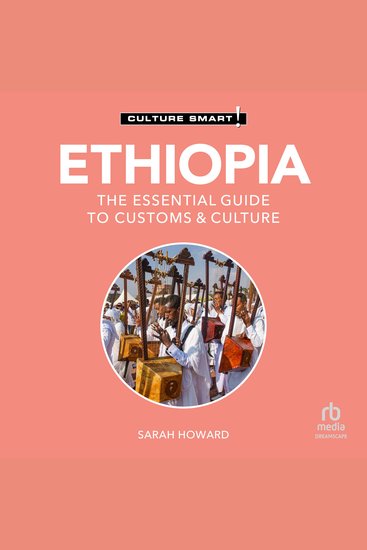
  • Ethiopia - Culture Smart! - The Essential Guide to Customs & Culture - cover

    Ethiopia - Culture Smart! - The...

    Sarah Howard

    • 0
    • 0
    • 0
    Don't just see the sights—get to know the people. 
    Set in Africa, but not wholly African; an isolated nation, yet receptive to the outside world; hierarchical and conservative, yet innovative and desirous of modernity; conformist as a people, and fiercely independent as individuals? The Ethiopian identity defies definition. Ethiopia exists simultaneously in different time periods. Its people, when they see something new that might work to their advantage, will embrace it and find ways to improve on it. Modern democracy, however, has understandably been slower to bloom given the strong historical antecedents of its monarchy. 
    Culture Smart! Ethiopia unpacks the values, attitudes, and traditions of this culturally rich nation. Etiquette in daily life, socializing, and communicating are all helpfully described, and advice is given on how to make the most of a visit. Above all, it provides the tools to do so in a considerate and sensitive manner. 
    Have a richer and more meaningful experience abroad through a better understanding of the local culture. Chapters on history, values, attitudes, and traditions will help you to better understand your hosts, while tips on etiquette and communicating will help you to navigate unfamiliar situations and avoid faux pas.
    Show book
  • Blame Not the Wind: A tragedy at sea A cover-up One mother’s search for justice - cover

    Blame Not the Wind: A tragedy at...

    Shirley Cooklin

    • 0
    • 0
    • 0
    "Very occasionally a tragedy turns into a triumph. This wonderful, searing book is such a moment. Rush to read it & be thankful." – Miriam Margolyes 
    Last night Ben phoned from Bermuda, collect as usual. I’d asked – though heaven knows why, as we avoid soppy talk – if he still loved me.  
    He had said, ‘Course I do.’ 
    He would be home for a visit once the race was over. He could not say exactly when but would keep in touch. 
    It is early June: the third day of June, to be precise, and a day I will never forget. Something feels wrong. Better get up. 
    Shirley’s sixth sense was all too real: tragedy had struck Ben’s ship, Marques. The government announced that it was a ‘freak accident’. 
    But something did not add up. 
    On 2 June 1984 the British-registered tall ship Marques left Bermuda Harbour, cheered on by watching crowds. With other sailing vessels from across the world, the barque was heading for Halifax, Nova Scotia, having won the first leg of the internationally famous Tall Ships Race. As they sailed out to sea, there was not a cloud in the sky. But by midnight the weather had changed and the seas became violent. 
    Just 80 miles from Bermuda, things took a turn for the worse – the ship lurched and water poured in through the wide-open hatches. In 40 seconds the Marques had vanished. Of the 28 people on board, 19 were lost: crew and passengers, hailing from Britain, Canada, the US and the Caribbean. Among the missing was Shirley Cooklin’s 18-year-old son Ben. 
    Driven to seek answers, Shirley finds only dead ends and denials. She begins to wonder – what if this was not a freak accident caused by the wind? What if the tragedy was the result of a gross act of negligence? And why is the Thatcher government so interested in the incident? 
    This is the riveting true story of one mother’s lifelong search for justice. 
    "Shirley Cooklin has a moving story to tell: and she tells it with a keen intelligence and warm heart." – Joan Bakewell 
    "A powerful and moving account." – Sasha Bates, author of The Languages of Loss 
    "A brilliant book" – Daily Mail 
    This moving non-fiction memoir and autobiography places one family’s loss within a wider maritime history that refuses to stay buried. As Shirley Cooklin presses for justice, she runs into misconduct, corruption and political obstruction—discovering how hard the law can be to move when power is at stake. 
    For fans of Antony Beevor (Rasputin), and Fern Riddell (Death in Ten Minutes). 
    HarperCollins 2025
    Show book