¡Acompáñanos a viajar por el mundo de los libros!
Añadir este libro a la estantería
Grey
Escribe un nuevo comentario Default profile 50px
Grey
Suscríbete para leer el libro completo o lee las primeras páginas gratis.
All characters reduced
Flow and Heat Exchange in Engineering - cover

Flow and Heat Exchange in Engineering

Jaideep Devgan

Editorial: Educohack Press

  • 0
  • 0
  • 0

Sinopsis

"Flow and Heat Exchange in Engineering" is a dynamic exploration tailored for undergraduate students. This comprehensive guide bridges theoretical principles with practical applications in fluid dynamics and thermal engineering.
We delve into fundamental concepts of fluid flow and heat transfer, essential for understanding various engineering systems and processes. From pipelines to heat exchangers, our goal is to equip students with the knowledge and skills to design efficient and sustainable engineering solutions.
Each chapter focuses on clarity and accessibility, presenting key theoretical concepts with real-world examples and practical illustrations. Engaging exercises and problems reinforce learning objectives and encourage critical thinking, enabling students to apply principles to solve complex engineering challenges.
Whether pursuing a degree in mechanical, chemical, or aerospace engineering, this book provides a solid foundation in fluid flow and heat exchange principles, preparing students for success in their academic and future engineering careers. Join us as we unravel the mysteries of engineering flow and heat exchange, empowering the next generation of innovative engineers.
Disponible desde: 20/02/2025.
Longitud de impresión: 262 páginas.

Otros libros que te pueden interesar

  • I Want to Be a Veterinarian! - How to Become a Veterinarian Book for Kids - cover

    I Want to Be a Veterinarian! -...

    Natalie Kelli

    • 0
    • 0
    • 0
    Explore an Amazing Animal Career Path! 
     
    Does your child dream of a future working with pets, livestock, and incredible wildlife? Get them on the right path with "I Want to Be a Veterinarian!," the ideal guide to one of the most paw-some professions. 
     
    This exciting book introduces kids to the wonderful world of veterinary medicine. Going far beyond just the basics, it dives into: 
     
    -Exploring the different veterinary career paths, from caring for household pets to working with exotic animals 
     
    -The key traits and skills needed to become a successful veterinarian 
     
    -Discovering the educational journey to obtain a veterinary degree 
     
    -Peeking behind the scenes at the daily life of several different vets 
     
    -Hearing direct advice from real-life veterinarians 
     
    -And so much more! 
     
    Written in an engaging way that speaks directly to young readers' interests, this book takes kids on an interactive journey that explores every aspect of this fascinating profession. They'll thoroughly understand what it takes to improve animals' lives as a veterinarian. 
     
    With fun facts, practical tips, and stories that spark readers' imaginations, "I Want to Be a Veterinarian!" provides an unbeatable head start for any child aspiring to an exceptional animal-based career. Let it ignite their passion while teaching them how to make that dream a reality. 
     
    The perfect gift to encourage kids' interests and future goals! Don't miss this invaluable opportunity to inspire and educate the aspiring veterinarians in your life.
    Ver libro
  • Innovation landscape for smart electrification: Decarbonising end-use sectors with renewable power - cover

    Innovation landscape for smart...

    International Renewable Energy...

    • 0
    • 1
    • 0
    This report is organised into three sections, each following the same structure:
    
    • Status and pace of progress of electrification of end-use sector 
    This section provides a quick overview of where the sector is today in the electrification process, which path could lead to decarbonisation goals, and the importance of a smart electrification approach. It also summarises the main challenges and identifies the blind spots that are often overlooked and hinder the deployment of smart electrification strategies. 
    
    • Toolbox for smart electrification strategy
    This section includes the guidelines for implementation. Using the innovation toolbox, it illustrates how smart electrification strategies can be developed for different context specificities and needs. 
    
    • Innovation landscape for smart electrification of end-use sector
    This section lists and describes the key innovations for each dimension and explains why it is important. It also includes examples of how the innovation has been implemented.
    Ver libro
  • A Rare Recording of Virologist Jonas Salk - cover

    A Rare Recording of Virologist...

    Jonas Salk

    • 0
    • 0
    • 0
    Jonas Edward Salk (October 28, 1914 - June 23, 1995), born in New York City, was an American virologist and medical researcher. A graduate of City College of New York and New York University School of Medicine, in 1947, Salk accepted a professorship at the University of Pittsburgh School of Medicine, where he undertook a project to determine the number of different types of poliovirus and, eventually, develop a vaccine against polio. This recording is from a 1974 tv interview.
    Ver libro
  • Cursed Objects - cover

    Cursed Objects

    Jason Christie

    • 0
    • 0
    • 0
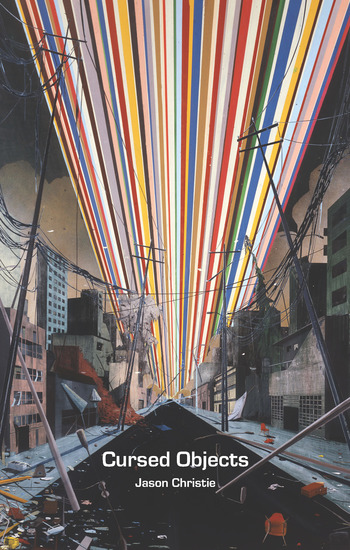
    What happens to identity when we're obsessed with self-surveillance and devalued words? Now that we've sold ourselves to ourselves, shuffling letters and sounds around to hide the pain, how do we represent the uncanny valley in which we've set up shop? In Cursed Objects, Jason Christie recoils in horror at the thoroughness of his self, then begins to write toward a new understanding brokered between all the things that define him and who he thinks he should be and interrogates how we reduce people to words, especially online, turning them into objects.
    Ver libro
  • Mayan Astronomy: The History of the Maya’s Measurements of the Planets and Stars - cover

    Mayan Astronomy: The History of...

    Editors Charles River

    • 0
    • 0
    • 0
    Many ancient civilizations have influenced and inspired people in the 21st century, and the Greeks and Romans continue to fascinate the West today, but of all the world’s civilizations, none have intrigued people more than the Mayans, whose culture, astronomy, language, and mysterious disappearance all continue to captivate people. In the past decade especially, there has been a renewed focus on the Mayans, whose advanced calendar led many to speculate the world would end on the same date the Mayan calendar ended in 2012.  
    	For the Maya, astronomy was not a purely scientific pursuit but intimately linked to religious, mythological, and ideological elements that were of the highest importance. The celestial realm held a sacred nature, as did the many gods and goddesses that dwelt there, so for all Mesoamerican cultures, astronomy was a fundamental part of their everyday lives. Thus, astronomy was present in their calendars, religion, and even agriculture, and in close relation to astronomy, the concept of time was also an essential part of their worldview. The Maya recorded time on almost every surface they could, including lintels, cornices, panels, stelae, friezes, ceramics, and paper. This insistence on capturing dates has led many scholars to suggest the Maya were obsessed with time. 
    The Maya had some of the most advanced astronomical measurements in the world, and their work built upon thousands of years, spanning from around 2500 BCE until the the arrival of the Spanish in 1519. Thanks to their hieroglyphic writing, archaeologists have been able to learn a wealth of information about the way they lived and their complex system of beliefs.
    Ver libro
  • Planta Sapiens - The New Science of Plant Intelligence - cover

    Planta Sapiens - The New Science...

    Paco Calvo, Natalie Lawrence

    • 0
    • 0
    • 0
    An astonishing window into the inner world of plants, and the cutting-edge science in plant intelligence. 


    Decades of research document plants' impressive abilities: they communicate with one another, manipulate other species, and move in sophisticated ways. Lesser known, however, is the new evidence that plants may actually be sentient. Although plants may not have brains, their microscopic commerce exposes a system not unlike the neuronal networks running through our own bodies. They can learn and remember, possessing an intelligence that allows them to behave in adaptive, flexible, anticipatory, and goal-directed ways. 


    A leading figure in the philosophy of plant signaling and behavior, Paco Calvo offers an entirely new perspective on plant biology. In Planta Sapiens, he shows for the first time how we can use tools developed in animal cognition studies in a quest to deeply understand plant intelligence. He illuminates how plants inspire technological advancements: from robotics and AI to tackling the ecological crisis. Most importantly, he demonstrates that plants are neither objects nor resources; they are agents in themselves, and for themselves.
    Ver libro