Junte-se a nós em uma viagem ao mundo dos livros!
Adicionar este livro à prateleira
Grey
Deixe um novo comentário Default profile 50px
Grey
Assine para ler o livro completo ou leia as primeiras páginas de graça!
All characters reduced
Vertical Cities - cover
LER

Vertical Cities

Jacob Smith

Tradutor A AI

Editora: Publifye

  • 0
  • 0
  • 0

Sinopse

Vertical Cities explores how skyscrapers can evolve into self-sufficient ecosystems, transforming urban living through sustainable urban development. The book argues that integrating residential spaces, workplaces, and green environments into high-rise buildings is crucial for accommodating growing populations while minimizing our environmental impact. It highlights the potential of vertical farms and mixed-use environments, suggesting that skyscrapers can become more than just commercial monuments. 

 
The book delves into integrating sustainable technologies like renewable energy and efficient waste management into architectural design. It examines creating functional, mixed-use spaces and fostering community within vertical structures. 

 
Drawing from architectural plans, environmental assessments, and sociological studies, Vertical Cities analyzes existing and proposed projects, acknowledging both successes and challenges. Structured in three parts, the book introduces the concept of vertical cities, examines key elements of self-sufficiency, and explores the social dimensions of vertical communities. This approach makes it valuable for architects, urban planners, and anyone interested in the future of architecture and environmental sustainability.
Disponível desde: 19/02/2025.
Comprimento de impressão: 86 páginas.

Outros livros que poderiam interessá-lo

  • The 50 Greatest Fashion Designers - The People Who Have Styled Our Clothes - cover

    The 50 Greatest Fashion...

    Emma Baxter-Wright

    • 0
    • 0
    • 0
    Fashion writer Emma Baxter-Wright introduces 50 of the world's most influential fashion designers and a selection of their most celebrated pieces. 
     
     
    Starting with the foundation of the 19th century House of Worth, perhaps the first real fashion house, through the designs of the hugely influential Coco Chanel, Christian Dior and Yves St Laurent, to Japanese designers such as Rei Kawakubo and Issey Miyake whose designs 'deconstructed' fashion in the 1980s and 1990s and the emerging stars of the present day, this book is a fascinating history of how fashion has developed over the past 160 years.
    Ver livro
  • Canaletto and Guardi - Views of Venice at the Wallace Collection - cover

    Canaletto and Guardi - Views of...

    Lelia Packer, Charles Beddington

    • 0
    • 0
    • 0
    A gorgeous celebration of the beauty of Venice as conveyed in the paintings of Canaletto and his followers.
    Among the renowned Old Master paintings at the Wallace Collection in London is an important group of 27 eighteenth-century views of Venice, known as vedute, by Canaletto and his followers, including Francesco Guardi. They hang together in a dedicated gallery known as the Canaletto Room, but until recently the majority had not been cleaned since the nineteenth century and their original beauty was obscured by multiple layers of discoloured varnish.
    The paintings have now been restored and rephotographed, following a multi-year conservation and research project that has also led to a reappraisal of them. This book presents these pictures in their renewed splendour. It features essays and commentaries by Charles Beddington, the global expert on vedute, and by Wallace Collection curator Lelia Packer. Together they provide fresh insights into the artists' creative processes, the dating of pictures and their authorship.
    Ver livro
  • The Buried City - Unearthing the Real Pompeii - cover

    The Buried City - Unearthing the...

    Gabriel Zuchtriegel, Jamie Bulloch

    • 0
    • 0
    • 0
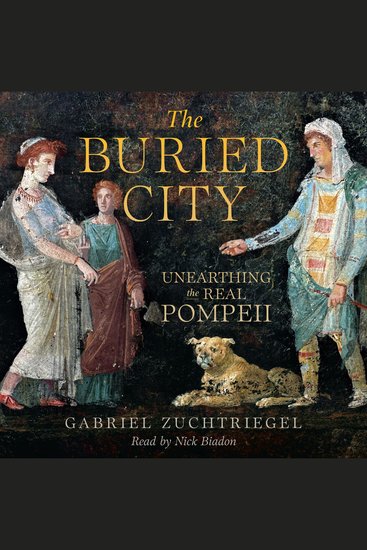
    The director of the Pompeii Archaeological Park offers a vivid view of daily life in the lost city, shares the latest discoveries, and reflects on preserving heritage. In The Buried City, Gabriel Zuchtriegel takes us on a behind-the-scenes tour of Pompeii and reveals new archaeological finds that are being unearthed at the site’s biggest dig in a generation. As director of the Pompeii Archaeological Park, Zuchtriegel presents a uniquely intimate perspective on this city that was tragically destroyed and frozen in time by the eruption of Mount Vesuvius in 79 CE. Among the ruins, we find unmade beds, dishes left drying, and bodies of victims encased in ash, but Zuchtriegel shows that we’ve only begun to understand this fascinating place, as a third of the site remains unexcavated. Zuchtriegel leads us into the heart of the city, reconstructing Pompeii as it would have been, showing us who lived there, what mattered to them, and what happened in their final hours. The Buried City reveals the latest discoveries unearthed at Pompeii—including a banquet hall with murals of Greek gods, a fresco of what appears to be a pizza, and the remains of individuals crushed by debris—all buried for almost two thousand years. Zuchtriegel offers a vivid portrait of this World Heritage site as a vibrant and diverse city, connecting us to a past that is much closer than we think and inviting us to reflect on our role as keepers of the site and its history.
    Ver livro
  • Edgar Degas - Ballet Movement and Introspection - cover

    Edgar Degas - Ballet Movement...

    Nathalia Brodskaya, Edgar Degas

    • 0
    • 0
    • 0
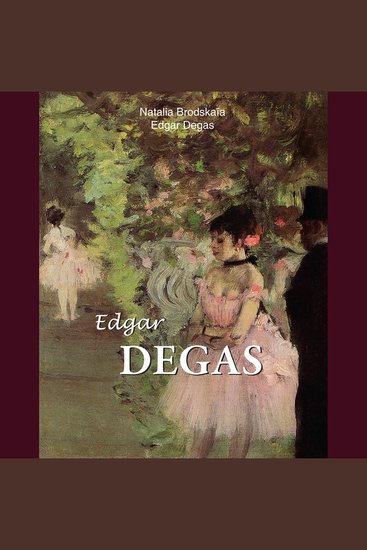
    Degas was closest to Renoir in the impressionist's circle, for both favoured the animated Parisian life of their day as a motif in their paintings. Degas did not attend Gleyre's studio; most likely he first met the future impressionists at the Café Guerbois. He started his apprenticeship in 1853 at the studio of Louis-Ernest Barrias and, beginning in 1854, studied under Louis Lamothe, who revered Ingres above all others, and transmitted his adoration for this master to Edgar Degas. Starting in 1854 Degas travelled frequently to Italy: first to Naples, where he made the acquaintance of his numerous cousins, and then to Rome and Florence, where he copied tirelessly from the Old Masters. His drawings and sketches already revealed very clear preferences: Raphael, Leonardo da Vinci, Michelangelo, and Mantegna, but also Benozzo Gozzoli, Ghirlandaio, Titian, Fra Angelico, Uccello, and Botticelli. During the 1860s and 1870s he became a painter of racecourses, horses and jockeys. His fabulous painter's memory retained the particularities of movement of horses wherever he saw them. After his first rather complex compositions depicting racecourses, Degas learned the art of translating the nobility and elegance of horses, their nervous movements, and the formal beauty of their musculature. Around the middle of the 1860s Degas made yet another discovery. In 1866 he painted his first composition with ballet as a subject, Mademoiselle Fiocre dans le ballet de la Source (Mademoiselle Fiocre in the Ballet 'The Spring') (New York, Brooklyn Museum). Degas had always been a devotee of the theatre, but from now on it would become more and more the focus of his art. Degas' first painting devoted solely to the ballet was Le Foyer de la danse à l'Opéra de la rue Le Peletier (The Dancing Anteroom at the Opera on Rue Le Peletier) (Paris, Musée d'Orsay). In a carefully constructed composition, with groups of figures balancing one another to the left and the right, each ballet dancer is involved in her own activity, each one is moving in a separate manner from the others. Extended observation and an immense number of sketches were essential to executing such a task. This is why Degas moved from the theatre on to the rehearsal halls, where the dancers practised and took their lessons. This was how Degas arrived at the second sphere of that immediate, everyday life that was to interest him. The ballet would remain his passion until the end of his days.
    Ver livro
  • Running the Room - Conversations with Women Theatre Directors - cover

    Running the Room - Conversations...

    Rosemary Waugh

    • 0
    • 0
    • 0
    Our most brilliant, fearless and creative women directors open the door on their craft, discussing their work in the theatre in intimate and illuminating detail.
    Through a series of fascinating conversations with many of the leading talents working on British stages, Running the Room explores what it takes to succeed in the field, and how each director approaches the work in their own way.
    Each interview focuses on a particular facet of the director's practice, examining not just the 'how' – how to talk to actors, how to create the right rehearsal environment, how to handle cuts and previews, how to work with a living playwright – but also the 'why': why certain approaches work better than others, why there's no 'right' way to direct a play, and why work in theatre anyway?
    As this passionate, inspiring book shows, there are myriad ways to be a theatre director. For aspiring or current directors, it will give you the confidence to be uniquely yourself, develop your own approach, and create the work you want to make. For creatives in other disciplines, it will provide insight into directors' processes, along with examples of successful collaboration. And for anyone who loves theatre, this is an unparalleled first-hand account of how brilliant theatre is made – direct from those making it.
    With contributions from:
    Natalie Abrahami • Annabel Arden • Milli Bhatia • Carrie Cracknell • Tinuke Craig • Marianne Elliott • Nadia Fall • Yaël Farber • Vicky Featherstone • Jamie Fletcher •  Sarah Frankcom • Emma Frankland • Rebecca Frecknall • Debbie Hannan • Tamara Harvey • Natalie Ibu • Ola Ince • Lynette Linton • Nancy Medina • Katie Mitchell • Rachel O'Riordan • Emma Rice • Indhu Rubasingham • Jenny Sealey
    Ver livro
  • Florida's New Deal Parks and Post Office Murals - cover

    Florida's New Deal Parks and...

    Keri Watson

    • 0
    • 0
    • 0
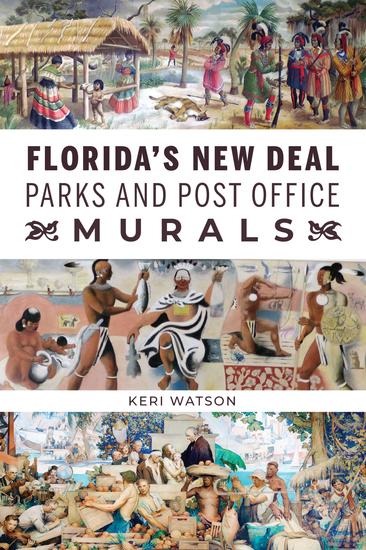
    Author Keri Watson guides readers on a tour through New Deal era Sunshine State parks and post office murals. Even before the stock market crash on October 29, 1929, the Florida economy was depressed from two major hurricanes, a citrus export embargo, and the collapse of the real estate market. Florida desperately needed the relief promised by President Franklin Delano Roosevelt's New Deal and actively participated in and benefited from a number of federally sponsored initiatives during the Great Depression. These programs were aimed at what the president termed "Relief, Recovery, and Reform," and they impacted every sector of society from banking and farming to art and architecture. This collection offers a detailed look at the state parks and post offices built in Florida between 1931 and 1946. Looking at Florida's Depression-era parks and post offices in concert elucidates the ways in which the natural and built environments work together to constitute the cultural landscape and provides insight into the role of the federal government in Florida's construction as an exotic and tropical paradise.
    Ver livro