Junte-se a nós em uma viagem ao mundo dos livros!
Adicionar este livro à prateleira
Grey
Deixe um novo comentário Default profile 50px
Grey
Assine para ler o livro completo ou leia as primeiras páginas de graça!
All characters reduced
Indigenous Science Today - cover
LER

Indigenous Science Today

Jacob Smith

Tradutor A AI

Editora: Publifye

  • 0
  • 0
  • 0

Sinopse

Indigenous Science Today explores the integration of indigenous knowledge systems (IKS) with Western science, arguing that this collaboration is vital for addressing complex global challenges. The book highlights the philosophical differences and practical applications of both systems, advocating for a synergistic relationship that respects cultural knowledge and promotes sustainable solutions. It emphasizes that IKS is holistic, place-based, and intergenerational, contrasting with the often reductionist approach of Western science. This integrated knowledge can be applied to environmental conservation and healthcare, offering innovative approaches that are both scientifically sound and culturally appropriate. 

 
The book examines the historical context, including the impact of colonialism on indigenous communities and the marginalization of IKS. It delves into ethical considerations such as intellectual property rights and the importance of collaborative research. Case studies illustrate successful partnerships between indigenous communities and scientists, showcasing the potential for integrating IKS into ecosystem management, traditional medicine, and climate change adaptation. 

 
The book progresses from foundational concepts of indigenous knowledge to practical applications and ethical challenges, concluding with recommendations for fostering respectful partnerships.
Disponível desde: 27/02/2025.
Comprimento de impressão: 82 páginas.


Outros livros que poderiam interessá-lo

  • Birth of the B-29 Bomber A 1945 US Army Air Forces Film on Audio - cover

    Birth of the B-29 Bomber A 1945...

    United States Army Air Forces

    • 0
    • 0
    • 0
    The following is the audio track for the 1945 propaganda film released by the US Army Air Forces discussing the development of Boeing B-29 bomber, an American four-engined propeller-driven heavy bomber, designed by Boeing and flown primarily by the United States during World War II and the Korean War. The B-29 was designed for high-altitude strategic bombing, but also excelled in low-altitude night incendiary bombing and in dropping naval mines to blockade Japan. B-29s dropped the atomic bombs on Hiroshima and Nagasaki, the only aircraft ever to drop nuclear weapons in combat.
    Ver livro
  • Stim - An Autistic Anthology - cover

    Stim - An Autistic Anthology

    Lizzie Huxley-Jones

    • 0
    • 0
    • 0
     Around one in one hundred people in the UK are autistic, yet there remains a fundamental misunderstanding of what autism is. It is rare that autistic people get to share their own experiences, show how creative and talented and passionate they are, and how different they are from media stereotypes. 
     This insightful and eye-opening collection of essays, fiction and visual art showcases the immense talents of some of the UK's most exciting writers and artists  − who just happen to be on the spectrum. Here they reclaim the power to speak for themselves and redefine what it means to be autistic.
     Stim invites the reader into the lives, experiences and minds of the eighteen contributors, and asks them to recognise the hurdles of being autistic in a non-autistic world and to uncover the empathy and understanding necessary to continue to champion brilliant yet unheard voices. 
    Ver livro
  • A Beginner's Guide to Celtic Mythology - An Introduction to the Mysteries and Magic of Celtic Legend and Lore - cover

    A Beginner's Guide to Celtic...

    Neve Sullivan

    • 0
    • 0
    • 0
    Embark on a captivating journey to mystical realms with A Beginner's Guide to Celtic Mythology and uncover the enigmatic legends, powerful deities, and magical landscapes that define this tradition. Each chapter introduces a different facet of Celtic mythology, guiding you through the labyrinthine tales that have fascinated generations. From deciphering the pantheon of gods and goddesses to unraveling the symbolism of animals and the mysteries of Druidic magic, this book offers a comprehensive understanding of this society's mythos. 


    Follow the epic quests of legendary heroes and heroines, encounter fearsome monsters, and venture into otherworldly realms where the boundaries between reality and mysticism blur. Explore the timeless themes of life, death, and rebirth that are woven into the fabric of Celtic narratives and discover the enduring influence of these ancient tales on contemporary culture. Through comparative analysis and deep interpretation, this book illuminates the historical crossroads where Celtic lore has intersected with Norse mythology, ancient Roman culture, Christian reinterpretations, and the legacy of Arthurian legends. Gain insight into how these myths continue to shape modern literature, art, and everyday life, and draw on the profound lessons and inspiration they offer for navigating the complexities of the modern world.
    Ver livro
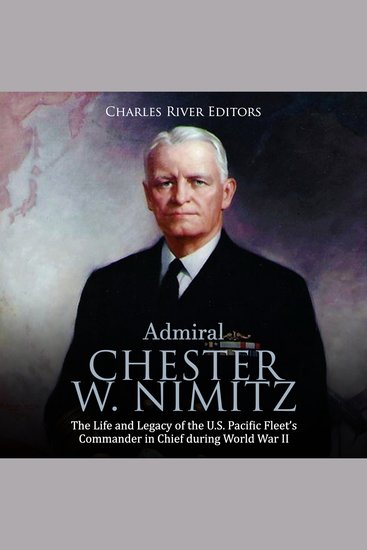
  • Admiral Chester W Nimitz: The Life and Legacy of the US Pacific Fleet's Commander in Chief during World War II - cover

    Admiral Chester W Nimitz: The...

    Charles River Editors

    • 0
    • 0
    • 0
    “It is the function of the Navy to carry the war to the enemy so that it is not fought on U.S. soil.” – Admiral Nimitz  
    	All Americans are familiar with the “day that will live in infamy.” At 9:30 a.m. on Sunday, December 7, 1941, Pearl Harbor, the advanced base of the United States Navy’s Pacific Fleet, was ablaze. It had been smashed by aircraft launched by the carriers of the Imperial Japanese Navy. All eight battleships had been sunk or badly damaged, 350 aircraft had been knocked out, and over 2,000 Americans lay dead. Indelible images of the USS Arizona exploding and the USS Oklahoma capsizing and floating upside down have been ingrained in the American conscience ever since. In less than an hour and a half the Japanese had almost wiped out America’s entire naval presence in the Pacific.  
    	Despite fighting in North Africa and the Atlantic, the United States still had the resources and manpower to fight the Japanese in the Pacific. Though the Japanese had crippled the American fleet at Pearl Harbor, its distance from Japan made an invasion of Pearl Harbor impossible, and Japan had not severely damaged important infrastructure. Thus, the United States was able to quickly rebuild a fleet, still stationed at Pearl Harbor right in the heart of the Pacific. This forward location allowed the United States to immediately push deeply into the Pacific theater. 
    	The Americans would eventually push the Japanese back across the Pacific, and one of the most instrumental leaders in the effort was Admiral Chester W. Nimitz, who commanded the U.S. Pacific Fleet and helped coordinate joint operations with the legendary General Douglas MacArthur, the Supreme Commander, Southwest Pacific Area. The ensuing strategies would lead to decisive operations at places like Midway, Iwo Jima, Okinawa, and others before the use of the atomic bombs compelled Japan’s surrender in August 1945. 
    Ver livro
  • A Rare Recording of Jim Garrison - cover

    A Rare Recording of Jim Garrison

    Jim Garrison

    • 0
    • 0
    • 0
    Jim Garrison (1921-1992) was the District Attorney of Orleans Parish, Louisiana, from 1962 to 1973. He is best known for his investigations into the assassination of President John F. Kennedy. Garrison was able to subpoena the Zapruder film from Life magazine. As a result, the American public was able to see the film for the first time. Garrison made the case that the Kennedy assassination was too complex to be carried out by Oswald alone. Later, he was played by Kevin Costner in Oliver Stone's 1991 feature film, "JFK." This recording is part of a speech he gave on the assassination.
    Ver livro
  • Moscow State University Address - cover

    Moscow State University Address

    Ronald Reagan

    • 0
    • 0
    • 0
    On May 31, 1988, at the request of General Secretary Mikhail Gorbachev, and standing below a bust of Lenin, Reagan spoke to and answered questions from a large audience of students and teachers at Moscow State University.  
    Reagan says “I wish you success” in Russian to the students on their upcoming exams. Reagan brings “a message of peace and good will and hope for a growing friendship and closeness between our two peoples.”  
    An information revolution is sweeping the globe that will transform our lives with robots, genetic coding, spacecraft, and other technologies. The key to progress is economic freedom. Entrepreneurs with the courage to take risks “are responsible for almost all the economic growth in the United States.”  
    The Republic of Korea, Singapore, Taiwan, India, and China are seeing the power of economic freedom. Freedom “is the continuing revolution of the marketplace.”  
    Nations “must renounce, once and for all, the right to an expansionist foreign policy.” “People do not make wars; governments do.” “Americans seek always to make friends of old antagonists”, for example, Britain, Germany, and Japan.  
    Nothing would please me more than to see “a growing, exuberant, exporting Soviet Union that had opened up to economic freedom”. In this Moscow spring of May 1988, we hope for a new world of reconciliation, freedom, and peace. 
    Following the speech, Reagan fields questions from the audience on a variety of topics: the START ballistic missile treaty, how young people have changed since he was a student, conflicts in Namibia and Nicaragua, the return of missing Soviet soldiers from Afghanistan, what’s unique about the U.S. Constitution, Reagan’s speaking plan on the mashed-potato circuit after retiring, American Indians, and Soviet dissidents. 
    Audio recording courtesy of the Ronald Reagan Presidential Library. 
    AspenLeafMedia.com
    Ver livro